
At MyLawQuestions, we're committed to delivering accurate, trustworthy information. Our expert-authored content is rigorously fact-checked and sourced from credible authorities. Discover how we uphold the highest standards in providing you with reliable knowledge.
What is a Victimless Crime?
 Michael Pollick
Michael Pollick
Michael Pollick
A crime is a violation of established law, but not all crimes have a readily identifiable victim. A victimless crime is one where an act that violates an established law is committed, without leaving a victim behind; that is, there is no resulting damage to a person or property. In these cases, there is usually no victim because the illegal activity was consensually entered into. For this reason, victimless crimes are often called consensual crimes.
One common example of a victimless crime is prostitution. Offering sexual favors in exchange for money is considered a crime in many places. Both the solicitor and the prostitute can be arrested for violating public decency laws. If, however, both parties are deemed to have committed the illegal act consensually, then neither party may be considered victims in the eyes of the law. While prostitution may contribute to other domestic problems or personal vices, the act itself, if entered into consensually, is usually considered a victimless crime.

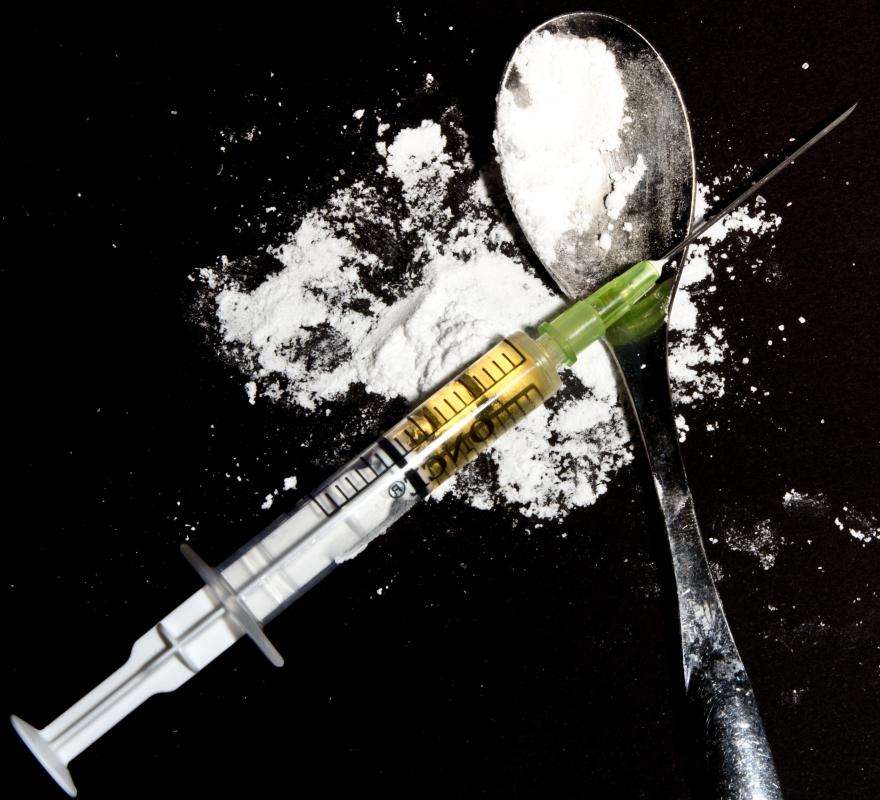
Another type of victimless crime is drug possession and usage. While it could be argued, usually successfully, that a person under the influence of illegal drugs could cause damage to other people or property, the general possession or personal use of those drugs is usually characterized as a victimless crime by those seeking to repeal current drug laws. The user may be causing damage to his or her own body through habitual drug use — and therefore some may argue the possessor or user is the victim — but the laws which make possession of these substances a criminal offense are largely written and enforced by non-users. The victim in this particular "victimless crime" is arguably the general public, since the criminalization of drugs makes it more difficult for drug-fueled criminals to commit other serious crimes.

Many white collar crimes are considered victimless crimes, although the act may cause real damage to a government agency or a large corporation. Tax evasion, for example, may cost the Internal Revenue Service a significant amount of grief and lost revenue, but the violator has not caused real financial damage to another person. Insider trading or other violations of SEC rules and regulations could also be considered victimless crimes, since they only involve an unscrupulous investor and the government agency which oversees public trading.

The concept of a victimless crime often plays a role in the proposed repeal of certain laws, especially the criminalization of drugs, prostitution and other vices. The argument presented by civil libertarians is that such laws only serve to punish citizens for personal lifestyle decisions which do not violate the legal rights of others. A citizen should be allowed to purchase and smoke marijuana legally, for example, because his or her private consumption in a private home does not affect anyone else's personal rights. Decriminalizing certain victimless crimes would reduce the prison population and take significant pressure off an overworked judicial system.
Michael Pollick
A regular MyLawQuestions contributor, Michael enjoys doing research in order to satisfy his wide-ranging curiosity about a variety of arcane topics. Before becoming a professional writer, Michael worked as an English tutor, poet, voice-over artist, and DJ.
Learn more...
Michael Pollick
A regular MyLawQuestions contributor, Michael enjoys doing research in order to satisfy his wide-ranging curiosity about a variety of arcane topics. Before becoming a professional writer, Michael worked as an English tutor, poet, voice-over artist, and DJ.
Learn more...AS FEATURED ON:
AS FEATURED ON:


-
![Many white collar crimes are considered victimless crimes, but they can still cause damage.]() By: Michael FlippoMany white collar crimes are considered victimless crimes, but they can still cause damage.
By: Michael FlippoMany white collar crimes are considered victimless crimes, but they can still cause damage. -
![Smoking marijuana has been called a victimless crime.]() By: WranglerSmoking marijuana has been called a victimless crime.
By: WranglerSmoking marijuana has been called a victimless crime. -
![Prostitution -- if not forced -- can be considered a victimless crime.]() By: BorreliaProstitution -- if not forced -- can be considered a victimless crime.
By: BorreliaProstitution -- if not forced -- can be considered a victimless crime. -
![Some contend that decriminalizing certain victimless crimes would help reduce the prison population.]() By: RufotoSome contend that decriminalizing certain victimless crimes would help reduce the prison population.
By: RufotoSome contend that decriminalizing certain victimless crimes would help reduce the prison population. -
![Some believe that drug possession or use is a victimless crime.]() By: termis1983Some believe that drug possession or use is a victimless crime.
By: termis1983Some believe that drug possession or use is a victimless crime. -
![Overworking employees may be a victimless crimes if it breaks labor laws.]() By: Syda ProductionsOverworking employees may be a victimless crimes if it breaks labor laws.
By: Syda ProductionsOverworking employees may be a victimless crimes if it breaks labor laws.





Discussion Comments
If bigamy, gambling, ticket scalping, riding bike without a helmet and if possible having sexual intercourse without marrying each other is a victimless crime, how can all this be explained?
Although it is believed that religion is the opium of the masses, I still believe that sentencing prostitutes and drug users is a very good idea.
What I don't understand is how the prosecutor has standing in victimless crimes regarding the doctrine of Corpus delicti.
If the doctrine of Corpus delecti requires (rightly IMO) that "1) The occurrence of the specific injury; and 2) some intentional, knowing act as the source of the injury.", then how does the prosecutor establish standing without a plausible victim.
Regarding Donald Bales assertions, that reasoning could be used to establish an all-pervasive totalitarian state that dictates the diets of all citizens, i.e., if the government can tell citizens what drugs they can use on the grounds that some drugs are injurious to public health, then they should also be able to tell everyone how much salt, fat, sugar etc each person is permitted to eat. Eating too much ice cream should carry an equal or greater sentence than smoking pot, because ice cream is quite demonstrably worse for one's health.
How does a court acquire jurisdiction without an injury? There is case after case stating that an injury is a requirement for standing or corpus delicti.
Great article/definition Michael!
While I don't smoke marijuana/hemp, I just don't see (Constitutionally) how government can outlaw a plant.
It's not manufactured like other drugs; it's grown then dried (as far as I know). If the government just decriminalized this one "drug", not only would it significantly reduce prison population and take pressure off of the judicial system, but it could again be manufactured for rope, clothes, fuel, paper, etc. (an estimated 50,000 products!) Of course the one manufactured is slightly different from the one smoked (lower THC?) but law enforcement can't readily tell the difference so it's all outlawed.
@mani65ng and Diwiyana: A victim is a person who is directly injured, destroyed, sacrificed, harmed, duped, mistreated, or oppressed by another person, or agent. (Sense of "person who is hurt, tortured, or killed by another" is first recorded 1650s. Meaning "person oppressed by some power or situation" is from 1718. Weaker sense of "person taken advantage of" is recorded from 1781.) If I do drugs there is no victim, because I didn't directly injure, destroy, sacrifice, harm, dupe, mistreat, or oppress another person. Likewise if I exchange sex for money.
@anon32602: Again you aren't directly harmed by the people who use the ER; you are directly harmed by an agent (the government). It is the government that makes you a victim via unconstitutional agencies, laws, and statutes. Health care was better before the government got involved and it's possible for it to be again, but not probable because of all the sheeple who don't understand the Constitution, government's role, economics, etc.
Now that emergency care in ER's and admission to hospital is also mandated, behaviors that would seem to impact only the individual have to be viewed in a somewhat different way. Granted that alcohol or drug use or smoking do not harm me directly, still I will be forced to pay for the consequences of these personal acts but my tax dollars and by the increase in my health insurance premiums. So, in a sense, I become the victim (am harmed) by the acts of other individuals. A government that undertakes to provide cradle to grave care will inevitably be led to regulate the behavior of individuals who cause increased costs.
If the government doesn't ask for it, citizens who do not do harmful things to themselves will demand it-or should demand it. Enforced charity is not real charity. There is no free anything. Somewhere somehow someone always has to pay for any good or service. "It may be paid for, but it is not free."
Some think that there should never be any bad consequences for bad behavior. That conflicts with the laws of nature-and nature will win every time.
Donald W. Bales
Prostitution unless spread by a criminal syndicate should not be criminalized but is in most all US states because we are a theocracy, not a democracy and have been controlled by religious tenets in blatant violation of our constitution (and it matters *not* that the silly word "God" appears in our bill of rights) as the already established theocracy demanded it: we are no different in *this* respect from Islamic regimes as in all theocracies, the last word is always the domain of a religious tyrant( priest rabbi. Imam, pastor-you name the miscreant- it matters little because these monsters are the criminals who enslave us insidiously and then abuse us one way or another. Our schools zero tolerance policy criminalize an 81 Mgs aspirin exactly like a reefer. In reality neither is but academic stupidity certainly is and the school boards that dictate that sort of policy should be channeled to a maximum security prison as a temporary holding facility until we reopen Alcatraz where all prisoners will be put to hard labor for life, not less: control freaks are dictators who should not be allowed the freedom of criminalizing medicines. Control freaks are criminals who manage to pass a rule that paralyzes others.
Good definition! Of course, in arguments over whether or not a particular law should be removed from the books, people disagree about which crimes really are victimless. Some feminists, for example, argue that the prostitute actually is the victim of prostitution, even though she seems to be agreeing to the sex-for-money contract of her own free will. She presumably wouldn't do it if she had other options. I don't know how many actual prostitutes have been surveyed for their opinions on the topic, though. Lots of convicted criminals also like to argue that their victims really wanted to be victims and so weren't truly victims anyway.
How are there no victims in victimless crimes?
Post your comments