
At TheHealthBoard, we're committed to delivering accurate, trustworthy information. Our expert-authored content is rigorously fact-checked and sourced from credible authorities. Discover how we uphold the highest standards in providing you with reliable knowledge.
What is a Urogram?
 Mary McMahon
Mary McMahon
Mary McMahon
A urogram is a radiograph, or X-ray image, of the urinary tract, and the process of making one is known as urography. It is used in diagnostic testing for various conditions related to the urinary tract and is also used to follow up on treatment for conditions like kidney stones and cancers of the urinary tract. As a general rule, urography is an outpatient procedure.
When patients arrive at the X-ray department for a urography procedure, they are injected with a contrast medium that will help define the structures of the urinary tract on the X-ray. Usually, it takes at least half an hour for the contrast medium to take effect, and the patient may feel slightly hot as the dye makes its way down to the kidneys. Next, the patient is X-rayed, and the resulting image is interpreted by a radiologist, pathologist, or urologist.

Some people have allergic reactions to the contrast medium, and patients may be asked to stay for a brief period of time after the procedure to ensure that if an allergic reaction does occur, treatment can be offered promptly. The contrast medium can also cause the urine to look a bit peculiar for a day or so, which is something for the patient to be aware of when urinating after a procedure.

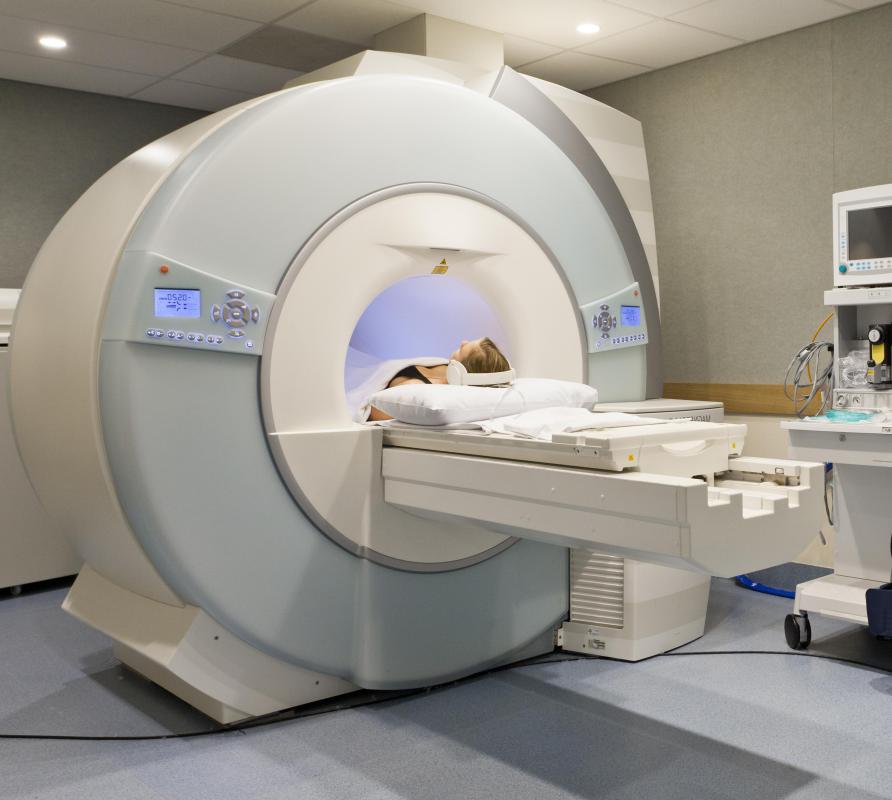
In addition to using X-rays for urograms, it is also possible to use Computed Tomography (CT) machines. A CT urogram is often of better quality than one produced with X-ray, and it sometimes reduces exposure to radiation for the patient. Not all hospitals offer this option, however, and it can be more expensive than a traditional one.
Urograms can reveal blockages such as kidney stones, congenital abnormalities, and cancers of the urinary tract. If something unexpected or abnormal is identified, the patient may need follow up tests, such as biopsies, to determine the nature of condition and to help determine what the next step should be. After treatment for conditions like kidney stones, it is common to request a urogram to ensure that the all of the stones have passed.

When this test is requested, patients should plan to set aside at least an hour and a half of time for the procedure. As a general rule, people are perfectly capable of driving or walking afterwards, so no escort is necessary. It can take several days to weeks to get results, especially in a small facility where the image may need to be sent out for interpretation. The medical professional who ordered the test will usually call the patient as soon as the results are in to discuss them.
Mary McMahon
Ever since she began contributing to the site several years ago, Mary has embraced the exciting challenge of being a TheHealthBoard researcher and writer. Mary has a liberal arts degree from Goddard College and spends her free time reading, cooking, and exploring the great outdoors.
Learn more...
Mary McMahon
Ever since she began contributing to the site several years ago, Mary has embraced the exciting challenge of being a TheHealthBoard researcher and writer. Mary has a liberal arts degree from Goddard College and spends her free time reading, cooking, and exploring the great outdoors.
Learn more...AS FEATURED ON:
AS FEATURED ON:


-
![A urogram can be used to test for various conditions related to the urinary tract.]() By: cbsvaA urogram can be used to test for various conditions related to the urinary tract.
By: cbsvaA urogram can be used to test for various conditions related to the urinary tract. -
![In some cases, CT scanners are used in place of a traditional X-ray during a urogram.]() By: ep stockIn some cases, CT scanners are used in place of a traditional X-ray during a urogram.
By: ep stockIn some cases, CT scanners are used in place of a traditional X-ray during a urogram. -
![Urograms can reveal kidney stones.]() By: airborne77Urograms can reveal kidney stones.
By: airborne77Urograms can reveal kidney stones. -
![Some urogram findings may require follow up tests and laboratory analysis.]() By: kastoSome urogram findings may require follow up tests and laboratory analysis.
By: kastoSome urogram findings may require follow up tests and laboratory analysis.



Discussion Comments
My husband had this test three weeks ago, and it left him with a metallic taste in his mouth, which turned to nausea. After a week, he went to his GP with pain in his ear and throat.
After two weeks (still not eating) he started getting sick. I rang for the duty doctor who came out and said he needed blood tests as he was dehydrated. The blood tests showed dangerously low potassium and low sodium and he was rushed into hospital. He was put on drips and kept in for seven days.
He is now home and has lost 18 pounds he is still not eating properly and feels very ill. He was a very fit man for his age. I am really worried because no one will say it is the dye that caused this reaction. Please give me some advice as to how I can help him.
This states that a CT urogram reduces radiation exposure to a patient. This does not seem right. Please explain.
The CT scan, as noted, is used to determine abnormalities in the urinary tract (bladder, kidneys, prostate, etc), and the cystoscopy is for checking from tip to bladder for polyps, growths, along the urinary tract right up and into the bladder using a camera and tube (much like a colonoscopy). A PSA test will give results if there is signs of prostate cancer to be investigated.
Either way, when you have symptoms that are not normal for you (cloudy urine, painful urination, cramping, blood in urine, etc) you need to have it checked out immediately; leaving it, nor asking for the wrong tests, will make it go away. See your family doctor, or directly to a urologist if they accept you without a referral.
ACT Urogram is to identify abnormalities of the urinary tract and as well as cancer and cancer spread. Bladder cancer is best detected by cystoscopy.
I have had this procedure. The allergy can be be any number of symptoms itching, hives all the way to difficulty breathing, just like any other allergy can cause.
Drugs can be given before the test to keep allergies at bay if you have a know susceptibility.
Did you know that the foods and drinks we consume can have the same effects as the dye? The kidneys filter the dye out as well as the toxins in our food. Drinking water after the tests helps the kidneys get rid of the dye.
What rubbish! this test does not reveal cancer as i had this test three times and the last test came back clear. Not long after that i was diagnosed with bladder cancer.
Is there any way i can see a urogram of the excretory system.
The dye is what worries me. I just don't understand how that could be safe. What type of allergic reaction happens? Just hives or something life-threatening?
Post your comments