
At TheHealthBoard, we're committed to delivering accurate, trustworthy information. Our expert-authored content is rigorously fact-checked and sourced from credible authorities. Discover how we uphold the highest standards in providing you with reliable knowledge.
What is a Universal Donor?
 Mary McMahon
Mary McMahon
Mary McMahon
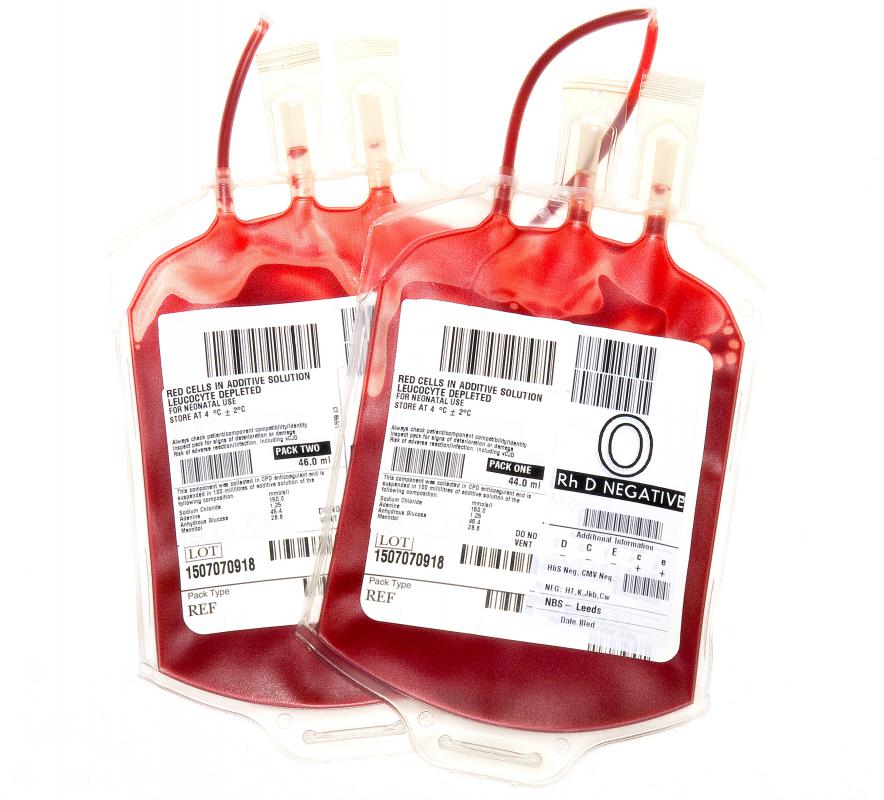
A universal donor is someone who can donate blood to anyone else, with a few rare exceptions. People with the O- blood type have traditionally been considered universal blood cell donors. Conversely, a universal recipient can safely take blood from anyone, again with a few exceptions. People with AB+ blood have been considered universal recipients.
Historically, universal donors are determined on the basis of the ABO blood typing system. Under this system, people can be divided into four blood types: A, B, AB, and O. Blood type is determined by the antigens present on the blood cells. In the case of people with A blood, A antigens are present. B blood types have B antigens, AB blood types have both, and O types have no antigens. Some people refer to the O group as the "null" or 0 group, referencing the fact that no antigens are present.

If someone with an A blood type is given blood from a B donor, the recipient's blood will react with the antigens on the B blood cells, rejecting the transfusion and triggering a transfusion reaction. O blood, however, can be given to someone with an A blood type, because there are no antigens in the donor blood to react with the recipient's body.
Things get a bit more complicated than that, as the "+" and "-" symbols people are probably used to seeing after blood types would suggest. The ABO blood typing system can be further classified with the use of the Rhesus blood group system. Blood types under this system are determined by testing for A and B antigens, and looking for something called the Rhesus or Rh factor. If the Rh factor is present, the blood is "positive," and if it is not, the blood is "negative."

When the two systems are combined, there are a plethora of blood types: A-, A+, B-, B+, AB-, AB+, O-, and O+. This complicates matters, because the presence of the Rh factor can cause a transfusion reaction in someone with a negative blood type. This makes it unsafe, for example, for B+ blood to be transfused into a B- recipient.
In emergency situations, patients may be given O- blood; however, this is not ideal. The best blood for a person to receive is an exact match for both type and Rhesus factor. This is because of the presence of antibodies and other antigens in the blood, which can cause dangerous reactions. Doctors perform a test called crossmatching to determine if the donor blood is compatible with the recipient.

Many blood banks like to stock as much blood from universal donors as they can. In an emergency situation where blood transfusions are urgently needed, O negative blood cells can be safely given to most patients. As a result, being identified as a universal donor can make someone very popular with a local blood bank.
In addition to universal blood cell donors, there are people who are universal blood plasma donors. Antibodies are found in blood plasma, and are the opposite of the blood type. Someone with type A blood has B antibodies in his or her plasma. Type AB blood plasma has no antibodies, and therefore can safely be donated to anyone.

There are a few cases in which blood from a universal donor can be dangerous. Some rare blood types fall outside the ABO system, and these blood types can react with O negative blood. For people with these blood types, it is a good idea to carry a medical information card clearly indicating this, as otherwise blood from a universal donor may be transfused under the assumption that it will be safe.
Mary McMahon
Ever since she began contributing to the site several years ago, Mary has embraced the exciting challenge of being a TheHealthBoard researcher and writer. Mary has a liberal arts degree from Goddard College and spends her free time reading, cooking, and exploring the great outdoors.
Learn more...
Mary McMahon
Ever since she began contributing to the site several years ago, Mary has embraced the exciting challenge of being a TheHealthBoard researcher and writer. Mary has a liberal arts degree from Goddard College and spends her free time reading, cooking, and exploring the great outdoors.
Learn more...AS FEATURED ON:
AS FEATURED ON:


-
![People with the O- blood type are universal donors.]() By: dazzi-bPeople with the O- blood type are universal donors.
By: dazzi-bPeople with the O- blood type are universal donors. -
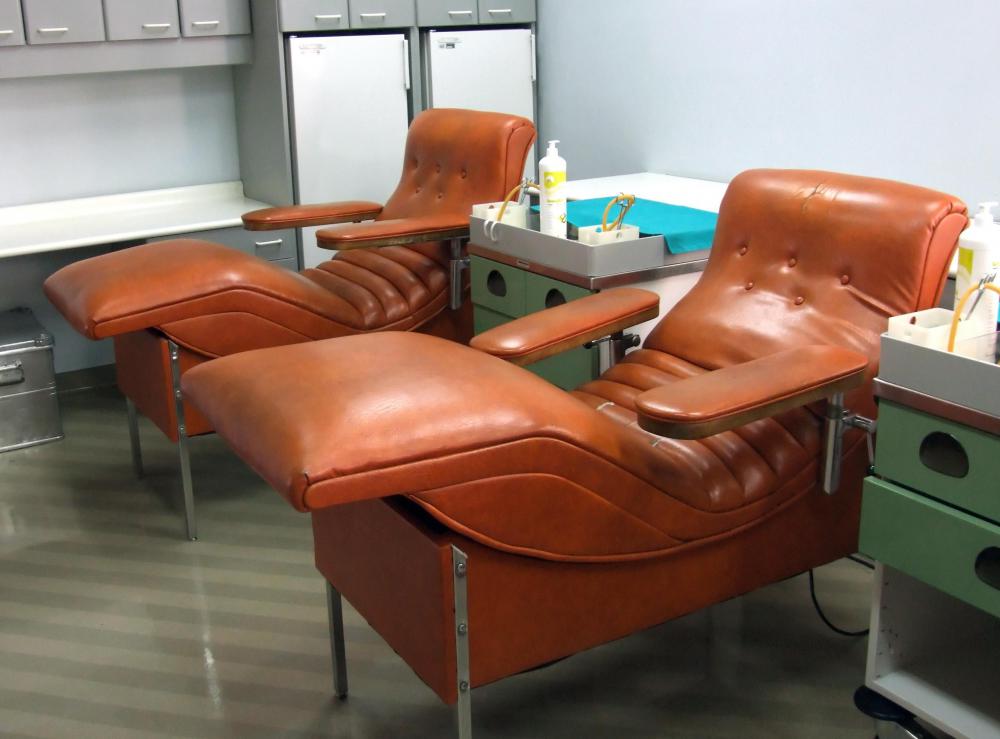
![A blood donation station.]() By: .shockA blood donation station.
By: .shockA blood donation station. -
![The Rhesus Factor set of blood types.]() By: Maxim PavlovThe Rhesus Factor set of blood types.
By: Maxim PavlovThe Rhesus Factor set of blood types. -
![Universal blood donors describe people with blood types that are compatible with almost all other blood types.]() By: kastoUniversal blood donors describe people with blood types that are compatible with almost all other blood types.
By: kastoUniversal blood donors describe people with blood types that are compatible with almost all other blood types. -
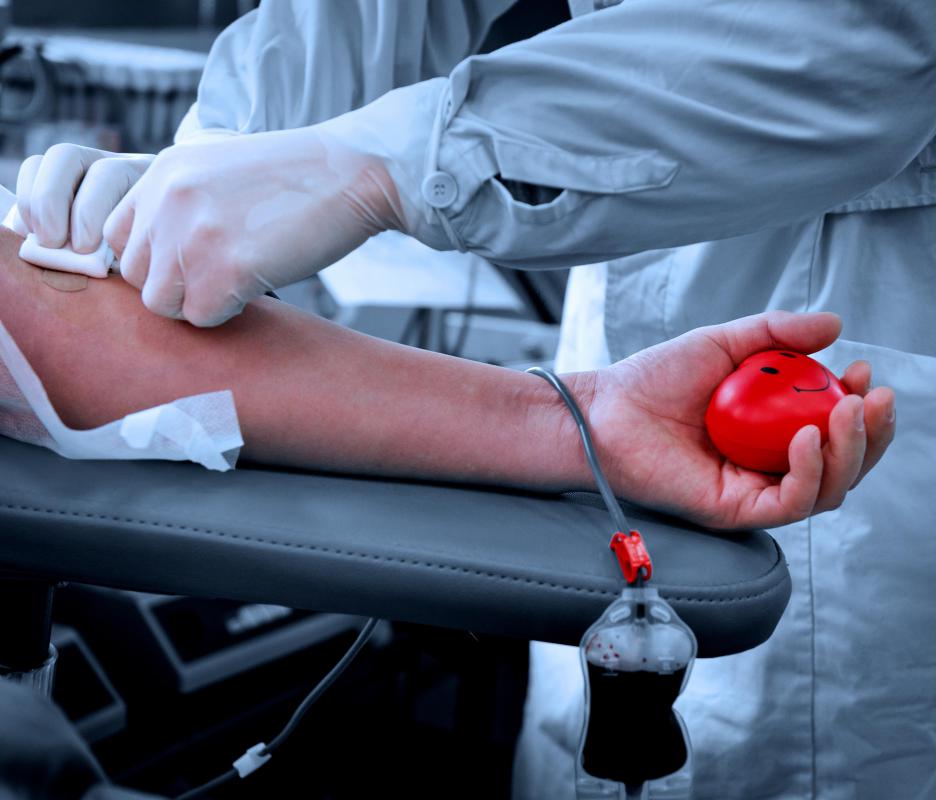
![Donors are typically screened before their plasma or blood donations are taken.]() By: xyDonors are typically screened before their plasma or blood donations are taken.
By: xyDonors are typically screened before their plasma or blood donations are taken.


Discussion Comments
Is it true that type AB blood can be donated to anyone, as stipulated in your statement above?
Is it a good idea to donate AB+ blood if it can't be accepted by blood types other than its own?
Why is type AB the universal recipient when they cannot receive any blood types? They can only receive the same blood type, but not any other blood type.
I'm an o- person. Will my body accept the o+ blood?
@Anon96345: Disclaimer: I am not a doctor, and your mother's surgeon can give you a definitive answer. My supposition is that someone with AB+ blood can receive any blood type, true, but this is more for emergency situations, and is not ideal. Say, if someone who is AB+ were in an automobile accident and needed blood, then the ER could use whatever the blood bank had on hand to save the person's life. However, it is always more desirable to use blood the same type as the patient's.
Would your mother be eligible for an autologous blood transfusion? That's when the patient goes in several times before surgery to donate a pint or so of their own blood, which the doctor or hospital banks for that patient's use during surgery. This is becoming a more common procedure. Might be worth asking the surgeon.
With regard to this statement: "Conversely, a universal recipient can safely take blood from anyone, again with a few rare exceptions. People with AB+ blood are considered universal recipients."
My mother is law who is AB+ and needs to undergo surgery for acoustic neuroma.
Doctors have said that she should have an AB+ donor. Does this mean that during a surgery, the universal recipient clause does not work.
Me and my mother both are O+ but my supposedly father is O-. Is he my father?
Two O positive parents *can* have a child who is O negative! My youngest sister is and she is the only one. The negative can come in from somewhere farther back in the family as a recessive gene that was strong enough to break through. Both my parents are O positive as are my older sister and I *but* my youngest sister is O negative due to a recessive negative gene on my mom's side of the family.
Does the blood group change from birth to any age?
amypollick,I used to think the same thing. That whatever blood type someone is that's what they stay. It is usually true but I actually know somebody whose blood type has changed three times since her birth.
Anon49833. I don't know about how often you can give certain blood types to patients, since I am not a doctor or nurse, but I do know that someone who has any type of blood is born that type and will die that type, regardless of what kind of blood he/she receives. Blood, as I understand it, is produced in the bone marrow, so a blood transfusion is not going to change blood type. I do know that a successful bone marrow transplant from a donor with a different blood type can change a person's blood type, but as far as I know, that's about the only thing that can. Of course, someone who is an expert in this field may certainly correct me if I'm wrong.
all this stuff so far is 'OK' with my knowledge. but i have a scenario, guide me there.
Patient is AB +VE, he/she can receive any blood, for example on a day in October he/she receives A+VE (because he/she can receive any group as he/she is universal recipient. after a few days, 10 days for example, can we give B+VE to the same patient (AB+VE) who has received A+VE a few days ago? in short, will an AB+VE patient still remain a universal recipient after receiving A+VE or B+VE?
Why ab group blood cannot be donated to group a and group b?
can an o postitive and an o positive make an o negative if the mother had a blood tranfusion in childhood? she had five kids who are supposed to have the the same dad but only one which is the last one has o negative, could this kid be for someone else or is it possible this man fathered it too?
Is it possible for a 0+ couple to have a A+ baby?
How can you determine if your parents are your parents?
An elderly couple dies in a traffic accident. The man has blood type AB Rhesus positive (AB+) and his wife has O Rhesus positive(O+). Shortly after, a young man shows up and claims to be the sole foe heir to the dead couple. His blood type is AB Rhesus positive(AB+)
a) can the young man be the couple's biological child?
b) what type of antigens that are on the red blood cell membranes of the elderly couple of the young man?
c)the types of antibodies that are in the serum of the elderly couple and the young man?
Post your comments