
At AllThingsNature, we're committed to delivering accurate, trustworthy information. Our expert-authored content is rigorously fact-checked and sourced from credible authorities. Discover how we uphold the highest standards in providing you with reliable knowledge.
What is a Tuber?
 Mary McMahon
Mary McMahon
Mary McMahon
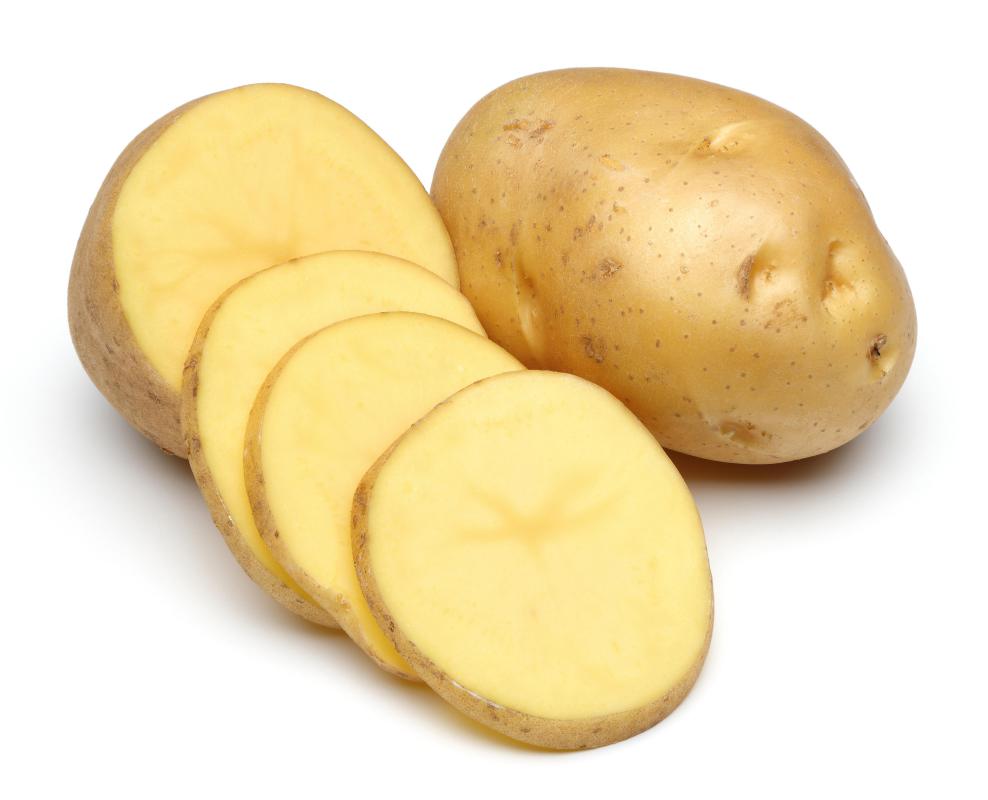
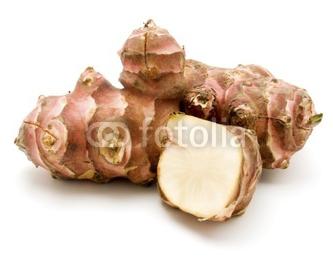
A tuber is a part of a plant that stores energy for later, and which plays a role in asexual vegetative reproduction. Strictly speaking, it is the tip of an underground stem, also called a rhizome, that swells with unused nutrients. Many types are edible, and people around the world easily grow different varieties as major crops or supplements to their general diet. Probably the best-known varieties are potatoes and Jerusalem artichokes. Some people also use this word when talking about plants with roots that look and perform in a similar way, but this is not really proper.
Main Functions

One of the main things this growth does for a parent plant is to keep food available for the future, much like a seed does. The plant uses this stored energy to get through tough times or to support new shoots, thereby ensuring that the species survives even if the parent plant dies off. They also help to anchor the plant in the ground to some degree, just like roots do.
Primary Characteristics

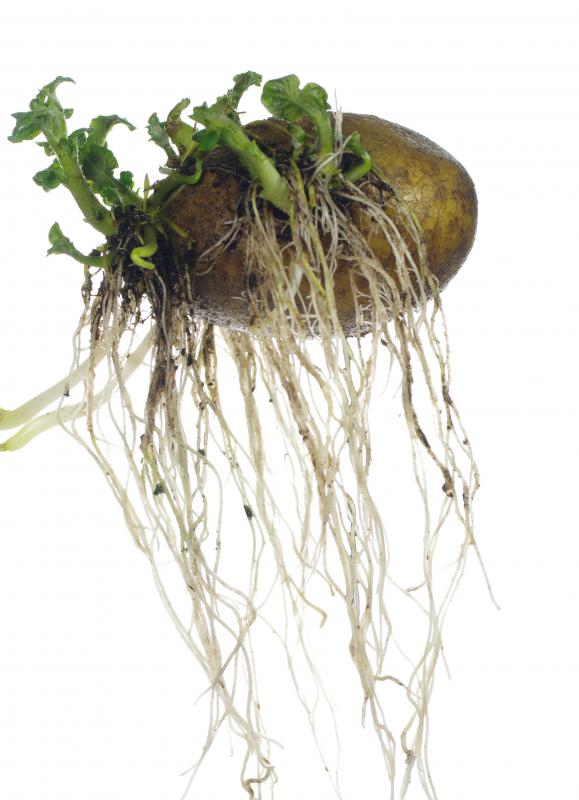
This structure is distinguishable from many bulbs and corms in that it doesn't have a tunic, which is a very thin outer covering that prevents the excessive loss of moisture. It also has no flat basal plate, which is what usually sends off roots. Some areas on a tuber are capable of growing into a new plant, and people usually call these spots buds or eyes — these are easy to see on potatoes that have been stored a little too long. An additional trait is that, generally, one gets bigger and bigger from year to year and doesn't split.
Propagation

Growing tubers is generally very easy, as they are specifically designed to generate new plants. In fact, this sometimes can be a problem — if a single potato is left behind in a garden bed, for example, it will produce more plants the next year, whether or not a gardener wants them. They are also famous for propagating in compost piles. The large number of kinds means that people can grow them around the world, although a person has to identify which species likely would do best in the climate and soil his area has.

The basic technique for propagation is very similar to planting a seed, except that a person first has to cut the main tuber into pieces. Each cut section should have at least one eye on it and should be almost completely covered with soil. New sprouts should appear within one to three weeks, although this depends on the variety of plant, the quality of the soil and the availability of sufficient sunlight and water. Most people find that giving them a drink roughly every 1 - 3 days works just fine.
Use as Food

The amount of carbohydrates or starch, vitamins and minerals tubers contain usually is extremely high, given that plants use them as an energy source as needed. They are an excellent addition to the human diet as a result, which is likely a primary reason they have become so important in many regional cuisines. People also can prepare them in a wide variety of ways, such as baking or frying, and individuals have the option of flavoring them with an array of spices, herbs or sauces, making them extremely flexible additions to the kitchen.
Many types are very tasty on their own, but generally, people pair them with other foods, particularly meats. Two big reasons for this is that tubers often are not ideal sources of protein, and because preparing them in combination generally provides a more balanced variety of nutrients. Another factor is that they are not always available in large amounts, depending on the variety, and some types have a flavor that is powerful enough to require just a small amount in a recipe.
Even though they work well as a food source for most people, they aren't right for everyone to eat. Diabetics, for example, have trouble with them because of the high carbohydrate levels. Some individuals also have allergies to certain varieties, so this occasionally limits what kinds someone can eat raw or use in cooking. Since tubers are typically low to moderate in calories, they also are not always the best choice for people who need to gain weight, such as people who have been severely sick.
Differentiation
Sometimes, people mistakenly use the word "tuber" to reference plants that technically are in a different class. The roots of these plants are unusual in that they are specialized and can store food. They are known as "root tubers" or "tuberous roots" because their function is so similar to a true tuber that forms from an underground stem or rhizome. Two common examples of this type of plant are the dahlia and cassava.
Frequently Asked Questions
What exactly is a tuber?
A tuber is a specialized storage organ of a plant, typically found underground. It stores nutrients in the form of starches to support new growth and to help the plant survive adverse conditions. Tubers are part of the plant's root or stem system and can give rise to new plants.
How do tubers differ from bulbs and rhizomes?
Tubers are thickened stems or roots filled with stored nutrients, while bulbs are made up of fleshy, layered leaves surrounding a central bud, like an onion. Rhizomes, on the other hand, are horizontal underground stems that often send out roots and shoots from their nodes. Each structure has a distinct role in plant propagation and survival.
Can you eat all types of tubers?
Not all tubers are edible for humans. While many tubers, such as potatoes and sweet potatoes, are staple foods, others may be toxic or unpalatable. It's essential to identify tubers correctly and be aware of which are safe to consume. Always refer to trusted sources before eating wild tubers.
What are some common examples of tubers?
Common examples of edible tubers include potatoes, sweet potatoes, yams, and cassava. These tubers are significant sources of carbohydrates and other nutrients in many diets worldwide. According to the Food and Agriculture Organization, potatoes are one of the world's largest food crops after rice, wheat, and maize.
How do tubers contribute to a plant's life cycle?
Tubers play a crucial role in a plant's life cycle by acting as energy reserves that allow the plant to survive winter or dry seasons. They also enable asexual reproduction, as new plants can grow from the buds, or "eyes," found on the tuber's surface, ensuring the species' propagation without the need for seeds.
Are tubers important for the environment or agriculture?
Tubers are vital for agriculture as they provide a reliable food source and are relatively easy to cultivate and harvest. They can improve food security and are used in crop rotation to maintain soil health. Environmentally, tubers can help with soil stabilization and prevent erosion due to their underground growth habit.
Mary McMahon
Ever since she began contributing to the site several years ago, Mary has embraced the exciting challenge of being a AllThingsNature researcher and writer. Mary has a liberal arts degree from Goddard College and spends her free time reading, cooking, and exploring the great outdoors.
Learn more...
Mary McMahon
Ever since she began contributing to the site several years ago, Mary has embraced the exciting challenge of being a AllThingsNature researcher and writer. Mary has a liberal arts degree from Goddard College and spends her free time reading, cooking, and exploring the great outdoors.
Learn more...AS FEATURED ON:
AS FEATURED ON:









-
![Potatoes are tubers.]() By: matesPotatoes are tubers.
By: matesPotatoes are tubers. -
![Sunchokes or Jerusalem artichokes are edible tubers.]() By: Only FabrizioSunchokes or Jerusalem artichokes are edible tubers.
By: Only FabrizioSunchokes or Jerusalem artichokes are edible tubers. -
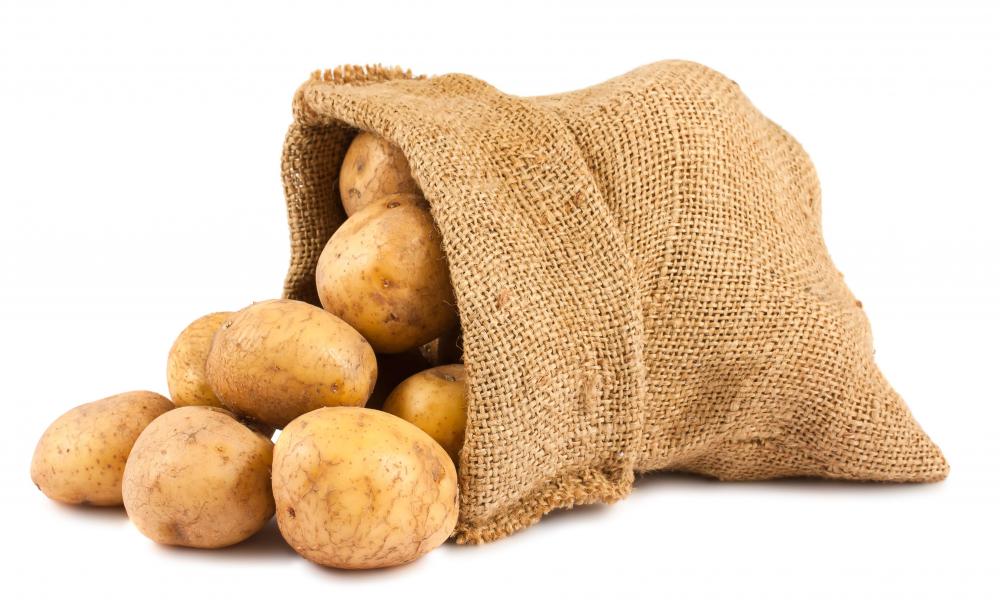
![A bag of potatoes, a tuber.]() By: mbongoA bag of potatoes, a tuber.
By: mbongoA bag of potatoes, a tuber. -
![Cassava is sometimes mistaken as a true tuber, but it is a root tuber.]() By: UnclesamCassava is sometimes mistaken as a true tuber, but it is a root tuber.
By: UnclesamCassava is sometimes mistaken as a true tuber, but it is a root tuber. -
![Growing tubers is very easy; a potato left in the ground will sprout and produce more potatoes the next year.]() By: Witold KrasowskiGrowing tubers is very easy; a potato left in the ground will sprout and produce more potatoes the next year.
By: Witold KrasowskiGrowing tubers is very easy; a potato left in the ground will sprout and produce more potatoes the next year.

Discussion Comments
This was really good for a school assignment I was doing, I recommended it to all my friends!
Ginger root comes to mind when I think of tubers. It's so knobby and meaty!
I buy ginger root and use just a little bit of it at a time in my recipes. It's extremely strong, so too much would be overpowering. I freeze the tuber and just take it out to grate whatever portion I need when I'm making something that calls for ginger.
I didn't know that a dahlia had a tuber. I figured they just grew from seed.
I did know that chrysanthemums grew from tubers, though. I have dug these up and separated them before to make more plants, and the rhizomes are all connected. Sometimes, I have to slice through them with a knife.
Another type of plant that I think must be considered a tuber is a blackberry bush. I have dozens of these growing in my yard, and they are all connected by thick underground stems.
I tried to dig up one of these plants and move it, but I quickly found that it was connected by a very strong tuber to the other blackberry bushes. I cut through it and moved the bush, but it died within a couple of weeks.
@kylee07drg – My brother stores potatoes in his basement for three months. After that, they start to develop rotten spots, so he has to get rid of them.
I like growing sweet potatoes. I've developed an addiction to sweet potato fries. I toss them in olive oil, sprinkle them with salt and pepper, and bake them for about thirty minutes.
I don't have a basement, but I can store them in my outdoor utility room. It doesn't have any windows, and it gets very cold in there during the winter.
So I could just buy a potato at the grocery store, toss it into some dirt in the yard, and it will grow a plant? That is so cool!
I've often been jealous of people with basements, because they can store items like potatoes there in the winter. How long can you keep potatoes in a cool, dark place? Will they spoil before spring arrives?
@Mor - If you've got kids that like weird colors you might try them with blue potatoes. They are becoming more and more common now and can often be found at farming co-op stores and farmers' markets. They are a really vivid blue or purple (which apparently makes them healthier) and kids love the color, even though they taste just like regular potatoes.
Try mashing them with some chopped carrots if you really want to make them pop!
@chicada - I love growing tubers as well. There's something very satisfying about digging up big chunks of food from the ground.
And a lot of tubers are very healthy for you, even though potatoes get a bad reputation, because they are often served without skins (which has a lot of their nutrition) and fried.
Sweet potato, for example, are a really healthy alternative to potatoes, particularly for people who want to keep their blood sugar level. I find it's much easier to get little kids to eat mashed sweet potatoes as well, particularly the ones that are a red tuber, as they have the nicest flavor.
@anon78221 - Might just be the common dandelion. I know they have roots like that, although they usually have a pale brownish skin over the roots. Or it might be some kind of spreading grass.
However, the best way to find out what the roots are is to replant them in a tub or a pot. If the roots are tubers (which is likely if they are that thick) they might sprout into whatever plant they are. Otherwise, without a description of the plant, you'd find it difficult to find anyone who could identify them.
Tubers were always my favorite vegetables to plant and harvest. Every year, my family and I would plant potatoes, sweet potatoes, carrots, and beets in our garden.
They were always easy to care for, easy to harvest and delicious year round. We would pull hundreds of pounds of delicious tubers out of the ground and give them to friends and family. The rest we would store in our basement for the rest of the winter. I never liked gardening, but the thought of fresh potatoes would always get me outside to help.
my wife was digging in her flower bed and getting rid of weeds she exposed some roots about three to five inches long and a half inch around, white with long hair like roots on the ends. we have been trying to figure out what kind of plant it might belong to, but can't find it anywhere.
Post your comments