
At AllThingsNature, we're committed to delivering accurate, trustworthy information. Our expert-authored content is rigorously fact-checked and sourced from credible authorities. Discover how we uphold the highest standards in providing you with reliable knowledge.
What is a Tree Line?
 Michael Anissimov
Michael Anissimov
Michael Anissimov
A tree line or timberline is the line at which trees stop growing. The best-known include the alpine, polar, desert, and exposure tree lines, though there are others. On mountains, this point begins anywhere between 2,600 ft (800 m) and 17,000 ft (5,200 m) above sea level, though between 7,000 ft (2,100 m) and 10,000 ft (3,000 m) is most typical. The lowest alpine tree lines are in places where it is already very cold and challenging for trees to grow, such as northern Sweden and Norway, and the highest is in the Bolivian Andes, where hardy trees grow up to 17,000 ft (5,200 m) above sea level.
A combination of complex factors determine the altitude of the alpine tree line. These include ambient temperature, local species, and degree of exposure. Many mountains have lower timberlines on south-facing slopes, because these receive less sun and are therefore colder and less hospitable. Usually, the trees that make it to the highest altitudes are conifers, especially various species of pine, as these are best adapted to cold conditions. While alpine forests may host a variety of animal species, the biodiversity tends to drop above the tree line, due to the lack of food and places to hide from predators. Some animals do indeed live at that altitude, however, eating small shrubs. These include the mountain goat, alpine ibex, bighorn sheep, and various rodents and birds including the golden eagle.

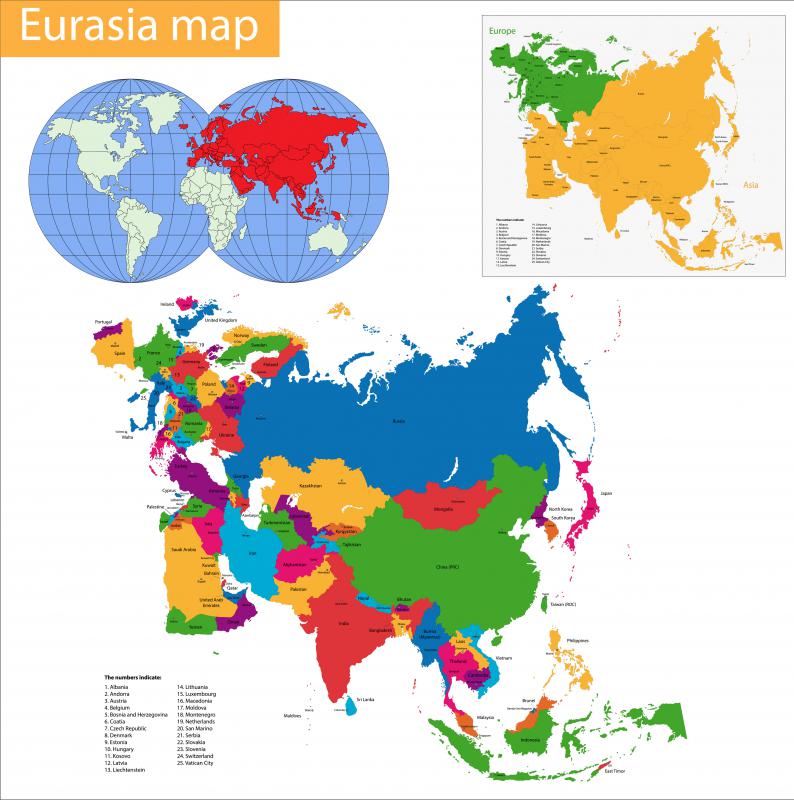
The Arctic and Antarctic tree lines occur in areas that are too far north or south to have ground suitable for tree growth. Generally, this is around 70 degrees from the poles, but it can be as close as 52 degrees from the poles depending on climate. In Eurasia, the tree line varies between 66 and 72 degrees north, meaning that only the northern tips of Norway, Sweden, Finland, and Russia have one. The most northerly Arctic timberline is in the Central Siberian Plateau, where the influence of an extreme continental climate heats up the ground, and the most southerly one is in Quebec, where the extremely cold Hudson Bay discourages tree growth. Few continental masses reach very far south, making it difficult to delineate the Antarctic tree line. Most of the southernmost areas of Tierra del Fuego in South America are barren, except for Hoste Island, located at 55 degrees south, the home of the world's southernmost trees.
Frequently Asked Questions
What exactly is a tree line?

The tree line refers to the ecological boundary where environmental conditions, such as temperature and soil quality, become too harsh for tree growth. Above this line, you'll typically find alpine tundra with shrubs, grasses, and scattered dwarf trees, if any. The tree line's altitude varies by latitude, being higher near the equator and lower as you approach the poles.
How does altitude affect the tree line?

Altitude plays a crucial role in defining the tree line, as it affects temperature and oxygen levels. Generally, for every 1,000 meters you ascend, the temperature drops by about 6.5 degrees Celsius, making it difficult for trees to survive. This is why the tree line is found at lower altitudes in the polar regions and higher in the tropics.
Can the tree line change over time?
Yes, the tree line can shift due to climate change, with global warming causing it to move upward in many parts of the world. This is because warmer temperatures allow trees to grow at higher altitudes than previously possible. However, this shift can disrupt local ecosystems and biodiversity, as species adapted to colder climates are forced to move or face extinction.
What types of trees are found near the tree line?
Near the tree line, you'll often find hardy, slow-growing coniferous trees like spruce, fir, and pine. These species are adapted to withstand the cold, wind, and short growing seasons. Their conical shape and flexible branches help them shed snow and resist wind damage, which is essential for survival in these harsh conditions.
Why is there no tree line in certain parts of the world?
Some regions, such as the equatorial rainforests, don't have a tree line because the climate remains warm and moist even at high altitudes, allowing trees to grow continuously. In contrast, areas like the Sahara Desert lack a tree line due to extremely dry conditions, not because of cold temperatures, which inhibit tree growth altogether.
How does the tree line affect wildlife and biodiversity?
The tree line creates a distinct transition zone between forested areas and alpine tundra, each supporting different wildlife and plant species. This ecotone is rich in biodiversity, providing unique habitats and food sources. Animals such as mountain goats, pikas, and marmots are adapted to life at or above the tree line, while many bird species use this area for nesting and foraging.
Michael Anissimov
Michael is a longtime AllThingsNature contributor who specializes in topics relating to paleontology, physics, biology, astronomy, chemistry, and futurism. In addition to being an avid blogger, Michael is particularly passionate about stem cell research, regenerative medicine, and life extension therapies. He has also worked for the Methuselah Foundation, the Singularity Institute for Artificial Intelligence, and the Lifeboat Foundation.
Learn more...
Michael Anissimov
Michael is a longtime AllThingsNature contributor who specializes in topics relating to paleontology, physics, biology, astronomy, chemistry, and futurism. In addition to being an avid blogger, Michael is particularly passionate about stem cell research, regenerative medicine, and life extension therapies. He has also worked for the Methuselah Foundation, the Singularity Institute for Artificial Intelligence, and the Lifeboat Foundation.
Learn more...AS FEATURED ON:
AS FEATURED ON:









-
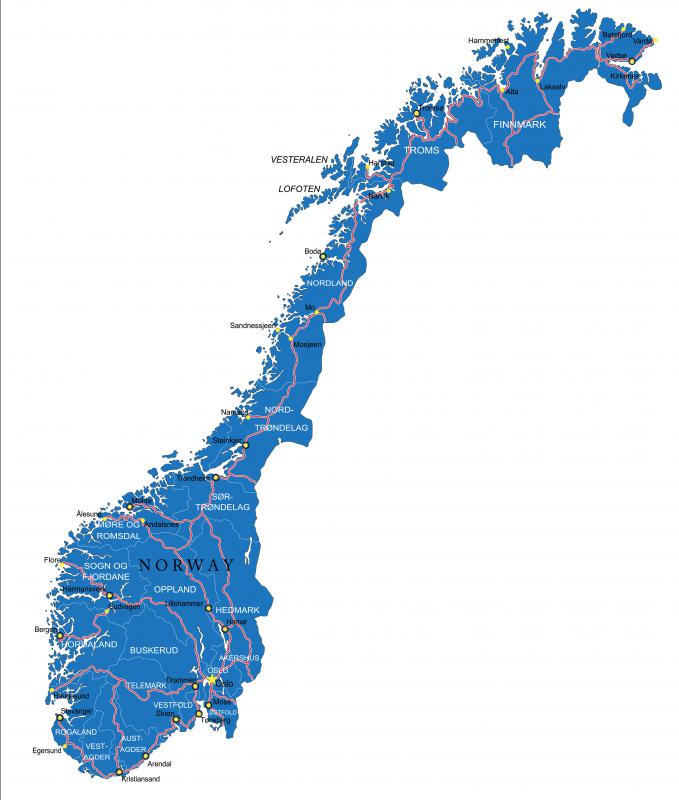
![Trees don't grow in the northern regions of Norway.]() By: bogdanserbanTrees don't grow in the northern regions of Norway.
By: bogdanserbanTrees don't grow in the northern regions of Norway. -
![In Eurasia, the tree line varies between 66 and 72 degrees north, meaning that only the northern tips of Norway, Sweden, Finland, and Russia have one.]() By: Iryna VolinaIn Eurasia, the tree line varies between 66 and 72 degrees north, meaning that only the northern tips of Norway, Sweden, Finland, and Russia have one.
By: Iryna VolinaIn Eurasia, the tree line varies between 66 and 72 degrees north, meaning that only the northern tips of Norway, Sweden, Finland, and Russia have one. -
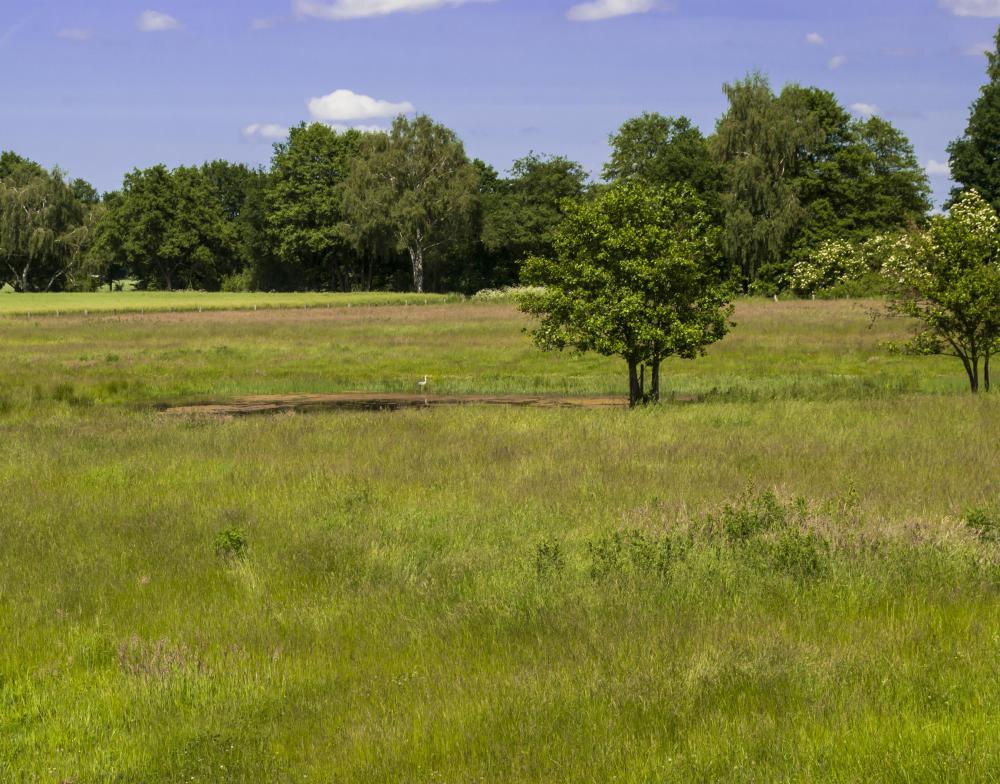
![A tree line refers to the line at which trees stop growing.]() By: marcelo2203A tree line refers to the line at which trees stop growing.
By: marcelo2203A tree line refers to the line at which trees stop growing.
Discussion Comments
A given tree line may look like a sharply demarcated line on a map, but in reality in most areas the closer you get tho this "line" the less like a sharp boundary it appears. There is almost always a transitional area where trees become more and more stunted. So "tree line" is a rather misleading term.
And here I thought a tree line was something that you put on your property, like a shrub border or something. I planted a line of maple trees around the edges of my yard years ago, and they make a great "tree line" -- give me a lot of privacy too!
I know some people who even have Christmas tree lines -- my daughter and her children can never throw out a Christmas tree, but they always insist on having live trees, so over the years they've developed their own "tree line" around their yard.
But I'm glad that I know the real definition of a tree line -- this was a very informative article, thanks for that.
One thing that I always find very interesting about tree lines is the biodiversity. Since a tree line really is a pretty transitional area in terms of ecology, you can find some fascinating combinations of animals.
I often used to spend nights behind the tree line near my vacation house in Canada, just watching all of the different animals that would creep out and mingle.
It's really a very fascinating experience -- it you ever get the opportunity to watch dusk at a tree line, you can see the most interesting things. Of course, it is really very cold, so be sure do dress warm and bring a thermos of coffee or hot chocolate. But the cold is well worth the experience. Seriously, if you get the change, I would highly advise you to try it out.
One thing that is kind of weird if you've never been to a place with a tree line is how very line-like it is.
I mean, you would think that treeline was just kind of a figure of speech, but they really do make almost a perfect line in some places.
It's really cool if you're hiking in an area like that, or if you just look at Google earth and see how straight some tree lines are.
Of course, there can be a downside to the whole tree line thing too -- a lot of times the trees will form a windbreak, so if you suddenly come out of a tree line when hiking, the sudden drop in temperature can send you in a bee line back for the tree line!
It is a really cool thing though -- I'd encourage everybody to try and see a tree line at least once in their lives.
How many trees make up a treeline/timberline.
Post your comments