
At HomeQuestionsAnswered, we're committed to delivering accurate, trustworthy information. Our expert-authored content is rigorously fact-checked and sourced from credible authorities. Discover how we uphold the highest standards in providing you with reliable knowledge.
What is a Tiller?
 Michael Pollick
Michael Pollick
Michael Pollick
A tiller, also known as a soil cultivator, is a farming tool used to prepare soil for planting. Gardeners and farmers use this tool to break up the hardened surface dirt and incorporate organic materials into the freshly turned soil. The first tiller models used human or animal power, but modern manufacturers use gas-powered engines to turn the blades or tines.
It can be argued that the development of the tiller defined the beginning of commercial farming. Early humans may have relied on preexisting stands of fruits and vegetables or attempted to plant seeds directly into the hardened ground beneath their feet. By creating a simple tiller capable of softening the soil, the earliest farmers could produce more crops per acre of land.

Most casual gardeners today do not own commercial-grade tillers, but rather rent them by the day or purchase smaller models designed for home use. After the ground has thawed sufficiently in early spring, a farmer or gardener will use the tool to overturn soil in a predetermined area. Depending on the type of crop, the soil may have to be "amended," meaning that acidic or basic fertilizer and organic materials are added to create an ideal balance for the vegetable or fruit to be grown. A tiller can blend these additives into the soil very evenly.

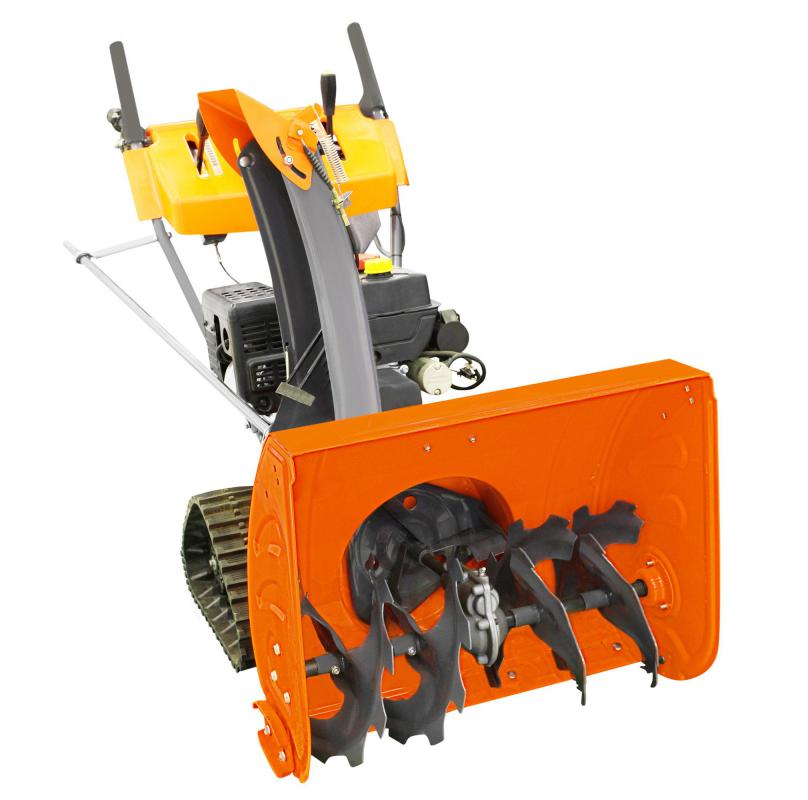
A modern tiller is not the same as a plow, although they perform similar tasks. A plow uses two opposing blades to essentially slice through the soil. A rotary tiller uses two sets of circular tines turned by an engine to cut into the soil to a prescribed depth. These blades are mounted on either the front or the back of the machine. Front-bladed tillers are recommended for smaller gardens and beginning gardeners. Running this tool can be like running a floor polisher or sander — it has a tendency to pull forward, taking the user with it.

A rear-blade model is best for larger commercial gardens and experienced users. Different attachments can be used to blend the soil, create planting furrows, build potato hills or even clear snow in the wintertime. Rear-blade tillers reputedly create more even results and are easier to control; however, they are often significantly more expensive than front-blade versions. Either model can be rented for occasional use, but a gardening hobbyist may find that a front-blade tiller is more affordable and does an acceptable job of preparing the soil for planting.
Michael Pollick
A regular HomeQuestionsAnswered contributor, Michael enjoys doing research in order to satisfy his wide-ranging curiosity about a variety of arcane topics. Before becoming a professional writer, Michael worked as an English tutor, poet, voice-over artist, and DJ.
Learn more...
Michael Pollick
A regular HomeQuestionsAnswered contributor, Michael enjoys doing research in order to satisfy his wide-ranging curiosity about a variety of arcane topics. Before becoming a professional writer, Michael worked as an English tutor, poet, voice-over artist, and DJ.
Learn more...AS FEATURED ON:
AS FEATURED ON:


-
![Tillers can help break up clods in surface dirt and work in new organic matter.]() By: keng88Tillers can help break up clods in surface dirt and work in new organic matter.
By: keng88Tillers can help break up clods in surface dirt and work in new organic matter. -
![Front tine tillers have rotary blades mounted on the front of the unit.]() By: Dmitry VereshchaginFront tine tillers have rotary blades mounted on the front of the unit.
By: Dmitry VereshchaginFront tine tillers have rotary blades mounted on the front of the unit. -
![Rear-tine tillers have cutting tines mounted behind the wheels.]() By: IvanovRear-tine tillers have cutting tines mounted behind the wheels.
By: IvanovRear-tine tillers have cutting tines mounted behind the wheels. -
![Farmers use large tillers to break up hardened soil or add organic nutrients into freshly turned soil.]() By: Johan LarsonFarmers use large tillers to break up hardened soil or add organic nutrients into freshly turned soil.
By: Johan LarsonFarmers use large tillers to break up hardened soil or add organic nutrients into freshly turned soil.



Discussion Comments
My dad is in his 80's and still uses an old manual tiller that belonged to his dad. He has used the same garden spot for many years, so it doesn't take too much effort to till this up every year.
Even so, it is much harder to use than it looks, but this is the only thing he has ever used for his garden.
When I was looking for one, I ended up buying a used tiller from the classified ads. This is run by gas and had not been used very often. The only reason the man was selling it was because he didn't want to take it with him when he moved.
This was much more reasonable than buying a brand new one, and also much easier than using the manual tiller my dad still uses.
You would be surprised at the number of people who have gardens but don't own their own tiller. When my son was younger, this was one way he made some extra money.
His business grew by word of mouth as neighbors saw him tilling up a garden space for someone every spring.
Most people would call him back every year to till up their garden for them. Spring was always a busy time for him, but it was a great way for him to make some extra money.
I think one of the biggest reasons people don't buy their own tiller is because you usually only need it once or twice a year.
That is much different than owning something like a lawn mower that you need to use every week.
@honeybees - After paying someone to till my garden for a couple years, I decided to buy my own.
Buying a tiller is an investment, but I use mine several times during the year, so feel like it is well worth it. This way I don't have to rent one or hire it done.
I bought a small Mantis tiller that is light and easy to use. I can carry this around the yard with one hand, and don't have to rely on my husband to till up any space where I want to plant something.
This tiller has attachments so you can also use it to edge along a border in addition to tilling and making rows in a garden.
I really put this to the test when I use it to dig up a space that has never been tilled before. That is always the hardest and takes the longest. Once that part is done, it is much easier to till up the ground every spring.
Any time there is a space where I want to add a new flower bed, my tiller is handy and ready to go.
We always had a garden when I was growing up, so the first time I lived on my own where I could have a garden, I wanted to plant one.
I didn't have a tiller and didn't have the money to buy one, so ended up renting one for a day. Since it doesn't take very long to till up a garden space, it didn't need to be rented for any longer than that.
This was a Kubota tiller that I would have loved to own, but was still excited to be able to get my garden planted. Before renting the tiller, I had bought some fertilizer so I could also work that into the soil.
Renting a tiller is certainly an option, but if you plan to garden every year and have some flower beds, it is nice to buy your own tiller if you can afford it.
a Tiller is also a machine which can lift loads for you. Loads between 15 and 75 kilos.
Post your comments