
At TheHealthBoard, we're committed to delivering accurate, trustworthy information. Our expert-authored content is rigorously fact-checked and sourced from credible authorities. Discover how we uphold the highest standards in providing you with reliable knowledge.
What is a Third Eyelid?
 Mary McMahon
Mary McMahon
Mary McMahon
A third eyelid, also known as a haw or nictitating membrane, is a structure found in the eyes of reptiles, birds, and some mammals. It consists of a transparent membrane that is drawn across the eye. The third eyelid lies underneath the two outer eyelids, and it serves a number of different functions in the eye. People who have been around cats and dogs may have seen it, as these mammals possess a nictitating membrane that is sometimes visible during sleep.
Like the outer eyelids, the third eyelid is designed to protect the eye from damage. It can be used to sweep dust and other debris from the surface of the eye, and to moisten it. One of the glands of the eye is located at the base of this eyelid, providing a steady source of fluid to keep the eye moist so that it will function well. Many animals that live in dusty or dirty environments may use their eyelids periodically to blink away debris.

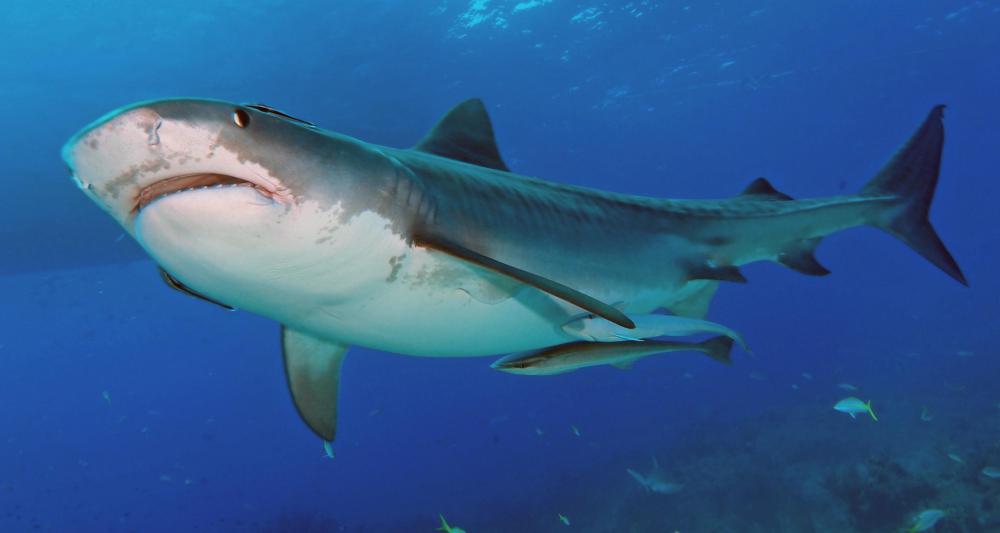
In some diving animals, this structure is used to cover the eye while swimming so that the animal can see, but its eyes are still protected from debris and other substances in the water. Birds use it for protection while feeding their young, ensuring that the baby birds do not accidentally peck the eyes of their parents in their hurry to eat. Creatures like sharks may employ theirs when they go on the attack to protect their eyes from thrashing or panicking prey.

Humans and most primates lack a third eyelid, although some vestigial structures around the eye seem to suggest that humans once possessed this anatomical feature. People who are curious to see this membrane in action may be able to find an obliging cat or dog. In these animals, the nictitating membrane sometimes shows during sleep, or when the animal is woken suddenly from a nap. Chickens and other domestic poultry may also display theirs if they are held and gently stroked or rocked to calm them.

Animals with nictitating membranes are subject to some disorders that can affect it, causing a variety of problems. Sometimes, the membrane rolls or inverts so that it cannot be closed, forming a small mass in the corner of the eye that can lead to irritation. Animals may also sometimes have difficulty closing or opening their third eyelids, and in some cases, the gland at the base may move, causing a condition known as cherry eye. Veterinary surgery is generally required to correct these problems.
Mary McMahon
Ever since she began contributing to the site several years ago, Mary has embraced the exciting challenge of being a TheHealthBoard researcher and writer. Mary has a liberal arts degree from Goddard College and spends her free time reading, cooking, and exploring the great outdoors.
Learn more...
Mary McMahon
Ever since she began contributing to the site several years ago, Mary has embraced the exciting challenge of being a TheHealthBoard researcher and writer. Mary has a liberal arts degree from Goddard College and spends her free time reading, cooking, and exploring the great outdoors.
Learn more...AS FEATURED ON:
AS FEATURED ON:


-
![The third eyelid is visible in some animals, like cats, when they are sleepy.]() By: Pete MarkhamThe third eyelid is visible in some animals, like cats, when they are sleepy.
By: Pete MarkhamThe third eyelid is visible in some animals, like cats, when they are sleepy. -
![Birds use their third eyelid for protection when feeding their young.]() By: Dave Bezaire & Susi Havens-BezaireBirds use their third eyelid for protection when feeding their young.
By: Dave Bezaire & Susi Havens-BezaireBirds use their third eyelid for protection when feeding their young. -
![Veterinary surgery may be required to fix nictitating membranes.]() By: Scott GriesselVeterinary surgery may be required to fix nictitating membranes.
By: Scott GriesselVeterinary surgery may be required to fix nictitating membranes. -
![Chickens have a third eyelid.]() By: jStockChickens have a third eyelid.
By: jStockChickens have a third eyelid. -
![Certain species of sharks have third eyelids to protect their eyes from thrashing prey.]() By: Christopher BartlettCertain species of sharks have third eyelids to protect their eyes from thrashing prey.
By: Christopher BartlettCertain species of sharks have third eyelids to protect their eyes from thrashing prey.


Discussion Comments
@KoiwiGal - Yeah, you're right. The human eye works so clearly above water because the light is transferring from air to the water of the eye. When it's transferring from water to water, it isn't as efficient. A third eyelid wouldn't solve the problem unless it trapped air underneath. Otherwise, I suspect we would have kept our third eyelid. There would be quite a strong evolutionary advantage to it if it could do that!
It might still come in handy if you were driving a motorcycle, but since you should be wearing a helmet with a face mask anyway, I guess that's a moot point!
@anon287200 - That was my first thought as well! It would be amazing to be able to just dive into the water and see everything under there without needing a mask.
Although, with that said, I'm not sure that would work with the human eye, as I think it needs a little bit of air against it in order to work properly. After all, you don't get clearer sight underwater when you wear contacts (believe me, I know!). I don't know how it works, but I'm pretty sure a third eyelid wouldn't completely solve the problem.
It would be amazing if we had a super translucent third eyelid! We would never need goggles when swimming, when riding a motorcycle or in so many other situations!
I think it's neat that cats have a third eyelid. We have really over-domesticated these animals, but when I think back to how they used to live in the wild, I can see how this would have been necessary.
Cats had to stalk prey through really tall weeds and grass, and that could have been very irritating to the eyes. Also, the captured prey would get really violent trying to escape, and it would likely try to claw at the eyes.
Today, we practice things like cat declawing to rob them of their nature. However, the third eyelids will remain as a testament to the lifestyle that once was.
I didn't know that birds had a third eyelid! I wouldn't have thought that something so small would even need one.
That's pretty creepy that their third eyelids have to go into action when they are feeding their babies. Can you imagine if we had to cover our eyes every time we fed our infants? I wonder if mother birds are a bit scared of their babies as they are reaching hungrily toward their faces!
@seag47 – I've seen my dog's third eyelid come across his eye just as he is falling asleep. When this happens, I know that he will be out for awhile.
He falls asleep on the couch, and his eyes usually stay at least partially open. However, that nictating membrane always covers the eyes for protection. It's kind of freaky looking, and it seems that his eyes have rolled back into his head.
I think that dogs' third eyelids cover their eyes when they die, too. I know that when my other dog passed, her eyes were mostly covered by a semi-transparent white membrane.
My dog's third eyelid appeared stuck in position when he had gotten some type of irritant in it. This scared me, because I was afraid that he had really damaged his eye in some way, like in a fight with another animal.
However, I couldn't see any blood or scratches anywhere near the eye. I decided that he might just have an allergen in his eye. I gave him an antihistamine, and a few hours later, the third eyelid started to recede.
It wasn't actually stuck. It was doing its job, protecting his eye from whatever was irritating it.
Post your comments