
At TheHealthBoard, we're committed to delivering accurate, trustworthy information. Our expert-authored content is rigorously fact-checked and sourced from credible authorities. Discover how we uphold the highest standards in providing you with reliable knowledge.
What is a Teething Ring?
 Nicole Madison
Nicole Madison
Nicole Madison
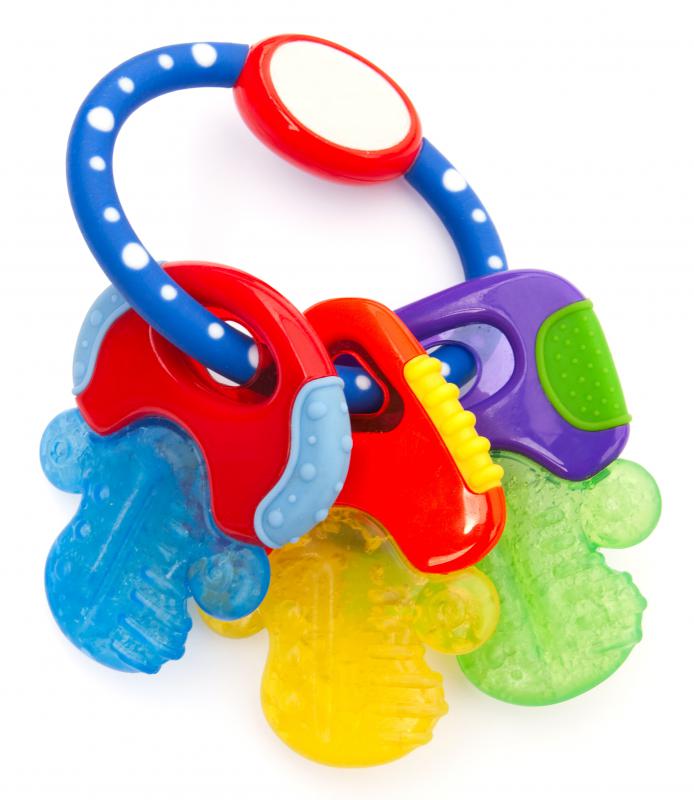
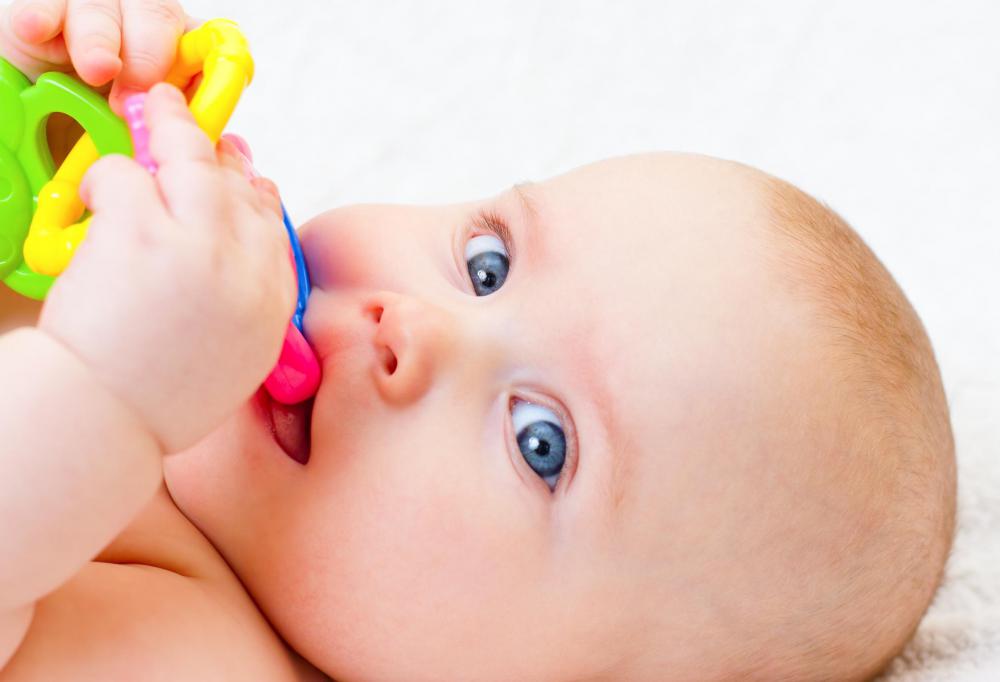
A teething ring is a baby product used to soothe the gums of a teething baby. When babies begin to get teeth, this change in their bodies is not without discomfort. As the teeth break through the tender gums, a baby may experience pain, discomfort, itching or throbbing. Teething devices simply provide something that a baby can gnaw or rub against his gums to help relieve the unpleasant sensations. Besides helping to soothe tender gums, they also provide a bit of enjoyment for babies who like to have something they can hold in their hands and put in their mouths.
A shopping trip for teething rings will typically provide many different choices. One of the most important things for a parent to do when shopping for one is to read the package and make sure a particular choice is safe for babies. This means that it doesn't have any small parts that could break off and become a choking hazard and that it is made of non-toxic materials. In the United States, all baby products are supposed to be free of toxic materials like lead, but it is wise to double-check packaging to be on the safe side.

Many rings are made of rubber that is firm enough to stand up to a baby's gnawing yet pliable enough to yield a bit and not cause further discomfort. Some of them are smooth while others have bumps and lumps that may help to further soothe gums. Often, they are designed to be placed in the refrigerator because a cold object may provide even more comfort to a baby.

Some teething rings may be placed in the freezer for a period of time before giving them to babies, but it's best to take them out of the freezer before they are frozen solid. While it may seem that having an ice-cold object applied to the gums will provide comfort, letting the ring become rock hard may actually do more damage than good. It can bruise swollen, tender gums.

Some people prefer to buy sterling silver teething rings for their babies. This type may be easier to chill, but it is more expensive than other models. Rubber rings may be softer and gentler on tender gums, and they are also less costly. Plastic is also less expensive and considered safe, although some people have concerns about the potential effects of allowing babies to chew on these products.
Nicole Madison
Nicole’s thirst for knowledge inspired her to become a TheHealthBoard writer, and she focuses primarily on topics such as homeschooling, parenting, health, science, and business. When not writing or spending time with her four children, Nicole enjoys reading, camping, and going to the beach.
Learn more...
Nicole Madison
Nicole’s thirst for knowledge inspired her to become a TheHealthBoard writer, and she focuses primarily on topics such as homeschooling, parenting, health, science, and business. When not writing or spending time with her four children, Nicole enjoys reading, camping, and going to the beach.
Learn more...AS FEATURED ON:
AS FEATURED ON:


-
![A teething ring helps relieve a baby's discomfort while his teeth grow in.]() By: Pamela UyttendaeleA teething ring helps relieve a baby's discomfort while his teeth grow in.
By: Pamela UyttendaeleA teething ring helps relieve a baby's discomfort while his teeth grow in. -
![Teething rings should have no small parts that can break off and become choking hazards.]() By: Dmitry NaumovTeething rings should have no small parts that can break off and become choking hazards.
By: Dmitry NaumovTeething rings should have no small parts that can break off and become choking hazards. -
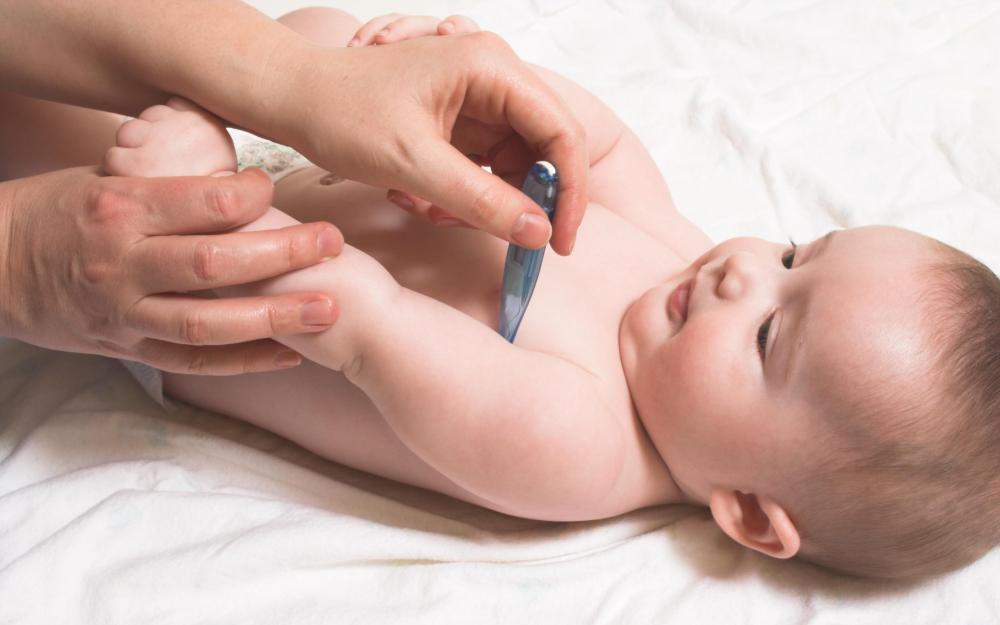
![Teething can cause babies to develop a low-grade fever.]() By: fred goldsteinTeething can cause babies to develop a low-grade fever.
By: fred goldsteinTeething can cause babies to develop a low-grade fever.
Discussion Comments
I feel horrible for all babies, since teething is such a painful experience. I know this because my wisdom teeth have been cutting through for a while. I probably should go out and buy me a teething ring, as it is very painful and is taking a long time for my wisdom teeth to cut in!
I am glad one poster mentioned how their children would just use anything around the house to soothe their teething gum's with. This is a good reminder so parents with low income can use something safe that they already have at their house as a teething ring. It is good to know so we all can remember to put unsafe stuff out of a baby's reach.
Some children do not even take to teething rings, so I would just buy one or two different kinds and see how your baby likes them, and if not, it is time to think outside of the box and use something you already have.
Another alternative, which other posters previously mentioned, was that you can give your teething baby an age-appropriate over-the-counter drug and just whatever else possible to try to soothe them, like holding them, rocking them, or whatever your baby loves the most.
I knew there were a lot of material choices when choosing a teething ring for a baby, but I did not know there were so many. I especially would not have thought and have not seen wooden teething rings, but it sounds like it works for some babies.
I would not even thought about some of the materials used to make teething rings could be unsafe, because I guess since this is America I would have thought any dangerous materials would have been banned, although it sounds like lead has been banned, which is good.
I am so thankful I read this article, so if I ever have to babysit, or have a child of my own, I will know which ones to at least try. Now that I know about the safety risks of plastic, I will steer clear of those ones.
I also will make sure the teething rings are not completely frozen solid, as the article says this can cause bruising on the poor baby's already hurt and agitated gums.
@julies - I bought a wooden teething ring for my son because I wanted to use something that was not plastic and was made in the USA.
What I also discovered is that my son seemed to like something hard instead of soft when he was teething.
I have heard opinions from people who love them, and others who don't like them at all. I found that if I used a little bit of olive oil on it to keep it smooth, it really helped.
Also putting it in the refrigerator for a little bit helped too. There is something to it being cold that really helps their tender mouth.
I still use both kinds of teething rings, but can see myself switching completely to the wooden ones since I have had good results with it.
Whenever I go to a baby shower, I like to include a teething ring as part of the gift. Either I will place it inside a gift bag or on top of the wrapped present.
I have bought quite a few Sassy teething rings that also double as a rattle. Another nice thing about them is they easily attach to stroller handles, car seat handles, etc. They also have very bright colors so the babies are instantly attracted to them.
When my kids were teething, what worked best for them was putting the teething ring in the freezer. This seemed to help soothe their gums more than anything.
I have also heard about wooden teething rings, and can't imagine how that would work as a teething ring. Does anybody have any experience with these teething rings?
@Kat919 - My babies make everything into a "teether"! One particularly liked to lean way forward in his stroller and put his gums around the tray.
I think you must be thinking of an amber teething necklace or bracelets. Teething rings and necklaces are quite different. While a teething ring is meant to be chewed on, a teething necklace is meant to be worn around baby's neck and is *not* for chewing. (Yeah, good luck preventing that!)
The theory behind the amber necklace is that the body's heat warms the amber and released a natural anesthetic into the bloodstream. However, science does not support this; apparently, it would take something much hotter than a baby's skin to release the right chemicals! I'm with you; I used Tylenol for younger babies and over six months I switched to ibuprofen.
The amber teething necklaces won't do any harm and they are pretty, but they must be used with caution. Baby should *never* be allowed to sleep in them!
I like silicone teething ring (not to mention pacifiers, bottle nipples, etc.). They are durable and can be colored more nicely than rubber, and I just want to keep plastic away from my baby. I choose not to wash plastic in the dishwasher when I do use them because the vigorous cleaning may cause them to leach chemicals, so silicone is easier for me!
On the other hand, I couldn't get my child to really take to the teething ring! Nothing seemed to help but baby Tylenol and lots of extra cuddles. A friend of mine gives her baby frozen french fries (when he's older and cutting molars), but that just sounded gross to me.
Someone told me that if I have another baby, I should try an amber teething ring. What's the advantage of those?
Post your comments