
At WiseGEEK, we're committed to delivering accurate, trustworthy information. Our expert-authored content is rigorously fact-checked and sourced from credible authorities. Discover how we uphold the highest standards in providing you with reliable knowledge.
What is a Talisman?
A talisman can be nearly anything that is thought to bring good luck or provide protection, but it is most often an object. The idea has a long history in all religions and societies from ancient times to present, and in some cases, it is associated with elemental power. The word itself has roots in the Arabic tilasm and the Greek talein, which both translate to “initiation into the mysteries.”
Often, a talisman is worn on the body or kept in a pocket. Each sign of the zodiac has a corresponding gemstone thought to be one for the person born under that sign, for example, and birthstones are made into rings and necklaces. A ring received as a gift, an inherited object, or even something found can be a talisman, however. Children will sometimes pocket a smooth stone that might serve as one over time. Much depends on what value, if any, the bearer associates with the object.
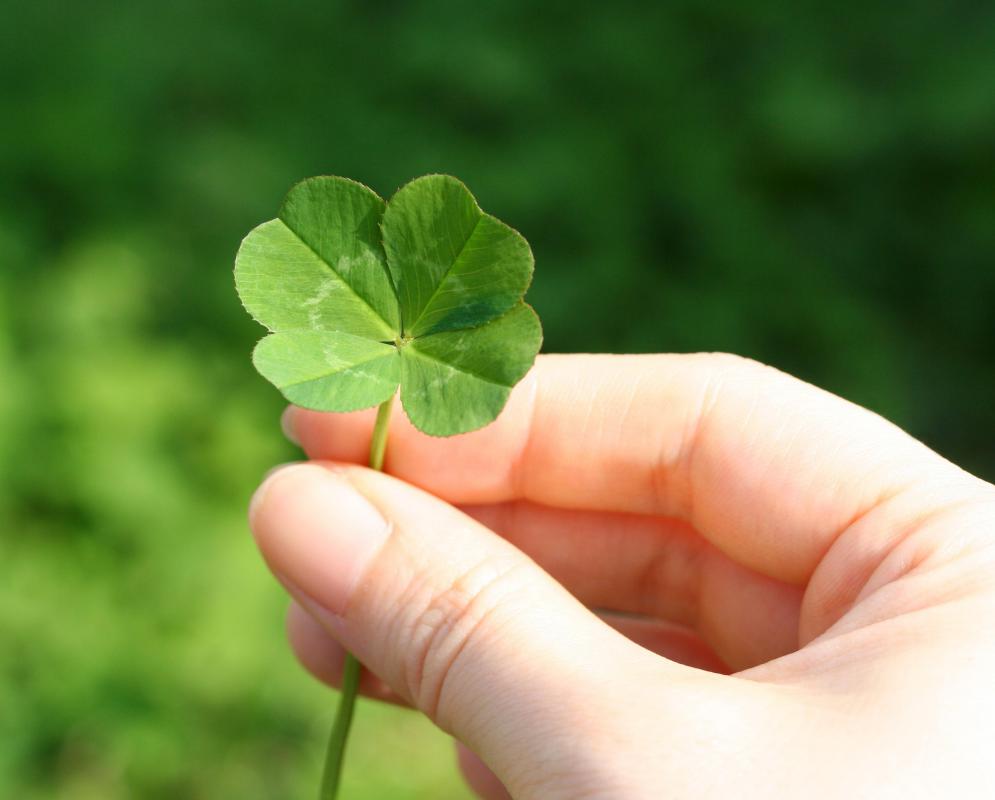
The Celts held the four-leaf clover as a talisman of good luck, while the Chinese would capture a live cricket and keep it in a box made of weeping willow wood. The pentagram, the cross, and the ankh are also examples.

In some instances, such an object or symbol is adopted for negative purposes. The swastika that Adolph Hitler chose as the Nazi Party emblem in World War II, for example, was an ancient talisman depicted throughout history as a symbol of good luck, appearing in cultures the world over. In many regions, it remains a positive symbol, but in the West, its more recent history overshadows its roots.

Another co-opted symbol is the pentagram, which many today associate with Satan worship. It is actually a symbol that dates back 5,000 years to Mesopotamia. Its first associations included angles, directions of orientation, the five closest planets, and the “classic five elements” of earth, air, fire, water, and divine being. Wiccans continue to use the pentagram as a positive image believed to be representative of the divine nature of earth elements.

Many people carry, wear, or own a talisman, but are unaware of it. The lucky penny that someone saves on the dresser top, the amulet that’s never taken off, granddad’s pocket watch, and a photograph kept in a wallet might all fulfill this role. Even something as mundane as a “lucky mousepad” can be one to a gamer or coder.
In the tradition of Native American Animal Medicine, an animal can also be a talisman. The appearance of a fox at the start of a hunt would likely be perceived as an auspicious sign by many tribes, as Fox medicine protects those away from home and allows them to blend into their surroundings in order to watch without being seen. In modern Western society, animal companions and the appearance of wild animals, such as an eagle or owl, raccoon, possum, or squirrel, might each have special meaning to the observer.

For some, a ritual verse becomes a talisman, such as the regular recital of a short prayer, incantation, or affirmation. Even the purposeful statement each morning, Today is going to be great! can serve this purpose. It is probably safe to say that a person without a single object or symbol of protection and luck in his or her life is rare.
AS FEATURED ON:
AS FEATURED ON:









-
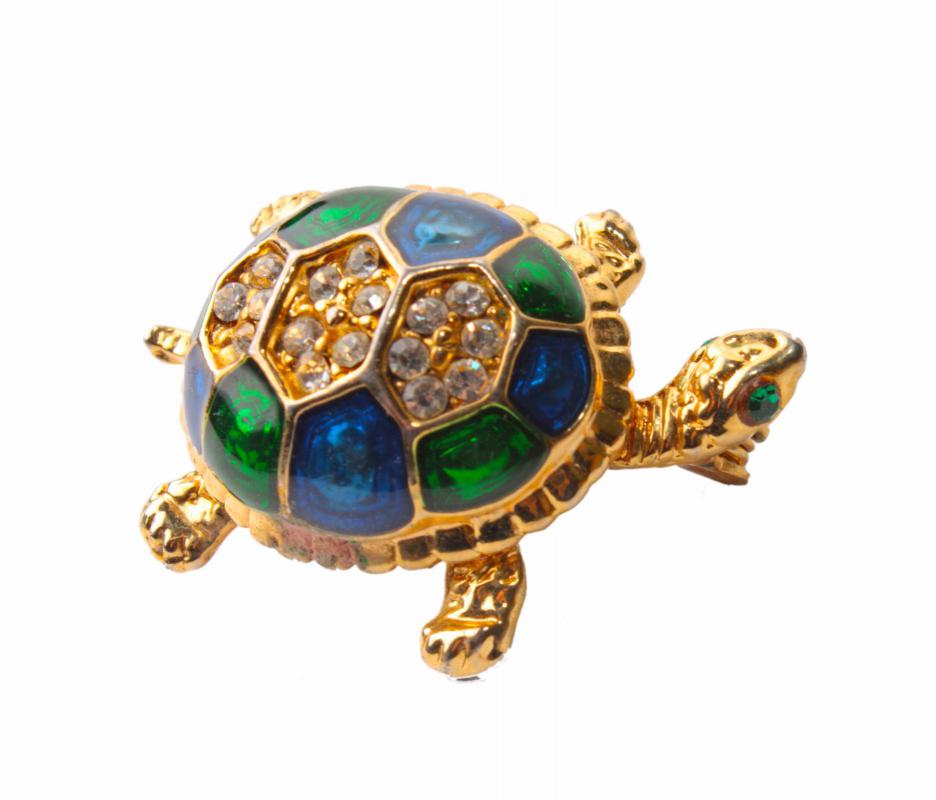
![A brooch in the form of an animal may serve as a talisman.]() By: a9luhaA brooch in the form of an animal may serve as a talisman.
By: a9luhaA brooch in the form of an animal may serve as a talisman. -
![In Celtic tradition, the horseshoe and four-leaf clover are talismans thought to bring good luck.]() By: AnykaIn Celtic tradition, the horseshoe and four-leaf clover are talismans thought to bring good luck.
By: AnykaIn Celtic tradition, the horseshoe and four-leaf clover are talismans thought to bring good luck. -
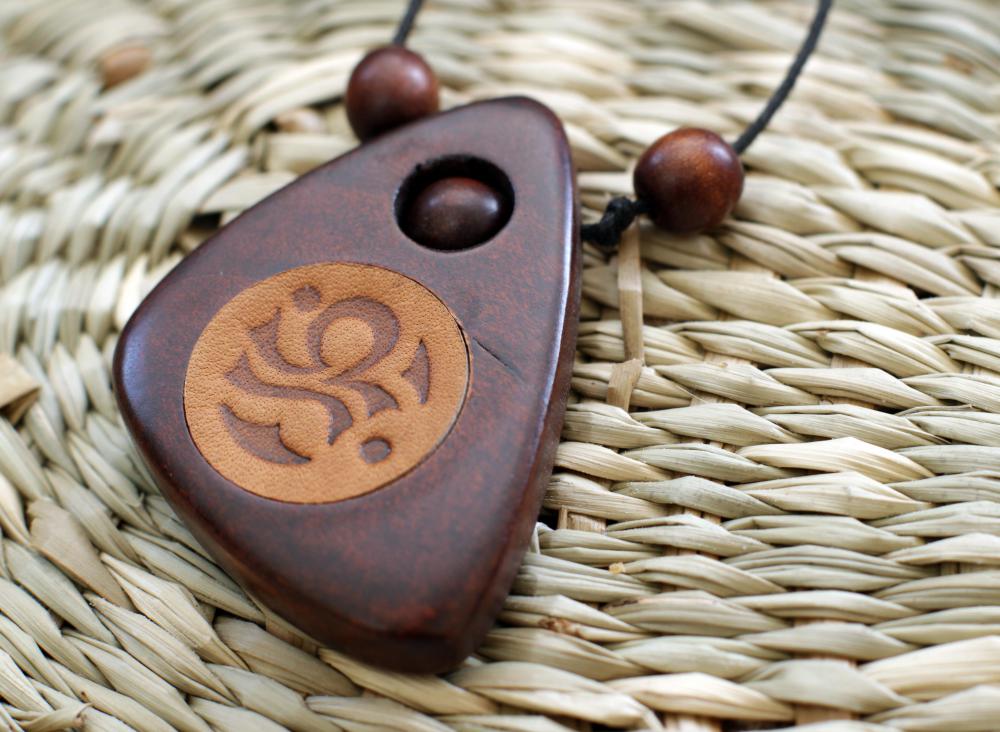
![A talisman is often worn on the body or kept in one's pocket.]() By: yarvetA talisman is often worn on the body or kept in one's pocket.
By: yarvetA talisman is often worn on the body or kept in one's pocket. -
![Wild animals such as raccoons and some forest rodents are considered talismans in American Indian culture.]() By: ElenathewiseWild animals such as raccoons and some forest rodents are considered talismans in American Indian culture.
By: ElenathewiseWild animals such as raccoons and some forest rodents are considered talismans in American Indian culture. -
![A captured cricket was good luck to the Chinese.]() By: viterA captured cricket was good luck to the Chinese.
By: viterA captured cricket was good luck to the Chinese. -
![Each sign of the zodiac has a talisman in the form of a gemstone.]() By: Arid OceanEach sign of the zodiac has a talisman in the form of a gemstone.
By: Arid OceanEach sign of the zodiac has a talisman in the form of a gemstone. -
![The four-leaf clover was seen as a talisman of good luck by the Celts.]() By: AKI's PaletteThe four-leaf clover was seen as a talisman of good luck by the Celts.
By: AKI's PaletteThe four-leaf clover was seen as a talisman of good luck by the Celts. -
![A St. Christopher medal may serve as a talisman.]() By: ZeeA St. Christopher medal may serve as a talisman.
By: ZeeA St. Christopher medal may serve as a talisman. -
![Honey is used as a talisman in some cultures.]() By: Sergii MoscaliukHoney is used as a talisman in some cultures.
By: Sergii MoscaliukHoney is used as a talisman in some cultures. -
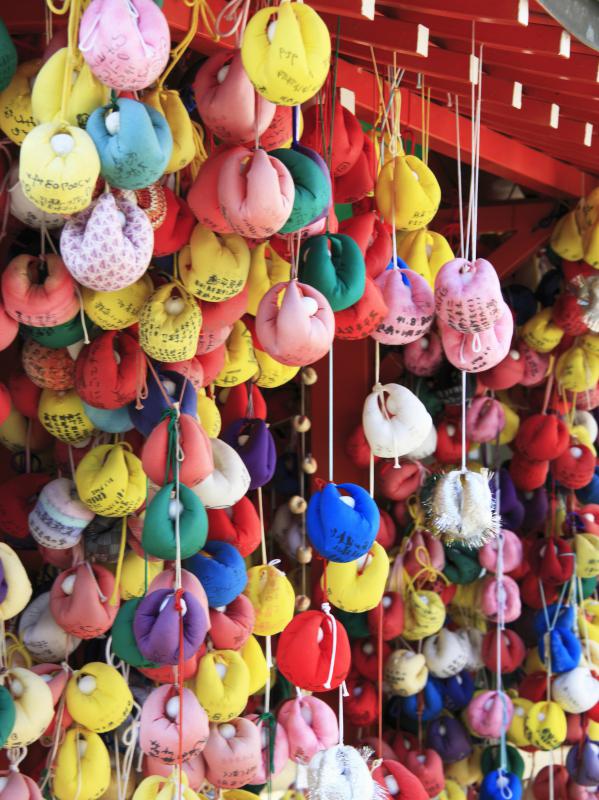
![In Japan, an Omamori amulet is a small silk bag that holds prayers inside.]() By: PaylessimagesIn Japan, an Omamori amulet is a small silk bag that holds prayers inside.
By: PaylessimagesIn Japan, an Omamori amulet is a small silk bag that holds prayers inside. -
![The swastika was an ancient tailsman symbolizing good luck, but was adopted by the Nazis during World War II.]() By: nyiragongoThe swastika was an ancient tailsman symbolizing good luck, but was adopted by the Nazis during World War II.
By: nyiragongoThe swastika was an ancient tailsman symbolizing good luck, but was adopted by the Nazis during World War II.







Discussion Comments
When "true" believers wear the cross, it is a symbol for what Jesus paid for them on the cross and what we now have. Our sins are forgiven as Jesus took them and gave us His righteousness. It is not a "good luck" charm or 'talisman" as said earlier. Luck is not of God, as He is our protector if you are saved. If you do not have Jesus, then you do not have that protection.
When I was younger, my cousin was over to visit. My parents left him, me and my brother alone. I was 16, my cousin was 14 and my brother was 12 years old. The power was out because they were working on it in our neighborhood and it had been out for hours.
We got bored because we couldn't watch T.V., so to entertain ourselves, we rummaged through my dad's knick-knack drawer. He had his old marijuana pipes from the 70's and beads and other useless junk and I found this large coin. It had a pentagram on one side and three words in Latin on the other. The instructions around the the words said, “Read aloud and make a wish.” I thought it was stupid, but we were bored as all get out. So we were all sitting in the living room on the floor. I read the words and my cousin says, "O.K. Now make a wish.” I thought it was stupid and a joke anyway, but I read the three words (which I don't remember and even if I did wouldn't dare recite again). I said "O.K. I want the power to come back on right now!” And bam! Just like that, all the power in the house came back on: the T.V., all the lights in the house and the microwave went beep! It scared the crap out of all of us. My heart literally jumped into my throat. But we were excited as hell because we were kids and were able to watch TV now.
I forgot where I put that coin and later my cousin left. After that day, I had nightmares and thought I saw weird little things running by, about knee-high, out of the corner of my eyes and when I'd turn my head to see them they'd be gone.
Ten years went by and I gave my cousin a ride home from work and that night came up and I swear to you, he said, “Yeah, I remember that and dude,I didn't want you to think I was crazy but when you reading and got to that second Latin word, I swear I heard dogs growling coming from your hallway!” Has anyone else ever heard of a coin that looks like that? To me, it was a trap or trick to promise to give the person who finds it a wish while deceiving them into opening a door to somewhere else!
I have a pendent I no longer wear because it contains lead. It's lost in a box in my storage now! I bought it at a goodwill store. It has a strange image of the triangle with three three-leaf clovers at the corners. It brings me peace with one side out and anger with the reverse side out. The second side is like the heaves circles with latin inscriptions. Some things are best not understood. I accept it for what it is! Good or evil, it's my responsibility! I think of it as balance and I am it's keeper!
I never realized that a talisman was such a simple everyday thing that most people have. I suppose that a so-called lucky or favorite number could be a talisman also.
My husband and I have a favorite number, that seems to come up often. We joke about it being a good sign, but I suppose that it actually has become a sort of comfort. When something is associated with that number, we feel peace over it.
So if practically any object can be considered a talisman, then what is the requirement or threshold to know that it is one? Clearly a wallet or lip gloss is not a talisman just because we carry it with us all the time. Also, is it enough that an object has a meaning or symbolizes something?
I read an article that talked about how stones have become a Palestinian talisman. Apparently, Palestinian youth now carry a rock in their pockets all the time. They don't carry it because they are going to throw it at someone but rather to remind them of their struggle and what they are fighting for.
I guess emotions play a big part when it comes to talismans. I think if the object didn't trigger some sort of an emotion or a reaction, then it would be a random object and not a talisman. What do you guys think?
I needed to give my students an extra credit opportunity so I asked them to choose a house of worship that they had never been to and we organized a Saturday trip. They chose a Hindu temple and the temple closest to our school happily agreed to host us.
The kids and I were taken by surprise when we saw the swastika in the very entrance of the temple. Our host explained that this is a very auspicious and important symbol of Hinduism and is believed to bring peace and good luck!
The Hindu swastika is a little different, it had a dot in each of its quadrants, but the shape was the same. It was a good lesson for all of us. It showed that even the same talisman might have different meanings and symbols attached to it.
When I visited Greece and Turkey, I saw the evil eye beads, jewelry, key chains and ornaments sold everywhere. I had seen some jewelry with with evil eye beads in the U.S. but didn't know that it had a meaning.
I gifted my friends evil eye key chains and jewelry and they immediately thought that it's a bad thing. It's not! It's called an "evil eye" I think because it was directly translated into English. In Turkey, they called it a "nazarlik." "Nazar" actually means a look. They believe that these beads in the shape of an eye will protect from people who have evil looks, that is, jealousy.
It is believed that jealous looks can make people sick or cause them to have an accident. I think that there might be some scientific truth to this. If you think about these looks as being negative energy due to negative thoughts.
I saw the evil eye beads especially worn by women and children. A baby I saw had a little one attached to her as well. The evil eye is an interesting talisman. I'm not sure if I believe in it, but I think it looks really cool as jewelry. I have a necklace and earrings with the evil eye beads. If it really does protect me, then that's even better!
People might think of a talisman as being something superstitious, but even wearing a cross every day, as many Christians do, is an example of a talisman to help bring the wearer peace and faith. Wedding rings could also be seen as such, since people wear them as symbols of their devotion to their spouses and their hopes for good marriages.
Post your comments