
At WiseGEEK, we're committed to delivering accurate, trustworthy information. Our expert-authored content is rigorously fact-checked and sourced from credible authorities. Discover how we uphold the highest standards in providing you with reliable knowledge.
What is a Straw Poll?
A straw poll is an informal opinion survey. The term is thought to have come from an 1800s American farmland practice of tossing straw in the wind to test its direction. By the 1820s, some American newspapers included informal surveys of public opinion as a way of testing the direction of the political "winds."
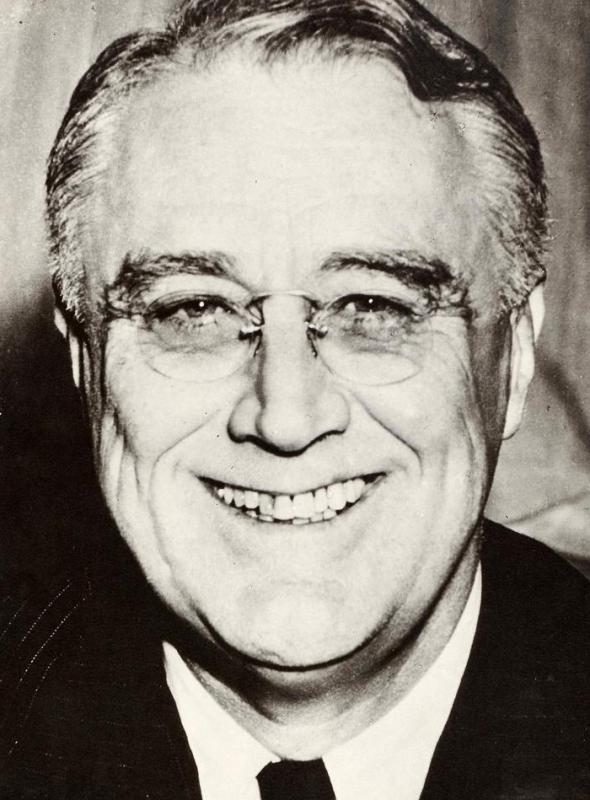
Probably the most famous straw poll was the presidential one conducted and published in 1936 by an American magazine called The Literary Digest. The Digest's poll results had many people thinking that Democrat Franklin Delano Roosevelt would lose the election, but instead he won by a large majority. The magazine's problem had been that their mailing list, which they used for their poll, was made up of names from motor vehicle registries and telephone books only. The names on that list did not cover the many Americans of that time who were too poor to have either a car or a telephone. The oversight caused the Digest to go out of business soon after.

Interestingly, advertising researcher George Gallup was able to accurately predict Roosevelt's huge victory. He created much credibility for his company, The American Institute of Public Opinion, by also accurately predicting that the Digest's poll would be flawed and cause the magazine's downfall. The pollster, with his Gallup Poll, later became a household name.

In the age of the Internet, virtual straw polls are common. Online versions of television news stations and newspapers often have daily non-scientific polls on various topics. Organizations sometimes put one on their website to give them some idea of the number of members interested in an event. For example, a poll asking how many members would be interested in getting together for a meeting at a certain place would help the organization decide whether the numbers would warrant holding the meeting there.
AS FEATURED ON:
AS FEATURED ON:









-
![An informal opinion survey is referred to as a straw poll.]() By: Peter AtkinsAn informal opinion survey is referred to as a straw poll.
By: Peter AtkinsAn informal opinion survey is referred to as a straw poll. -
![A famous straw poll published by The Literary Digest predicted Franklin Delano Roosevelt would lose reelection in 1936.]()
A famous straw poll published by The Literary Digest predicted Franklin Delano Roosevelt would lose reelection in 1936.

Discussion Comments
Polling has taken its toll on all aspects of society now through mass media. Take, for example, all the reality show winners are selected based upon the polling done around the world. Polling is everything now. People have forgotten how to make their own decisions and have to depend on other persons' poll opinions. Sad but true.
Cafe41-Election news is always fun to listen to. It is important however, to take the polls with a grain of salt.
In the 2004 Presidential election, there was exit polling done that indicated that the majority of the people polled voted for John Kerry when in reality the results went the other way and President George W. Bush was reelected by a 5% margin.
Also, there has been some data to suggest that some election polls are biased by oversampling the registered Democrats and under sampling the Republican voters. This is why online straw polls or any polls for that matter do not always represent the truth.
I think the most accurate pollster is Scott Rasmussen. His reports to my knowledge have never been wrong.
Sunshine31-I agree with you. His biggest problem is the fact that he passed a local version of the health care bill. The health care bill faces about a 70% opposition rate among the American people so it is a tough sell for the American people because Romney care is also thought to be a financial failure in Massachusetts.
This is the single biggest issue with the American people and it would be hard for him to defend his record when the majority of Americans are opposed to this legislation. This is what the Romney straw poll does not demonstrate.
The GOP straw poll conducted earlier this year ranked Mitt Romney as the top choice for the Republican presidential candidate spot.
Rand Paul, son of Ron Paul came in a close second and Sarah Palin and Newt Ginrich tied for third place. This presidential straw poll is not entirely accurate because it was done early in the year and the voters are more conservative than the likely voters.
I think that the Republican straw poll does mention many of the same names that people are talking about but Mitt Romney has a lot of baggage.
Post your comments