
At AllThingsNature, we're committed to delivering accurate, trustworthy information. Our expert-authored content is rigorously fact-checked and sourced from credible authorities. Discover how we uphold the highest standards in providing you with reliable knowledge.
What is a Storm Surge?
A storm surge is a high flood of water caused by wind and low pressure, most commonly associated with hurricanes. It is the most deadly aspect of a hurricane, responsible for 90% of deaths during hurricanes. Storm surges are different from tidal surges, which are violent surges caused exclusively by the tidal shift in sea level.
A storm surge is primarily caused by the extremely high winds which accompany a hurricane. This wind pushes the water rapidly, building it up into a huge wave. At the same time, the low pressure caused by a hurricane also causes the water level to rise up in the lowest-pressure spots and to sink in areas of higher pressure, exacerbating the wave buildup caused by the winds. Additionally, the shape of the ocean floor may affect how high the waves of the surge are when they reach land.

It is not uncommon to see a storm surge in excess of 18 feet (6m), a wave that can potentially cause dramatic damage. The largest recorded one was in Australia in 1899, which reached heights of 43 feet (13m). In the United States in 2005, storm surges associated with Hurricane Katrina reached 30 feet (9m).
In the United States and many other countries, storm surges are not the primary cause of death associated with hurricanes. In fact, in the past twenty years, just over 1% of hurricane-related deaths in the United States have been caused by them. The majority of hurricane deaths in the United States come from inland flooding. In other parts of the world, however, virtually all hurricane-related deaths are a result of storm surges. Bangladesh is the area in the world most affected by storm surges, with over a hundred on record. These are responsible for hundreds of thousands of deaths in the Bangladesh area alone.

There is a growing concern in areas such as the United States' Gulf Coast region about the problem of public storm surge awareness. Since the United States has not been hit dramatically by surges since the 1920s, most of the public is unaware of the true dangers of this phenomena. With the growing frequency of hurricanes in this region of the world, there is a push to teach awareness and preparedness before events such as the 1900 Galveston hurricane storm surge, which killed over ten thousand people, are repeated.
Frequently Asked Questions
What exactly is a storm surge and how does it form?

A storm surge is a rise in sea level that occurs during a tropical cyclone, hurricane, or other intense storm. It's caused by the storm's strong winds pushing water towards the shore, which can lead to significant coastal flooding. The severity of a storm surge depends on the storm's intensity, speed, size, angle of approach to the coast, and the shape of the land it encounters.
How does a storm surge differ from a tsunami?

While both storm surges and tsunamis involve large volumes of water moving onto land, their origins are different. A storm surge is primarily wind-driven and associated with atmospheric weather events like hurricanes. In contrast, a tsunami is caused by underwater disturbances, such as earthquakes, volcanic eruptions, or landslides, resulting in a series of ocean waves with longer wavelengths.
What factors can increase the impact of a storm surge?
The impact of a storm surge can be amplified by several factors. A shallow continental shelf can cause more water to be pushed onshore. High tide can coincide with the surge, creating a "storm tide" that increases the water level even further. Additionally, the storm's angle of approach, speed, and size, as well as local geographical features, can all contribute to the surge's severity.
Can we predict when and where a storm surge will occur?
Storm surges can be predicted with reasonable accuracy when a storm is approaching. Meteorologists use models to forecast a storm's path, intensity, and the potential for surge, taking into account local topography and bathymetry. Warnings are issued to at-risk areas, allowing for evacuation and preparation. However, the exact timing and impact can vary based on the storm's changes.
What are the potential dangers of a storm surge?
Storm surges pose significant dangers, including life-threatening inundation, powerful currents capable of destroying buildings and infrastructure, and erosion of coastlines. They can lead to widespread flooding, which compromises fresh water supplies, disrupts sanitation systems, and displaces populations. The immediate and long-term effects on communities and ecosystems can be devastating.
How can coastal communities prepare for a storm surge?
Coastal communities can prepare for storm surges by developing emergency response plans, constructing barriers like levees and sea walls, and restoring natural buffers such as mangroves and wetlands. Public awareness campaigns and evacuation plans are crucial. Residents should heed evacuation orders, secure property, and have an emergency kit ready. Ongoing research and improved forecasting also play key roles in preparedness.
AS FEATURED ON:
AS FEATURED ON:









-
![The storm surge from Hurricane Katrina destroyed many homes in New Orleans' Ninth Ward.]() By: Brian NolanThe storm surge from Hurricane Katrina destroyed many homes in New Orleans' Ninth Ward.
By: Brian NolanThe storm surge from Hurricane Katrina destroyed many homes in New Orleans' Ninth Ward. -
![Strong hurricanes may cause surges that can raise coastal water levels by several feet.]() By: razlomovStrong hurricanes may cause surges that can raise coastal water levels by several feet.
By: razlomovStrong hurricanes may cause surges that can raise coastal water levels by several feet. -
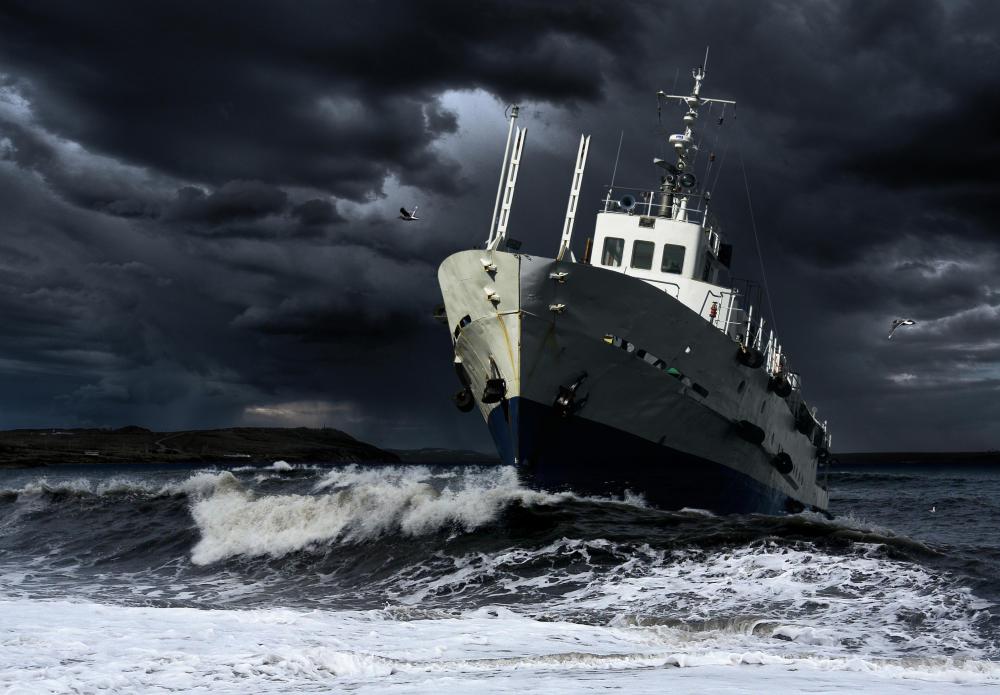
![A storm surge is especially dangerous for mariners.]() By: snowmakerA storm surge is especially dangerous for mariners.
By: snowmakerA storm surge is especially dangerous for mariners. -
![The majority of hurricane deaths in the United States come from inland flooding.]() By: annaveeThe majority of hurricane deaths in the United States come from inland flooding.
By: annaveeThe majority of hurricane deaths in the United States come from inland flooding.



Discussion Comments
Thank you for your help. I learned a great deal as I did not know much about storm surge before I read your article. Could you possibly go into greater detail about tidal surges and explain more about how they are different from a storm surge?
@anon62755: Thanks for your answer. --griffy2
The National Hurricane Center website has a SLOSH model output. It plots the depth of surge water over land areas.
Note that there are actually two storms in a hurricane: the wind storm and the "surge storm". The largest surges can occur very far away from the strongest winds of the hurricane.
Where and when the winds hit are not always where and when the surge hits. Some people may need to evacuate to escape surge even though the winds at the time may be of low category. Some people only evacuate when they think Cat 3 winds or higher hit their coastline. This could be a mistake because they could be caught by the surge.
The NWS is looking into ways to make clear the distinction between the surge vs. wind threats.
I think that judging by the power of the hurricanes due to global warming and using the equation x=m*c=z*y. There is a 83.5 percent chance that you will be affected badly by a hurricane. There you go Griffy2
how much does a given change of barometric pressure affect the height of the ocean?
The Question was:
Is there any way to "equate" or "convert" storm surge - the vertical height of water - to the distance inland from the shoreline the water will travel? Example: if a 25 foot storm surge hits Galveston, TX,
My question is: I live 11 miles from the Atlantic Ocean and my elevation above sea level is 130'. With the Hurricanes as they are now more powerful. What are the chances of a Storm surge traveling that far inland? Thanks, Griffy2
Is there any way to "equate" or "convert" storm surge - the vertical height of water - to the distance inland from the shoreline the water will travel? Example: if a 25 foot storm surge hits Galveston, TX, what distance would we expect that water to travel from the "normal" water line? I realize elevations, shore and bottom shapes, etc., play a role in that calculation, but is there any standardized factor or localized factor for such measurements? Thanks.
Post your comments