
At TheHealthBoard, we're committed to delivering accurate, trustworthy information. Our expert-authored content is rigorously fact-checked and sourced from credible authorities. Discover how we uphold the highest standards in providing you with reliable knowledge.
What is a Spirited Child?
 Tricia Christensen
Tricia Christensen
Tricia Christensen
A spirited child may be also called a challenging child, high needs child, or difficult child. "Spirited child" is often more politically correct, especially over the term “difficult,” which has negative connotations. This child is truly a challenge to parents, because even parents with older children may find themselves stumped by their child's behavior and reactions. Frequently, one can see a young child, even an infant, who resists efforts and comforting, and cries often, even after all needs have been addressed and the infant is being held.
There are several foundational books on raising a high needs child. These include: Raising Your Spirited Child by Mary Sheedy Kurcinka, Living with the Alert Active Child by Linda S. Budd, The Difficult Child by Dr. Stanley Turecki, and Parenting the Fussy Baby and the High Needs Child by Martha Sears and Dr. William Sears. Each book defines the high needs child in a slightly different manner, and offers different suggestions for coping with and helping this child develop his or her full potential. Some parents use a combination of these four books and others when they recognize their child as spirited.
Some characteristics that identify the spirited child are the following:
- Intensity — meaning greater drama, easier cry response, making more demands on parents.
- Persistence — gets committed to and stays with ideas, may argue points with parents long after an issue is settled.
- High Energy Level — also sometimes labeled hyperactive, but many who write on this disorder do not want the term hyperactivity confused with the disorder.
- Sensitive — may be overly sensitive to sounds, slight discomfort, pictures, and stimuli of all sorts.
- Difficult Adaptability — may react with greater emotion to changes like attending school, or moving to a new house.
- Moody — may be more prone to get cranky, but may also be susceptible to and more perceptive of the moods of others.

More characteristics identify the spirited child, but not all of these children exhibit all characteristics. Some of the key aspects outlined by the Sears family also apply specifically to infants, who may be uneager to cuddle or be close to people, cry more frequently, wake more frequently, be unsatisfied with anything you try, and may have challenges soothing themselves. In all cases, the authors of these books suggest that being aware one has a high needs child may prove a relief to parents.

Some parents with a high needs child may find themselves drained, worried about the child’s future, insecure in their own parenting abilities and frustrated with or angry at the child. It can be fairly easy to either blame one’s self or the spirited child or baby for having such extensive needs and making significant demands on one’s time. To this end, many mid-size towns and large cities have support groups specifically geared toward parenting the child. There are also many Internet resources on the subject, and naturally, the books mentioned above.

There is also some question regarding whether the high needs child is actually a child with attention deficit disorder (ADD). In most cases, especially in very young children, there is no way to determine this, and the matter is of some debate. Further, it is quite unusual to medicate an infant for ADD or ADHD. Even those who support using stimulants to treat ADHD generally don’t recommend these to children younger than five years old.

Instead, the parent with the challenging child learns most by getting to know the child. Strategies in books or derived from therapy and support groups may be tried, and some will undoubtedly work for the individual child. Additionally, one learns to cope with a higher degree of expressed dissatisfaction on the part of the child without blaming oneself or parental abilities.

Most experts also point to the many upsides of raising a challenging child. They may be highly artistic, very intelligent, intensely logical, and goal-oriented. Their ability to express themselves, loud and often, may ultimately translate in adulthood to being in touch with one’s own emotions. Further, this child can be greatly compassionate, especially as he or she gains maturity, making them valuable and active members of their community.
Tricia Christensen
Tricia has a Literature degree from Sonoma State University and has been a frequent TheHealthBoard contributor for many years. She is especially passionate about reading and writing, although her other interests include medicine, art, film, history, politics, ethics, and religion. Tricia lives in Northern California and is currently working on her first novel.
Learn more...
Tricia Christensen
Tricia has a Literature degree from Sonoma State University and has been a frequent TheHealthBoard contributor for many years. She is especially passionate about reading and writing, although her other interests include medicine, art, film, history, politics, ethics, and religion. Tricia lives in Northern California and is currently working on her first novel.
Learn more...AS FEATURED ON:
AS FEATURED ON:


-
![A spirited child may prefer strenuous play.]() By: Elena StepanovaA spirited child may prefer strenuous play.
By: Elena StepanovaA spirited child may prefer strenuous play. -
![Some spirited children suffer from undiagnosed attention deficit hyperactivity disorder (ADHD).]() By: DNF-StyleSome spirited children suffer from undiagnosed attention deficit hyperactivity disorder (ADHD).
By: DNF-StyleSome spirited children suffer from undiagnosed attention deficit hyperactivity disorder (ADHD). -
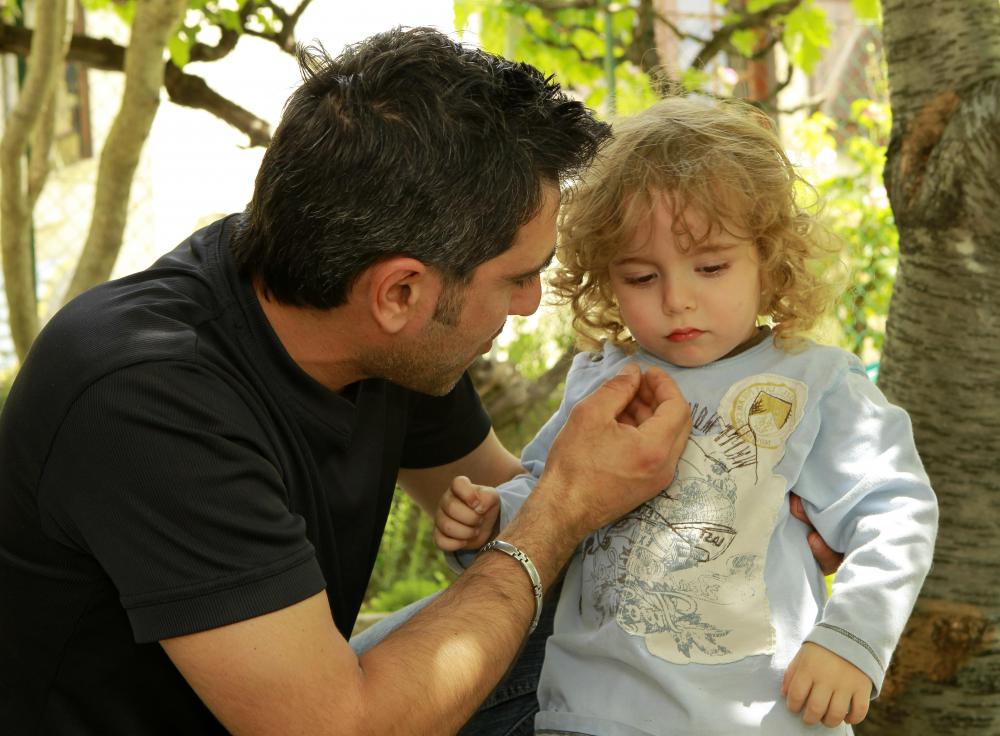
![A "challenging" toddler may cry more frequently and easily than his peers.]() By: Pix by MartiA "challenging" toddler may cry more frequently and easily than his peers.
By: Pix by MartiA "challenging" toddler may cry more frequently and easily than his peers. -
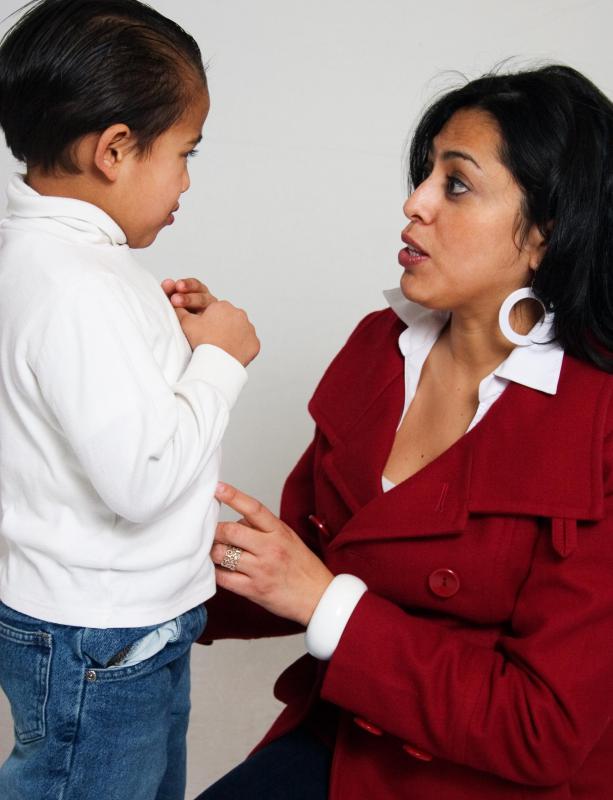
![Spirited children may be difficult to discipline.]() By: Monart DesignSpirited children may be difficult to discipline.
By: Monart DesignSpirited children may be difficult to discipline. -
!["Spirited child" is a more politically correct term than "difficult child."]() By: Naty Strawberry"Spirited child" is a more politically correct term than "difficult child."
By: Naty Strawberry"Spirited child" is a more politically correct term than "difficult child."



Discussion Comments
If you think you have a spirited child or are a spirited adult, please read and implement the methods discussed in the book "Simplicity Parenting" by Kim John Payne.
I started an online support group on facebook if anyone is interested in joining. I do know there was also a support group in yahoo groups, but I am not sure if that is still there anymore.
Look for High Need Child / High Spirited Child
Dear Frenchjannu: Read the book "The out of sync child". It sounds like your little boy has sensory processing disorder. I hope this helps.
I recently bought the book, "Raising Your Spirited Child". By reading just the first few pages, I discovered that my 4.5 year old son is in fact, spirited. This book is great! It is so relatable and I highly recommend it if your child possesses any of the characteristics pointed out above.
I am realizing that my sons' intense reactions are, most of the time, out of his control. I am learning new ways to cope. Get the book!
I need advice. please forget my english, which isn't my native language. I've got a little boy who from day one has been 'challenging'. I suspect he could be spirited as he fits all the characteristics. Where I am still questioning, my little boy has also a language delay and that is not mentioned in the description above. Also, he is four, but still not potty trained especially with poo.
He is bright, and he has learned to recognized shapes, numbers and was very fast when doing puzzles at a very young age. He is very logical as well. But he is also all over the place and is easily distracted. He has that over confidence and nothing can stop him when he wants to try something.
He is extremely friendly with children and adults. This can be frighting for me because you don't know people's reactions. My family would say he has a temper. Sometimes he can throw a huge tantrum for something silly as dropping his fork or simply not managing what he wants to achieve. Also, he is very sensory and sensitive to texture and taste. He would chew on cardboard, plastic, wood. He mixed paint with glue and add a kitchen towel to that, and it was very, very messy. But he hates having paint on his finger. Certain noises like the vacuum or loud music can upset him. He seems not as mature as his peers, but is very compassionate when others are sad. Finally, he loves contact play and touching hair and faces. But especially when he gets tired, he can be very, very rough to kids coming into his space.
Could my little boy be spirited? Thanks for reading my (long) post.
I am extremely relieved to find this article.
It is almost a relief to find that my husband and I are not the only parents trying to cope with a spirited child. Our daughter is six and it does not get easier. although, now I can look for a support group.
Thank goodness i have finally found some answers to my 5 year old daughter's perplexing behaviors. we also have been to a psychologist who seems to think our darling girl is socially/emotionally developmentally delayed, but this did not seem to 'fit'.
The characteristics of the 'spirited' child however definitely do and i am relieved i can now begin to help my daughter appropriately. i will be purchasing 'raising the spirited child' tomorrow.
My daughter is five and she is the fourth child in a family of all girls. She is very intense, demanding and perserveres at all costs.
She is exhausting mentally and emotionally. Our problems are 24/7 and the night ones really are problematic with major temper tantrums in the middle of the night. We have no idea how to handle the night tantrums. Suggestions?
If you are open minded, research the following terms "Starseed" and "Indigo Children". This way you can look at the situation from a "spiritual" point of view.
I have a four year old boy, who has never ending high energy, very smart, loves puzzles (can stay focused on one until its complete), obsessed with plumbing.
My parents recently returned from a month in Sweden and now my son acts as if they aren't routine anymore (he goes every second weekend for a visit)now he gets lonely for me and calls to come home.
He potty trained for pooping (no accidents) at less then two years old and peeing at two years and four months.
I'm wondering if he is spirited. I have been worried about adhd but spirited seems a gentler term.
What do you do about family that doesn't get what a spirited child is and seems set on telling me everything I'm doing with my spirited child is wrong?
I have come to understand that I have a spirited child. Most of this article is my son. I am excited to dive into the book and find out how to raise my spirited child and be happy at the same time.
I found out that I have been a spirited child for more than 40 years. I feel like I am so different from others, especially in the society. But I am working as a leader. It's no problem for me to be the leader but it's quite difficult for me to adjust myself to others. I am a single. Please advise which book I should read or any idea to be a better (more normal) people in the group.
I have read two of the four books and I am starting to read raising your spirited child workbook for reinforcement. I read Dr. Sears' book when my son was a very young infant and read the spirited child when me was in preschool.
Now he is in kindergarten and is currently misbehaving during class. Is he hyper? Yes, he is 'high-energy'! He is also very funny, sensitive, perceptive, and intense. He's a great kid but I don't always have the energy or tools to deal with his behavior so the resources are helpful.
I have only just heard about "spirited children" and my daughter has all the characteristics. how would I know for sure, though? I have been to doctors, counselors and a pediatrician and they all say it's a behavioral issue but it's not.
she loves routine, is so over the top emotionally and argues just like an adult, but at the same time she tries so very hard be be good.
I have been at my wits end so many times but can't seem to find anybody with remotely the same issues to talk to about what's going on. oh nearly forgot -- my darling daughter is just five and at kinder. can somebody point me in the right direction please?
My daughter, who is now 14 months, is very spirited. In fact, the labor and delivery nurse said she could identify her as spirited within five minutes of her birth (she screamed intensely and did not like the cream they put in her eyes).
Neither my husband nor I are spirited, so it's been quite a challenge. She had colic for five months, and now she has full temper tantrums if something isn't exactly to her liking.
But, as the article says, she's very smart and clever, and she is definitely in tune with other people's emotions.
While this article alone doesn't provide serious depth on the subject, it does agree with other articles I've read on the subject.
Like anon35893, this description hit the nail squarely on the head. Our son is five, and the issues/struggles -- everything from hypersensitivity to clothing and daily battles about going to kindergarten -- finally make sense.
This is not simply a "soft name"; it is the first clearly defined answer many parents, myself included, have been able to find! Now that I know what's going on, I feel confident that we'll be able to find ways to help our child.
This person: "Unfortunately I tend to think that the term "spirited" child is just a nice way of saying hyper, disobedient or possibly a sensory challenged child" doesn't have spirited children.
I have two, and am spirited myself (oh my poor husband). We are different. I am different and always have been. The world is different. There is a lot of disobedience and there is no excuse for it, but that's not what being spirited is about.
You need to read more about it if someone in your life has these characteristics. It's more to do with the emotional overload that hits you and leaves you unable to deal with the world rationally.
Kind of like horrible PMS - for lack of a better example, but that's just one aspect of it.
The first poster seems to assign blame to the child or parent, which is both wrong and an ineffectual approach to handling a spirited child. To a parent with a "normal" child it may appear that the spirited child is imply disobedient. We have 3 children -- same parents, same rearing, but our middle child has always been "spirited." She requires more of our physical and emotional time than our other children, as well as more routine. However, she is also incredibly loving, bright and absolutely hysterical. Parents need to learn how to parent each individual child and learn not to judge others when their experience is limited to only their children.
Unfortunately I tend to think that the term "spirited" child is just a nice way of saying hyper, disobedient or possibly a sensory challenged child. While I do believe these issues exist, I take issue with this term because I don't think it ends up helping the child in any way to simply give these issues a soft name.
I was trying to figure out why my daughter looked like she was having all these issues but really this is her one issue.
This article sure hit the nail right on the head. That's my son to the tee!
Post your comments