
At TheHealthBoard, we're committed to delivering accurate, trustworthy information. Our expert-authored content is rigorously fact-checked and sourced from credible authorities. Discover how we uphold the highest standards in providing you with reliable knowledge.
What is a Spiral Fracture?
 Mary McMahon
Mary McMahon
Mary McMahon
A spiral fracture is a type of bone fracture which is caused by a twisting force. They are also referred to as torsion fractures, in a reference to the forces involved to create a spiral fracture. It can be difficult to treat this type of fracture because the break is helical. Treatment can involve months in a cast and possible surgery, depending on the location of the break, the general health of the individual, and the specific circumstances involved in a fracture.
A classic example of a spiral fracture is a fracture incurred while skiing. Skiers lock their feet into the skis in sturdy ski boots, so if a ski breaks or the skier loses control and the ski rotates, the leg may be violently twisted in one direction, creating a textbook spiral fracture. As anyone who has broken a leg skiing knows, this type of fracture can be extraordinarily painful, and it typically quashes any skiing activity for several months, at least.

To diagnose this kind of fracture, a doctor will take x-rays of the site and examine them. The x-rays will confirm that the issue is a fracture, and a close examination of the image can provide information about what kind of fracture is involved. Depending on the situation, the doctor may recommend surgery to pin the bone, ensuring proper healing in the event of a severe break, or the limb may simply be set in a cast to hold it still while the fracture heals.

Significant torsion is not required to create this type of fracture, especially in the case of people with fragile bones due to age or poor diet. In the event that a person does not have immediate access to medical care, as might be the case when camping, any suspected fracture should be immobilized with a splint to keep the patient comfortable while being transported to a hospital.

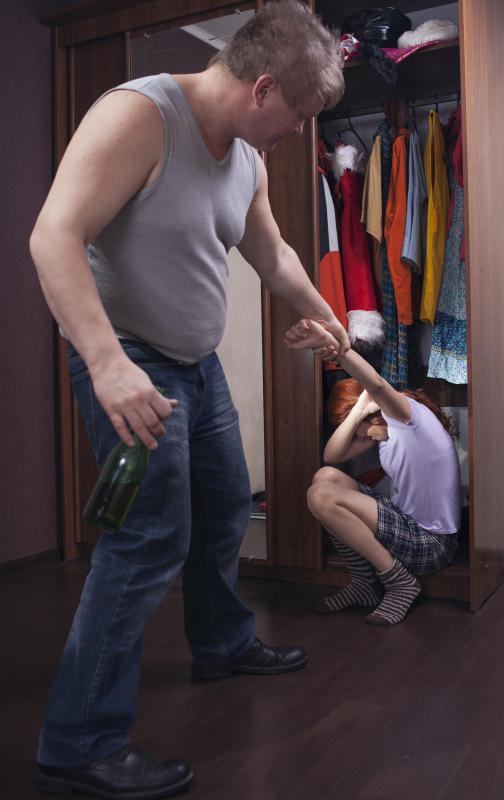
Historically, these fractures have been considered an indication of abuse, especially in children; the suggestion is that the twisting motion necessary could be caused by something such as a parent or guardian grabbing and twisting the arm or leg of a child. As a result, when medical professionals see such fractures in children, they may report the injury to child protection authorities. It is important to note that these fractures in children can be the result of many causes other than physical abuse, however; the bones of children are delicate, and may be more susceptible to this type of injury caused by simple accidents. Studies suggest that an isolated spiral fracture alone is not necessarily an indication of abuse.
Mary McMahon
Ever since she began contributing to the site several years ago, Mary has embraced the exciting challenge of being a TheHealthBoard researcher and writer. Mary has a liberal arts degree from Goddard College and spends her free time reading, cooking, and exploring the great outdoors.
Learn more...
Mary McMahon
Ever since she began contributing to the site several years ago, Mary has embraced the exciting challenge of being a TheHealthBoard researcher and writer. Mary has a liberal arts degree from Goddard College and spends her free time reading, cooking, and exploring the great outdoors.
Learn more...AS FEATURED ON:
AS FEATURED ON:


-
![A spiral fracture can occur while a person is skiing.]() By: Silvano RebaiA spiral fracture can occur while a person is skiing.
By: Silvano RebaiA spiral fracture can occur while a person is skiing. -
![The bones of children are more susceptible to injury caused by minor falls.]() By: ivolodinaThe bones of children are more susceptible to injury caused by minor falls.
By: ivolodinaThe bones of children are more susceptible to injury caused by minor falls. -
![In some cases, a child with a spinal fracture may suffer from child abuse.]() By: Pix by MartiIn some cases, a child with a spinal fracture may suffer from child abuse.
By: Pix by MartiIn some cases, a child with a spinal fracture may suffer from child abuse. -
![Football players are susceptible to experiencing fractures.]() By: guerrieroaleFootball players are susceptible to experiencing fractures.
By: guerrieroaleFootball players are susceptible to experiencing fractures. -
![Spiral fractures may occur in situations of domestic abuse.]() By: Anatoly TiplyashinSpiral fractures may occur in situations of domestic abuse.
By: Anatoly TiplyashinSpiral fractures may occur in situations of domestic abuse.




Discussion Comments
My son is 6 months old. He wasn't putting weight on his left leg so we took him to urgent care and he had a left femur spiral fracture. My partner and I didn't know how this had happened. He had got his leg caught in the cot, however the consultants said the break doesn't match our description. The only other things that could have caused it are his jumperoo or our dog. He's with a family member at the moment. Did anybody else get their children back?
Does anyone know a doctor or social worker, etc., who can help in saying that a spiral femur fracture can be accidental and be caused by other things than physical abuse? I need help! My husband is being falsely accused of twisting my 8 month old daughter's leg and causing a spiral femur fracture. There is no bruising at all and he loves her to death.
Our family has been torn apart. Please, if you know any doctors or anyone who could help back up that it can be caused by other things other than abuse, please respond and put accidental spiral femur fracture at the top before you start commenting so I know it is an answer for me.
Thank you and to everyone else going through this: don’t give up!
My 4 and 1/2 year old had a mattress that was leaning on the wall fall on him causing a spiral fracture of his left femur. My sweet baby boy suffered so much.
He told the hospital what happened after we arrived and after they transferred us to the area trauma center, they reported it to Protective Children's Services. My other children were asked ridiculous questions and did not understand why.
This system must change. Not all children who get hurt are abused. I can't understand why they have social workers on staff in hospitals if they are not qualified to access a situation correctly. They should be held accountable for the false reports and making families go through situations that are clearly not needed. I understand some children need protection, but wasting resources on unfounded reports takes away the chance of saving a really abused child's life.
Please! If this posts, people, a doctor who specializes in Vitamin D deficiency has written articles on this. He is in San Luis Obispo, California. There are other doctors around the country too. This should not be happening. Many of these cases are vitamin D deficiency, not the fault of the parents or caregiver -- at least not intentionally. Please I hope they post this and it helps someone. Also, you can find a lot of information online.
For those of you who act like CPS workers are all just wonderful people, you're delusional. I'm an attorney who has worked with CPS. My husband is a minister.
Our son fell at daycare and ended up with a spiral femur fracture. He was almost three years old. CPS was called. By law, CPS must be called for any child under age 3 who sustains a serious injury. This CPS worker came to our house, asked a bunch of nosy questions, told us she was only investigating the daycare, and had the nerve to try and interrogate our little boy (not even three years old). I informed her that we would not allow him to be interrogated. Children in family court aren't allowed to give testimony until they are 14 years old unless the judge gives special approval. Our son wasn't even three yet! She copped a major attitude. She told our son's doctor that we refused to sign our son's medical release forms, which was a complete lie. And then, she went to our old daycare and asked a bunch of nosy, accusatory questions about us, even though she was only supposed to be investigating the daycare. That lady was a headhunter. She was out for blood.
I'm all for protecting abused children, but CPS workers ought to have the sense to discern which ones are abused and which ones have good, stable homes. Our experience was ridiculous.
Is it possible for a 13 year old male to be doing gymnastics on his bed, slip and fall on the floor and suffer a spiral fracture of the left forearm?
I've read a spiral fracture is caused by a twist and force motion; has anyone heard of it happening from a Jumperoo? My eight month old broke his femur while jumping (like crazy, as usual) in his Jumperoo. The doctors agree it was likely, but Child Protective Services have twisted the doctor's words and said it's not likely. My eight month old is in foster care until we can prove innocence. Only with DYFS are you guilty until proven innocent! Any information would be most appreciated. God bless!
@anon276257: when I saw your post I thought I'd forgotten I left a comment on this site. It's horrible how Child Protective Services can twist and distort the true story! I pray for anyone being abused by DYFS!
My 7 year old girl has a spiral fracture to her arm from walking back from school with our babysitter. Babysitter said she was running when she tripped and landed on her arm. I'm afraid CPS will be called.
The hospital visit was weird. They just put a temporary cast on and said we will call you in the next couple days to put the real cast on. Why not do it then? Also, she said she had to fax the medical papers to the fracture clinic. Weird because the fracture clinic is literally a 10 second walk from emergency.
Can they take her away from me for alleged abuse if I'm not even there? Please help. I can't sleep.
My seven month old grandson has a Fisher Price jumperoo (not the kind that hangs in a doorway). You are not to bounce flat footed in this thing, just bounce on your toes. He was bouncing flat footed and like a crazy guy on his right foot. I found out that my son-in-law leaves him in there for hours because he likes it so much.
One day, he stopped moving his leg and was fussy when you picked him up. They took him to the ER and were told that he fractured his femur. They are now being accused of child abuse and the child has been removed from the home.
I know that this isn't child abuse as they love that baby so much. Has anyone ever heard about using these jumpers (in particular the Fisher Price Luv U Zoo jumperoo) and sustaining any type of fractures?
I need some sort of info on this matter. A few days ago, we had an appointment out of town. We were heading back and we decided to stop at a Wal-Mart in the next town. My girlfriend's son has kernicterus, a form of cerebral palsy, and he has attachment issues when he is away from his mom and when in a store, if he doesn't get his way, he starts crying very loud. He is deaf and he doesn't know he is crying that loud.
I decided to take him to the car so nobody would have to hear the crying. Well, he likes to put his foot by the door so you can't shut it. This time. I made sure it wasn't in the way, but at the last second, he put his foot there and got his foot caught between the car seat and the door, causing a spiral fracture, but a small one -- less than an inch.
Now cps is involved and this is my worst nightmare. I have never gone through this and because he can't talk, the case is going to a forensic orthopedic doctor to determine if it was child abuse.
Please, I need some sort of feedback.
@lexchaos: O.K., then you may have something. If you can, get a copy of the newscast (maybe from the internet), and give it to your lawyers. Or they can subpoena a copy of it from the station.
If the reporter was going on something a doctor said, then you can still go after the doctor.
Something else: Since you were not arrested or charged, then the TV station saying anything without an arrest to back it up, could be construed as a HIPAA violation. That is, they violated your daughter's confidentiality by using her name and reporting on her medical condition. And even if they didn't use her name, but used yours, well, that's still very much a gray area.
Your attorney will just have to see the newscast in question to make a determination on what kinds of charges to file, but it does sound like you may have something actionable.
@amypollick: We were not arrested, nor were we charged. No one was quoted. They were just saying stuff, and then on top of that, the story wasn't even right. Not one bit.
@lexchaos: First, I am so sorry you are going through this.
Second, before you start suing the TV station, let me give you a little information. I work with the media too (newspaper), so I know a little about how they get their information. If you and your fiance were actually charged with child abuse, or a related offense, then that's public record and they have the right to air it on television. You could sue from now on and not collect, since this information is public record.
You mentioned they used the term "torture." If that was the name of the charge ("child torture in the second degree," for instance), then they are still off the hook since that was the official charge. The police are also not liable, since they charged you according to the criminal code in your state.
Having said all that, if the reporter used the word "torture" and it wasn't related to the name of the charge, and was not from a direct quote, then you may have something. If it was from a direct quote ("Dr. Smith said, quote, 'this was torture.'") then the TV station is still off the hook, *but* you may be able to get the doctor who used that term. A good defense attorney who has experience in slander cases could go after him for that.
I hope your daughter comes home ASAP. Good luck with this situation.
Oh my god. I took my five month old daughter to the ER to get her nose cleared out due to her being extremely congested. The nurse who was holding her down was so rough with her, she jerked her arms up over her head and everything. We got home about 2:30 a.m. and we laid her down. She woke up at 8 a.m., and I went to pick her up and I noticed she didn't want to move her left arm so I panicked and thought she had popped it out of place. The first thing I did was wake up my husband and call the doctor. Well, right off the bat we were accused of child abuse and
It was even on the news! They called it "child torture."
The spiral fracture wasn't even bad enough to put a cast on it, or at least I think it wasn't since they didn't treat her at all, nor did they give any instructions on how to take care of her. They were too busy wrongfully accusing my and my fiancé.
I want to know how this all ends. I want my daughter back and I would never hurt her. I see all of these posts and my heart breaks.
I have lawyers and picture proof that she was fine right up to the night we took her to the hospital, and video proof. I just want this to be over. DHR is telling me that all we need is proof that a spiral fracture isn't always just child abuse (the doctor is being evil) so we are getting a second opinion. I hope all of this ends soon and my baby girl can come home.
But being on the news when there were absolutely no signs of abuse, no bruising -- nothing – has
ruined my reputation. I am going to have to change my whole life just because this station wanted a freaking story!
Someone is getting sued when I get my baby back, but right now getting her home is my main concern.
My fiance and I are being wrongfully accused of child abuse! We had brought my daughter to the emergency room with a broken arm. We knew it was broken but had no idea how! She is 8 weeks old.
We were pulled into a private room and investigated from 6 p.m. until 5 in the morning. We are 19 and have tattoos, so therefore, we are child abusers. This is my first baby. I had preeclampsia, type 1 diabetes and did not take my prenatal vitamins during pregnancy because they made me so sick.
We are still under investigation and I cannot get my daughter back. They are trying to pin it on my fiance, and trying to get me for "covering" for him, all the while, refusing to test her for brittle bone disease.
I am tired of the new york state laws! We are working so hard to get this testing done. We had a referral from my doctor for testing and social services stopped it. They don't want to believe that it is anything but child abuse. This is negligence! We fear that we will get charged if something happens soon, or even worse, our baby will get hurt again or even die if she is not treated!
Someone please give me advice on what to do, who to contact, anything! We are lost! -Brittany H.
@DavidsMom: That does sound a bit suspicious. Could you have the police interview the daycare and open an investigation?
I hope that you figure out what actually happened. It also makes me wonder if anyone lost their job over not reporting your son's injury to CPS. The nurse at the ER where I took my son told me that she was mandated to report such injuries to CPS and that she risked losing her job if she didn't comply.
Falling from a high area would cause enough force for a spiral break but the story is, my son fell off a couch -- a couch that was looked at and explained to me to be of normal height and in perfect condition. No one is accountable for this incident. The ER doctor never called the police so there were no photos of the leg before the cast.
When the police were called two days later, they failed to question the ER staff or the ER doctor. It's all a mess, and I want to know why the doctor here didn't assume abuse. I sure wish he had, as the best evidence was lost due to his negligence.
We have had personal experience with this topic lately. My 2 1/2 year old son was balancing on our porch rail and I was standing right behind him as we waved goodbye to our pastor, who had been at our home for a church planning meeting.
In the blink of an eye, my son leaned forward, lost his balance and landed in a semi-twisted position in the grass 4 1/2 feet below.
After assessment and a call to our family doctor, we took him to the ER where they diagnosed him with a spiral fracture of his left femur. That's when CPS came in and the sheriff came in and we were interviewed.
My son was transferred to a larger hospital where he had his spica cast placement. The hospital reviewed our situation, including a negative skeletal survey, among other things and discharged us from the hospital a few hours after cast placement.
CPS has reviewed our case and just closed our case yesterday after verifying that it was a legitimate accident.
We were so fortunate that an adult third party witness was present to verify our story. In addition, we have a five year old whom CPS interviewed as well. My daughter told them how her brother got hurt, also.
I can vouch from personal experience that spiral fractures can be very much accidental and my heart hurts for any parent that had their child removed for a mere accidental.
My son suffered a spiral femur fracture and the ER doctor didn't report it. Finally, two days later, the other doctor reported it. However, when he was questioned, he speculated about the incident and stated it wasn't abuse because there was no soft tissue bruising. I have come to find that is a false statement and is inaccurate about what determines abuse, yet I can't get justice or a lawyer to help me.
I have no justice for my child, and the daycare was never held accountable. In fact it was recently closed for the owner being drunk with kids in her care. I guess what I am saying is it can be abuse and it can be ignored. I wish the doctor had accused someone and pushed for CPS and law enforcement, but he did nothing,
I got a spiral fracture in my tibia from sledding in Colorado. Thankfully it stayed in place, but it broke from my knee all the way to my ankle so the cast almost went to my hip.
I feel so badly for any innocent parent who has lost their child because of an accident that was blamed on them. I can say with absolute certainty that a spiral fracture can occur from a fall. One of my preschool students fell from the monkey bars on the approved playground and ended up with a spiral fracture of the femur. No one was touching him so it was *not* abuse. Shame on the person who suggests that the above parents are in denial of their abuse. Glad this country's legal system is based on innocent until proven guilty and has an appeal system!
These posts make me heartsick. My six year old son fell off of his two wheel bike (that he learned to ride only one month ago) and had immediate, excrutiating pain.
I'm going to say my husband and I must have gotten lucky, because with his tibial spiral fracture diagnosis at the ER, there was no CPS called. I never even considered that that would occur. I'm so very sorry for all of you for whom that was not the case.
I wonder how many of the posts here are by parents in denial about their criminal conduct? One? Seven?
My two year old son fractured his leg over the weekend. No one knows how it happened. No one saw him fall and hurt himself. The only thing I know is he was saying his leg hurt, and wouldn’t put any of his weight on it without screaming in pain. When asked how he hurt his leg he says "leg owie fell down. Leg hurt."
I took him to the hospital ER immediately after I realized he was in too much pain for it to be a normal "owie". After the x-rays were taken, the doctor came back and told me he had a spiral fracture to his lower leg and that because of the type of fracture it is and the "severity" of the break, Child Protective Services and the sheriff's department had to be contacted.
After CPS and the sheriff's department showed up, and asked me the same ridiculous questions over and over for what seemed like hours, they made me go to the children's hospital in my area. Two more sheriff's department ladies showed up and proceeded to ask the same questions again. They took my boyfriend out of the room and questioned him for at least an hour before letting him come back in the room with me. A few minutes after he returned, one of the sheriff's ladies said she didn’t want my boyfriend around my son. She then said that because they don’t feel I will protect my son they were taking him from me. I had the choice of them putting him in foster care or letting him go to his dad's house. Of course, I chose to let him stay with his dad.
I have never seen an x-ray or talked to a doctor for more than two or three minutes. No one will tell me exactly what I need to do to get my son back. I have done my own research to try and understand how this could have happened. I have read that a spiral fracture is common in toddlers my son's age. I am wanting to know if this could have happened by him falling while he was climbing out of the car seat. My boyfriend said he saw him sitting on the floor in our car and when asked if he wanted help out of the car, my son said "no leg owie". Could this have been caused by him slipping out of his car seat?
Does anyone have any idea what CPS wants me to do so I can have my son again? My parents are telling me I need to move back in with my mom and that CPS wants me to move out of my apartment I share with my boyfriend. I don’t know what to do. Help!
To post # 77: I'm so sorry you're having to go through this. I actually work as a CPS Investigator for DFCS. Back in April, my children were with their daddy for the day and one of my daughters fell (from the monkey bars) and broke her femur bone. It, too, was a spiral fracture. She broke it from her hip, down to her knee cap. I, in no way shape or form would ever harm my baby, and neither would her father. I work to protect children.
I am thanking God I didn't have to walk in your shoes that day. As if you aren't already enduring enough pain with watching your child hurt, now you have to go through this. I do hope it gets better for you. I love my job, but I love it when we are protecting children who are actually being abused. I hope that everything works out for you!
My 14 month old son fell off of our couch about a week ago. My partner is paralyzed and in a wheelchair, and it is usually parked by the couch for him to transfer. We didn't actually witness the fall. I tried to soothe him but, unlike usual, it wasn't working. I noticed him reaching towards his leg where I noticed a red bump. I called my mother for immediate reinforcement, for it's my first child and a lot of this is still new to me. She decided we should take him to the ER. We made it to the ER roughly an hour after the incident.
The doctor decided to take an x-ray. He finally came back to the room and asked what had happened. I told him that he had fallen but that neither my partner or I had actually seen the fall. He told us that he had a spiral fracture of the tibia and that that type of injury was caused mostly by abuse. I broke into tears just knowing that they were accusing me of hurting my baby boy. They said they would take more x-rays to see if there were any similar previous injuries. All of his other x-rays came back without a scratch, as I knew they would. Yet, they proceeded to tell me that they were obligated to call DCFS because the injury "didn't match the story". Again, more tears, I don't want my baby taken away from me.
We finally left the ER with a temporary cast. We picked up his medicine and we headed home. No more than an hour after we arrived home, DCFS was there. She came in making accusations, and saying that the injury could not have been sustained by that type of fall. I didn't know what to tell her other than what I knew. She then asked my partner "were you angry with your child" and of course he answered no. We're never angry with him. She then asked if there was someone he could stay with for a while, and I again broke into tears. She asked why I was crying.
To put it simply, I felt helpless. She basically took my baby away from me for something I know I, or my partner, didn't do. She was accusing me of abusing my only baby boy. What else did you expect from me? To just say, "Here, have him"? And not be emotional at all?
I understand that she's just doing her job, but these people have to realize that there are accidents in this world. The only thing that I will say that I did wrong by my baby was that I wasn't paying attention to him at that moment when he fell off of the couch.
And something I don't get: if either one of us were the ones to have injured him in this "twisting motion" wouldn't there be bruising from a hand, or something, other than his red bump where the fracture was? Anything at all? They didn't take any of this into account and now I have to be supervised at all times with him until this is all over. I just don't want them to take my baby away for something that was not intentional.
Spiral fractures cannot all be caused by abuse. Someone should figure out another way of assessing these situations, other than "Spiral fractures = Abuse."
I am having a harder time than usual typing this post. You see, my right ring finger was twisted so very hard by an abusive mate, that I received a 'spiral fracture'. Just wanted to let everyone on this board know (in defense of the doctors and case-workers everywhere who are probably just attempting to do their jobs) abuse is real.
Now I know firsthand. I may even have to have surgery on my finger, and I am presently unable to perform even the simplest tasks with my dominant hand. All because someone who supposedly loved me decided to take out his anger on me. I have found out myself how an abuser can 'spiral' out of control, and fracture another!
Reading most of these posts makes my stomach turn and I feel so very lucky that I have a long and very good relationship with several of the pediatric consultants at our local hospital (due to one of my twins being in the NNU for three months and still being followed up nearly five years later).
My gorgeous nine month old baby boy fell off the sofa just over two weeks ago, and sustained a spiral fracture to his left femur. The sofa wasn't high, and it was onto a soft rug. He just fell really awkwardly, all his weight (and he's a chunky chap) onto his leg, which was twisted peculiarly underneath him.
It didn't occur to me at all that I would be suspected of inflicting the injury myself until the consultant came to speak to me the following morning (we'd been in A&E for five hours then didn't settle on the ward until the early hours of the morning after he'd been put in traction). Thankfully, it was a consultant I knew and he made it clear he was just going through the motions as he was bound to. He said normally a baby would have to have a CT scan and a full skeletal survey but we managed to avoid going through that and he was just examined and also had his eyes checked.
I find it utterly horrific that innocent parents are separated from their children. The thought of Max being taken from me makes me feel sick to the pit of my stomach. I really feel for anyone going through that. I do not know how I would cope with something so traumatic.
I am very very lucky it seems. Tomorrow, my baby boy gets his hip spica removed after just one week as he healed so well after ten days in traction. I cannot wait to put this whole horrible experience behind us.
as i read many of these comments, i see a lot of we don't know what happened, or i swear that is what happened.
With that in mind, my next few sentences are in no way accusing anyone of lying -- only to further explain why some actions may have been taken against some people and why others have had nothing done.
In my occupation, i have seen quite a few cases of spiral fractures and it is not just the x rays that lead to the accusation of abuse. Everything that takes place from the moment you walk in until the diagnosis is made comes into play. What i mean by this is they look at the way you act when you check in, the way you answer questions such as "so what happened," and not just what you say, but how you say it. Are you hesitant? Are you hysterical? And, even based on how much information about the incident you actually know or claim to know. Also, most of the time in the incidents that i have seen end with positive child abuse, the stories do not match the fracture. For instance, the mode of injury. If your child falls off a couch, chances are you are not going to end up with a spiral fracture. However, i am not saying the child cannot break something because they can, but more than likely you will end up with a different type of fracture, such as a transverse fracture, which is consistent with falling more than the spiral, which is consistent with a twisting motion, such as with skiing accidents and legs being caught in the pedal of a bike as it crashes to the ground.
Again, not saying a spiral is out of the question with a fall, but a lot less likely to occur with anything other than an incident in which a twisting motion occurred, whether it be accidental or intentional.
I hope i helped answer some of the "why did this happen to me questions" and i am sorry if i offended anyone in anyway, because this was not at all my intention.
We just had a child (13 years old) step on a hockey stick during a routine scrimmage in a hockey practice. He fell to the ice and immediately screamed in pain.
After getting him to emergency room, he was diagnosed with a spiral fracture in his leg/ankle. There was no abuse there -- just accidental circumstances that resulted in a terrible injury!
I'm in kentucky and its 2:20 in the morning. I am home alone and cannot sleep. I am a tough guy, but i cried for an hour. I am all alone because my six month old son was taken away from us. We took him to the doctor for a swollen soft spot and a fever. we were questioned about abuse and sent home after four days.
We were told to come back in two weeks for another x-ray. During that two week period we bought him his first walker. It collapsed with him in it. He cried a little but no bruising or swelling. When we went back for the x-ray they took our child and it looks like we may be arrested. Something has to change. This system is flawed. We are poor so we cannot prove our innocence. This is wickedness in high places!
My eight year old son just got a spiral fracture in his left hand (two middle fingers) last night. He was messing around with his brother and fell backward on his hand. It's a bummer because it's his left hand, and he's left handed. Nobody asked any questions (like CPS) at Urgent Care, maybe because he's old enough to say what happened?
I can see where people would be concerned about spiral fractures in young babies - but the authorities shouldn't be disrespectful or rude or condescending. People should be treated kindly, even if being researched for child abuse. At least until something (proof) has been made.
Sorry for everyone that has gone through unwarranted abuse claims. Pray every child gets to stay with loving and devoted parents.
Hoping my little guy doesn't have to be in a cast for to long.
I'm going through this! On thursday my baby was diagnosed with tonsillitis. He started getting better. on sunday he was walking around and playing again, so monday i went back to work and left my partner home to look after him.
When i got home from work my son was still in bed and when i woke him at 4:30, he wouldn't eat anyhing -- just wanted to go back to sleep, so i put him to bed about 5:30. Then i took him to the doctor on tuesday and they sent me up to the hospital, but they found nothing, then wednesday morning (his first birthday) i took his top off to get him dressed and i saw a massive bruise on his upper arm which had a red line through it. I rang 999 and he was crying all day and night. It was broken and the ambulance lady asked if he sleeps in a cot. i said yes and she said it looked like his arm has been trapped through the cot bar because you can see the line where it's been!
now I've been told my son will be going in foster care after he comes out of the hospital and i can't go up see him until they ring me! Anyone who knows me know i would never hurt anyone. I know people who smack their kids and I've never done anything like that! I buy my son everything. He is my world. Now he's been taken. How can they take a mother and baby away from each other? He's so clingy to me, he doesn't settle with anyone else. If i were abusing him, why would he be such a mama's boy? And how come all the scans came out perfect? if i were abusing him, there would be marks all over his body, surely?
These people are sick! While i stayed at the hospital with my boy, all the other mums kept shouting at their children. i was the only one who held my baby all day and played with him all day until he went to sleep! It's just disgusting how they are treating me! and i hope one day something really awful happens to them.
my 8 year old niece just spiral fractured her leg after playing at a bounce house. She was running around and ran into another kid so i do not believe that 90 percent are from child abuse.
90 percent? Are you making a statement of fact as you know it? Do you have anything to back up that claim? Or is it actually just a guess that you based on your own personal viewpoint?
@anon127455: I have a few questions for you as you seem to know the stats. Where did you get your 90 percent of all spiral fractures are caused by abuse? If your stat is true, then the fact is that 10 percent are not caused by abuse. I think you will find that the people on this site probably fit into that group. We cannot justify what is happening to these families if they are in the 10 percent who are treated as criminals when they are not.
The police are not there to find the truth; they are there to prove you are guilty. CPS doesn't care about the truth either. Their job is to get the child to a safe place away from the accused. The process of getting your child or children back is more destructive then anyone should have to suffer, the children included.
Even if you have the money to get the best lawyers, you will have a fight and it will take several months if not years to prove you are innocent. This is while the child is in the care of others. This system is severally broken and needs to be fixed.
Even if the percentage is 98 percent child abuse 2 percent of these fractures are not caused by child abuse. I thought we lived in a country where you were innocent until proven guilty? I'm sure that you believe those in that 10 percent group you report to CPS will be found innocent. But the truth is no one is trying to prove them innocent. Don't get me wrong.
I am not saying that we need to get rid of CPS. Like you said, 90 percent of the time they are needed to protect the child. But to assume that all cases of a spiral fracture are abuse is definitely wrong. Every case should be looked at as an individual case.
Me and my boyfriend are going through the same thing. my gorgeous baby boy was diagnosed with a humerus fracture to his upper right arm at one month old after i noticed he cried when i was holding him and shuffled him up my body.
He was admitted to the children's ward and we were ready to stay with him that night, or as far as we knew. At 11 pm the police turned up at the ward and wanted to speak to us so they took us outside. Then they told us we couldn't stay with our little boy and wouldn't even let us say goodbye to him. All we wanted to do was be there for him while he was in so much pain and we wanted to comfort him.
We rang up every two hours to make sure everything was okay and if he was feeding well.
For five days we did not see him. social services eventually told us that he was to be placed in temporary foster care with or without our consent.
we met the foster carer at the hospital where we saw our little boy for the first time in five days. she seemed nice and had no doubt she would look after our baby very well.
He has been in foster care four months now and we are still fighting to get him back. Me and my boyfriend are on bail until March and a finding of fact hearing has been arranged for the end of march.
i am dreading the end result of this case because i have heard so many horrid stories, adoption? only one parent having the child causing the relationship to split forcefully? or best case scenario everyone can be a proper family again.
I would never, ever hurt my baby and neither would his dad! I can't stress this enough! it was such a shock and so upsetting to hear my baby was suffering from a fracture and that he was in pain and i didn't know. We have no idea how it happened and i just wish i had a time machine or a crystal ball to help me solve this. The only explanations we can think of are, his moses basket handles or the doors that led into our old flat.
The weird thing is that there were no bruises or anything other wrong with him. it's all so confusing. I feel for everyone who is innocent and going through this, it is truly torture to have your kids taken from you!
i know social services are doing their job and most of the time they catch the true criminal, but they need to realize when it is accidental and try not to split families up who have done nothing wrong.
We have offered to do numerous parenting classes and anything that will help us get him back but we know all we can do is fight and wait and let him know we love him more then anything. Hope everything works out. I'm praying!
@shygirl. My husband was in jail for 36 hours. he bailed out and he is being charged with child abuse and domestic battery. they go hand in hand when it is a father daughter relationship.
this is nevada. And i have custody of her because i was asleep and didn't know anything happened until i took over her care. they made me do stupid things to let me keep her like get a tpo against my husband. we do have to take parenting classes and family counseling and have an in home parenting coach. it is so stupid.
my son fell off the slide in his day care and suffered a spiral fracture on his arm. I am thankful that it happened in the daycare. I am not thankful for the pain my child suffered, but had that been at home, we would be fighting a court battle it seems.
This is very sad that people who are falsely accused of child abuse are being abused by so called SRS, without even checking the family background and prior history, investigation with the primary care provider of the child. SRS has the right to take away your children! this is ridiculous in the name of saving your own butt. SRS paints all the cases with the same brush. No wonder people lose faith in public servants!
This is so sad. They have no right to remove a child from a parent. The parents are the ones to nurture it. I have been through three families and children need permanent homes or feel rejected.
@anon141577: Did the person go to jail? If so, were they able to bond out and what did they charge the person with? Also, what state was this in? Did you have to end up taking parenting classes?
@anon141983: How long was your husband in jail for? Was he able to bond out and what did they charge him with? Also, what state was this in and did you have to end up taking parenting classes? Another thing, I have to be supervised with my daughter even though I wasn't even there. Why don't you have to be supervised if you were there and didn't even know what happened? Just curious!
Thanks!
We are going through this too. my husband had my daughter that morning and she was falling asleep when i woke up to take over her care. He left for a work and about 20 minutes later i was taking her to the hospital because she wasn't moving her leg. they found she had a spiral fracture to her left femur. She is 3 months old.
They automatically said abuse and have kicked my husband out of the home. He doesn't know what happened. He said there was nothing out of the ordinary that happened that morning. I believe him and he is taking a polygraph. The initial cps worker has been very disrespectful and treating us like dirt and tearing our family apart.
It is so frustrating. What can we do? My baby is much better now. she got her spica cast off last week and is doing much better. I'm glad she is feeling better but i can't stand what we are being put through. everyone is accusing me of being a battered wife and letting my husband hurt my baby. She didn't have a mark on her. no hand bruises or anything. He has never hurt me, hell he won't even fight with me. He loves his daughter and so do i.
I am right there with you all. I know there are plenty of people out there who abuse their kids, but for those of us who don't, CPS should be ashamed of themselves for how they treat us. When my husband gets cleared of this in february (and he will, they don't have crap) they should feel nothing but guilt for all they put us through when we are already going through hell trying to figure out what happened to our precious baby girl and dealing with being apart. I had to face my baby being put to sleep to get her leg set alone because they threw my husband in jail.
the thing that kills me is that they have interviewed us over and over and the only stories that are changing are cpas and the medical staff. The initial doctor said it had to have been purposely twisted and two doctors later said that's not the case at all. they arrested my husband anyway. they gave him a choice: he goes or i go so he took the fall when neither of us should have had to.
I get they have a job to do but they should be more thorough in deciding who needs to be put through the ringer.
shygirl. i am going through the exact same thing. My husband had her and she got a broken femur. we are dealing with cps too. I don't know what is going to happen. all i know is that my husband did not twist my baby's leg. Thanks for posting this on here. it helps a lot.
My daughter had a spiral fracture of the tibia when she was four and a half. She was at a birthday party and all the kids were jumping off a low wall onto the grass. She and her best friend jumped off holding hands and somehow my daughter ended up with a broken leg. None of the adults saw it, so we don't know exactly what happened, but she claims 'X let go of my hand and i fell.' Very odd as it was a bad break.
Anyway, the point of the story is, not only was it not abuse, but the hospital never even suggested the possibility and were extremely kind and helpful. She was in a full leg cast for seven weeks and a cast pinched at the knee for another two weeks so nine weeks all told and a year on you'd never even know she's hurt the leg, no lasting damage at all. (other than to my nerves every time i see her contemplating jumping off anything higher than a kerb!)
Help! This all started on Dec. 9. My seven-month-old baby girl and her father (my boyfriend) were sleeping on the bed. My boyfriend woke up to a pop and a screaming baby. What happened is that he accidentally rolled over onto our daughter, which ended up causing her to have a spiral fracture on her left femur.
When I took her to the ER, the doctors ended up calling CPS and now we're having to be supervised by my family. The doctors keep saying it's impossible to break a seven month-old baby's femur, especially since she's not walking or crawling yet.
Please write me and let me know if you are going through the same thing! We have never once taken our daughter to her pediatrician for any bruises, scratches, marks, etc. We would never, ever hurt our daughter! Heck, we have never even raised our voices to her! Her orthopedic doctor said it could be possible for my boyfriend to have rolled over onto her and broken her femur. But then another doctor said it's impossible to have done that.
What's going to happen? Does anybody know?
i broke my tibia (doc said it was a spiral fracture) at the skate park on friday. I was on a scooter. Some may say that's stupid. I'm 14 by the way, and i ride goofy (meaning body facing left and left leg behind right) and i was dropping in on a four foot half pipe, leaned too far back on the drop, my left foot bailed and crossed behind right like a four and i landed on it bad.
I wasn't crying but in shock. I had lay down for about 15 mins on the half pipe surrounded by idiot skate park goers who you seem to want to punch in the face because they're talking about stupid crap.
The ambulance came. Some nice people they were. Too bad i was busy being a jerk and telling one lady to stop touching my leg lol. We get to the hospital, take x rays, wait an hour and they put on a splint.
Wait another hour for the orthopedic to come and determine if i would need a cast that instant. he decided not till tomorrow, which was a saturday but didn't take my insurance so was I stuck in a crappy splint done by a nurse fresh out of college who did it so badly it caused bruising of my ankle causing me not able to feel my big toe.
By the way, I'm still not feeling it, but the doc says it will be fine but i don't want to go another two weeks without feeling it. I had to wait until monday -- three days -- to get a cast. I got my cast and am now on crutches and a wheelchair.
Today I'm thirteen days in and have about six to eight weeks before it comes off, plus i have high school football which starts in a month. Hope to be out of my cast and able to train two weeks after it starts. I play cornerback. I'm going to come back slow and i hope to get stronger in those eight weeks of training that is left and faster to be able to start next year. Wish me luck. Pedro
I fractured my femur when i was seven. I pulled my oldest brother back who was wrestling with my middle brother.
He fell on my leg and some how it broke.
Firefighters/EMT who arrived told us it wasn't broken. Oh were they wrong when they saw the x-ray. My left femur suffered several severe spiral fractures.
The morning of my second birthday, I spiral fractured my left femur. Believe it or not, it wasn't caused by abuse. The cause of the fracture was this:
I wasn't carrying my blankie off the ground like my mom asked me to. I was sucking my thumb and dragging my blankie behind me. Blankie somehow wrapped herself around me or my leg, which caused me to trip and fall. This resulted in a spiral fracture. I spent my second birthday in the ER.
Now at 19, I'm the one reminding little ones to pick their blankie up off the ground.
Child abuse is *never* the only possible cause of a spiral fracture.
Create as many not me posts as you want. 90 percent of the time spiral fractures in children are a direct result of abuse. Putting it plainly, if you brought a child into my office with a spiral fracture I would notify CPS. End of story.
My kids were taken away from me due to having a new boyfriend. I dressed the kids that morning and the baby who was almost eight months old was fine that morning and I was dropped off at work by 7:45 a.m. so say they reached daycare by 8 a.m.
By 9:25 a.m., the daycare called stating she wasn't looking good, not eating and was getting a fever. They called my boyfriend when my mother was the emergency contact. He got the baby by 10 a.m. and he said she looked real high. He brought her home and got her Pedialyte for her fever and fed her and figured since she was eating that she'll be OK.
Once bathed and dressed he set her on our L shape couch where she fell off as he reached for her pacifier. He rushed her right to the hospital where she had to have surgery on her skull/brain and they found two old fractures. One being her wrist and one her right shin which was a spiral fracture.
How can I address abuse when there were never any signs of her being hurt? She was crawling, eating, playing pat-a-cake and I'd even lift her legs for her diaper. I am currently trying to get my kids back and my boyfriend has been arrested on $300,000 bail.
She's been in daycare since March and they had her in a jumper, she's gotten her leg twisted in her crib, but CPS don't care and the hospital immediately goes for abuse and the daycare was cleared instantly and she was fine that morning.
To anon75291 the cps social worker professional: i am disgusted to hear you say spiral fractures can only be caused by abuse or car crash. you need to get your facts correct before posting on here. Spiral fractures can be caused in many different ways.
Shame on your professional conduct for even being on here and posting a comment.
My daughter is 2.5 and has a spiral fracture to her right femur. she did this at preschool and she just fell over so I guess it can happen to anyone.
my son has had a spiral fracture. He was 3 weeks old. me and my partner are very young parents and we don't know how it happened. We took him to the hospital when we noticed that his arm was limp and we were told after when he had a x ray that he had a spiral fracture to his upper arm.
We were devastated. What happened to our little boy? we have been fighting since march 2010 and i am really upset about it and i wish we could get him back and everyone asked us, social services and the police what happened, and we said we don't know. They are saying it's not accidental so we are missing him but i don't understand why we would hurt a child when there are people who would and why do they have to tear our families apart.
My three weeks old baby had a spiral fracture done by the GP. My son was a footling breech baby and they have to extend their legs in their own time, but my gp didn't know what footling breech was and me and my partner took my son there because we were worried about his leg and she pulled his leg straight and twisted it.
This was at the limes surgery in margate kent and then the QEQM hospital margate missed the broken leg and now it is a court case, so just to warn you mothers or expecting mothers out there, be very careful. You really don't want this to happen to you so beware please.
I was injured at work several months ago. My injury was a spiral fracture to my fib and tib and around my ankle. It has been just over five months. I took my first step just over a week ago. The pain was something out of this world.
I have to say a huge thank-you to the men and women who are first on scene. These people are seeing you at your worst and most vulnerable.
Then there is the nurses in the hospital. They are the true heroes. These people have hearts that are, simply put, huge.
The doctors, I can't say enough about them. The surgeons and medical team -- God bless all these people.
Family, what can I say about family? Thank you to my wife Yolanda, who has worked tirelessly. You are an amazing woman!
To all the staff at Budget car and truck, you guys are fantastic. Thanks for all that your team has done to help out during this difficult time.
Physiotherapy, Darren wow, there have been a few days when I come home so sore it's almost unbearable. But a huge improvement Thank you for all your help.
WCB, wow it has been a difficult journey, I'm convinced the right people have been put in my path. My rep, Rebecca a huge thank you. For all the negative things that have been said about WCB, there certainly isn't enough positive mentioned.
Last but not least, a great big thank you to Elizabeth. You have been a beacon in this violent storm that we've been pushed into. You're an amazing woman, and I can't say enough about you and how you represent humanity.
To paint a picture for you folks reading this, my leg was broken in seven places, all in an area not more than 180 cm starting around my ankle and running 180 cm up my tib and 135 cm up my fib. My leg consists of two titanium plates, two scars and 18 screws.
Dr. Q, great job, thank you. Dr. Bobby, I've been given the opportunity to learn more about you, you're a great guy with a plethora of knowledge.
Most of all, I would like to thank God for all the people that he has surrounded my wife and myself with. From the complete stranger who holds a door for me, to the cab driver who goes the extra mile out of his way to help in some way.
In closing, thank you. --Mike
Wow. I feel sorry for all you parents who are under CPS or like agency's watch. I myself suffered a spiral fracture about two and a half weeks ago. I was playing basketball at the park, the floor was wet and I had slipped upon landing after a dunk. After I had my x-rays done in the ER, the doctor asked me if someone had struck me. It was funny for a second since I'm 21 years old, 6'3" and about 200 pounds. I said, "are you kidding me? I would have taken someone's head off for approaching me the wrong way." I was never asked a question like that again.
My point is that anyone can get a spiral fracture from non-abuse related accidents.
Mean while the idiots in the ER did not align the humerus bone before placing the splint and overtightened the split to the point where I had to come back to the ER the next day and then a third visit to the ER because I could no longer feel my arm. Where are these watchdog agencies when you really need them?
Do some research on temporary brittle bones in infants.
The same thing happened to my daughter. She was four or five months old when my husband and i noticed she wasn't using her arm and was very uncomfortable. She would cry once we touched that part. we took her directly to the hospital and found out she had a crack in her bone located on her upper left arm.
Since we didn't know what happened, the dcf took my daughter away i couldn't see her and i couldn't call to find out how she was doing. Now I find out that they are not going to return my daughter until we tell them what happen since they say it was abuse. They took my daughter away in February and until now in August, I'm still fighting for her. They filed to take my parental rights away because after it showed that she had a previous fracture in her leg but despite when my husband and i took her to the hospital they never told us anything about her leg -- just her arm.
DCYF just thinks that everyone is the same. We are all bad parents. How many people do we see who should not be having their kids but they still do but those of us who don't do anything to harm them, then dcyf just wants to take our kids away as if they are nothing to us.
I'm having my faith in God. DCYF wants me to put my baby up for adoption but there's no way on earth that I'm allowing that to happen. My daughter is my daughter. i don't care what anyone says but i will never harm her.
DCYF people have no hearts. They treat you like garbage, thinking they know everything. all they know how to do is break up innocent people's families.
My three week old baby girl has a spiral fracture on her left arm, and my fiance and I are first time parents and have been struggling with her overnight periods. She never seems to want to sleep in her moses basket. We have to cradle her to sleep before we put her back in.
My fiance one night had her on her chest, trying to get her to sleep, when she fell asleep herself and we were woken up by my baby girl screaming. She had wiggled her way off her chest and fallen to the floor. We checked her over and she seemed fine. After another cuddle she when back to sleep. The next day she couldn't use her left arm so we took her to A & E where she was checked over very quickly and sent home saying it was just bruising. We were also told that it was impossible to x-ray a baby of that age.
After a week we took her back as the injury seemed to be no better and some swelling had started to appear. This time (despite being told otherwise) she was x-rayed and we were told she has a spiral fracture.
The doctors called social services and kept saying to us it was suspicious because of the nature of the injury. My baby was kept in the hospital for four nights and we were allowed to stay with her. We have had her home now for over a week but we have what the doctors call a strategy meeting arranged for next week. Our care visitor keeps saying that these injuries are uncommon and she has concerns.
We would never hurt our child and this has always kept my mind at ease that once they see we are good parents that it will all soon blow over and we can get on with our lives. But having read all the comments on here, I now feel sick with worry. I could never have imagined they could/would take our child away from us because of an accident. I can't show this site to my fiance as she will break down with worry.
Social Services are doing their jobs and they are needed because you have some sick twisted people out there, but how can they think this of us because of one stupid accident?
I know now that i am not alone in this. my prayers go out to all of you. I've been doing some research and found some help online.
I'm 20 years old, and I took on the responsibility of taking care of my little brother who is 17 years younger than me. My parents were arrested and are currently serving prison time. I got married at a young age to be able to keep my "baby bro".
My little brother sleeps in a crib where he can stick his whole leg out of the slots. He is disabled and developmentally delayed, meaning he can't walk and at the time could not crawl -- just roll around. He stuck his foot through the crib against the wall and tried turning himself, then he started crying and went to sleep. He never showed that he was in any pain.
A day or two later my husband put him down for a nap and was covering him up when he felt like a crack and my little brother started crying and his leg swelled up. We took him in and they did x-rays saying it was a spiral femur fracture. They called CPS and my little brother was removed from our care and put into a hospital. We were allowed to be with him and still had temporary custody while CPS had legal. They returned him to our home, and nine months later they started a case against my husband, saying he is the alleged perpetrator in this matter.
CPS never came to check on my family two to three times a week and only came once in those nine months. My husband is sitting in jail, waiting for court. I don't understand why doctors automatically scream abuse, when i know in my heart and god knows this is not what happened. I need help. CPS does have honest people but what about the others who have guilty, cheating hearts?
There are some out there and i happen to be in that situation.
this is a message for the person whose baby woke up in pain and had a femur fracture. I know what you're going through. I'm going through the same.
My three year old bounced on my other son and he had a femur fracture. We are being investigated further and further despite the fact that the doctors found he has low bone density. How is your case getting on?
When I was five, I was on a very old merry-go-round at school when my pants leg got caught up in in the stationary post at the center. It twisted my leg around 360 degrees and then some -- spiral fractures that broke my lower leg into four pieces. I was in a full toe-to-hip cast for six weeks, in a wheelchair at first and then a tiny pair of crutches.
I distinctly remember how my parents were told that if it hadn't happened at school, they would have been very seriously suspected of child abuse. I shudder to think what may have happened if I had a similar accident when I wasn't at school.
Obviously, these things can happen absent of abuse. Pulling children away from their families without any real proof of abuse is an absolute injustice. I can't believe people would say "it's to protect the children -- they have to be on the safe side". In America, you're innocent until proven guilty.
No child should be removed from a home without actual evidence or reliable testimony of abuse -- a broken bone is not evidence of abuse, it's evidence of an injury. I'm living proof that a small child can suffer a massive spiral fracture without being so much as touched by another person. CPS has way too much power to act without a shred of evidence or proof and needs to be put in check.
To anon65662 quote: "I find many of you to be disgusting. These people are trying to help your children and I cannot believe that you can't see that. Why don't we just have them ignore all of the injuries that children have and pretend that none of them are being hurt by adults? Would that make you happy?"
We *do* see that the medical profession and the social workers are trying to help and trying to protect. However, you hear more and more cases of families been torn apart because of less than solid evidence of child abuse, and even on cases where certain officials have a grudge against a group of people and will make up "abuse" cases for no uncertain reason.
In the "least worst" situation of an over-reported abuse, the so-called accused are interviewed, it is determined there is no case and that's that - legally, but in the mind of the accused, even when found to be innocent, it puts distrust in their mind of "the system", even to the point that they get clinically depressed, thinking that they are "bad parents" and it's the parents who end up seeing psychiatrists and clinical social workers to talk about the situation - a vicious cycle.
In the "worst case scenario", people get locked away for life or even sent to death row for a minor sexual assault they did not do. This is what gives a bad image of CPS and such like services.
It's a damned if you do, damned if you don't situation. It's a tough job for them and I don't want to be in their shoes. However, there has to be some better system in place than there is now because there are innocent families being torn apart because of one person's opinion of a situation and it makes the CPS get known as the "Kiddie Police", ready to rap you over the knuckles even if you just look at your kid the wrong way while having problems at figuring out who is committing the mass murders across their state.
We hear of cases surfacing where fathers have kept their daughters in cellars for years, raping them and having incest children with them. Where was CPS then? Those who want to get away with abuse and want to hide it can and will.
Those who do not abuse and have an accident and because it falls under those "iffy injuries" get the full force of the kiddie police thrown at them.
What I want to see is corrective fine-tuning the CPS system so it is efficient at actually catching real abuse cases and not sent on a wild goose chase over something that is clearly not abuse.
when my 24 month old child falls off beds all the time ands runs and gets boo-boos all the time, never have we ever had any broken bones until a day ago when he was in his father's care.
He was running across the floor and fell and it just broke. that does not make sense even after reading all these posts. my prayers go out to those that told the truth about trying to catch the child, the dressing, or those where the child had some kind of force or foot caught and has to go through all the confussion for I'm glad we have people that are there to protect our children for there are so many that need that protection.
truthfully i would not want their job. men seem to have more strength than they realize and accidents do happen. but, when one is telling their side of the story, and it doesn't add up when it takes a lot of force to break a bone.
While I was dressing my four month old child, she cried in pain. I took her to the ER and they stated that she had a spiral fracture of her left upper arm.
She has no bruising, no swelling, no fever and is now moving the arm with no problem. They haven't even splinted her arm or done any sort of treatment. CPS removed both of my children from the home and now I have to go to court to fight to get my children back.
Is this standard practice for my children to be removed with out any proof? I know that a fracture is proof, but how can I get information as to what caused this? any suggestion?
My 16 month old daughter fell down some steps from the first floor to the second floor at my in-laws' home. She was acting just fine, and we thought nothing of it,
My husband has five children from a previous marriage, I have one from a previous marriage, and then we have two together.
The next day, she was favoring her right arm, so, still not concerned, we took her to the ER, where they diagnosed it as a spiral fracture of the upper right arm. From then on, it has been hell. They removed us from the home because we were seen as a danger to our children.
What gets me is that I've seen articles that state this kind of break can occur from a fall, but the ER doctor says it's not possible. If it were abuse, wouldn't there be marks or bruises or something?
Most research that has been done shows that more often than not, fractures in babies under 18 months are not accidents. This is even more true for femur fractures, and especially spiral fractures.
A baby with more than one bone break at different times rings every alarm bell in a health professional's mind. Of course there will be cases where "usual" is not what's happened, and where this impacts families it's tragic. But doctors, nurses, social workers etc want to protect these kids- can you blame them?
Anon7515: That is ridiculous, I'm sure you are a good parent, the actions they are taking by not letting you be around your children until the investigations over is insane. These people need degrees in common sense!
Yes, the way they are treating parents is totally ridiculous. My sister went through this with her daughter having a spiral fracture.
She sends her daughter to day care, and they told her when she picked her daughter up that she wasn't moving her arm. So she took her to a physician after that and they said it was nurse maids elbow and rotated it back into place.
Just being concerned, she decided to take her daughter to the emergency room, to have an x-ray, and they found a spiral fracture, then the hospital called children services.
Can't they be better judges of character? They wouldn't even let my sister take her two children home that night. Things happen, who knows? Maybe the three year old tried to pull the baby, maybe the day care did it? All this for not knowing how it happened?
I see this as if you do abuse your children, don't take them to the hospital. My parents who abused me I guess knew that one. Wow, hospitals need some classes on judges of character along with all their other 1000's of degrees.
Go to an inner city, and look at all those children, sometimes the school lunch will be the only meal they get in a day.
They say an adult can only give a infant a fracture like that, which is not the case if you have an older child. This can happen to you so beware of where you take your children.
Go to your child's doctor as soon as you can, at least they know you there.
I am a CPS worker. I have been investigating child abuse and neglect for the past mome years. I have investigated many cases as described. I have never removed a child from his or her home because of a spiral fracture!
Yes, the law states that the medical profession must contact Child Protection, and yes the law says we must investigate the cause. It is our job to make sure our children are safe and not being abused!
There are stringent laws that guide our investigations. I have removed children from homes due to abuse. It is a must to protect those children who are being abused. In my experience with cases involving spiral fractures, I have gotten more than one physician's opinion on the possible cause of the fracture and have found that physicians have sided that simple falls can cause this injury.
I have had ER physicians conclude that there is no other cause for a spiral fracture but abuse or a car accident. This is why a second opinion is always important, as well as the story from the caregiver and any persons present during the incident.
Maybe those of you who are so quick to tell me I am a "home breaker" are leaving out some vital information. Maybe you are abusing your children.
Let me just set the record straight that CPS workers take mp joy in removing a child from their parent. We do not benefit financially, our pay is abysmal for the stress and horrid abuse of children we witness on a daily basis!
People abuse their children. They beat them, they neglect them, they sexually assault them.
Have you ever seen a 1 1/2 year old child so beaten and raped, yes raped, that it is any wonder they even survived the horrid abuse that was taken out on them? This is the life of a CPS worker.
Quit blaming medical persons and cps for your ignorance.
Me and my and partner are going through the same thing. Our son is six months old. He went to sleep and woke up screaming in pain.
We were unsure what was wrong as he was pulling his knees to his chest. We thought it was wind. He was crying on and off for a few hours.
I then got concerned and called out of hours doctors who advised me to take him to see the doctor who then sent me to children's A&E department where we waited until 3 a.m. for the doctors to do an x-ray which revealed he had a fractured femur.
As we did not know how this has happened the hospital called csf and the police were suspicious. we have both been questioned and out on bail regarding suspicion of abuse and assault on a minor.
I also have a three year old son and both are at present staying with my parents in voluntary care while investigations are done. But I am unsure that a fractured femur only takes a week to heal and that my son is crawling on the floor and when held tries walking on his injured leg.
Can anyone please tell me what i can do to get my sons home, as we have done nothing wrong to the boys.
we are at present waiting for all reports and evidence. We found out last week that it was a twisted, fractured femur. As my son is still in a moses basket at times, he has had his legs caught in the handles when he has been sleeping and tried rolling from front to back and back to front. Could this have caused it.
also i have been researching and it may have been caused by the baby walker he goes in or the baby exerciser i have that spins when is standing in or maybe his brother by accident as he is very boisterous.
please can anyone tell me what could have happened and what we can do to prove our innocence. has anyone else been through this? Please comment as i am very interested in people's views.
I am so upset over this. I have three teenagers I gave birth to and three babies i did not. My two year old jumped off a table received a spiral fracture. Yes, they took the babies. Ironic how one doctor can make a call to destroy a family.
For you medical specialists (as you call yourselves) how ironic one doc (I might add i have jeans older then this girl) makes a call such as this. Three ortho surgeons say its a fractured ankle, and let's not forget the fact the doc put a cast on the wrong leg in the first place.
Does dcfs realize what they do to these kids? Protect them -- is this what you call ripping children from their parents? I was at the host with my son and had a sick feeling, so i called home and my three year old princess was yelling, "no, no, please! i will be a good girl!" while my 18 year old was devastated.
I've been dealing with coins and family and case workers who know me very well, and are in my home a lot. Then you have dcfs. They are the "boss" and protect their own butts, is what they are doing.
For 52 days i have gone to bed wondering if my babies think i have abandoned them (this mommy doesn't leave her kids) -- 52 days of wondering who they are with and if i remembered to make sure i told them how much i loved them every day just so they would have a little something to hold onto.
I will fight them until the end. I will have my babies home. Do not talk to me about protecting kids. They were so worried about me being abusive and breaking a leg, they left the rest of the kids here.
See, you as health care providers, it may be your "duty" to call dcfs, but as a foster parent, it is my job to love my children with all my heart, to protect them and fight for them.
See, I'm foster nothing! I am mommy! Yes it is possible a child gets a spiral fracture from jumping, falling and playing -- mine did. I understand the red tape, i understand protocol, but you explain it to a three year old who wants her mommy.
Fact: every time a child is dumped in a foster home, that child leaves a piece of themselves there. After 68-90 different foster homes, what will the child have left? Yes i know this. I talked to a panel of 12 girls who had been in just that situation. They were raped, beaten, woke up christmas without any gifts, just to watch someone else's child have a mess of things.
Do not talk to me about protecting children. I believe i would worry more about the child who never gets hurt.
I am a mom and have been for 20 years. I have loved every child who has come into my home. Doctors, teachers and day care providers are so quick to jump on the phone to dcfs before they know the facts. In the meantime, the kids are the ones who pay the ultimate price in the long run!
If your a doc or a nurse, call in a second opinion, just to make sure. Try asking what happened before you assume anything. I swear it doesn't make you a bad physician, it makes you responsible and caring as to what will really happen to our kids when all is said and done.
You may have a job but i have three babies with a stranger somewhere wondering when is mommy coming, when all one doctor would have had to do is ask another what they thought.
In the long run, you will save the kids!
Our granddaughter fell down a set of stairs in an older home (pre-1930). Now we are accused of possible child abuse.
The only abuse of children in our family has been the caseworker, who has emotionally abused nine children and teens. Please don't tell me this is right for the children.
The only thing this man has on his mind is to accuse (no proof possible) adults for a conviction, then a coerced agreement not to discipline. He has never once shown any interest in or looked at her. The state police told us the day after that there was no cause for action and closed the case.
The Brown Shirt continues to harass us in spite of that and testimony from the children's doctors that they don't believe any mistreatment occurs in our family. Sieg Heil!
I'm 35 and three weeks ago I slipped in the garden while trying to save myself from the fall I hurt my finger. As it was quite painful I went to A and E and was told that I had a spiral fracture to my fingers.
So yes it is possible to have a spiral fracture from such a minor mishap.
I wish you all well and hope that it all turns out well. We all know children must be protected but so should good families.
From a lady who as a child often had lots of bruises and broken things just from doing child's stuff.
So on thursday i took my daughter to the hospital and they told me she had a femur fracture. She climbed on a stool and fell while dad watched her. I was lucky that when she fell my 12 year old was there. The police took statements from him and thankfully let it go as an accident. My daughter loves to climb now am so scared of what my kids do.
my 20 month son got a a spiral fracture on his leg today same exact way as the other person on the slide! But my Mom had him at the park, and she feels so bad! He's a bruiser, though. Glad I didn't know about the abuse part before I took him to the hospital -- that would have really upset me.
my disabled child has cerebral palsy and had a spiral fracture to his right femur. He wasn't crying and was just moaning during the day and when i changed his nappy in the evening his leg was swollen so i rang up nhs direct while he was smiling at me and wasn't in pain.
I explained he was happy in himself but his leg was swollen and i thought maybe there's fluid filled up in his leg. I went with the ambulance and it was confirmed he had a spiral fracture.
He was said to have weak bones in the past because of his prematurity and we were sent home after he had his cast put on and everything was fine.
I was concerned that his bones may be weak and he may need minerals or something so i asked for an appointment with the bone team. they thought he hasn't got a bone condition and reported me to social services.
We have a ongoing court case, and this all happened because i asked for a bone doctor to see him. I don't know if all this is going to end up pear shaped and i might lose my child. Does anyone have any advice for me please?
I find many of you to be disgusting. These people are trying to help your children and I cannot believe that you can't see that. Why don't we just have them ignore all of the injuries that children have and pretend that none of them are being hurt by adults? Would that make you happy?
While it is very stressful for families whose child sustain a spiral fracture, I think it is sad that some view Children's Services as "home wreckers" and "out to make money" (how?) when they remove children who have received injuries which are rare for their age group, and where there may be some doubt over whether the story matches the injury.
As a pediatric RN, one of my patients today was an immobile infant with a femoral spiral fracture. If this kind of injury didn't raise concerns for us, we would be negligent. We are also required by law to involve child services.
The family are lovely, but this incident must be investigated to avoid the possibility of further injuries if the cause is abuse.
The catch 22 is, CPS must remove more children than is necessary (have quite overcautious criteria for removal) to ensure they protect those who are abused and don't miss them.
CPS must look at the big picture of child protection. Unfortunately, in the small picture, that means some families will unnecessarily be caught in the emotional turmoil that results from child removal
I know here in Australia there is an outcry whenever a child dies due to abuse that wasn't picked up or the child not removed. "How could this happen? How can we prevent it happening again?" The answer: being over cautious.
I'm sorry it has happened to innocent families. In an ideal world it wouldn't happen at all, but CPS have to act in a "better to be safe than sorry" paradigm.
Amy, paediatric RN in Australia
A large, unsteady unit fell onto my granddaughter's leg, who is aged two years old. Subsequently the hospital is saying it is a spiral fracture and could only have been caused by a twisting motion made upon her leg and consequently now are investigating my daughter.
They seem to be ruling out that my granddaughter struggled to get out from under the unit, however they admitted this is possible and could have caused the torsion.
So if they are admitting this, why is it my granddaughter has been placed into foster care, however, they have allowed my eldest granddaughter, who is eight years old, to remain with my daughter, who has now been placed on child protection register.
My daughter was arrested but has not been charged, although she is out on bail as they say its causing GBH without intent. The ironic part is the hospital has only made this allegation since I put in complaints regarding the hospital's malpractice and the long response time of the ambulance service.
My seven months old son had an accident while at home. he fell off the bed which has a gap between the mattress and bed frame.
It was discovered that he had a spiral fracture of the femur and from then we have been treated as abusive parents. Our son was taken into care and now I'm fighting to get him back, although there are no criminal charges brought against us. The police even suggested that it was possible that the injury could have been caused by the gap.
The paediatricians cannot decide whether accidental/non accidental. If anyone has gone or is going through the same please post your comment as i will be very interested in seeing just how common this is, regardless of research.
There is nothing you can do because no matter what you do they will not believe you. you and your family and god himself knows what happened and that's what matters. i am going though the same thing. my son rolled over on his arm and he is seven months and we took him to the hospital and they told me he had a fracture, and now i am going though a bunch of crap. these people don't care about you or your families. they are home wreckers. all you can do is fight and pray. you will win if you stick to it. don't give up or give in. that's what they want. Take it from me -- i know. i will pray for everybody that's going though the same thing. god bless all of you. take care of you and yours.
My 20 month old was taking a nap when we had heard him cry. we went in his room and he was lying in front of the window on a bunch of toys crying and having trouble walking. i immediately took him to the hospital and they said he had a spiral fracture of the femur bone. we asked him what he did and he said he fell from the window. Children's Protective Services were called immediately and my children were taken and i was just wondering how common it was for children at that age to break a bone like that.
My 13 month old son and I were sliding down a spiral slide at the park, his legs got free from between mine,(he has to do everything on his own) and the traction on his shoe caught the side of the slide and twisted his leg the wrong way. He has a spiral fracture on his right leg. Take off the kids' shoes before sliding down a spiral slide.
Same thing happened to my grandson over five months ago. His father fell asleep with little man(two months old)on top and when realized he was falling of the bed his father grabbed him by the leg causing a fracture. My daughter worked for the pediatrician and was at work when this happened. Her husband called her and the doctor examined the baby gave him tylenol and said to watch. next day it was to the emergency room his leg was swollen and red almost looked like a bug bite. DCF and CPS was called and he was removed from their care. However, when we took him to a specialist at the children's hospital we were told this could have happened the way the father claimed it did. There is no background of abuse anywhere in both families. I for one feel the government has way too much control over parents rights and DCF and CPS are only ways to make money. even though i feel there is true abuse out there that needs to be taken seriously. for those that are falsely accused and have lost custody are left feeling helpless. In my daughter's case they both have done what the courts ordered them to do and are due for the reunification court in three weeks, and even though she was allowed unsupervised visits. the father was jailed for three weeks and lost all visitation rights and there still do this day is no "true" evidence of any sort that baby was intentionally abused. The system is corrupt and we plan on filing suit in the near future!
My granddaughter fell of her bed when she was 10 months old and she seemed fine but I got her checked out at hospital. The doctor said she was fine, did not x ray her. Eight weeks later after coming back from the child minder she awoke from her car seat and seemed in intense pain. We took her to hospital and told she had two fractures done at different times. Was told non-accidental as one was spiral fracture. Child minder said that 2 and half year old son jumped on her leg while on bed. My baby is having to stay with grandmother and we can only see our little girl who is now 13 months old 4 times a day with a chaperone. We love our daughter dearly and would never do any harm to her. We may lose her and don't know what to do.
my 16 year-old son was playing around on a makeshift slip and slide and caught his middle finger on a seam. The doctor says he has a spiral fracture of the middle metacarpal in his hand. So, it can happen to anyone if the circumstances are right.
My 5 month old baby girl had a spiral fracture in her left arm from falling. Her dad tried to catch her and twisted her arm we thought he pulled her arm out of the socket.We both had to take lie decector test and we now are waiting for results. We love our daughter very much. we would never hurt our child but they said one of us will go to jail.
my 3 year old son was jumping on the sofa next to my 1 month old son. my baby suffered a spiral fracfure in his leg. they try and tell you only an adult can cause a spiral fracture to a child because of the force needed to create that type of fracture. even in a babies bones. what can you do.
It is possible for a child to get a spiral fracture from a fall. My grandson jumped from a coffee table at home and got a spiral fracture.
I was going down my friends front steps after a rain and I had my 1 year old daughter on my right hip. My feet slipped from under me and we went down hard. Needless to say, she had a spiral frature in her left tibia. No abuse here just a bad accident. maremoore2009
my one and a half month old son was nursing when i fell asleep. he had rolled off me onto the bed which woke me and he immediately started crying. i took him to the doctors and as a first time mother i was freaking out..turns out he has a spiral fracture on his left arm. i know for a fact nothing else was done to cause this so falling off a bed could completely cause these injuries if falling off me onto a bed could..accidents happen and in the case of doctors your damned if you do take them. damned if you don't.
My 1 month old grandson also had a spiral fracture when his dad tried to put a sleeper on him that was to small and he accidentally twisted his leg. Of course he is being accused of abuse although it was done unintentionally.
We have a 4 and a half month old grandson who had a small accident at home - he was on the parents bed and while the dad was getting some baby clothes from his nursery, he managed to shuffle and fell off the side of the bed.
As a precaution he was taken to A&E which found that he had fractures in both legs. Further medical opinion then stated that these were *spiral* Fractures, and that it was impossible for these to occur from a baby falling from a low bed onto a soft carpet.
What I would like to know is, has anyone else experienced this sort of thing, and does anyone know if it is possible to get a spiral fracture from such a mishap?
Any comments would be very gratefully received. Many thanks, Tim S
Is it possible for a child to receive a spiral fracture from a fall? For example: if the child falls from a car seat and rolls before the parent can catch them.
Is it possible for a child to receive a spiral fracture from a fall? For example: if the child falls from a car seat and rolls before the parent can catch them.
Post your comments