
At TheHealthBoard, we're committed to delivering accurate, trustworthy information. Our expert-authored content is rigorously fact-checked and sourced from credible authorities. Discover how we uphold the highest standards in providing you with reliable knowledge.
What is a Soft Tissue Injury in a Car Accident?
 Nicole Madison
Nicole Madison
Nicole Madison
In a car accident, soft tissue injuries are those involving supporting, non-bony parts of the body, such as muscles, tendons, and ligaments. This type of injury is quite common in car accidents. Often, they are present in the form of tears, sprains, strains, and general soreness.
When a car accident occurs, the impact of the crash can cause the the people inside the car to be jolted around. Hard braking and bracing against the impact lead to even more blows. The force of impact in a car accident can cause soft tissues to stretch considerably, resulting in significant damage. As a result, individuals often experience pain, swelling, bleeding, and loss of function.

Though soft tissue injuries are very common, they cannot be detected using X-rays, so they are more difficult to diagnose than hard tissue injuries affecting the bones and cartilage. Often, an individual with injuries to the tendons or ligaments will not experience symptoms for hours after a car accident. In some cases, it takes days for car accident victims to begin experiencing symptoms.

Once the symptoms begin, the car accident victim may experience persistent pain and inflammation. This is a natural result of soft tissue injury and helps to make the person aware that a body part has been damaged. The pain, however, can be significant and can stall or inhibit healing if left untreated.
One of the most common injuries of this type is whiplash, which occurs when a person in a car is hit from behind in an accidnet. In this type of collision, the head of the accident victim often snaps forward and back again. The head weighs a considerable amount, and when it snaps backward, it exerts significant force on the tissues in the neck. The resulting whiplash can lead to a range of serious conditions, including chronic pain, joint dysfunction, and herniated discs of the spine.
Symptoms of whiplash can include neck pain, stiffness, headache, and burning sensations. Shoulder, back pain, and dizziness may be present as well. Some sufferers also report memory loss, depression, fatigue, and nervousness.
Nicole Madison
Nicole’s thirst for knowledge inspired her to become a TheHealthBoard writer, and she focuses primarily on topics such as homeschooling, parenting, health, science, and business. When not writing or spending time with her four children, Nicole enjoys reading, camping, and going to the beach.
Learn more...
Nicole Madison
Nicole’s thirst for knowledge inspired her to become a TheHealthBoard writer, and she focuses primarily on topics such as homeschooling, parenting, health, science, and business. When not writing or spending time with her four children, Nicole enjoys reading, camping, and going to the beach.
Learn more...AS FEATURED ON:
AS FEATURED ON:


-
![A woman wearing a neck brace for whiplash, a common type of soft tissue injury in car accidents.]() By: ESLINEA woman wearing a neck brace for whiplash, a common type of soft tissue injury in car accidents.
By: ESLINEA woman wearing a neck brace for whiplash, a common type of soft tissue injury in car accidents. -
![A man with a soft tissue injury consulting with an attorney after a car accident.]() By: Lisa F. YoungA man with a soft tissue injury consulting with an attorney after a car accident.
By: Lisa F. YoungA man with a soft tissue injury consulting with an attorney after a car accident. -
![The sooner the insurance company is notified of an injury from an accident, the better the chances of receiving damages for the injury.]() By: Monkey BusinessThe sooner the insurance company is notified of an injury from an accident, the better the chances of receiving damages for the injury.
By: Monkey BusinessThe sooner the insurance company is notified of an injury from an accident, the better the chances of receiving damages for the injury. -
![The whiplash from a car accident could cause a herniated disc in the spine.]() By: rob3000The whiplash from a car accident could cause a herniated disc in the spine.
By: rob3000The whiplash from a car accident could cause a herniated disc in the spine. -
![A gel pack can be used to soothe neck and shoulder pain caused by a car accident.]() By: JPC-PRODA gel pack can be used to soothe neck and shoulder pain caused by a car accident.
By: JPC-PRODA gel pack can be used to soothe neck and shoulder pain caused by a car accident. -
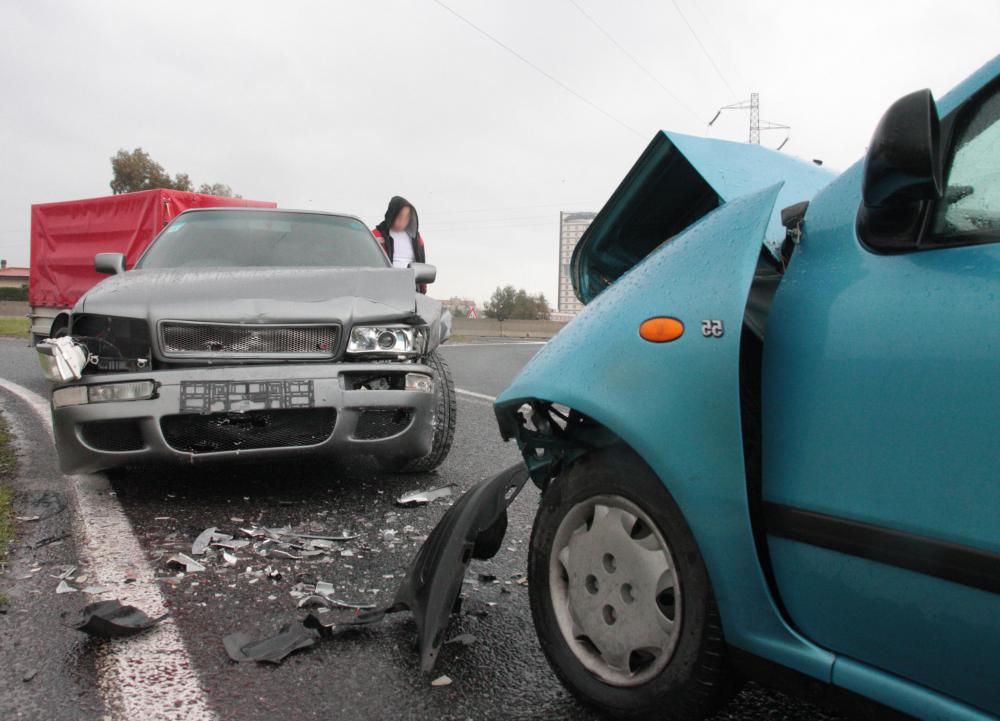
![Head-on collisions can cause soft tissue injury in almost any part of the body.]() By: lupoalb68Head-on collisions can cause soft tissue injury in almost any part of the body.
By: lupoalb68Head-on collisions can cause soft tissue injury in almost any part of the body.


Discussion Comments
Get an attorney immediately. No need to play games with your life.
I was involved in a car accident a little over a week ago. I was going 30 mph down the street, the other car didn't stop all the way and took off. I hit the side of the car (some people call it a cop slam). I was fine but now I'm having pain in both knees, but mostly in my left one.
When in doubt, hire an attorney! I'm working with an attorney right now on a rear-end collision. It's nice to have him fighting for me and I can go about my day without being bothered by the other persons insurance company. Yes, they take a percentage but to me it is well worth it.
I'm still in pain, depressed, given up on most daily activity (I still work, which is a struggle) and my car has $15,000 in damages, which is going to be a total loss.
Should I go to the ER? A guy pulled out in front of me going 45. Airbags deployed. Car is totaled. I told the EMTs, police and fire I was OK. My chest was bothering me then, but now it really is bothering me. It was two and half hours ago, I think, maybe? But seriously, are they going to be able to do anything but tell me I'm going to be sore?
I was in a car accident about a week ago, I was feeling pain in my chest a burning in my knee tingling sensations in my upper back and shoulder. Now a week a later my knee is so swollen I can hardly walk. Every time I move, my knee swells up even more.
I want to post this anonymously. I was T-boned at a major intersection in Los Angeles.
You believe you are prepared to photograph, document, and get witnesses. But after the accident, if you are the lone person in the automobile, your senses are diminished.
I was T-boned while I was in the middle of the intersection. The other driver broadsided me (T-boned me). My car lost control and swerved to the side of the road, and the rear of the car hit a building.
The two side airbags, and one front window ledge airbag deployed.
Months after two accidents that were not my fault, I'm still experiencing soft tissue pain, shooting pains in my neck, difficulty sleeping due to the pain. Now I feel victimized again by the insurance companies. Where are my rights as an accident victim? I've been to hell and back.
I was hit from behind in 2004 and my neck and back were hurt. Over the years, I've felt better. In 2008 I was hit again from behind, and had no broken bones, but I did have soft tissue injury. I had shooting pains in my lower back which went down my right leg, numbing it. Then in 2009 I was hit again from behind and this time my back and neck were hurt. Again I had soft tissue injury and then in 2010 I was hit again from behind.
It has been a terrible recovery. I have had injections in my back, etc., but nothing heals it and makes the pain go away. Some days are worse than others. My doctor in deposition said none of the last three accidents caused it, that it was caused from my accident years ago. Now how does he know this? He also said the pain from these wrecks should have lasted a six weeks or so and I should be better by now.
He totally is cheating me. I continue to see him and continue to get injections and tell him I hurt. My family sees me at home with heating pads and complaining about my leg and back. I am so upset. Now these three attorneys, who want to settle, are going by my doctor's report, which is totally a lie and yet I am truly hurting. Any recommendations?
My attorney is telling me to come up with a figure that I am looking for. I have no idea. How should I know? I am totally confused and hurting and I feel like everyone thinks I am a liar when I am not. I need help or suggestions.
Anon you are very right about these cases being temporary and victims being priceless. I was in a car accident one and half months ago. I was hit head on by a drunk who was overtaking me and speeding along a bridge.
I suffered soft tissue injuries in one of my shoulders and in my chest. The doctor said I only needed some inflammation medicine but the pain is still there even after all these days. I don't feel it sometimes, but other times I feel it more -- especially when I wake up in the morning.
My insurance company treated me bad when I wanted my car repaired. I ended up using my own money to repair it and now I'm claiming the money back, which is not easy according to the insurance company. My injuries were not considered since I had no broken bones. It is sad to know that one becomes priceless when involved in any car accident.
I've read so many of these stories and it made me feel so not alone. I'm a victim of circumstance also, three times over. I have anterior tibia pain from a car accident that was no fault of my own. I loved my car insurance company until this! They attacked me, or I should say us, like we were strangers and we paid our insurance faithfully, but all that flew out the window. They were not team players.
The young guys pulled out into oncoming traffic and failed to yield right of way to traffic, and I was in the inside lane. My life has been destroyed because they look at soft tissue injuries as nothing when you don't have anything broken.
Speak the truth and really take a good look at these victims instead of looking at us as cases all the damn time and a lot of what you represent will be based on fact when you take the time out to evaluate what they are representing. Cases are temporary, victims are priceless. They make you fight so that you hope and pray your loved ones never have to endure it. And when you do? What?
My car exchanged a little bit of paint from the license plate cover to the lower rear bumper of the other car. No airbag deployed. Other car had ambulances and police on their way before anyone got to their door. The man was a volunteer fireman.
Public records show that they have had two other similar accidents in the past 11 months. The man said he saw my car braking (it was raining out) but just sat there. No oncoming traffic. They told everyone they were fine: cops, paramedics and fireman. They had nine emergency vehicles there. Men were standing around throwing up their hands, like what the heck are we doing here for this? When they found out there was no damage, suddenly they insisted on taking ambulances to the ER. Research has shown a pattern and easy willingness to call ambulances repetitively. So they are wearing neck collars and seeing ortho doctors now. Any advice on how to deal with low life scammers?
I was in an accident five days ago. I was a passenger in a car that was t-boned by a truck. We spun around several times before coming to a stop. The car was totaled.
The driver has a sprained shoulder, mild concussion and soft tissue damage. I have soft tissue damage, which I didn't really take seriously until now when I am really realizing the impact that it is having on my life. When I am up and about I end up hurting a lot in my neck, shoulder,hip, back and legs. I wish I had taken it more seriously from the beginning but now realize I could be in for a long haul.
Have any of you heard of someone getting an injury from bumping tires with another vehicle? If so, will you please tell me what these injuries are?
I was involved in an accident where the other party and I bumped tires. Now they are trying to take me to court. We were quickly approaching a red light going about 5 mph or less at the time our tires bumped. No other damage to either vehicle was done. I'm just trying to figure out if I am getting scammed here, or if there is possibly a realistic explanation of the three passengers of the other vehicle all claiming to have soft tissue damage in their necks and backs. Any information would be *greatly* appreciated!
Also, this particular family has done this before, in the exact situation. They also said that they had soft tissue damage in their necks and backs in the other accident. That is the only reason I'm thinking it may be a scam.
My son and I were in our vehicle and felt fine, did not feel any pain anywhere on our bodies. My son actually slept through the whole thing. Would that indicate what they felt? Again *any* information would be *greatly* appreciated!
I was rear ended by another car, and as a result, was moved forward and then whipped back and missed the head cushion, causing my neck to hit the seat top and bend way back. When that happened I immediately felt an electric jolt in the middle of my neck just above my shoulders and a burning sensation in my middle back. The other driver stopped to look at his front bumper then left the scene. Fortunately, I was able to jot down the license plate number before the other driver took off.
I was on my way to work when this occurred and as I was in pain and close to home, I went there first. I contacted my primary doctor, who saw me immediately and after checking me over, did low level laser therapy that day and the over the following week. He then directed me to see a chiropractor. I saw the chiropractor for over one year and had little success with that. I have since seen a physiatrist who recommended physical therapy as well as recommended an orthopedic surgeon who wants to perform surgery. In the interim I had epidural treatments that exacerbated my symptoms.
As the pain is getting worse in my neck and arms, I am also feeling depressed, sleeping terribly especially as of late since I cannot find a comfortable position to lay in, and having memory issues such as inability to remember names, words and often walk into a room in my house not remembering why I went there. I am seeing a neurosurgeon at present for a second opinion about surgery. In the meantime my pain is getting worse and I am now taking pain medication I avoided until now because I have heard the horror stories about becoming dependent on pain medication. I am also being told by the neurosurgeon, who is performing further testing to determine if surgery is the right thing to do, that surgery in my case may not be an option because it may not make the pain stop.
I am so frustrated in that I am suffering for doing nothing more than driving to work while the other driver goes on with their life without any consideration for what they caused when they hit me and then just left the scene.
By the way, the other driver's insurance company and their attorney(s) have done everything possible to make it appear that I am the problem here and that the other driver is a respected retired professional who could not possibly have caused my pain. I am infuriated that this is the how the insurance company and their attorneys treat the injured victim. I have never been in an accident prior to this. What do I have to do to get justice?
I was in a car accident and was T-boned and my car was totaled. It has been a two year life of hell with injections monthly and my insurance still thinks I am a liar and am not injured.
Warner Insurance sucks. now they have ended my treatments and I have not gotten a settlement.
i was rear ended. The women admitted she slammed me. I told the insurance guy, etc. I went to the ER and had a strained neck and back. I had X-rays, ct scans, etc., yet now I have to wait two or three weeks and am being basically called a liar by the insurance company, that i was hurt. Still l7 days later having arm pain, forearm and neck/shoulder pain. I have no insurance and no money to pay a doctor up front, yet neither insurance company will pay for it. Insurance is a joke. Pay, pay, pay, but when you're hurt, oh you'll be OK. State farm sucks!
I have been in three car accidents in my life. None my fault. Whiplash in two of them and the cars were written off due to the impact. The pain from whiplash and soft tissue damage reduces after time.
Years later I still have pain, but the most important thing is to keep moving. Do whatever exercise you can. Lift your mental pain threshold and accept that this has changed since the accident. Focus on what you can do,not your limitations and focus on your life dream and passion. Good luck all.
I was hit by a drunk driver in August 2010 from behind. I was going home one Friday night, when i stopped at a red light and i got struck from behind. I was going for treatment and all x-rays came back negative. All i have is soft tissue damage.
My insurance cut me off from treatment December 2010 and I'm still having pain. Now I'm trying to find a PT or Chiro for treatment because it stinks sometimes when i can't sleep or sit for a long time. I see a lot of you have the same issues i did in the beginning, but all i have now is back pain. Best of luck to everyone.
It has been two years now since my accident, when a driver pulled out in front of me and i hit his van on the driver's side.
I have been going three days a week to the chiropractor, and he has done wonders, but now I am having fun dealing with his insurance co. they are trying to say I contributed to the accident. I have been in pure hell from the soft tissue injury to my neck and now have to be accused of contributing to the accident.
I lost my car and I lost my sanity. Now I can't afford treatment and the pain is coming back as it felt before. I have headaches and three bulging discs but could not convince my gp there is something wrong with me. if it doesn't show up in x-rays it doesn't exist with doctors. my neck cracks all the time now and also makes a grinding noise. but i have to live with it. i can no longer choose what kind of job i want, nor can i go to school because i cannot sit in a classroom due to the pain. i can't sit for too long and i can't stand for too long.
i was in a car accident a couple of days ago. my right leg has a large knot on it and my right toes hurt if i bend them and my back hurts also, should i see a doctor or just wait to see what happens next?
I nudged a car in the back in a stop light at 2 miles per hour. The woman came out saying automatically that she will have back pain as same as her mother! Be careful if that happens. Lots of abusive people are opportunistic of those types of injuries to take advantage of the insurance policies and charge good amounts of money. (Careful. the woman in question was caught doing the same in the past -- actually in agreement with a chiropractor).
I am a Chiropractor in the State of Ca. I have a patient who is in pain and the ins. Co. is telling her she should not be hurt because it is a soft tissue injury. I am searching the net to find the right article to help her.
Somehow I got here and see a lot of you have experience what a MVA is like. (motor vehicle accident) Listen: from the get go you ice! think of RICE: Rest, ice, compression to that area and elevation. So many people use heat, which is the wrong thing to do. Has anyone here burned their hand? Did you use heat or ice? Same thing -- it's inflamed. Use ice and reduce the inflammation. Heat feels good because it causes sedation but it enlarges the blood vessels, causing more inflammation/swelling to that area.
Many of you are still hurting. If you are in an accident, call your car insurance company and see if you have medical coverage in case you were in an accident. In Ca. it is called Med Pay. Check your state, I know some states call it PIP.
I recommend you call a chiropractor or an attorney and tell them your situation. Ask them if in your particular case can you get treated on what is called a lien.
Here in ca. I and many others do treat patients on a lien basis. In Ca. if you did not cause the accident, you can get get treatment and the wrong party's insurance has to pay for your treatment. Call a office and see if they accept liens. If they don't ask them if they know someone that does.
It is wise to to get an attorney. I have been a chiropractor for 20 yrs. and have seen it all. Those of you who are sore, more often it is the disc between each vertebrae that get inflamed and can cause pain down the arms/legs etc.
It may also be that ligaments got stretched and muscles torn. I would say all of these happened.
It takes less than one second for your head to get whipped forward and back. The average head weighs as much as a bowling ball, 12 to 16 pounds.
Also number 10, chiropractic doesn't hurt at all. It may sting in the beginning but most people get used to it and then love it. Sincerely,
Dr. Desi G.
I was in a roll over wreck about a month ago (aug 2010) where my car rolled three times. My neck has been hurting since the wreck, and the ct scan showed nothing broken but now i still hurt just as bad as i did the day of the wreck. It is nuts. however finding someone who takes state medicaid is hard to do. anyone that can help would be great.
I have two words for anyone who has severe tissue damage: Aston patterning. It sounds hokey, but I am living proof. it saved me from not wanting to be here from all the pain from a car accident. It's been seven years and I still go once a month but I had severe tissue damaged to my head, face, neck, spine and ribs. I know for certain I would not be here if it were not for Aston patterning. Please research and check out for yourself. The proof is in how you feel after each session and how it changes. I hope that everyone finds some type of relief from severe tissue damage and please ask around about Aston Patterning for severe tissue damage.
I had an accident in mid-June when i stopped my car in the four way street while hearing the fire engine coming through the street. The guy behind me didn't see me stopping completely or didn't hear the fire engine approaching the four way street and hit me from behind really hard, which resulted in pushing my car forward close to the middle of the road.
On that date, after reporting it to the police, I went to work (with the damaged back bumper and exhaust pipe). Next day, I started to have ankle and knee joint pain and the next day started to have a heavy headache for a week.
Some symptoms are very strange (lightheaded, seeing spinning walls around me, dizziness, feeling sick, no motivation, and terrible sleeping problems), and then when my back and neck were very stiff and full of pain, i went to see a doctor and was told that I had a concussion (when the accident happened). I was on medication to reduce the swollen brain from the injury and joint injury for a week, but my back, shoulder, upper arm pain got worse. In addition, I started to have short term memory problems (cannot find things where I put them, or cannot remember people's names or dates and times of appointments, etc.).
I went back to see a doctor and got two medications (one for muscle pain and another for anxiety due to trauma). It didn't seem to help. Last night, after taking medication, i forced to myself to be in bed by 9 p.m. and woke up at midnight due to strong chest pain. Checked on my blood pressure and it was over 140 (I never had blood pressure problems in the past prior to accident). Every 20 min, I checked on blood pressure and it went up from 140, 146, 156 and 167.
Eventually, I could not bear the chest pain and checked myself into ER and my blood pressure was 178. I got an EKG to check my heart function, x- rays and blood tests last night and was released from the ER with the strong anxiety medication to manage the blood pressure under normal.
I am now on three different medications and am afraid of facing what would come next without any warning. I am going to see a physical therapist next week to receive therapy, but not sure whether this is going to stop the pain that my body experiences daily.
I have soft tissue injuries resulting from a car accident. I'm receiving electro stim therapy but will soon get my back and neck adjusted. Has anyone ever had an adjustment and how bad does it hurt?
i was hit by an auto and i am on the motor bike. he hit me in march. i am still under treatment. my right knee ligaments were badly damaged. my doctor suggested MUA (manipulation under anesthesia).
i was in a car accident in may of 2009 and i am in pain all the time. i get everything they said: headache and dizziness etc and I've yet to find a doc who will take my state medicaid and medicaid in idaho with no luck. it will be a year at the end of may.
I was hit by a drunk driver last Feb/09 which left me with a broken neck and severely damaged knee. My neck was the most important injury to deal with at the time of the accident to even months after. I am going to therapy for both neck and knee.
I have just found out after all the bone scans, x-rays and Mris, I have severe soft tissue damage in my knee. It's only been a year of continuous pain. How much more pain does someone have to been in before things get better?
I was hit by drunk-driver Wednesday. We were all stiff and sore for the next two days. Saturday I thought I was much better--headache gone, shoulder not too bad, stomach finally better and even ate for first time. Back started to ache Saturday night, worse Sunday interrupted sleep, and today Monday, hard to turn, move, hurts if I sit the wrong way? Thought I was OK, but I guess I am not.
My son and I were hit by a loaded semi truck. My son was driving and was trying to evade the oncoming truck in our lane. We were hit near the drivers rear tire and spun us 180 degrees and threw us off to the side about 30 feet. My son was transported and released from the hospital with back pain. It was a day or so before my neck pain began. It was severe pain, after almost two years
of chiropractic visits I am feeling somewhat better. I kept working and fought through the pain. Occasionally the pain was so bad I had to go home from work. The problem is my neck randomly pops several times a day and the pain comes and goes with the poping. Sometimes the pain decreases. Sometimes the pain increases. What do I do?
I was involved in a car accident in December 2002. My knee was injured against the steering column. I had arthroscopy in 2003 and have continued with pain on the inner aspect of my knee. Although I have continued to work 2 - 3 days/week, I feel completely and totaled exhausted after anything physical I do. I also am knocked knee and have patellar tracking syndrome. The surgeon has said he could operate on my knee to straighten it, but it probably will not relieve my pain and it is an extremely difficult and painful procedure to go through. Without the certainty that the pain will be relieved, he is reluctant to consider this. He said that I should just live with the pain and that sometimes knocked knee, for unknown reasons, take a long time to heal from soft tissue injuries. It is now close to seven years since my accident. I am wondering if anyone else has experienced such a thing and how long it took their pain to disappear and what was done to help this. I have been going to physiotherapy for over 6 months now with no relief of symptoms. In fact, it requires me to take more pain medication.
I was in an auto accident about 2 weeks ago. We were hit by someone who ran a red light. My car spun and then rolled over. I was not too bad that night or even the next day. But, the following day I could hardly move. Now I am moving, but still very sore. No bones are broken.
Has anyone experienced this? If so, how long did it take for you to feel generally better again? The constant soreness is really getting in the way of my everyday life activities. Plus, I seem to need to take a nap every afternoon. Thanks.
The soft tissue injuries from an accident can be so severe, particularly the next day, that for some time you are not even able to move. It happened to me, I could not move at all.
Post your comments