
At TheHealthBoard, we're committed to delivering accurate, trustworthy information. Our expert-authored content is rigorously fact-checked and sourced from credible authorities. Discover how we uphold the highest standards in providing you with reliable knowledge.
What is a Simple Fracture?
 Tricia Christensen
Tricia Christensen
Tricia Christensen
The simple fracture is often compared to the compound fracture. Compound breaks look very serious immediately because bone penetrates skin; bone may remain on the outside of the skin or cause a cut from the inside and shift back to where it can’t be seen. In contrast, a simple fracture is a break in the bone that doesn’t penetrate the skin. Simple doesn’t necessarily mean less serious, and there are other ways of assessing degree of severity in bone breaks.
An additional set of terms can be applied to fractures and these are important, too. A compound or simple break may be classified as incomplete or complete, which has to do with the amount of bone that breaks. When the break completely severs the bone in two, it is complete, and this can be seen in either type of fracture. Incomplete fracture refers to partial breakage of bone, where the two parts of bone are still connected by a bone piece. These definitions get even more refined and can refer to the way that bones break, such as across (transverse), in a bent fashion (greenstick), or in other ways.

What these definitions suggest is that simple is not necessarily easy. A complete simple fracture breaking up into fragments (comminuted) may take a long time to heal and be difficult to repair. Moreover, bone shifts inside the skin can damage plenty of tissue under its surface, including ligaments and blood vessels. The fact that people can’t see bone protruding from a wound doesn’t mean that fractures are less severe. Additionally, since bones can shift back inside a wound in a compound fracture, it might be mistaken for a simple one.

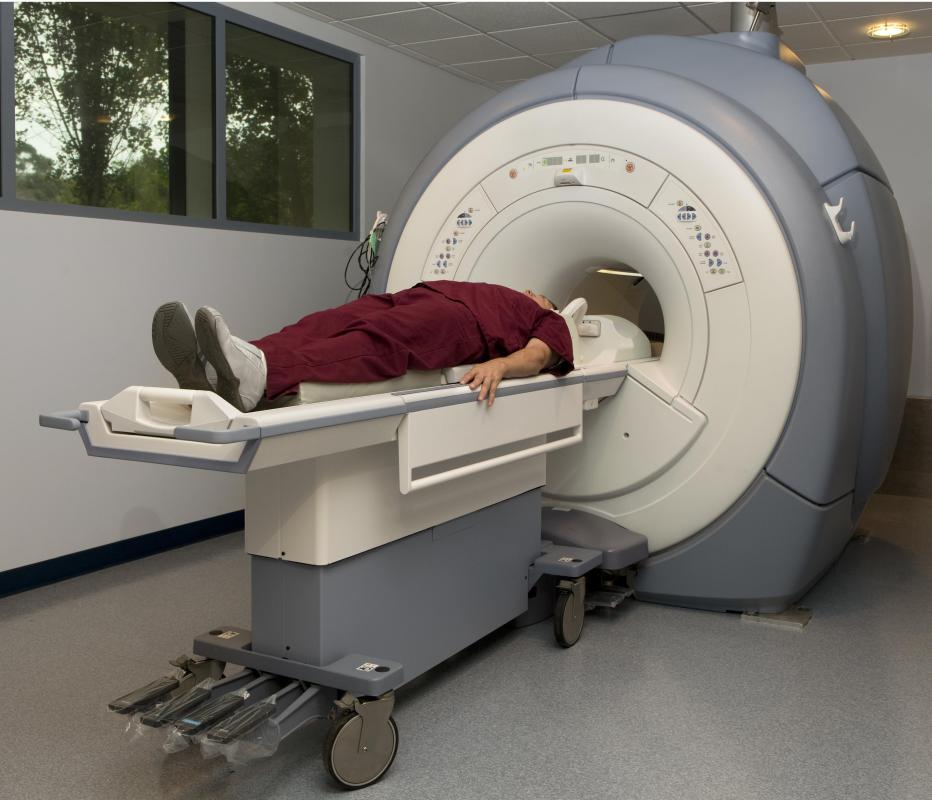
Any suspected bone break is serious and requires medical attention right away. It’s difficult to tell exactly the degree of damage, especially with a simple fracture, because the damage takes place below the surface. To accurately diagnosis the severity of a bone break, medical professionals rely on scans like X-rays, magnetic resonance imaging (MRI) scans, and computed tomography (CT) scans. These images allow healthcare providers to determine how to address a fracture, and they often give them a sense of how long treatment will be needed, though each person is individual.

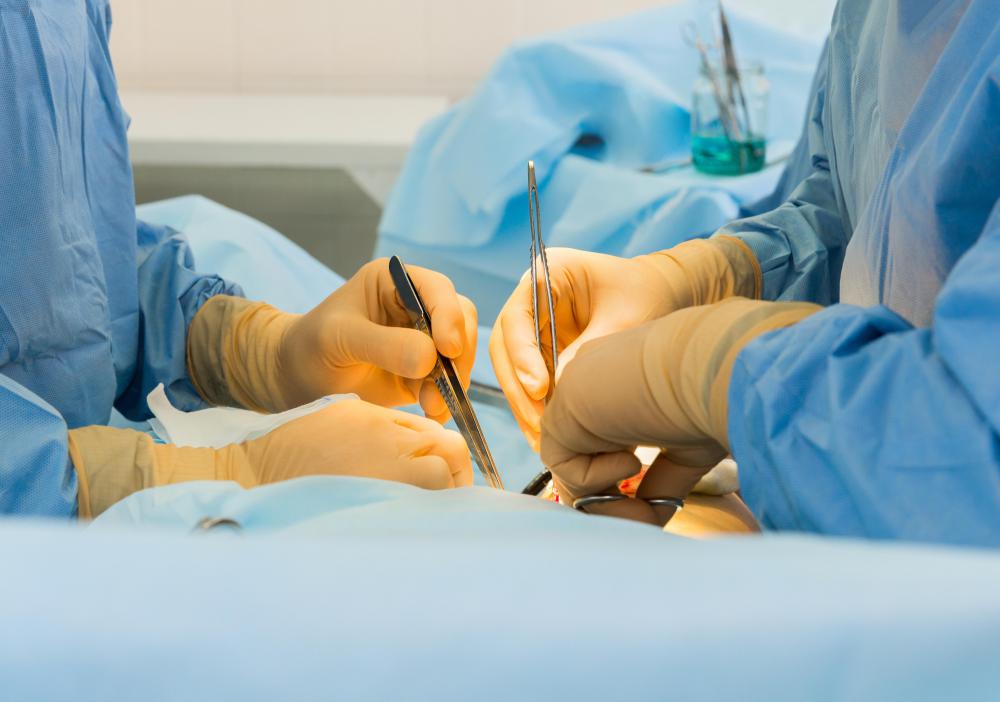
In some cases, a simple fracture may be treated easily, and some might not even require a cast if breaks are very small. Other times, extensive casting and/or surgery could be necessary to address the bone damage that lies under the skin. Treatment time will also be different, depending on type of fracture and any additional conditions that might accelerate or slow down bone healing.
Tricia Christensen
Tricia has a Literature degree from Sonoma State University and has been a frequent TheHealthBoard contributor for many years. She is especially passionate about reading and writing, although her other interests include medicine, art, film, history, politics, ethics, and religion. Tricia lives in Northern California and is currently working on her first novel.
Learn more...
Tricia Christensen
Tricia has a Literature degree from Sonoma State University and has been a frequent TheHealthBoard contributor for many years. She is especially passionate about reading and writing, although her other interests include medicine, art, film, history, politics, ethics, and religion. Tricia lives in Northern California and is currently working on her first novel.
Learn more...AS FEATURED ON:
AS FEATURED ON:


-
![Any suspected bone break requires immediate medical attention.]() By: Andres RodriguezAny suspected bone break requires immediate medical attention.
By: Andres RodriguezAny suspected bone break requires immediate medical attention. -
![Surgery may be required to treat a simple fracture.]() By: Kot63Surgery may be required to treat a simple fracture.
By: Kot63Surgery may be required to treat a simple fracture. -
![Casts are often used to treat simple bone fractures.]() By: kameelCasts are often used to treat simple bone fractures.
By: kameelCasts are often used to treat simple bone fractures. -
![MRI scans may be used to accurately diagnose the severity of a fracture.]() By: James SteidlMRI scans may be used to accurately diagnose the severity of a fracture.
By: James SteidlMRI scans may be used to accurately diagnose the severity of a fracture. -
![Comminuted fractures are common among the elderly, as their bones are often more brittle than those of younger people.]() By: Fotoluminate LLCComminuted fractures are common among the elderly, as their bones are often more brittle than those of younger people.
By: Fotoluminate LLCComminuted fractures are common among the elderly, as their bones are often more brittle than those of younger people.



Discussion Comments
My aunt had a simple fracture in her neck after a car accident. She was not moved at all until medical personnel came. They put a neck collar on her and place her carefully in the ambulance. Even though the fracture was a simple fracture, it was very dangerous because it was in her neck where all the nerves are located.
I think it's better to treat all fractures as serious until you get to the hospital like the article said. It's better to be safe than sorry.
I think doctors chose these labels based on the type of treatment each fracture requires. Simple fractures are easier to treat than compound fractures. They usually just require realignment and a cast to heal. But open and compound fractures require surgery.
People tend to get confused because they think that easy means no pain. That's not true, but a simple fracture will be less painful than a compound fracture and will heal faster.
If the name of this fracture is so misleading, why don't medical professionals just change it and refer to it as something else?
Why confuse people?
On the other end of the spectrum from EdRick's nephew, my son fell off the monkey bars and had a greenstick fracture in his forearm. Now, that really was a "simple" fracture (although it looked weird on the X-ray because it didn't go all the way through the bone). It not only didn't break the skin, but was relatively easy to treat. He didn't even have to have a hard cast. The doctor gave him a removable splint.
My sister was told her son had "simple fractures" after his car accident and she thought that was a good thing. If only! Simple fractures are also called "closed" and that seems to make more sense to me. The skin stays closed. In his case, the "simple" fractures were anything but. He actually had comminuted fractures--the bone was broken into three pieces--and had to have surgery and physical therapy.
Post your comments