
At TheHealthBoard, we're committed to delivering accurate, trustworthy information. Our expert-authored content is rigorously fact-checked and sourced from credible authorities. Discover how we uphold the highest standards in providing you with reliable knowledge.
What is a Sigmoid Resection?
The sigmoid colon is the S-shaped portion of the lower part of the large intestine that terminates at the rectum. This section of the colon has the difficult job of contracting vigorously to expel solid waste out of the body through the rectum. Sometimes a medical condition will interfere with the function of the sigmoid colon. If this condition does not respond to medical treatment it is occasionally necessary to perform a sigmoid resection or surgical removal of the sigmoid colon.
Extreme pressure along the walls of the sigmoid colon can cause small pouches of the colon to bulge out. These bulging areas are called diverticula. When the diverticula become inflamed, a condition called diverticulitis has developed. Sometimes, diverticulitis will become so severe that these pouches will rupture and spread infection into the abdominal cavity. Chronic diverticulitis is a common reason why many people have a sigmoid resection.

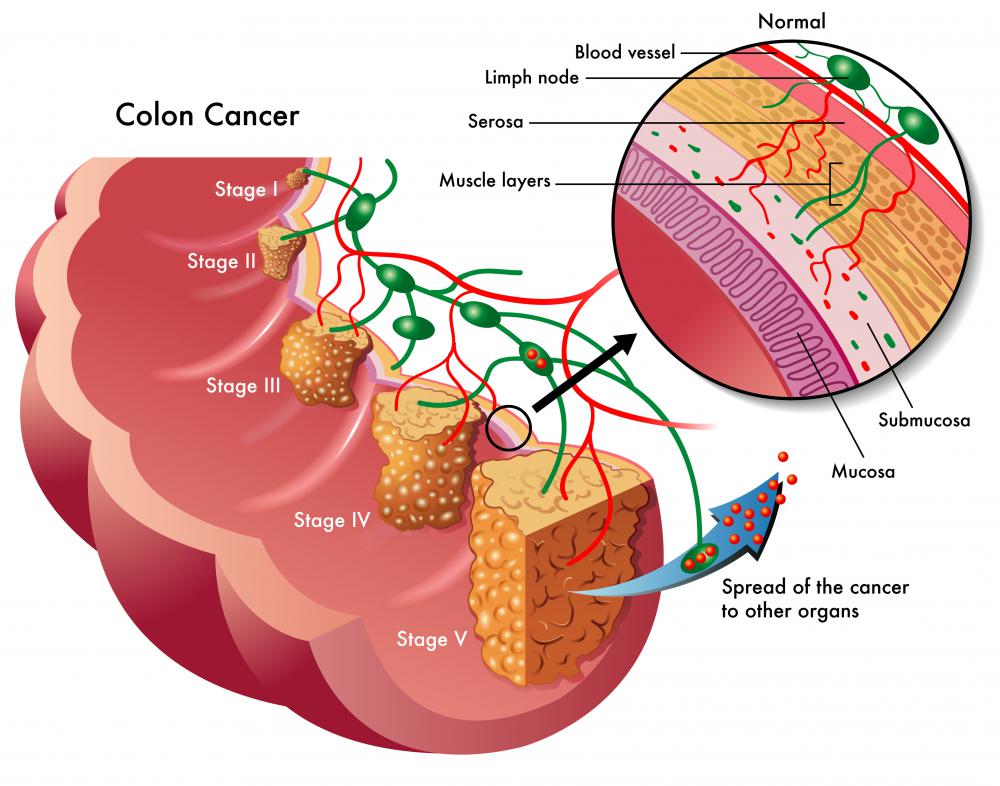
Another possible reason for a sigmoid resection is colon cancer, possibly with an obstructing tumor in the sigmoid colon. In such cases, it is important that the surgeon removes all of the affected tissue. In most cases, he will remove the surrounding lymph nodes to prevent the cancer from spreading. Colon cancer can be curable if it is caught early enough.

In some cases, a sigmoid resection can be performed laparoscopically. This minimally invasive surgical procedure involves the surgeon making three or four small incisions into the abdominal wall. He will then insert several surgical instruments, including a laparoscope, into the incisions. The laparoscope allows the surgeon to see inside the abdomen and the other instruments can be manipulated to cut away and remove the sigmoid colon.

When the portion of the sigmoid is too diseased to be removed laparoscopically, the surgeon must open up the abdomen to get to the sigmoid colon. He will remove the diseased portion of the sigmoid colon and then re-connect the two healthy ends to produce a continuous loop of bowel. There are occasions when the colon needs to rest or a large portion of the colon is diseased. When this is the case, the surgeon will take a small loop of the bowel and pull it through an opening in the abdomen. This is called a colostomy.

Colostomies can be temporary or permanent, depending upon the circumstances of the individual. If the patient had a large amount of colon removed, the colostomy will usually be permanent. A colostomy bag is applied over the colostomy to catch the bowel movements. This bag can be easily emptied into the toilet.
A sigmoid resection will come with risks. As with any surgical procedure, there is a risk for infection or bleeding. There is also a slight risk for developing blood clots in the legs or in the lungs. Occasionally, the patient may experience obstructions in the intestines due to scar tissue. The risks of complications have decreased as technology advances.
AS FEATURED ON:
AS FEATURED ON:


-
![A sigmoid resection may be performed laparoscopically.]() By: CosmicA sigmoid resection may be performed laparoscopically.
By: CosmicA sigmoid resection may be performed laparoscopically. -
![The S-shaped portion of the lower part of the large intestine is referred to as the sigmoid colon.]() By: abhijith3747The S-shaped portion of the lower part of the large intestine is referred to as the sigmoid colon.
By: abhijith3747The S-shaped portion of the lower part of the large intestine is referred to as the sigmoid colon. -
![The sigmoid colon terminates at the rectum.]() By: stockshoppeThe sigmoid colon terminates at the rectum.
By: stockshoppeThe sigmoid colon terminates at the rectum. -
![An ultrasound may be used to detect problems with the sigmoid colon.]() By: acherstAn ultrasound may be used to detect problems with the sigmoid colon.
By: acherstAn ultrasound may be used to detect problems with the sigmoid colon. -
![Colon cancer is a possible for a sigmoid resection.]() By: rob3000Colon cancer is a possible for a sigmoid resection.
By: rob3000Colon cancer is a possible for a sigmoid resection.


Discussion Comments
To all who are going to have a color resection:
I am 5 months post surgery. I had colon resection due to diverticulitis that developed with a "fistula" that was leaking into my bladder. I needed urgent surgery but had to have heavy doses of antibiotics prior to prevent serious complications. Initially they wanted to do an endoscopy, which is minimally invasive.
Once in, they found my Sigmoid colon had hardened with other complications, so that was changed to having to use incision from my navel to pubic area, approx 6+inches. They removed about 15-16 inches of colon. Luckily I didn't have to have a colostomy bag! I spent 7 days in hospital and was then released. Not a lot of fun but could have been much worse.
At this point, I have no complications, none. I was good to go after minimal home recovery, thank God. No dietary restrictions or adverse complications. Maybe a bit more "gassey" at times and bowel movements seemed quicker, but no other issues. Although bowel movements seemed initially "incomplete" and having to go sooner than normal, I discovered that a "squatty potty" greatly helped with those BM's so no issues.
Please, everyone, look up squatty potty. It aligns your bowels and rectum for better movement! I'm very thankful to my excellent surgeon in the "job" he did. Hopefully it is now going to be a non issue. I haven't had to change my lifestyle one bit.
I am a 67 year old active male, and still am! For all who are going to have this "procedure" done, it is scary to be sure. Maybe I was just lucky. But this isn't the end of the world, although not fun, in hindsight, at least for me, I am good to go! (Pun intended) I hope all of you have great results as I did and live long and prosper! Just sayin'...
I am 23 years old and had 14 inches of the sigmoid colon removed after doctors discovered a stage 1 colon cancer in a polyp. Lymph nodes were also taken from around the area and all were clear. It was more of a precaution than anything to remove the colon - better to be safe than sorry. As far as functioning goes, it's two months on and have I noticed very slight change in bowel habits -- slightly looser, but not by much.
I'm a 34 year old female and had my sigmoid removed five days ago. The only thing that hurts is my back from the stupid hospital bed. I only spent four days total in the hospital and was up and around the next day. It wasn't even close to being as bad as I thought. In fact, the next day they served me a steak for breakfast.
Do your research on a hospital and a doctor. I think that is key. I had the best surgeon and a great hospital. If you need the surgery, don't be scared. The worst part is the bowel prep the night before.
I'm a 23 year old male having a 14-inch section taken out in six days and I'm nervous.
I am one month post op from resectioning. During the procedure, the sigmoid portion was removed. At this time, I was cleared to put benefiber in my coffee once a day and it has helped stool to form instead of painfully pooping feathery cornflake stool material for 40 minutes at a time. Some residual dark / carmine blood will seep from the stool as it sits in the toilet. I guess as long as it is not bright red, it's OK for now. I'm feeling like I've been kicked in the gut after my morning movement.
I had no prior diverticulitis before I perforated in early July 2012. I spent 35 days in the hospital (while on vacation) to fight infections and I lost over 25 pounds that left me limp as a dishrag. Six months with a colostomy was difficult and I am so happy to be back together -- bagless!
My post op appointment yesterday had to be rescheduled do to the surgeon being called in on an emergency. I'm just looking for reassurance about the discomfort and what still appears to be just residual blood.
My diet is low residue and I will never eat another nut, seed or skin. I used to consume large quantities of each and had always been very healthy and robust. I am grateful for the skill of my surgeons in both hospitals. Just how long will I see this old load seep from my stools?
I am three years post a colon resection. My doc went in to do a rectopexy and ended up removing about 12 inches of redundant colon as he thought that might have been contributing to my IBS with constipation It did not help! In fact, I am worse off.
I am in my early 40's and in very good health other than my colon issues. Since the surgery, I go through bouts of small frequent BMs. Sometimes, I have to rush to the bathroom, with frequent, horrible, noxious gas, weeks of constipation, bloating and burping, always feeling like there is stool in the rectum which won't come out, and when I do pass gas there might be more too it. I never had these problems before. I attribute them all to the surgery.
If someone had told me that I would have them embarrassing and unfortunate symptoms I would never have signed the consent. The worse is at work when my bowels act up. I have uncontrollable gas or urge for a BM. Not good! I would only consider this surgery if you have an existing illness like DV. Otherwise, I would not recommend it for constipation/IBS issues.
For the past seven or eight years, I have dealt with one to two attacks of diverticulitis per year. About four years ago, I had an allergic reaction to one of the treatments and survived my throat swelling shut (heavy treatment of steroids).
During the last attack in the spring of 2012, it took much longer for the antibiotic to take hold and I spent eight painful days in bed. At this time, I felt I might be developing immunity to the one antibiotic left to treat my infection and scheduled the surgery to have a sigmoid resection.
While I am glad that I waited, the surgery was much less difficult than I anticipated. I was only in the hospital for two and a half (was told it could be three or four days), took much less pain medicine than prescribed, and was back to work in six days (from home as I can't drive until after my follow up). I do not believe these results are typical, but nonetheless, am very pleased with the results of my surgery.
For anyone else going through the decision making process, here is the way I chose when it was time to have the surgery.
First, my father was a physician and always recommended avoiding surgery for as long as possible. There is always a risk during surgery and in addition, each year there are advances that improve the knowledge and procedures of the physicians.
Next, I consulted with my long term family physician about when to have the procedure. We discussed that I could quickly and accurately identify when an attack was occurring, thus I was able to get the antibiotics in me quickly. I had a prescription with me at home and took it with me when I traveled. Once I identified the start of the diverticulitis, I would take a pill and immediately schedule an appointment so he could make sure we were treating the right inflammation.
Along the way, I did meet with several specialists and had three appointments with the surgeon who ultimately performed the procedure. I checked with several physicians, websites and former patients and was convinced that my surgeon was one of the two best in the region. I considered the risk, and even thought of going to a more nationally prominent surgeon, but decided the cost and inconvenience were greater than the risk.
Ultimately, I had a 10-inch section removed and am recovering well. My surgeon believes I will be 100 percent healed and able to eat normally going forward.
While a significant procedure, I was always comfortable that I was in great hands and would recover to live a better life. I believe this is the case.
In conclusion, I would recommend postponing surgery if this is an option, but once you choose to have it, find a surgeon you trust and believe in to achieve the best result.
I am seeing my consultant in a couple of days to discuss having a sigmoid resection due to idiopathic constipation that has become unbearable over the last seven years. My consultant has advised I have this surgery while in his words 'I am young enough to get a good result'!
I am 32 years old and really scared about the thought of this surgery after reading so many negative stories on the internet. However I have been tried on every laxative and drug on the market and nothing has worked for me.
Does anyone have any happy ending stories after having this surgery? I am a very positive person, however I'm really struggling to see any positives from having this surgery.
I am scheduled for a sigmoid resection in a few weeks. Even though I have had three doctors, my internist, a gastro guy and a colorectal surgeon all recommend this surgery, I remain somewhat unconvinced.
I am perfectly healthy and functioning, 55 and fit. My symptoms are not severe, but I did have reoccurring "incidences" of diverticulitis over five months which antibiotics finally cured. I continue to have a persistent "sensation" in my left abdomen, but would hardly call it pain. Are my doctors cut-happy? Overreacting to cover their "you-know-whats"? I'm interested in any feedback I can get.
My Mom has been recently diagnosed with diverticulitis and is probably going to have surgery, so I'm pretty curious (and worried) about the answers to the questions asked here by people. Aren't there any?
My wife had an operation and has not had a decent day since (over a year now) they operated. She had to go back a couple days later and she has had continued to have problems ever since. She has given up on doctors.
I had a sigmoid resection six months ago and have been fine since. I can eat anything I like. I am a 55 year old female.
I am about to have a sigmoid resection surgery due to diverticulitis. This section is approximately 25cm from the rectum/anus. I am a very healthy 54 years old man. I am very worried after reading all these comments about post surgery problems. Am I going to have a pretty normal life after the procedure?
I had a sigmoid resection five years ago. The post-op period was without incident. Never have had a Diverticuli problem since. Having the Sigmoid Resection has not presented me with any adverse effects. I have had vague soreness in the left quadrant, (rarely) which I assume to be adhesions, which can follow abdominal surgeries. --esbt
@abundancer--From what I have read, each person reacts differently after the colon resection surgery. A common thread seems to be no fiber in the diet for awhile. Be careful of fruits and veggies too. No nuts or seeds at all, and watch the sugar intake. A visit to your doctor and perhaps a local nutritionist might be helpful.
If someone has had a successful bowel resection do they need to restrict their diet at all? How about any other habits that might need to be changed for not only a healthier healing time, but also to decrease any complications?
Post your comments