
At SmartCapitalMind, we're committed to delivering accurate, trustworthy information. Our expert-authored content is rigorously fact-checked and sourced from credible authorities. Discover how we uphold the highest standards in providing you with reliable knowledge.
What Is a Service Fee?
A service fee is a monetary charge added to a customer’s bill or account for a service that has been provided by a business. There are numerous types of such fees that vary by industry. The most common fees for consumers include bank fees, credit card fees, and service fees from other utility providers.
Banks may charge a service fee for services provided, for account maintenance, or as a penalty; these fees typically vary by bank and account. Some banks assess a monthly account fee for maintaining an account. In other instances, a minimum daily account balance is required, and when the account balance falls below the minimum, a fee may be assessed. Banks also may charge wire transfer fees for electronically transferring money from one account to another. Penalty fees might be charged for over-drafting an account, which is often referred to as a non-sufficient funds (NSF) fee.

Credit card companies may impose fees as finance charges, annual memberships, cash advance service, balance transfer, or as penalty; these fees also vary by company and account. Finance charges can be assessed for each transaction charged to an account, while annual membership fees typically are charged each year that a line of credit is extended to a consumer. Cash advance fees apply when cash loans are given from the line of credit — the fee usually is a percentage of the amount of money advanced. Balance transfer fees are charged when one credit card is used to pay off the balance of another credit card. Penalty fees can result from late payments and spending over the limit of the credit card, as well.

Another common type of service fee comes from various utility providers. They may charge fees for either processing payments or as a penalty. Cellular phone companies, cable or satellite television companies, and Internet provider companies oftentimes charge an early termination fee when a consumer fails to maintain the service for the duration of the contract. Late payment fees are also common among utility providers.

Examples of other miscellaneous service fees could include a delivery fee when ordering food, an application fee when applying for an apartment, or a tax fee from a mortgage company. A fee is typically charged when property taxes are collected monthly with a mortgage payment, and most mortgage companies use a tax service agency to manage these taxes and pass the cost on to the consumer, even though it is often a required service.
AS FEATURED ON:
AS FEATURED ON:









-
![There is a service fee involved in ordering taxi service.]() By: JackinThere is a service fee involved in ordering taxi service.
By: JackinThere is a service fee involved in ordering taxi service. -
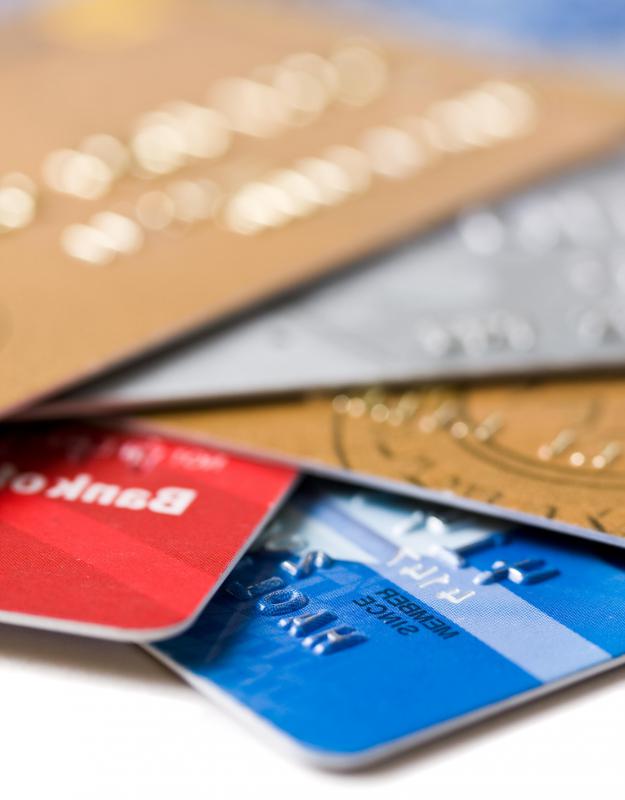
![Credit card companies may engage in several service fees, including annual membership fees.]() By: fotopakCredit card companies may engage in several service fees, including annual membership fees.
By: fotopakCredit card companies may engage in several service fees, including annual membership fees. -
![Cell phone companies may charge service fees for things such as early contract termination.]() By: guerrieroaleCell phone companies may charge service fees for things such as early contract termination.
By: guerrieroaleCell phone companies may charge service fees for things such as early contract termination. -
![Records of a wire transfer, which often comes with a service fee.]() By: AlterfalterRecords of a wire transfer, which often comes with a service fee.
By: AlterfalterRecords of a wire transfer, which often comes with a service fee. -
![The drive-thru at a bank. Some banks charge service fees for certain transactions.]() By: Sheri ArmstrongThe drive-thru at a bank. Some banks charge service fees for certain transactions.
By: Sheri ArmstrongThe drive-thru at a bank. Some banks charge service fees for certain transactions. -
![There is typically a service fee involved with using an ATM machine.]() By: Denys PrykhodovThere is typically a service fee involved with using an ATM machine.
By: Denys PrykhodovThere is typically a service fee involved with using an ATM machine.



Discussion Comments
Service fees can be so mysterious. They are always itemized on my monthly satellite and phone bills, but no details are ever given regarding what they are actually for.
Since the major portion of the bill is listed separately, I know this service fee isn't for the regular service provided. It is usually a small fee around $3 or $4, so it doesn't bother me too much, but not knowing what it is for frustrates me a little.
If I were to go into a grocery store and spend $5 on food and get charged a mysterious service fee of $3, then it would bother me. Paying such a small fraction of the total bill for satellite service is not as much of a big deal.
@OeKc05 – It is crazy how different banks and credit organizations vary so much on their service fees or benefits that they offer to customers. You can really tell the difference by checking out different credit card offers.
The very first credit card I ever got required a $59 yearly service fee. I had to go with this, because I had no credit record, and it was the only offer I had.
After spending about a year with them, paying off my balance in full each month, I built up a little credit. I received an offer from another credit card company for a card with no yearly fee, and I jumped on it. I canceled my first card as soon as the term was up.
I make sure to always adhere to the rules of my bank, because if I do as they ask, I can avoid service fees. I have to keep at least $50 in my account, and I have to use my debit card twelve times a month. This is easy, since I use it for nearly everything I buy.
I have an interest-bearing checking account, so I can see why it has conditions attached. I am happy to oblige, since they are not burdensome.
It is so nice to see a few extra cents or dollars added to my account by my bank each month. Some people have it taken out by their banks for service fees, but I get to have it deposited, just for allowing the bank to use my money.
I was upset when my cell phone company charged me a late fee last year. I had my account set up so that my credit card got charged each month for the bill, but for some unknown reason, the company had been unable to process my payment for the past two months.
I called the company, and while I was on the phone with customer service, I had the webpage with my information on the screen in front of me. I told the lady that I was looking at my profile, which stated I was enrolled in automatic bill pay, and it even had my correct credit card number on there.
She didn't know why it didn't go through, but she could clearly see it had been a mistake. She waived the service fee, but I have kept a close check on it since then. It was upsetting to have to pay two monthly bills at once, even though I didn't get stuck with the fee.
Post your comments