
At WiseGEEK, we're committed to delivering accurate, trustworthy information. Our expert-authored content is rigorously fact-checked and sourced from credible authorities. Discover how we uphold the highest standards in providing you with reliable knowledge.
What is a Renal Diet?
The renal diet is a diet prescribed to patients who suffer from kidney disease. The kidneys are responsible for removing excess fluids from the body, and they also keep red blood cells functioning properly and maintain healthy bones. When a person who has kidney disease does not follow the proper diet, the body cannot efficiently eliminate fluids and waste. As a result, he or she may experience a variety of health problems.
People who follow a renal diet must avoid consuming too many liquids, as this will force the kidneys to work harder. Those with kidney disease who drink excessive liquids will experience swelling, high blood pressure, shortness of breath, and further kidney deterioration. Foods and liquids such as coffee, soda, water, milk, tea, soup, and ice cream should rarely be eaten.

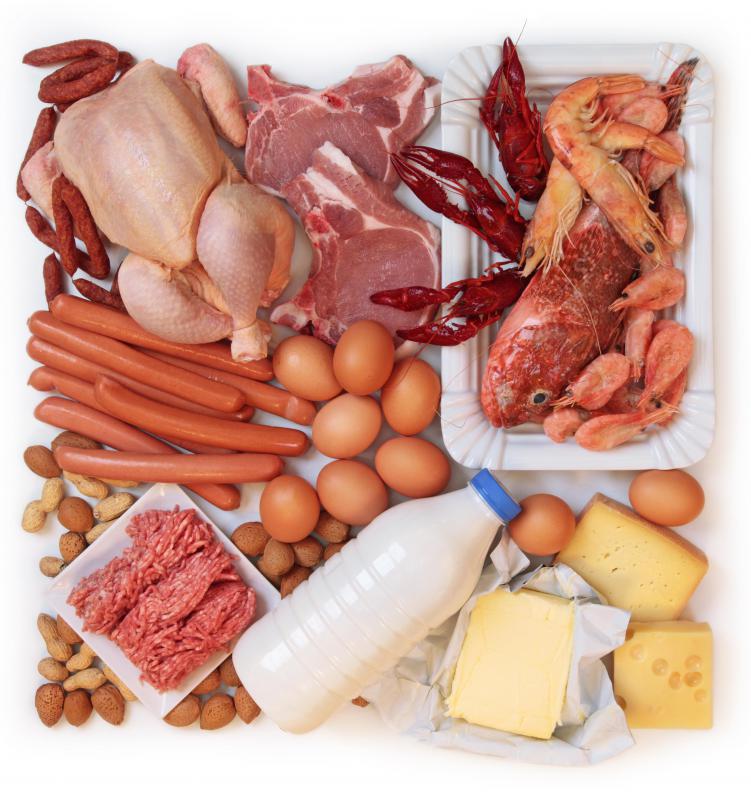
Kidney disease patients who are on dialysis are required to take in more protein than patients who are not currently receiving this treatment. These patients should consume more meats, poultry, seafood, and cheese. They can also find protein in fruits and vegetables, breads, and cereals.
Patients who suffer from kidney disease often have an overabundance of potassium in their bodies. When a body contains high levels of potassium, the heart can stop functioning without warning. In order to combat this danger, patients should eat more fruits and vegetables that have smaller amounts of potassium. Other low-potassium foods include bread, rice, and noodles. Patients should remember that nearly all foods have some potassium and should therefore monitor serving portions.

Following a renal diet requires that patients limit their sodium intake as well. Too much sodium, or salt, causes the body to retain water, which in turn causes patients to experience breathing difficulties and swelling. When a kidney patient suffers from fluid retention, the kidneys must work harder to function. In order to limit sodium intake, renal patients should avoid consuming too much processed food and season what they eat with garlic and other types of spices.

A kidney patient often has an imbalance of phosphorous and calcium in the body. Usually, he or she has excessive amounts of phosphorous and decreasing levels of calcium. When the body has limited amounts of calcium, the bones become weak. In contrast, high levels of phosphorous cause the bones to become brittle. The patient can also suffer from joint pain and itchy skin.

In order to avoid consuming too many foods that contain phosphorous, the renal patient should limit intake of peanut butter, dark colored soft drinks, nuts, ice cream, and other foods that have high phosphorous content. Instead, he or she should eat more broccoli, sherbet, zucchini, squash, and other foods low in phosphorous.
Under the care of a medical professional, a kidney disease patient can follow a renal diet that will improve his or her health. The goal of this diet is to help the kidneys eliminate waste and fluids from the body in a more efficient manner. By avoiding foods that cause the kidneys to work harder, the patient can enjoy stronger bones, a healthier heart, lower blood pressure, and an overall sense of well-being.
AS FEATURED ON:
AS FEATURED ON:









-
![Kidney disease patients who are on dialysis must consume more protein than those who are not, including beef, poultry, fish, and cheese.]() By: Elena SchweitzerKidney disease patients who are on dialysis must consume more protein than those who are not, including beef, poultry, fish, and cheese.
By: Elena SchweitzerKidney disease patients who are on dialysis must consume more protein than those who are not, including beef, poultry, fish, and cheese. -
![Renal patients should consume foods that are low in phosphorous, including squash, zucchini, and broccoli.]() By: Dani VincekRenal patients should consume foods that are low in phosphorous, including squash, zucchini, and broccoli.
By: Dani VincekRenal patients should consume foods that are low in phosphorous, including squash, zucchini, and broccoli. -
![People on a renal diet must avoid consuming too many liquids, especially soda, coffee, water, milk, tea, and soup.]() By: Marius GrafPeople on a renal diet must avoid consuming too many liquids, especially soda, coffee, water, milk, tea, and soup.
By: Marius GrafPeople on a renal diet must avoid consuming too many liquids, especially soda, coffee, water, milk, tea, and soup. -
![The kidneys and renal veins and arteries.]() By: satin_111The kidneys and renal veins and arteries.
By: satin_111The kidneys and renal veins and arteries. -
![Those undergoing dialysis treatment should consume more protein than the average person.]() By: Tyler OlsonThose undergoing dialysis treatment should consume more protein than the average person.
By: Tyler OlsonThose undergoing dialysis treatment should consume more protein than the average person.




Discussion Comments
@Oceana – I agree with you that chronic renal failure diets vary. I have polycystic kidney disease, and I've actually been told to drink plenty of water, whereas some other kidney patients have to drink less.
I am on an experimental medication that is supposed to shrink my kidney cysts by dehydrating them. This means that I pee a lot and often, and I have to drink tons of water to replenish my fluids.
It's an exhausting way to live, but the medicine is working. It has cut my cyst size in half.
Smaller cysts means better kidney function. It is also supposed to prevent new cysts from forming.
I've been following the National Renal Diet for a few years because I have compromised kidney function. One of the things that has been hardest for me is reducing my protein intake.
I used to eat meat at every meal, but now, I eat only a small portion at dinner and sometimes at lunch. Usually, my lunch meat is sprinkled on a salad, so it isn't that much. I eat blueberries and cereal for breakfast, and it has been hard to give up sausage and bacon.
I think that many renal diet foods vary, because there are several different types of kidney disease. However, one thing that all renal diets recommend is a low sodium intake.
I used to eat a lot of potato chips and salted snacks. When I discovered I had a kidney disease, my doctor told me to stop eating so much salt.
My feet and ankles had begun to swell, because I was retaining water. My blood pressure was also high, so he put me on medication to lower it, but he did tell me I had to eat less salt.
I now eat low-sodium snacks and use celery salt and other spices instead of table salt. My blood pressure has gone down, and I feel better overall.
If you are on a renal diet with low potassium intake, then don't eat bananas and potatoes. Those are two good sources of potassium. Sweet potatoes are even higher in potassium than regular potatoes.
I was operated for renal block and I am fine. my left kidney is enlarged and I am having high blood pressure. Sometimes I feel low pressure while passing urine and also some substance in urine. what exactly should I follow? My profession is fitness. can i take protein supplements?
You should take NONI fruit juice under the supervision of a competent Noni Specialist.
Hi there. i have been recently told by the doctors that i have nephritic syndrome. they also did renal biopsy and from there they said my kidneys fight against my body, so they gave me white pills to take. but im not getting better. recently my stomach has swollen. it's painful. on the other hand i have developed the flu. i'm really lost. please help me.
Post your comments