
At WiseGEEK, we're committed to delivering accurate, trustworthy information. Our expert-authored content is rigorously fact-checked and sourced from credible authorities. Discover how we uphold the highest standards in providing you with reliable knowledge.
What is a Proportional Tax?
 Tricia Christensen
Tricia Christensen
Tricia Christensen
A proportional tax, also known as a flat tax, is a system under which the percentage of tax taken from a person's income remains the same no matter how much money is earned. This type of system can be applied to the income of an individual, or to an entire tax system, with applicable time periods ranging anywhere from one year to a lifetime, depending on the country and laws under which it is set up. Russia, Iraq, Kazakhstan, and many countries in Eastern Europe charge working citizens a flat tax to help pay for the needs of their country; in many other countries, including the US, the system is not used but is viewed by some as being an unfair system for the lower class citizens who are taxed the same amount on a smaller salary.
Historical and Modern Applications
One of the first known instances of a proportional tax was originally known as "tithe," which required all citizens to pay one-tenth of their income, regardless of how much they earned, to the early Christian church to be used for religious purposes. Many countries have since adopted this practice, but most use the money to support the country as a whole as opposed to strictly giving the money to a religious denomination.
The following is an example of how a proportional tax might be charged today, with the rate being 10 percent of one's annual income: the person who makes $200,000 US Dollars (USD) a year would pay $20,000 USD a year in taxes, leaving this consumer with $180,000 USD of income. In contrast, the person making $10,000 USD a year pays $1,000 USD in taxes, leaving him or her with $9,000 a year to meet all expenses. The rate of 10 percent is paid equally, regardless of the fact that these two people earn very different incomes.
Pros
Many arguments exist for and against proportional tax systems as is evidenced by the number of countries that do or do not apply such a system. For example, the US does not apply a proportional system for income taxes, but rather uses a progressive tax system, where higher incomes are taxed at higher amounts than are lower incomes. Other countries, such as Australia, China, and India, choose to employ their own income taxes that are not proportional systems.
People who argue for a flat tax generally feel that an equal rate across the board is the most fair system. There are no exceptions, the rules are generally easily understood, and there should not be any questions about what the rate is as it is the same for every working individual. Another argument for a proportional tax system is that it can motivate people to earn more money as they will not be charged any higher percentage of tax, even though they are making more. The hope is that by motivating people to earn a higher income, the society and quality of life will improve.
Cons
Some argue that proportional taxes are most difficult to pay for those who are poor, and feel that a proportional system is too similar to a regressive tax system to be beneficial. In general, a regressive tax is one that requires a higher amount of income from the lower class than from the higher class, even though the regressive tax rate is the same for both classes. For example, upper and lower class people will pay the same tax rate on a box of detergent, but it may hurt the poorer man’s pocket more when he has less money to spare due to his lower income. In the case of a proportional system, some argue that even though the tax rate remains constant for everyone, it will be most difficult for the poorest people to pay because they have so little to spare.
Tricia Christensen
Tricia has a Literature degree from Sonoma State University and has been a frequent WiseGEEK contributor for many years. She is especially passionate about reading and writing, although her other interests include medicine, art, film, history, politics, ethics, and religion. Tricia lives in Northern California and is currently working on her first novel.
Learn more...
Tricia Christensen
Tricia has a Literature degree from Sonoma State University and has been a frequent WiseGEEK contributor for many years. She is especially passionate about reading and writing, although her other interests include medicine, art, film, history, politics, ethics, and religion. Tricia lives in Northern California and is currently working on her first novel.
Learn more...AS FEATURED ON:
AS FEATURED ON:









-
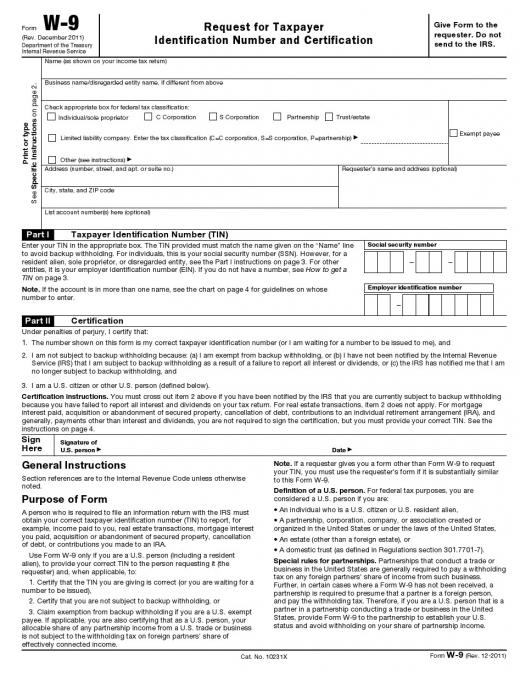
![W-9 form, a type of tax form filed for freelance and contract employees.]()
W-9 form, a type of tax form filed for freelance and contract employees.

Discussion Comments
Subway11-The small business tax is another proportional tax in the United States. It is among one of the highest corporate tax rates in the world.
Corporations pay about 26% in corporate taxes when most of the European countries only charge about 15% tax and Ireland offers the lowest corporate tax rate at 2%.
This is why many American companies invest in other countries and why foreign countries choose to invest in other foreign countries and bypass the United States altogether.
We really have to lower these corporate rates in order to entice companies to invest in the Untied States. This will not only stimulate our economy but will add additional jobs as well.
A proportional tax is like the fairtax that is an idea that has been put out there by many financial
The fair tax is a movement that actually has a sponsor and cosponsor of proposed bills in congress. Both John Linder and Saxby Chambliss of Georgia are leading the charge to introduce this form of tax and abolishing the progressive tax system that we currently have.
There are about 66 economists in favor of this USA tax. The fair tax would no taxes on capital gains or estate taxes and it would also eliminate taxes on Social Security benefits and pensions, and well as tax forms or payroll withholding.
It would also establish a set percentage that all Americans would pay as their federal income tax. Therefore it would make filing taxes so much easier.
Post your comments