
At TheHealthBoard, we're committed to delivering accurate, trustworthy information. Our expert-authored content is rigorously fact-checked and sourced from credible authorities. Discover how we uphold the highest standards in providing you with reliable knowledge.
What is a Poultice?
 Tricia Christensen
Tricia Christensen
Tricia Christensen
The term poultice comes from the Latin word for porridge. It was not uncommon to treat inflammations with porridge spread on a cloth and then applied to the inflamed area. They might also cover the chest during a chest cold. Usually, however, plain porridge mixed with mustard was applied directly on the chest and was called a plaster. Poultices may also be called cataplasms.
Whatever the ingredients for a poultice, it is always a wet substance applied to inflammation or sore spots. Its most common use today is in horses, instead of people. People tend to either ice swelling to reduce it, or heat areas with heating pads. The closest thing to a cataplasm for humans is probably the application of a hot washcloth to large pimples or abscesses to make them form a head and then drain. This is also good for areas that have ingrown hairs. Here, the only wet ingredient is usually water, though some add peroxide as well.

In horses and other farm animals, the most common usage of the poultice is its application to reduce swelling of the joints. Some use a simple cool bran or oatmeal cereal, essentially porridge, on a cloth, and then cover the area with a bandage to secure the cloth. This treatment may be used on abscesses to help the abscess drain.
There are a few poultices that may use disinfectant or antibacterial agents, which are available for commercial sale. These can usually be obtained through a horse vet or a farm animal vet, or at local feed stores. Even though this method is old medicine, it still makes for good medicine in the field of veterinary science.
Veterinarians recommend that one should never use a poultice over an open wound. This makes sense for people using one, too. This may cause the wound to take longer to heal.

However, some surgical wounds that are not healing properly in humans are given a wet to dry dressing, similar to a poultice. The first layers of the dressing are gauze soaked in antibacterial medication. Several applications of the soaked layers are followed by layers of dry gauze and perhaps tape. This type of dressing should only be done under a doctor’s orders.

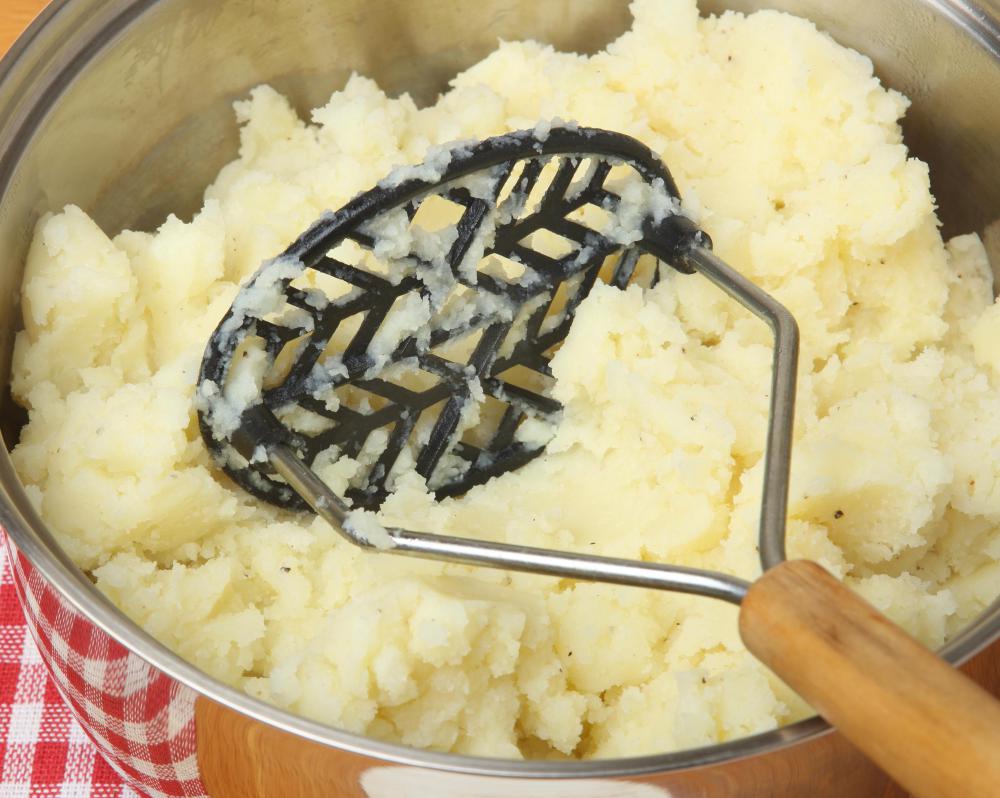
In alternative medicine, one sees home recipes for a mashed potato poultice: warm mashed potatoes spread onto cheesecloth. Historically, this treatment was said to be good for skin conditions like eczema. It is also thought to work well for those who suffer from arthritis.
Tricia Christensen
Tricia has a Literature degree from Sonoma State University and has been a frequent TheHealthBoard contributor for many years. She is especially passionate about reading and writing, although her other interests include medicine, art, film, history, politics, ethics, and religion. Tricia lives in Northern California and is currently working on her first novel.
Learn more...
Tricia Christensen
Tricia has a Literature degree from Sonoma State University and has been a frequent TheHealthBoard contributor for many years. She is especially passionate about reading and writing, although her other interests include medicine, art, film, history, politics, ethics, and religion. Tricia lives in Northern California and is currently working on her first novel.
Learn more...AS FEATURED ON:
AS FEATURED ON:


-
![Poultice may be used on horses to reduce swelling of the joints.]() By: Alexia KhruschevaPoultice may be used on horses to reduce swelling of the joints.
By: Alexia KhruschevaPoultice may be used on horses to reduce swelling of the joints. -
![Mashed potatoes may be used as a poultice.]() By: Joe GoughMashed potatoes may be used as a poultice.
By: Joe GoughMashed potatoes may be used as a poultice. -
![A hot washcloth applied to an abscess is similar to a poultice.]() By: SchliernerA hot washcloth applied to an abscess is similar to a poultice.
By: SchliernerA hot washcloth applied to an abscess is similar to a poultice. -
![Poultices can be used to help remedy ingrown hairs.]() By: F.C.G.Poultices can be used to help remedy ingrown hairs.
By: F.C.G.Poultices can be used to help remedy ingrown hairs. -
![Gauze is sometimes used as part of a poultice.]() By: picsfiveGauze is sometimes used as part of a poultice.
By: picsfiveGauze is sometimes used as part of a poultice.



Discussion Comments
Vicks counts as a poultice to me. Muscle rubs too, are probably the same as some lotions out there. They're different but similar, I'm sure.
A large hunting sock of 60 percent wool and 30 cotton with whatever's left to hold it together works wonders for circulation. A knitted wool also helps with cotton socks. Amber stones close by absorb negative ions, allowing for faster healing.
poultice premedicated rub cured my horse who at one time could not walk.
Mud and vinegar are good for swelling. You can use a mud mask with mineral salt and add vinegar. Apply on area like you would on your face or you can put on gauze and wrap with ace-bandage.
Viks would be more like a salve, because it is a cream/gel. A poultice normally has more substance to it.
what about a poultice of chocolate for ovarian cancer? I think i read some where that this herb is used in this way. Anon WsZX
I was looking for information about poultice treatments for cleaning such as those found in hardware stores...such as what the ingredients are and the uses...
My fall down a cliff in Bali 11 Sept 2008.
I was told only today, Tuesday 30 Sept 2008, that to use a charcoal and slippery Elm poultice on my infected lower R leg, The skin is not broken as such, but when accident happened two weeks ago in Bali INDONESIA, I did gain a puncture hole at the time.
Excessive bruising but no bleeding to the outside. My leg instantly swelled up and the ankle was nowhere to be seen.An ice pack was applied and then I took about 8 aspirin over about 12 hrs as I was flying back to Melbourne Australia, that midnight... and I didn't want a DVT or die, I just wanted to get home.
I applied Betadine immediately.
When arriving home I went straight to my own doctor who put me on a course of antibiotics. I finalized them last w/end and saw him again today. Extra strong antibiotics have been prescribed then I spoke about my prob to a friend who suggested all the names and poultices above.. he told me lots of things that I can't remember, and thinking YOU may be able to help in what I have to do with the poultice suggested... Also electric soda, and hot and cold buckets of it for my leg..??? Do you suggest any thing please. I would love to walk properly again.
Lynda Fish. Bendigo Victoria Australia.
I wonder if things like Vicks VapoRub can count as a modern day poultice? It seems to work the same way as poultices...
Post your comments