
At TheHealthBoard, we're committed to delivering accurate, trustworthy information. Our expert-authored content is rigorously fact-checked and sourced from credible authorities. Discover how we uphold the highest standards in providing you with reliable knowledge.
What is a Platelet Transfusion?
A platelet transfusion is an intravenous transfer of platelets collected from a donor or pooled from multiple donors. Platelets are small cell structures essential to the process of blood clotting and, therefore, important to maintain at certain levels within the body. A complete blood cell count (CBC) is a blood test that measures the number of the different types of cells circulating in the blood stream. When the results of a patient's CBC indicate that there are a lower than normal level of platelets, the condition is called thrombocytopenia. Depending on the cause, symptoms, and severity of the patient's thrombocytopenia, a transfusion may be considered as a treatment.
An intravenous drip into a vein in the arm or hand, an implanted central line, or a peripherally inserted central catheter (PICC) line can be used to transfuse the platelets. The donor platelets, which are stored in small bags, must be kept cool. Each bag contains approximately 3.4 oz (100 mL) of a yellow fluid that includes the platelets. Most patients only require one bag, also called a unit, to be administered, and each unit takes about 15 to 30 minutes to be transfused.

Each transfused unit is typically comprised of platelets given by three to five blood donors or from those given by only one donor. When the blood of only one donor is used, the cells are known as apheresed platelets. These are produced when the blood is processed through a machine, and the platelets are separated from the rest of the blood in a process called apheresis. Apheresed platelets are generally less likely to produce an adverse reaction in the recipient.

Platelet transfusions are often prescribed for those who are undergoing chemotherapy, bone marrow/stem cell transplant, or organ transplant, and those with AIDS. They are usually not given for thrombocytopenia secondary to the administration of the anti-clotting medication, heparin. A transfusion would also generally not be used to treat a patient with thrombotic thrombocytopenic purpura (TTP), a blood disorder that results in the formation of blood clots within the smallest blood vessels of the body.

Beyond a diagnosis that may indicate a need for a platelet transfusion, medical professionals also take other factors into consideration before prescribing this treatment. A patient with a platelet count of less than 10,000 requires a transfusion, regardless of whether or not that patient shows any symptoms of thrombocytopenia. In general, a patient with a count between 20,000 and 50,000 may be prescribed a transfusion only if that patient is experiencing active bleeding. In addition, any patient with a count under 50,000 may be prescribed a transfusion if he or she is undergoing surgery in the immediate future.
AS FEATURED ON:
AS FEATURED ON:


-
![An individual undergoing chemotherapy may receive platelet transfusions.]() By: Monkey BusinessAn individual undergoing chemotherapy may receive platelet transfusions.
By: Monkey BusinessAn individual undergoing chemotherapy may receive platelet transfusions. -
![Individuals undergoing an organ transplant may receive platelet transfusions.]() By: Dan RaceIndividuals undergoing an organ transplant may receive platelet transfusions.
By: Dan RaceIndividuals undergoing an organ transplant may receive platelet transfusions. -
![Platelet donation is very similar to blood donation.]() By: Nenov BrothersPlatelet donation is very similar to blood donation.
By: Nenov BrothersPlatelet donation is very similar to blood donation. -
![Patients who require platelet transfusions often already have a central line catheter placed for medications and blood draws.]() By: tawesitPatients who require platelet transfusions often already have a central line catheter placed for medications and blood draws.
By: tawesitPatients who require platelet transfusions often already have a central line catheter placed for medications and blood draws. -
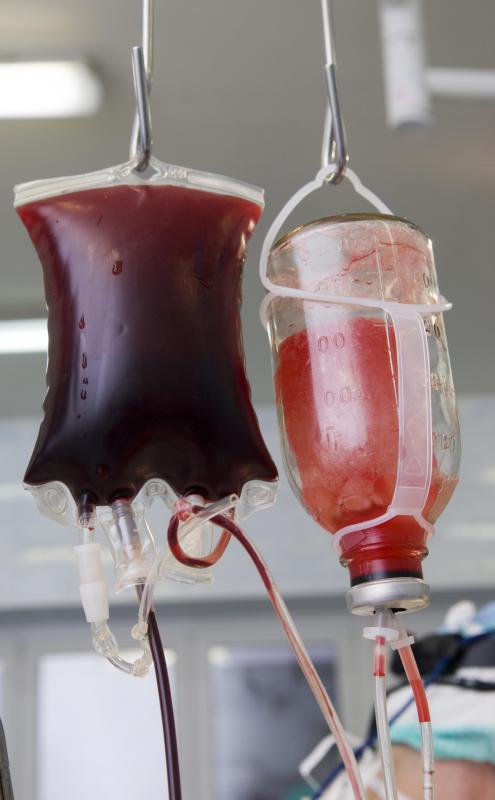
![Abnormal platelet function can lead to hemorrhaging, necessitating a blood transfusion.]() By: Max TacticAbnormal platelet function can lead to hemorrhaging, necessitating a blood transfusion.
By: Max TacticAbnormal platelet function can lead to hemorrhaging, necessitating a blood transfusion.


Discussion Comments
What condition needs a blood transfusion of platelets?
My granddaughter is about to have a platelet transfusion. after reading comments posted i think that i would donate not just for her but the other children that i have seen on the ward that need this regularly.
I give a platelet donation every 4 months. This is all they will allow. No, if you have ever given blood it is the same feeling, just takes a little longer.
It is a great feeling to do this.
My sister has cancer and has platelet transfusions regularly and also packed blood transfusions. It is used in emergency situations.
When my daughter was born, I almost bled to death, and if was not for someone who gave blood, I probably would not have survived. This is my pay back to the person who gave a part of themselves. I will do this as long as I am able. Thank you whoever you are whose blood saved my life.
Platelet donation is really easy. If you can donate whole blood, then the platelet process will not cause any problems. It is utterly painless. The only real difference from a whole blood donation is that it takes longer (about 60 - 90 minutes) and you need to be able to commit to more regular donations. In the UK you can go every four weeks if you are able.
I was wondering about blood platelet donation -- how exactly does that work?
I've heard that they take out the blood, then separate the platelets from it, and then put the rest of the blood back in.
I would imagine that would really hurt -- has anybody had this done, or know about it?
@FirstViolin -- While there are a number of platelet transfusion side effects, the more serious ones are thankfully rare.
The most common side effects are itching, a rash, a fever, and chills or shivering. These occur during the transfusion itself, and can be controlled with medication.
In rare cases, such as the case of a massive transfusion or repeated, large transfusions, a person's body can develop an immune response to the platelets, and produce antibodies to attack them.
However, again, this is very rare, and usually only happens in the case of a very large, or very prolonged course of transfusions.
What are some of the side effects of platelet transfusion? That sounds like such an invasive thing, I can't imagine that the body would just accept it.
Am I right, are there usually transfusion reactions, or do people normally have few side effects?
Post your comments