
At DelightedCooking, we're committed to delivering accurate, trustworthy information. Our expert-authored content is rigorously fact-checked and sourced from credible authorities. Discover how we uphold the highest standards in providing you with reliable knowledge.
What is a Pizza Stone?
Pizza is one of the world's most beloved foods, but homemade pizza just doesn't taste the same as getting it from a genuine brick oven. Too often the crust is left doughy while the topping is done, or the bottom burns while waiting for the top to brown! Getting the pizza to heat evenly seems nearly impossible. But there is a way to make perfect brick-oven pizza at home without redesigning your kitchen. All that is needed is a pizza stone.
A pizza stone is a round stoneware platter that sits under the pizza while it bakes. The microscopic pores in the stone absorb exuding moisture from the dough while distributing heat evenly throughout the pie. The result is a perfectly cooked pizza that will not burn on the bottom before the toppings have cooked to your liking.

Pizza stones can be made to varying thicknesses and from a variety of materials such as condensed sand or terra cotta. They can break, so care should be taken to avoid dropping or knocking them. Thermal shock, or a sudden change in temperature, can also cause stones to crack, so a cold stone should not be placed in a hot oven. Instead, place the cool stone in the unheated oven on the middle shelf. Preheat the oven to the desired temperature, allowing the stone to heat slowly with the oven. Then use a pizza peel or paddle to place the homemade pizza on the stone.
If you are baking a frozen pizza, do not place it on a hot pizza stone. Instead, place the frozen pizza on a cold stone in an unheated oven, then let the oven heat to the proper temperature.

Sprinkling corn meal on a pizza stone will keep the pizza from sticking. Do not use oil or sprays on a stone unless recommended by the manufacturer. When the pizza is done, remove the pizza from the stone with a paddle, allowing the stone to remain in the oven and cool down as the oven cools. Alternately, you can remove the stone and place it on a cooling rack, but do not place the hot stone on a cold surface.

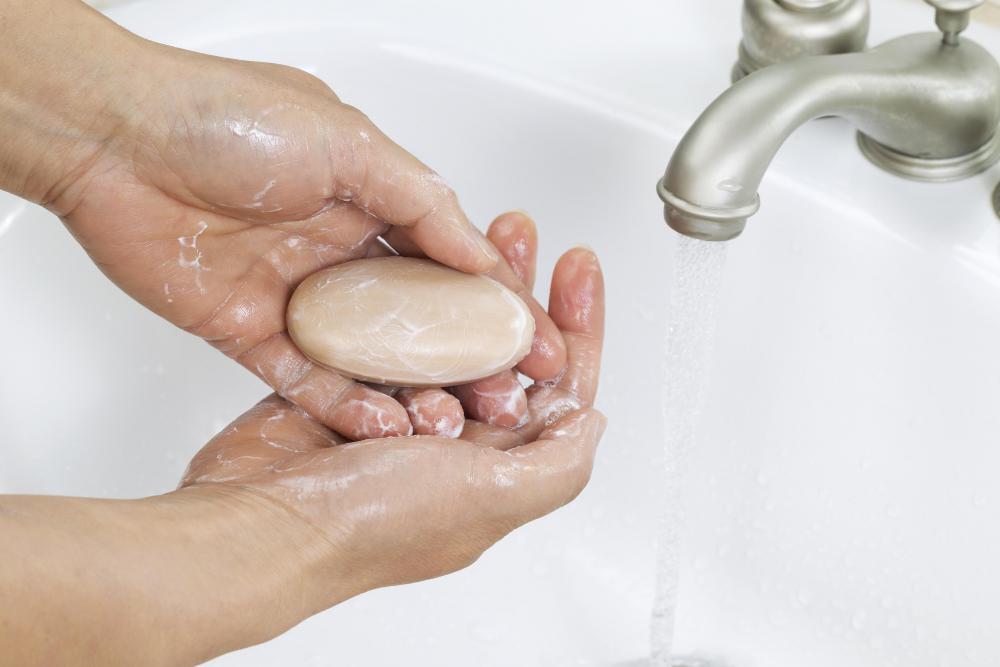
To cut the pizza, transfer it to a cutting board to avoid scarring the pizza stone. A stoneware stone will darken with age. It should never be washed, as it will absorb soap and water, ruining the taste of future pizzas. Instead, the stone should be cleaned with a dry, stiff brush. Do not place a pizza stone in the oven on the self-cleaning setting, as some ovens heat too rapidly and could cause the stone to break.
AS FEATURED ON:
AS FEATURED ON:


-
![Some restaurants cook pizza on flat bricks or stones in special ovens.]() By: sherstobitovSome restaurants cook pizza on flat bricks or stones in special ovens.
By: sherstobitovSome restaurants cook pizza on flat bricks or stones in special ovens. -
![There are innumerable iterations of pizza, a food that's popular worldwide.]() By: emde71There are innumerable iterations of pizza, a food that's popular worldwide.
By: emde71There are innumerable iterations of pizza, a food that's popular worldwide. -
![A pizza stone should never be washed.]() By: tab62A pizza stone should never be washed.
By: tab62A pizza stone should never be washed.


Discussion Comments
You're right to let the pizza stone cool gradually in the oven. A closed oven, to be sure. I'd never pull it out hot to rest on a counter. Crack!
@celnsur: Don't worry about the stains, I've had mine for years and it looks gnarly and awful, the more you use it the less it sticks to the food. I've never washed it or cleaned it in any way.
@anon44390: A pizza stone is essential if you want a perfect crust; just don't forget to preheat it sufficiently.
Yes they are great, and inexpensive.
My help accidentally placed a plate with an oily surface on top of my pizza stone and it left a mark. I also see some black rings on the surface of my stone. I haven't used the stone yet. Can I still use it despite the condition. How do you clean it also of dust? Thank you.
I have wanted to buy a pizza stone, but haven't known anyone who had one, so I don't know if they actually are worth buying. Has anyone had any luck using a pizza stone?
Post your comments