
At DelightedCooking, we're committed to delivering accurate, trustworthy information. Our expert-authored content is rigorously fact-checked and sourced from credible authorities. Discover how we uphold the highest standards in providing you with reliable knowledge.
What is a Pimiento?
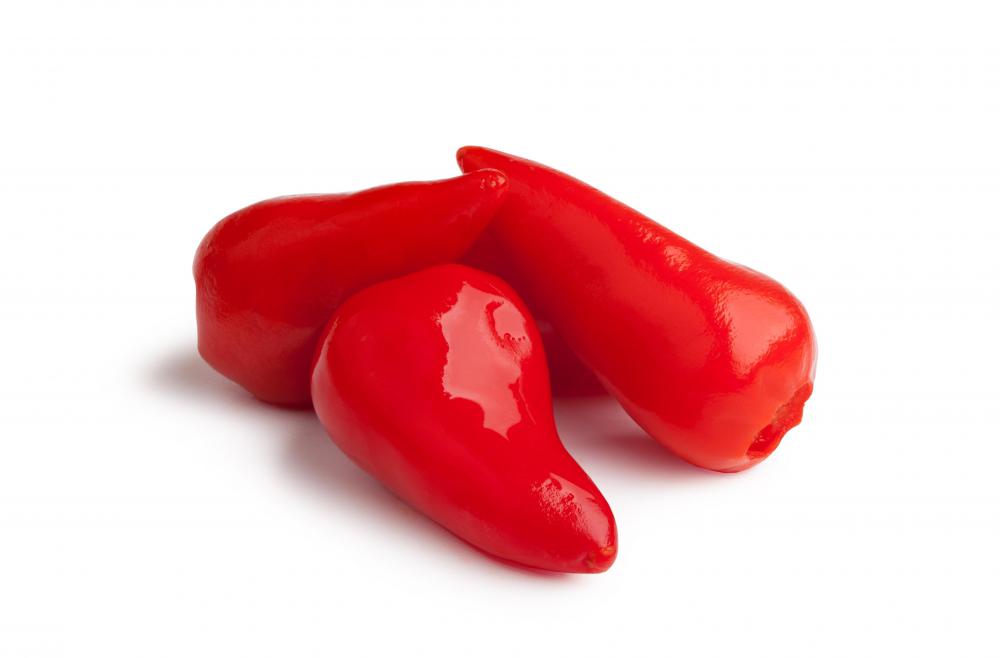
A pimiento, also spelled "pimento," is a small sweet red pepper, similar to, but more flavorful than, a bell pepper. These peppers can be used in a wide range of dishes, from stuffed olives to chicken salad sandwiches. They are commonly dried and ground into a powder called "paprika," which is quite popular in the cuisine of countries such as Hungary and Spain. Pimientos are low in calories and fat content but contain a great deal of Vitamins C and A.
Culinary Uses

When used fresh, the skin of a pimiento is typically removed; one old-fashioned method for this was to hold the pepper on a long fork over a fire to char the skin, which someone could then easily pull off. This process can still be used for pimientos and bell peppers, often then referred to as "roasted red peppers." Pimiento is familiar to many Americans as the square red strip that is found inside some brands of seedless green olives.

It can be grown and used just like bell pepper, sliced or diced and added raw to salads, or stuffed with other ingredients and baked as a side dish or entree. Available in "olive-stuffing sized strips" in many grocery stores, canned pimiento tastes great in pasta salads, cheese spreads and dips, and chicken or tuna salad sandwiches. If a recipe calls for pimientos, but a cook does not have access to them, then the cook can typically use red bell peppers in their place. Roasted peppers are often the best replacement, since their texture and flavor more closely matches the softness and sweetness of pimientos.
Use As a Dried Spice

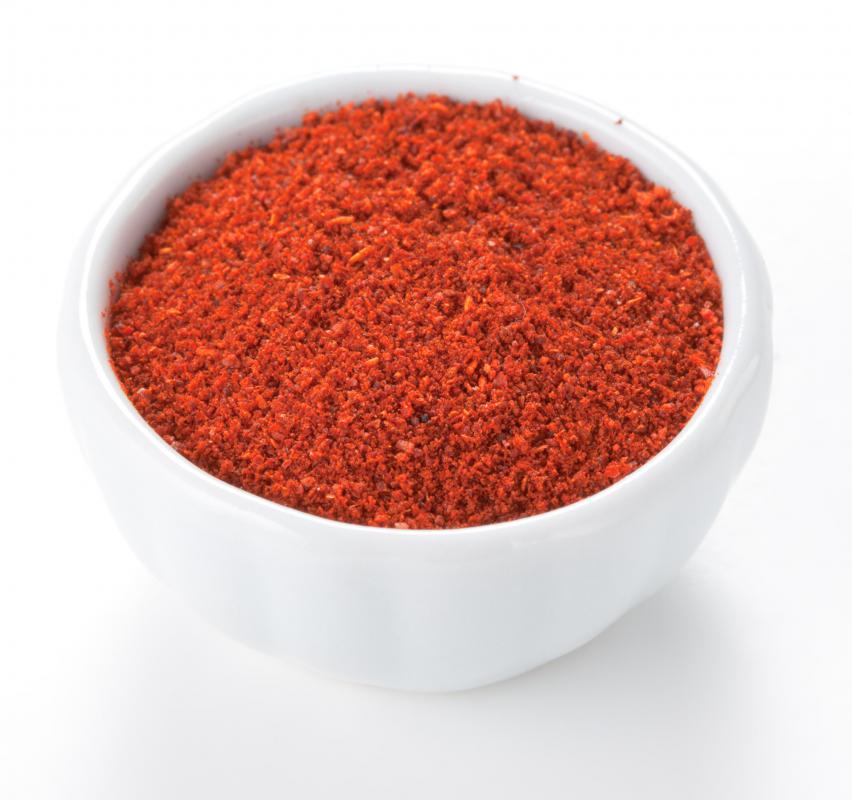
Grown commercially in Spain, Hungary, and the Middle East, the pimiento is native to South America. Pimiento dried and ground fine becomes the spice paprika, which is widely used in Hungarian and Spanish cuisines. Many chefs add paprika to stews, vegetables, and other dishes both for its pungent flavor and to add an attractive red color to the dish. Paprikash is a Hungarian dish prepared with paprika and sour cream; it is most typically made with chicken, although turkey and vegetarian versions are also quite good, and many cooks serve it over buttered noodles.
Nutritional Benefits

Both pimiento on its own and paprika are very low in calories, especially since they are usually eaten in small quantities, and have little fat. They are commonly prepared in dishes with high-fat content, but do not contribute much to this. Pimientos are very good sources of Vitamins A, even in fairly small quantities, and a single pepper has almost the entire recommended daily value of Vitamin C for an adult.
AS FEATURED ON:
AS FEATURED ON:


-
![Fresh pimientos.]() By: GreseiFresh pimientos.
By: GreseiFresh pimientos. -
![Green olives stuffed with pimiento is a popular use for the pepper.]() By: Diana TaliunGreen olives stuffed with pimiento is a popular use for the pepper.
By: Diana TaliunGreen olives stuffed with pimiento is a popular use for the pepper. -
![A bowl of paprika, which is typically made with ground pimiento.]() By: Ekaterina LinA bowl of paprika, which is typically made with ground pimiento.
By: Ekaterina LinA bowl of paprika, which is typically made with ground pimiento. -
![Chicken stuffed with pimiento.]() By: Andrey StarostinChicken stuffed with pimiento.
By: Andrey StarostinChicken stuffed with pimiento. -
![A pimento pepper is small and sweet, and more flavorful than a bell pepper.]() By: Only FabrizioA pimento pepper is small and sweet, and more flavorful than a bell pepper.
By: Only FabrizioA pimento pepper is small and sweet, and more flavorful than a bell pepper.



Discussion Comments
Hungary is the world's paprika country. You'll find literally hundreds of types from sweet to very spicy. I use it in goulash and even in spaghetti sauce to give it a richer taste.
I don't know the shelf life once opened, however, my just purchased, small jar says, "To store, cover with water, add half teaspoon vinegar, re-cap and store in refrigerator."
what is the shelf life once they are open and put in the fridge?
I recently used (inexpensive) roasted red peppers in a corn salad recipe that called for (expensive) pimiento.
They taste great in the salad. I will continue to use peppers in place of pimiento.
I have a recipe that calls for pimiento strip. what is this?
I would recommend red bell pepper as the alternate for pimiento. If you have not tried pimiento, however, you should. Buy a small jar in the supermarket in the pickles and relishes section.
What can be used as an alternative to pimiento, when a recipe calls for 1/4 cup of pimiento to Savoury Chicken Noodle Bake?
Post your comments