
At AllThingsNature, we're committed to delivering accurate, trustworthy information. Our expert-authored content is rigorously fact-checked and sourced from credible authorities. Discover how we uphold the highest standards in providing you with reliable knowledge.
What is a Phenotype?
 Mary McMahon
Mary McMahon
Mary McMahon
A phenotype is the collective sum of the observable or measurable chemical, physical, behavioral or developmental characteristics an organism shows. It becomes established through a combination of environmental factors and genetic encoding. Professionals often look at this set of traits for the purpose of grouping or classification, despite the fact that it is not always constant.
Definition

People typically refer to a phenotype as the entire set of characteristics that an organism has that are measurable or observable, or that individuals can see or prove in some way. It is extremely difficult to describe a phenotype completely, simply because there are so many traits that living things show. For this reason, most of the time, people usually talk about one using only a small number or part of what appears, such as pointing out that an person has brown eyes or a specific blood type. Technically, it is not proper to refer to these individual parts as a phenotype, although individuals sometimes do.

Very strictly, this term applies only to physical or chemical factors. Some professionals, however, expand the definition to include behavioral and developmental elements, as well, because people can see an organism changing, growing or performing different activities, just as they can note height or a number of limbs. When two creatures look very similar, it is often these traits that become distinguishing.
Relationship to Genotype

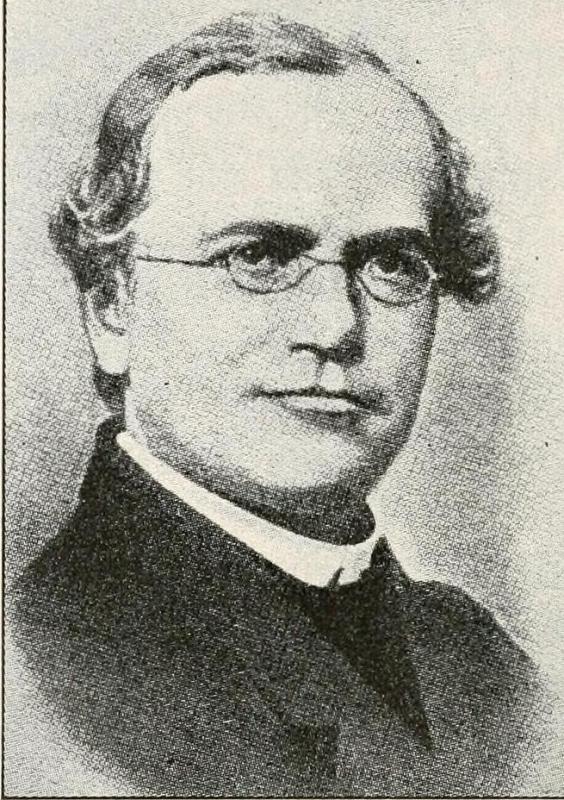
Closely related to the phenotype is the genotype, which is the collective set of information found in an organism's genetic code. This data controls a host of cell and body functions and, subsequently, affects many of the observable characteristics something has. In fact, people have figured out that they can manipulate traits by influencing genetic sequences. Perhaps the best example of this comes from the groundbreaking work of Gregor Johann Mendel, a 19th-century friar who experimented with pea plants to create hybrids with specific appearances and qualities. In many cases, it is possible to make some conclusions about genetic issues based on part of a phenotype, such as when medical professionals note the unique facial structure associated with trisomy 21, better known as Down Syndrome.

Most scientists say that a phenotype is the set of traits that are physically expressed from the presence of dominant genes. Under this view, it is not really possible to separate genetics from observable and measurable characteristics, and the way that genes interact or combine becomes extremely important in statistically determining the odds that a trait will be seen. Researchers do not ignore non-genetic factors, however.
Influence of Environment

Even though genetics determines a lot of what shows up in a phenotype, most experts accept that the environment plays a part, too. A person who goes out in the sun a little too often, for instance, might develop freckles. Someone who loses or gains weight as a result of changes to diet and exercise is another good example.
Although most researchers acknowledge that what people can observe is not entirely genetically based, it often isn't clear exactly what effects particular environmental factors have on the characteristics in a phenotype. Many of the chemicals people use in foods and general manufacturing haven't been available or studied long enough to determine the benefits or drawbacks, for instance. To make the issue even more complex, no two organisms necessarily react the same way, because everything has a slightly different genotype. It can be hard to tell whether a trait is the result of genes, what's around the organism or both, but the understanding that environment does have some influence has led to a wide range of studies and has opened the door to complex questions, such as whether people with certain characteristics are fated to live in a particular way.
Use in Classification and Grouping
Experts often use phenotypes to classify or group something, or to make some assumptions about its functions and history. If a creature has hair, for example, it is probably a mammal. Similarly, if a person has extremely fair skin, they likely descend from people who lived further away from the equator where there is less sunlight. This practice falls naturally into regular physical, chemical or behavioral study, because part of the standard scientific method is to make observations and apply them during analysis.
Constancy
A big issue when relying on phenotypes for classification and grouping is that, even if the underlying genetic code involved does not change, what someone sees is not necessarily static. A person can alter their natural hair color with dye, for example, or they can use plastic surgery, tattoos, piercings to change how they look. Trauma such as accidents also can change appearance and behavior, as can medications and general aging. An entire field of psychology is dedicated to behavior modification, or changing what someone does. Whether an organism belongs to a particular group, therefore, is something that professionals constantly have to reevaluate.
Frequently Asked Questions
What exactly is a phenotype?
A phenotype refers to the observable characteristics or traits of an organism, such as its morphology, development, biochemical properties, physiology, and behavior. These traits result from the interaction of the organism's genetic makeup (genotype) with the environment. For example, a person's eye color is a phenotypic trait that can be seen.
How does a genotype differ from a phenotype?
The genotype is the genetic code inherited from an organism's parents, consisting of DNA sequences that dictate potential traits. In contrast, the phenotype is the actual expression of these traits, which can be influenced by environmental factors. While genotypes determine possible phenotypic outcomes, the environment can modulate these outcomes in various ways.
Can the environment affect an organism's phenotype?
Yes, the environment plays a crucial role in shaping an organism's phenotype. Factors such as temperature, nutrition, stress, and exposure to pathogens can influence the expression of genes and thus alter phenotypic traits. For instance, identical twins, despite having the same genotype, can exhibit different phenotypes due to environmental differences.
Are all phenotypic traits visible?
Not all phenotypic traits are visible to the naked eye. While many traits, like height and skin color, are readily observable, others, such as blood type or enzyme levels, require biochemical tests to detect. These non-visible traits are just as much a part of an organism's phenotype as the visible ones.
Can an individual's phenotype change over time?
An individual's phenotype can indeed change over time due to environmental influences or changes in the organism's internal conditions. For example, a person's weight can fluctuate based on diet and exercise, and suntanning can alter skin pigmentation—both are phenotypic changes. Some changes are reversible, while others, like scars, are permanent.
Is phenotype solely determined by inheritance?
While inheritance plays a significant role in determining phenotype, it is not the sole factor. The interaction between an organism's genotype and its environment results in the phenotype. For example, a plant's inherited potential for height might be limited by the availability of sunlight and water, demonstrating the environmental impact on phenotype.
Mary McMahon
Ever since she began contributing to the site several years ago, Mary has embraced the exciting challenge of being a AllThingsNature researcher and writer. Mary has a liberal arts degree from Goddard College and spends her free time reading, cooking, and exploring the great outdoors.
Learn more...
Mary McMahon
Ever since she began contributing to the site several years ago, Mary has embraced the exciting challenge of being a AllThingsNature researcher and writer. Mary has a liberal arts degree from Goddard College and spends her free time reading, cooking, and exploring the great outdoors.
Learn more...AS FEATURED ON:
AS FEATURED ON:









-
![A phenotype of animals with hair would imply that the animal is probably a mammal.]() By: Vera KuttelvaserovaA phenotype of animals with hair would imply that the animal is probably a mammal.
By: Vera KuttelvaserovaA phenotype of animals with hair would imply that the animal is probably a mammal. -
![Children with Down syndrome often have distinct facial features.]() By: karelnoppeChildren with Down syndrome often have distinct facial features.
By: karelnoppeChildren with Down syndrome often have distinct facial features. -
![Gregor Mendel is known as the father of genetics for his work studying inherited traits.]()
Gregor Mendel is known as the father of genetics for his work studying inherited traits. -
![Gregor Mendel experimented with pea plants to create hybrids with specific qualities.]() By: Giuseppe PorzaniGregor Mendel experimented with pea plants to create hybrids with specific qualities.
By: Giuseppe PorzaniGregor Mendel experimented with pea plants to create hybrids with specific qualities. -
![Some people with trisomy 21. or Down syndrome, may learn the skills needed to live independently.]() By: Monkey BusinessSome people with trisomy 21. or Down syndrome, may learn the skills needed to live independently.
By: Monkey BusinessSome people with trisomy 21. or Down syndrome, may learn the skills needed to live independently.




Discussion Comments
@BioNerd: Sorry, but it is quite obvious that you would eventually find a specific phenotype in a completely unexpected place because genes somehow (and you can think of many possible ways) would travel there. Nowadays that's pretty plausible. It can also happen that specific phenotypical characteristics would show up only after a few generations. It can also be a genetic malfunction. In fact, there are all kinds of possibilities. That doesn't contradict the theory itself, though!
I think that although much of the tendency of characterizing a people group based on phenotypes may be based on popular convention and very little actual fact, there is still a set of patterns which can be applied to a people group. For instance, most Italians tan. Although there are a good deal of Italians who cannot tan, they are nevertheless in the minority of Italians, and usually live in the North of Italy. The key in distinguishing people groups is to realize that you can never definitively tell very much at all about them based on surface traits, but can merely make speculative postulations.
Anthropologists used to be big on defining people groups based on a common set of phenotypes, but often failed to account for the random sets of people who they would discover in random places with phenotypes which were characteristic of a people thousands of miles away. Suffice it to say that the traits determining that someone is "Scandinavian" could pop up in places such as Afghanistan or Ethiopia. There is often little correlation between a nation and a set of traits, and the lines are always blurred.
Post your comments