
At WiseGEEK, we're committed to delivering accurate, trustworthy information. Our expert-authored content is rigorously fact-checked and sourced from credible authorities. Discover how we uphold the highest standards in providing you with reliable knowledge.
What is a PET Scan?
A positron emission tomography (PET) scan is a special kind of imaging test that allows medical professionals to see how certain tissues and organs within the body are functioning. The most significant difference between a PET scan and other imaging tests, such as MRI or CT scan, is the ability to detect changes in the body at the cellular level rather than after a disease has progressed enough to actually effect the surrounding tissue or organs. A scan may be useful for helping to detect certain types of cancer, brain disorders, heart problems, and other conditions of the central nervous system.
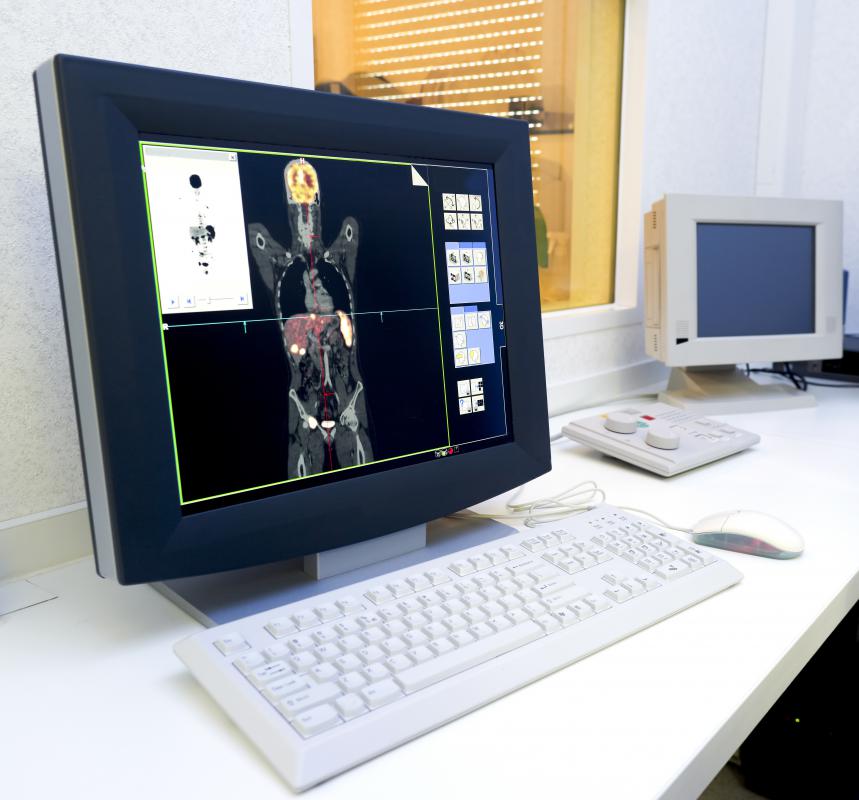
A PET scan is performed by injecting a small amount of radioactive chemical into a vein. As the chemical travels through the body, it is absorbed by the organs and tissues. During the test, a scanner records the energy produced by the cells. A computer converts the recording into three-dimensional pictures of an area of the body and any cells that are changing show up at a brighter contrast to any surrounding, normal cells.

There is very little preparation involved prior to the procedure, and it is most often done on an outpatient basis. In general, most patients are simply given restrictions on food or drink for six to 12 hours prior to the test. Heart patients, diabetics, and other specific patients may be given a specific set of directions depending on the purpose of the scan. The test takes approximately two hours to complete.
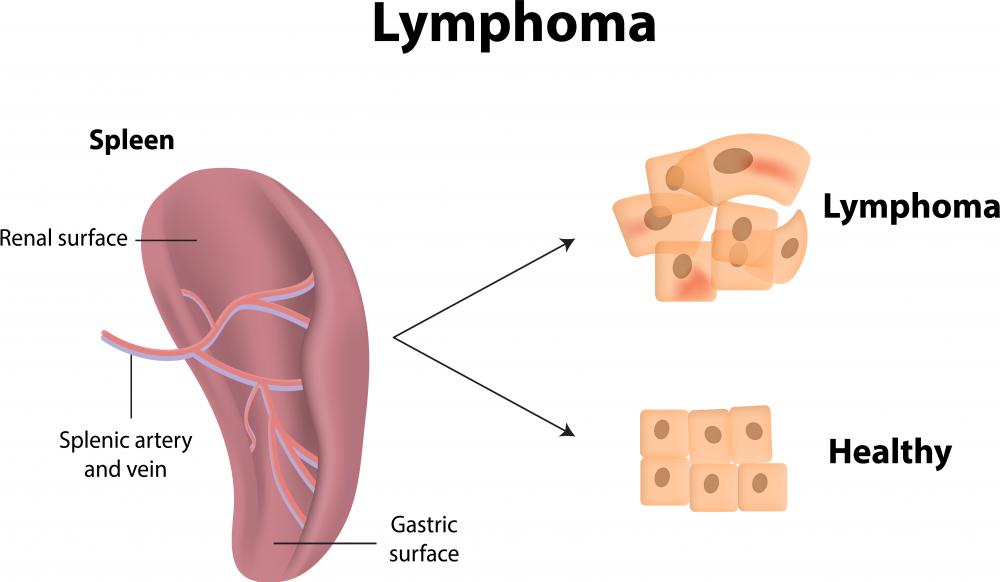
PET scan technology is widely used in oncology as it helps to stage and detect certain types of cancer including breast cancer, lymphoma, and certain types of lung cancer. It is also widely used in medical research.

Due largely to the technology and equipment involved, this type of scan is considerably more expensive than conventional imaging tests, but most insurance plans will cover one if certain conditions apply. Before undergoing the scan, patients should check with their insurance company about coverage benefits and requirements.
AS FEATURED ON:
AS FEATURED ON:









-
![A PET scan is a type of nuclear medicine imaging examination.]() By: griezeA PET scan is a type of nuclear medicine imaging examination.
By: griezeA PET scan is a type of nuclear medicine imaging examination. -
![PET scans and CT scans detect changes in the body at the cellular level.]() By: Tyler OlsonPET scans and CT scans detect changes in the body at the cellular level.
By: Tyler OlsonPET scans and CT scans detect changes in the body at the cellular level. -
![Brain disorders may be detected with a PET scan.]() By: CGinspirationBrain disorders may be detected with a PET scan.
By: CGinspirationBrain disorders may be detected with a PET scan. -
![A PET scan may be performed to help detect lymphoma.]() By: joshyaA PET scan may be performed to help detect lymphoma.
By: joshyaA PET scan may be performed to help detect lymphoma. -
![PET scan results are generally only interpreted by radiologists who have received specialized training in nuclear medicine.]() By: michaeljungPET scan results are generally only interpreted by radiologists who have received specialized training in nuclear medicine.
By: michaeljungPET scan results are generally only interpreted by radiologists who have received specialized training in nuclear medicine. -
![A PET scanner uses gamma cameras to capture images inside the body.]() By: sonapA PET scanner uses gamma cameras to capture images inside the body.
By: sonapA PET scanner uses gamma cameras to capture images inside the body. -
![PET scans may be used to locate malignant tumors as well as track growth.]() By: Trish23PET scans may be used to locate malignant tumors as well as track growth.
By: Trish23PET scans may be used to locate malignant tumors as well as track growth.




Discussion Comments
Where in Ontario do they provide this PET scan?
I have a broken rib and had melanoma but they got all of it. Now a New York doctor wants me to have a pet ct scan. Will that tell me why my rib broke? or will it tell me if the cancer is back?
What is the cost of a entire body pet scan?
are pet scans similar to mri machines?
Can a Pet scan show a bacterial blood infection in the body?
i see a Kidney doctor regularly as my kidneys need to be monitored. Is the chemical used for the PET scan safe for the kidneys?
what kind of chemicals are injected?
I am afraid of claustrophobia. Will there be equipment near my face? this is to detect problems with my heart, I think.
Read the article "The test takes approximately two hours to complete." Last sentence of the third paragraph.
does a pet scan cover the entire body
including the head?
How long does the actual body pet scan take?
Post your comments