
At TheHealthBoard, we're committed to delivering accurate, trustworthy information. Our expert-authored content is rigorously fact-checked and sourced from credible authorities. Discover how we uphold the highest standards in providing you with reliable knowledge.
What is a Paraaortic Lymph Node?
The paraaortic lymph node is one of several masses of lymph tissue located near the aorta, right in front of several lumbar vertebrae. Another term for one is a periaortic lymph node. As part of the lymphatic system, these nodes help drain dead cells and immune system-neutralized foreign bodies. In particular, they help drain the organs in the pelvis and the lower part of the digestive system.
These nodes can be classified based on its location. The preaortic group is located in front of the aorta, where each node drains sections of the gastrointestinal tract found in the abdomen until the mid-rectum. The group can further be divided into the superior mesenteric, celiac, and inferior mesenteric lymph nodes, according to their arrangement around the superior mesenteric, celiac, and inferior mesenteric arteries. These arteries are the major blood supplier of the digestive system.

The set of lymph nodes located near the third and fourth lumbar vertebral bodies, just behind the aorta, is called the retroaortic or postaortic group. These nodes receive drainage from the left lateral aortic glands and the right lateral aortic glands. The sets of glands are collectively termed the lateral group.
In males, the left and right lateral aortic glands drain the testes; in females, they drain the ovaries, uterus, and Fallopian tubes. They also drain the kidneys, adrenals, lateral abdominal muscles, and common iliac glands. The right lateral aortic glands are located anterior to the inferior vena cava, around the area where the renal vein terminates. Left lateral aortic glands are arranged in a chain structure on the left of the abdominal aorta.

Any infection or pathology in the parts of the gastrointestinal tract located in the abdomen and pelvic organs drain into the paraaortic lymph nodes. When there is a suspicion of cancer or when medical professionals want to know how widely cancer has spread into the abdominal and pelvic cavities, a biopsy of one of these nodes is performed. Usually, a surgeon performs a procedure called mediastinoscopy, whereby a lighted camera is inserted within the chest in order to visualize the node. Instruments used for biopsy are then inserted into the chest, together with the mediastinoscope, in order to take a sample. Determining which lymph nodes have cancer is important because it allows staging of the disease and it lets the healthcare professional know about a patient’s prognosis.

The dissection or removal of a paraaortic lymph node is also important in the surgical treatment of cancer. Node dissection usually involves the lateral group, which has approximately 20 nodes on each side. Typically, the surgeon starts dissecting at the region where the aorta bifurcates or branches off, and removes the lymph node chains up to the renal veins or the superior mesenteric artery. The lymph nodes are in close proximity to the aorta, which is the largest blood vessel of the body. Therefore, great care is undertaken during lymph node biopsy and dissection.
AS FEATURED ON:
AS FEATURED ON:


-
![When cancer is suspected, a surgeon will insert a camera into the chest to get a view of the paraaortic lymph node.]() By: Franck BostonWhen cancer is suspected, a surgeon will insert a camera into the chest to get a view of the paraaortic lymph node.
By: Franck BostonWhen cancer is suspected, a surgeon will insert a camera into the chest to get a view of the paraaortic lymph node. -
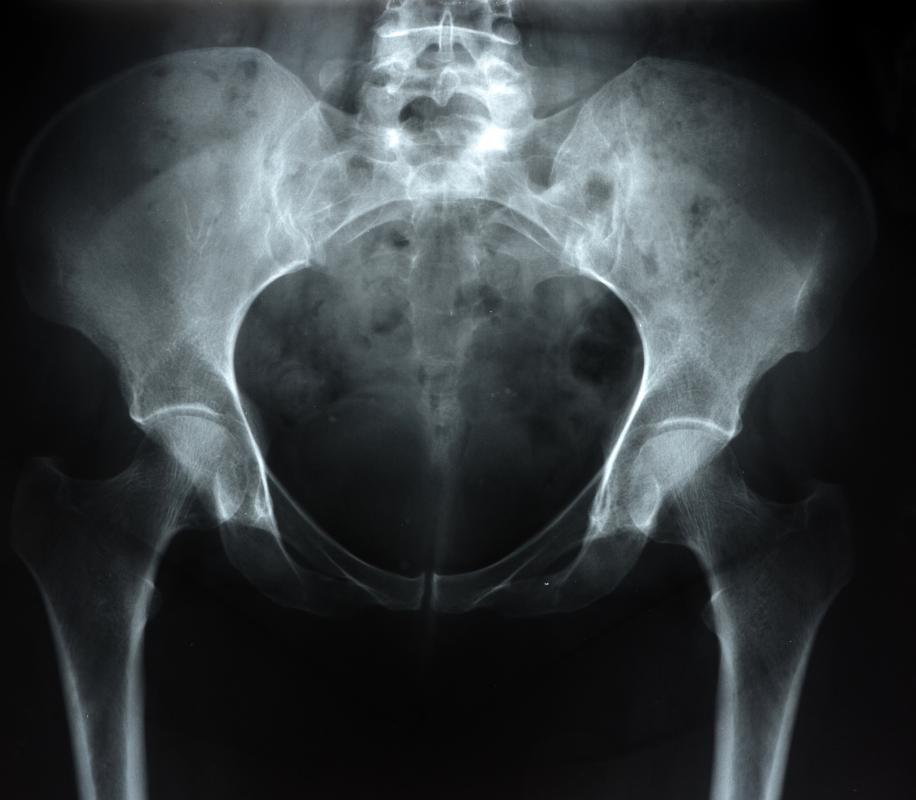
![Paraaortic lymph nodes help drain pelvis organs.]() By: neftaliParaaortic lymph nodes help drain pelvis organs.
By: neftaliParaaortic lymph nodes help drain pelvis organs. -
![The lymphatic system, shown in green.]() By: Sebastian KaulitzkiThe lymphatic system, shown in green.
By: Sebastian KaulitzkiThe lymphatic system, shown in green. -
![A sample of a paraaortic lymph node may be examined under a microscope if cancer is suspected.]() By: luchschen_shutterA sample of a paraaortic lymph node may be examined under a microscope if cancer is suspected.
By: luchschen_shutterA sample of a paraaortic lymph node may be examined under a microscope if cancer is suspected. -
![The right lateral aortic glands are located anterior to the inferior vena cava.]() By: 7activestudioThe right lateral aortic glands are located anterior to the inferior vena cava.
By: 7activestudioThe right lateral aortic glands are located anterior to the inferior vena cava.



Discuss this Article
Post your comments