
At AllThingsNature, we're committed to delivering accurate, trustworthy information. Our expert-authored content is rigorously fact-checked and sourced from credible authorities. Discover how we uphold the highest standards in providing you with reliable knowledge.
What is a Panda?
 Tricia Christensen
Tricia Christensen
Tricia Christensen
The panda is arguably one of the most appealing mammals on earth. It is related to other bear species, but genetic research suggests a split about 40,000 years ago, that resulted in the animal having an elongated wrist bone similar to a thumb.
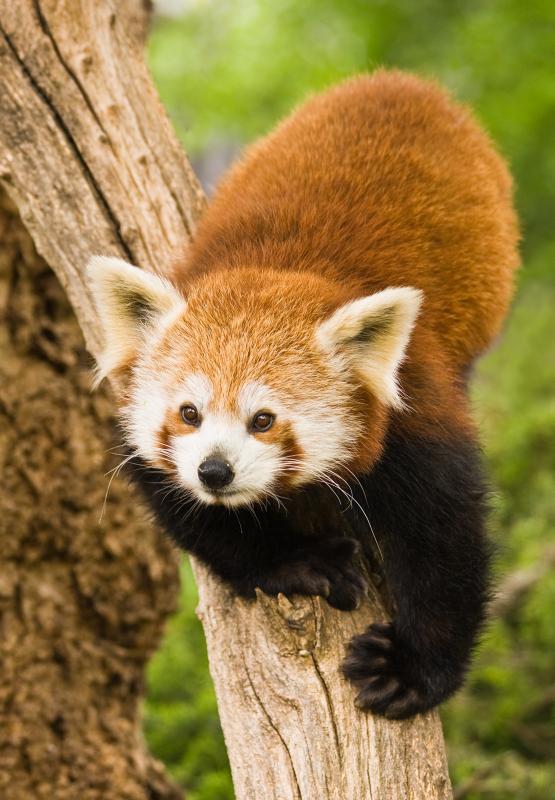
The Giant Panda, with its black and white patches, is most recognizable, but the same group of animals also includes the Red Panda, which much more resembles a raccoon or fox than a bear. Another species, roughly half the size of the Giant species, has been extinct for about a million years, though fossil records are still found of this Dwarf Panda.

The Giant Panda weighs about 270 pounds (122.54 kg), and can be about 5 to 6 feet (1.52-1.82m) in height. The Red Panda is much smaller, and closer in resemblance to a raccoon. It can be about 1.75 feet (.53 m) long and weigh about 11 pounds (4.98 kg). This species also has a long bushy tail that is fox-like in appearance.
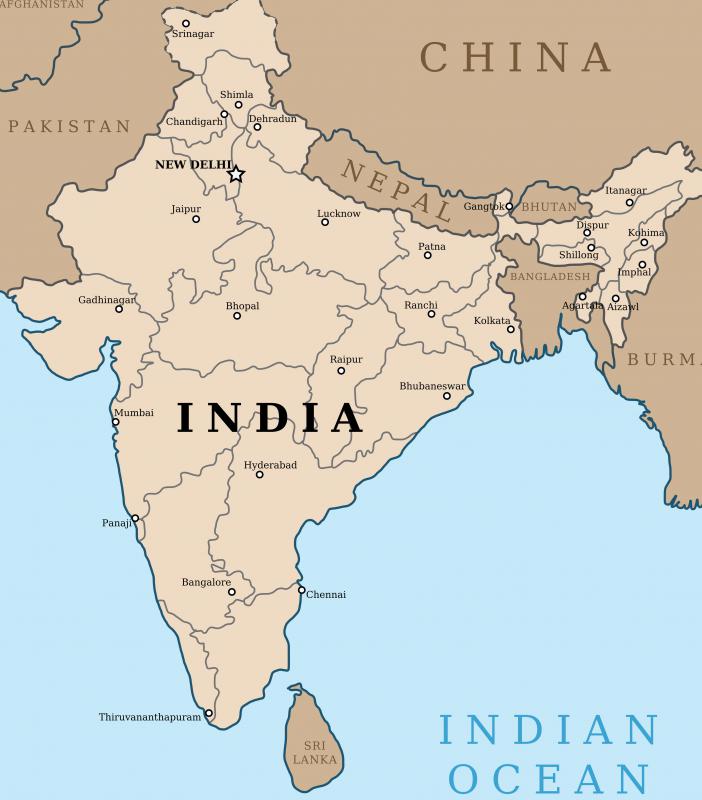
The Giant and Red Panda can be found in Asia, with the largest concentrations of animals in China. Habitat of these animals is thought to have extended throughout most of Asia, according to fossil records. Now the Giant Panda is found exclusively in China. The Red Panda is found in China, India, and Nepal.

Both types are almost exclusively herbivorous, eating primarily bamboo. In captivity, the animals may enjoy eggs and yams. They are thought to be very selective regarding the type of bamboo they will eat, and tend to migrate according to bamboo types and seasons. This factor has resulted in their extreme endangerment due to habitat destruction.

However, concerted efforts by the Chinese government, and zoo breeding programs have increased the Giant Panda population, both captive and wild. The two species are both still considered endangered. Further measures and restoration of habitat is needed to consider the species once again safe. At this time, the Red Panda is not afforded the same protection.

The Giant Panda is also a fairly solitary creature in its natural surroundings. This has made breeding programs extremely challenging. Many born in captivity are now artificially inseminated to provide better opportunities for producing young. The Chinese government is also fairly proprietary regarding allowing other zoos to keep pandas. They often loan the animals to zoos in different countries for a price, so several breeding populations can be established, and inbreeding can be avoided.
As well as problems with Giant Panda mating, the babies can be stillborn, or twins may occur with one sick twin. This species will only have five to seven young in a lifetime, making it more difficult to produce a live and healthy baby, especially in captivity. The Red Panda is not quite as solitary and tends to have litters of babies. There are fewer issues with reproducing the species, but more issues with providing enough natural habitat for them.
Even though both species are now protected to a degree, more protection is needed. Wildlife experts suggest there are only about 1000 Giant Pandas remaining in the wild. In their natural setting, about 10,000 Red Pandas die per year mainly due to loss of habitat.
Frequently Asked Questions
What exactly is a panda?
A panda, more specifically known as the giant panda, is a bear species native to central China. Recognized by its distinctive black and white fur, the giant panda primarily feeds on bamboo and plays a crucial role in China's bamboo forests by spreading seeds and facilitating growth of vegetation. Despite its classification as a carnivore, the panda's diet is overwhelmingly herbivorous.
Are pandas endangered?
As of the latest assessments, giant pandas have been downgraded from 'Endangered' to 'Vulnerable' on the IUCN Red List, thanks to China's intense conservation efforts. According to the World Wildlife Fund, there are now an estimated 1,864 pandas living in the wild, which marks a significant recovery for the species.
How much bamboo do pandas eat in a day?
Giant pandas have a voracious appetite for bamboo, consuming up to 38 kilograms (84 pounds) daily. Bamboo makes up 99% of their diet, requiring them to eat for up to 14 hours a day to meet their nutritional needs, due to the low caloric content of bamboo.
Do pandas have any natural predators?
Giant pandas have few natural predators due to their size and the remoteness of their habitat. However, young cubs are vulnerable to predators such as leopards, jackals, and birds of prey. Adult pandas' primary threat is not from natural predators but from human activities, including habitat loss and fragmentation.
How do pandas contribute to their ecosystem?
Pandas play a significant role in their ecosystem by helping to maintain the health and growth of bamboo forests. As they forage, they spread bamboo seeds through their droppings, aiding in plant dispersal. Their activities help to support a diverse range of species that also rely on these forests.
What efforts are being made to conserve pandas?
Conservation efforts for giant pandas include habitat preservation, establishing and expanding panda reserves, and extensive reforestation programs to reconnect fragmented forests. China has established over 67 panda reserves, which protect nearly two-thirds of all wild pandas. International collaboration and research on panda breeding have also contributed to the species' gradual recovery.
Tricia Christensen
Tricia has a Literature degree from Sonoma State University and has been a frequent AllThingsNature contributor for many years. She is especially passionate about reading and writing, although her other interests include medicine, art, film, history, politics, ethics, and religion. Tricia lives in Northern California and is currently working on her first novel.
Learn more...
Tricia Christensen
Tricia has a Literature degree from Sonoma State University and has been a frequent AllThingsNature contributor for many years. She is especially passionate about reading and writing, although her other interests include medicine, art, film, history, politics, ethics, and religion. Tricia lives in Northern California and is currently working on her first novel.
Learn more...AS FEATURED ON:
AS FEATURED ON:









-
![Young giant panda in a tree.]()
Young giant panda in a tree. -
![Red panda climbing on a branch.]()
Red panda climbing on a branch. -
![Pandas eat bamboo.]() By: WONG SZE FEIPandas eat bamboo.
By: WONG SZE FEIPandas eat bamboo. -
![The Giant Panda is found only in China, while the Red Panda lives in China, Nepal and India.]() By: TupungatoThe Giant Panda is found only in China, while the Red Panda lives in China, Nepal and India.
By: TupungatoThe Giant Panda is found only in China, while the Red Panda lives in China, Nepal and India.


Discussion Comments
@donasmrs-- We do have Giant Pandas in the US. They're in zoos in Washington D.C., San Diego, Atlanta and I think Memphis. You can go see them there.
Which other countries used to have Giant Pandas before?
The Giant Panda is exclusively the symbol of China now so I thought that historically these Pandas have only lived there.
I have not come across a single Chinese restaurant or establishment without a Giant Panda picture. I don't blame them. If we had such an adorable animal in the US, we would make it our national symbol too.
Now that I look at it more closely, the feet and ears are uncharacteristic of raccoons.
I hope that Asian governments start protecting the Red Panda like the Giant Panda soon. It's a beautiful animal, it will be unfortunate if it becomes extinct.
Good article. It is very useful information. I like this site for research for my students. Gary Dominicus
I heard that giant pandas eat around 20-40 pounds (9-18 kg) of food a day whereas the average person eats about 5 pounds of food a day.
Post your comments