
At BeautyAnswered, we're committed to delivering accurate, trustworthy information. Our expert-authored content is rigorously fact-checked and sourced from credible authorities. Discover how we uphold the highest standards in providing you with reliable knowledge.
What is a Natural Lubricant?
A natural lubricant is either a biological or man-made liquid that is designed to reduce friction and pain during sexual intercourse. Both men and women naturally secrete lubrication in their genital regions during sexual arousal, and from a scientific standpoint these are the only true “natural” lubricants. Some commercial products will also use this name if they are made with natural rather than synthetic ingredients, however. Many pharmacies and health supply stores sell gel or water-based lubricants that people can use during intercourse to increase or add to the fluids their bodies are creating naturally.
Production in Men

Men who are sexually aroused often leak a small amount of clear fluid from the tip of their penis, often called pre-ejaculate or "pre-cum." It does not usually contain any semen. Pre-cum is produced in the Cowper's gland before ejaculation, and serves the dual purpose of protecting the sperm from the acid inside the vagina and cutting down on friction during penetration. Friction is often somewhat uncomfortable for both parties, and can also make it harder for the sperm to travel in search of an egg to fertilize.
Female Secretions

The process is similar in women. During arousal, the walls of a woman's vagina become filled with blood. The pressure of the blood forces plasma through the vaginal tissues, and a woman's genitalia become "wet” as a result; this wetness makes the opening slick, facilitating penetration. The Bartholin's glands, located beneath the opening of the vagina, will also produce mucus to augment the plasma. Sperm ejaculated into this environment often have an easier time navigating to the egg than they would if conditions were drier.
Outside of Intercourse

Lubricants are sometimes secreted outside of sexual situations, too. Boys and young men going through puberty often experience somewhat random dripping from their penis as the organ develops and gets ready for its reproductive prime. Women may also find that their genitals become wet and lubricated at different points in their menstrual cycles, usually as a result of hormonal shifts.
Commercial Products

Biologically produced natural lubricant isn’t always enough for intercourse to be comfortable for both partners, particularly if barriers like condoms or spermicides are used. A lot of different factors can impact how much lubrication men and women produce, but different medications, stress, and even environmental things like temperature can all play a role. People who are concerned about friction or pain during sex often look for man-made lubricants, also known as "personal lubricants" or simply "lube." When these are made with only natural ingredients, they are sometimes sold with the “natural” label attached.

Most commercial lubes in this category are water-based and get their slipperiness from vegetable or plant oil. Shea butter, aloe, and green tea are also common additives. These products are sometimes marketed as an alternative to more conventional, chemically-derived lubricants, especially for people with allergies to synthetic ingredients or concerns about the environmental effects of chemical production.
Different brands often have different standards when it comes to what “natural” means, and as a result anyone who is concerned about how a product is made or exactly what it contains should usually read the labeling very carefully. Just because something is natural doesn’t always mean that it is the best choice. Some ingredients can cause latex to break down or disintegrate, for instance, which can be a big problem for couples using condoms, and more obscure oils can cause reactions and rashes, particularly on skin that is irritated or broken.
Common Concerns
It’s usually considered somewhat normal for peoples’ biological lubricant to fluctuate a little bit, with some days where there is more than others. Anyone who is concerned that they don’t have enough — or, in the alternative, that they are producing too much — is usually best served talking to a healthcare provider. Sometimes simple things like dehydration or prescription drug side effects are to blame, but chronically low or high lubrication can also be a sign of a more serious condition like a hormonal imbalance or a glandular issue.
AS FEATURED ON:
AS FEATURED ON:


-
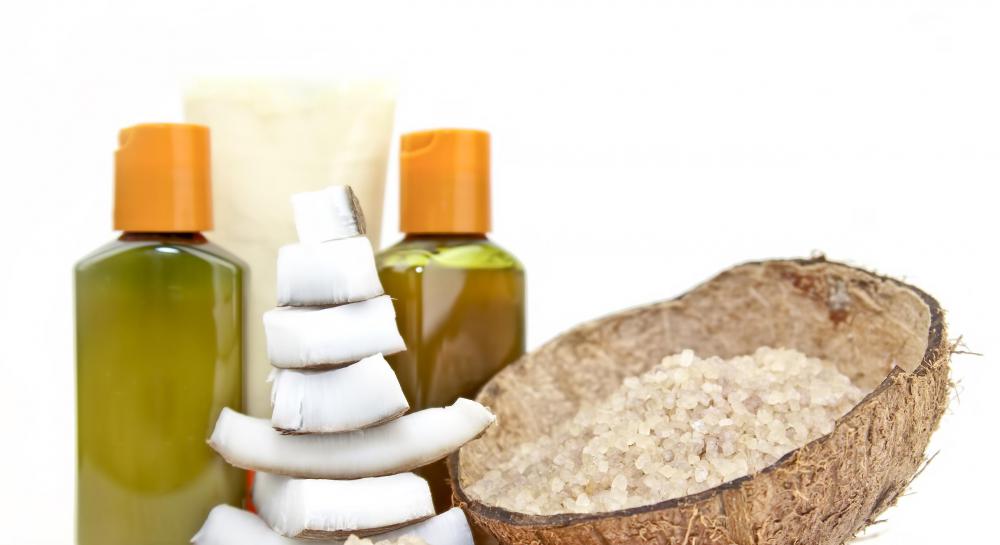
![Coconut oil may be an ingredient in natural lubricants.]() By: alexmisuCoconut oil may be an ingredient in natural lubricants.
By: alexmisuCoconut oil may be an ingredient in natural lubricants. -
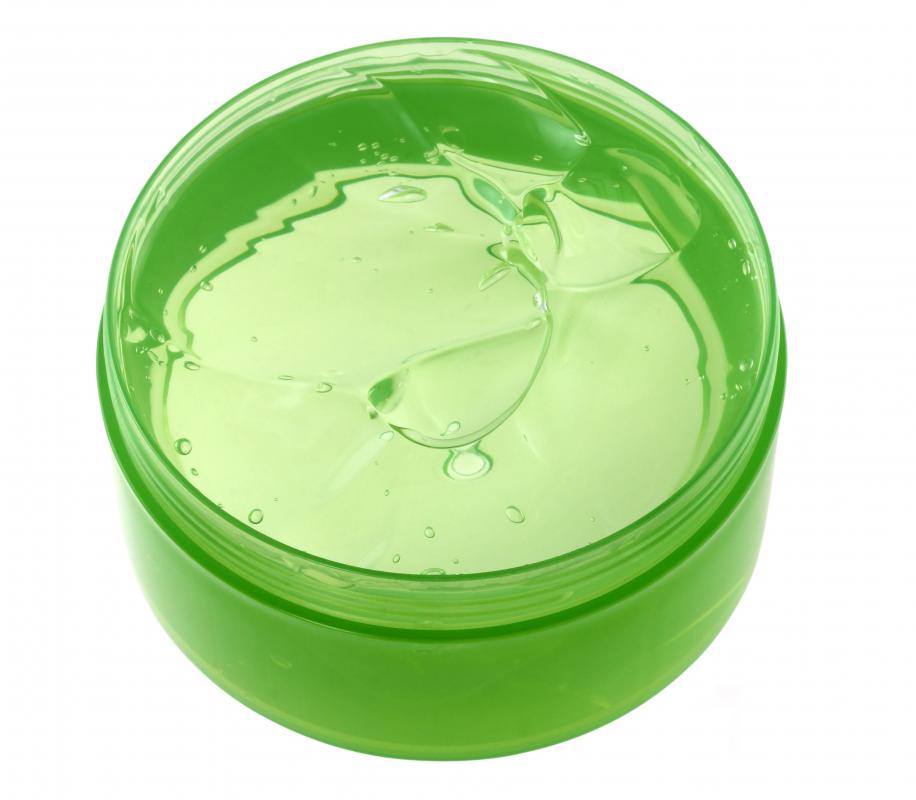
![Aloe vera gel is a natural skin lubricant.]() By: sassyphotosAloe vera gel is a natural skin lubricant.
By: sassyphotosAloe vera gel is a natural skin lubricant. -
![Diagram of the male reproductive system showing Cowper's, or bulbourethral, gland.]() By: peterjunaidyDiagram of the male reproductive system showing Cowper's, or bulbourethral, gland.
By: peterjunaidyDiagram of the male reproductive system showing Cowper's, or bulbourethral, gland. -
![Lubrication products are often needed when condoms are used during sexual intercourse.]() By: yaskiiLubrication products are often needed when condoms are used during sexual intercourse.
By: yaskiiLubrication products are often needed when condoms are used during sexual intercourse. -
![Both men and women naturally secrete lubrication in their genital regions during sexual arousal.]() By: madhourseBoth men and women naturally secrete lubrication in their genital regions during sexual arousal.
By: madhourseBoth men and women naturally secrete lubrication in their genital regions during sexual arousal.



Discussion Comments
Definitely use a lube that is made just for sex. Other lotions and oils contain chemicals and fragrances that can irritate the skin. Guys can also use a penis health creme every day to ensure that their penis skin is moisturized and smooth. This will make everything slide a lot easier during intercourse.
Coconut oil is great to use as a lube and it is safe if you do oral. There are also flavored oils that women can use to have different tastes, like cherry, lemon, mint, etc.
In some cases (certainly not all, but some), the woman's natural lube gets "dried up" by a man's circumcised penis. The foreskin on an intact penis allows her natural lube to be retained during sex. But a penis with no foreskin will actually suck up all the moisture and cause uncomfortable friction. This makes the woman tense up and stop producing lube.
The foreskin also provides a sort of cushion. It creates a nice gliding motion as opposed to the "jack-hammer" thrusts of a circumcised penis. There are some women out there who are perfectly healthy but feel bad that they don't produce enough lube, wondering what could be wrong with them. Their man thinks he's not arousing them. When in reality, he is arousing her and she is healthy; the problem may just be that he is circumcised.
I really wish that I could find some truly natural lubricant, but I really don’t know where to look. I mean, KY and all of that jazz is fine. I’ve even used some things from Adam and Eve, but I wish I could locate something truly natural.
Some of those other kinds can be really irritating to a sensitive woman, and if there is one place where itching is not advised, it is in the general who-ha area (by the way, who-ha is code).
Any ideas of good places to buy some quality products? Maybe something similar to what the article describes with coconut oil. Until then, I find that the very best is just plain old, Wal-Mart variety KY Jelly.
You know what; I am awfully funny about the things that I am willing to lubricate with, but some people just don’t care.
I’ve heard some of the craziest stories about people using all kinds of things like shampoo (can we say itchy, ouch), vegetable oil (yuk) and even butter (smelly).
I’m sorry, folks, but my...personal parts are precious and wonderful and very much worth the very best. So, you can bet your bottom dollar that if lubrication is needed, top dollar is what’s going down in my bedroom.
Using just any old thing is how many women get some pretty darn bad infections, not to mention what some of those off the wall ideas can do to the integrity of a condom.
This is one instance where you should really care enough to use the very best.
I guess I just don’t find vegetable oil sexy.
A lubricant can be very important if you are practicing safe sex by using condoms.
In this case, unless you have quite a lot of natural lubricant for intercourse you need to use some other kind of lubricant. Otherwise you run the risk of tearing the condom.
Sometimes condoms come with lubricant already on them, or in a sachet included with the packet.
But, if you need to buy a lubricant, make sure it is a water based, or at a pinch, silicone based lubricant, not an oil based one. That includes things like body lotion or Vaseline.
The oil can weaken latex and cause the condom to tear.
Be safe and have fun.
I've known a few women who felt bad about the fact that they couldn't produce very much lubricant.
In fact I've known a couple who were worried about producing too much as well! Although that doesn't usually seem to be as much of a problem.
Honestly, the best thing you can do is just make sure you get lots of foreplay so that you are warmed up. If, after all the foreplay in the world, you still don't produce very much, just use a squirt of store bought lube.
Unfortunately, there is no other "cure" for not making enough natural vaginal lubricant, but it works just fine.
All you have to do is stop worrying and enjoy yourself!
Post your comments