
At EasyTechJunkie, we're committed to delivering accurate, trustworthy information. Our expert-authored content is rigorously fact-checked and sourced from credible authorities. Discover how we uphold the highest standards in providing you with reliable knowledge.
What is a Multimeter?
A multimeter measures electrical properties such as AC or DC voltage, current, and resistance. Rather than have separate meters, this device combines a voltmeter, an ammeter, and an ohmmeter. Electricians and the general public might use it on batteries, components, switches, power sources, and motors to diagnose electrical malfunctions and narrow down their cause.
The two main kinds of a multimeter are analog and digital. A digital device has an LCD screen that gives a straight forward decimal read out, while an analog display moves a bar through a scale of numbers and must be interpreted. Either type will work over a specific range for each measurement, and users should select one that's compatible with what he or she meters most, from low-voltage power sources to high-voltage car batteries. Multimeters are specified with a sensitivity range, so consumers should make sure they get the appropriate one.

As a voltmeter, the tool can measure the amount of AC or DC voltage flowing through a circuit. Voltage is a difference in potential energy between the two points. A fan, for example, should be drawing 120 volts (in the U.S.) from the plug in the wall, but a computer scanner might only draw 12 volts from a converter. To test these components, the user should choose AC or DC, select an upper limit on the voltage, and plug the machine in question right into the multimeter, without breaking the circuit. The readout should reveal whether the device is functioning normally, when compared to the data specified in the user's manual.

As an ohmmeter, it finds the resistance in a circuit, which is given in ohms. A user can find the resistance at any point in a circuit by first unplugging the machine from a wall outlet or battery source then putting in an approximate range he or she expects to contain the number of ohms. The measuring tool actually passes a small amount of electricity from its own battery through the circuit to measure resistance by comparing the voltage sent out to what it receives.

When used as an ammeter, the multimeter measures current flowing through a closed circuit by interrupting that circuit. The tool can only be connected in series, which means that all the circuit's current will flow through the ammeter's sensors. The user will still need to select the range in which he or she expects the current to fall. This feature is used less often than the others, so some multimeters do not measure current at all.
AS FEATURED ON:
AS FEATURED ON:









-
![A multimeter measures the electrical properties of a circuit.]() By: pavanttA multimeter measures the electrical properties of a circuit.
By: pavanttA multimeter measures the electrical properties of a circuit. -
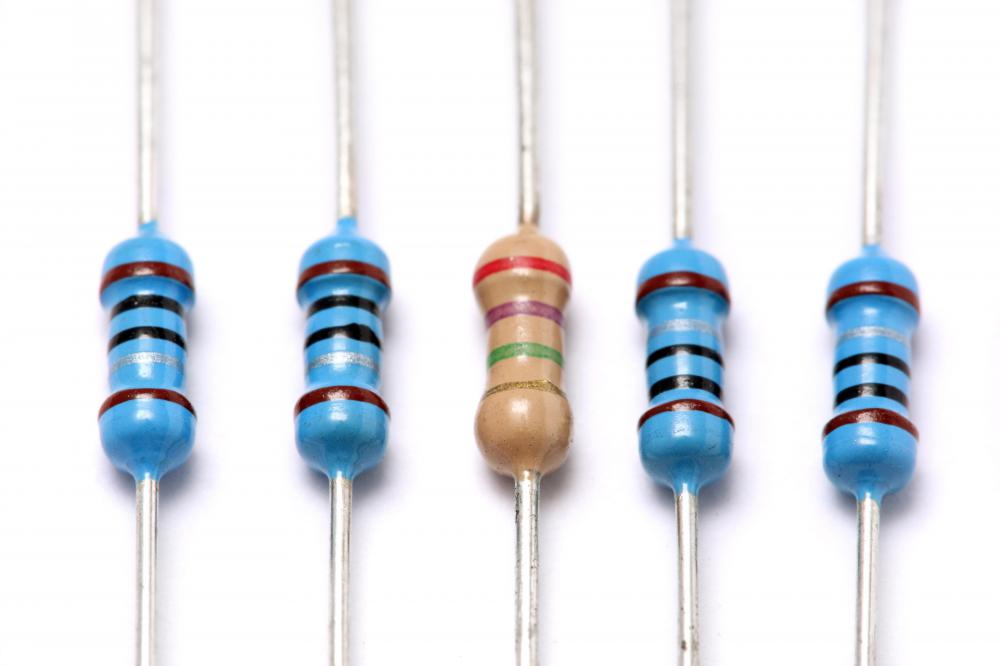
![Resistors are electrical devices that manage the flow of current through a circuit.]() By: Mau HorngResistors are electrical devices that manage the flow of current through a circuit.
By: Mau HorngResistors are electrical devices that manage the flow of current through a circuit. -
![A multimeter is a part of any professional electrician's toolbox.]() By: Sudheer SakthanA multimeter is a part of any professional electrician's toolbox.
By: Sudheer SakthanA multimeter is a part of any professional electrician's toolbox. -
![People should use a multimeter that's compatible with what they meter most, such as high-voltage car batteries.]() By: NorGalPeople should use a multimeter that's compatible with what they meter most, such as high-voltage car batteries.
By: NorGalPeople should use a multimeter that's compatible with what they meter most, such as high-voltage car batteries.



Discussion Comments
I am using my multimeter for a science type experiment and the ammeter part works great!
Multimeters are pretty common. You should be able to find them at most places which sell tools and home improvement supplies.
Look in the big box stores like Lowes and Home Depot. They usually have several to choose from and you can get a favorable price.
Some local hardware stores, depending on the size, sell multimeters.
You can probably find the best deals by shopping online. Compare the prices and you can probably find a cheaper price than you can in any store.
I just bought a house and it needs a ton of work on the electrics. Where can I but a multimeter?
@chivebasil - You are right that the multimeter is an incredible tool. I love the way it incorporates multiple tools into one, but even more than that I like how it improves on the functionality of some of the classical electrical tools.
I used to use an independent ohmmeter pretty often and I would always get faulty readings. It was more useful as a negative example than as something you would actually use. But the ohmmeter included in my multimeter gives a clear and correct answer every time. It really is a great invention.
I worked as an electrician in the past and I continue to help friends and family with their electrical projects and I can attest to how useful a multimeter is. It used to be the case that you would have to carry multiple different tools to do everything that a multimeter does. It is really a huge savings in time and expense to have them all built into one tool. Its like the Swiss army knife of electrical meters
Post your comments