
At DelightedCooking, we're committed to delivering accurate, trustworthy information. Our expert-authored content is rigorously fact-checked and sourced from credible authorities. Discover how we uphold the highest standards in providing you with reliable knowledge.
What is a Microbrew?
Even though it sounds like a miniature beer, a microbrew is actually a beer brewed in a small commercial brewery. In the U.S., it is a beer produced at a microbrewery that brews no more than 15,000 barrels of beer per year. Brewed and distributed on a regional basis, some of these beverages are also known as craft beers.
The emphasis of a craft beer is the quality of the product rather than its mass production. These beers are also known as real ale or cask ale. Similarly, a microbrew pub is one that sells beer that is produced in limited quantities on the premises. Some pubs allow sampling, or tasting, of their products.

Although the term microbrewery originated in the United Kingdom in the 1970s, many of the beers they made became so successful that they outgrew their statistical category. Because these small breweries pay particular attention to ingredients and monitor the entire brewing process, the term craft beer is descriptive. Using the traditional brewing process, the beer starts with the sugars from a form of malted grain, either barley or wheat, added to hop flowers and water. The mixture is aged and generally not pasteurized. The difference in the process occurs after the initial fermentation.

Instead of filtering and heating, the process used for mass market bottled beer, cask ale is placed directly into a cask where it continues to develop. Some craft beers are filtered, however. The beer is often carbonated by live yeast that ferments in the container. Darker beers age longer, and light ales must be used more quickly.
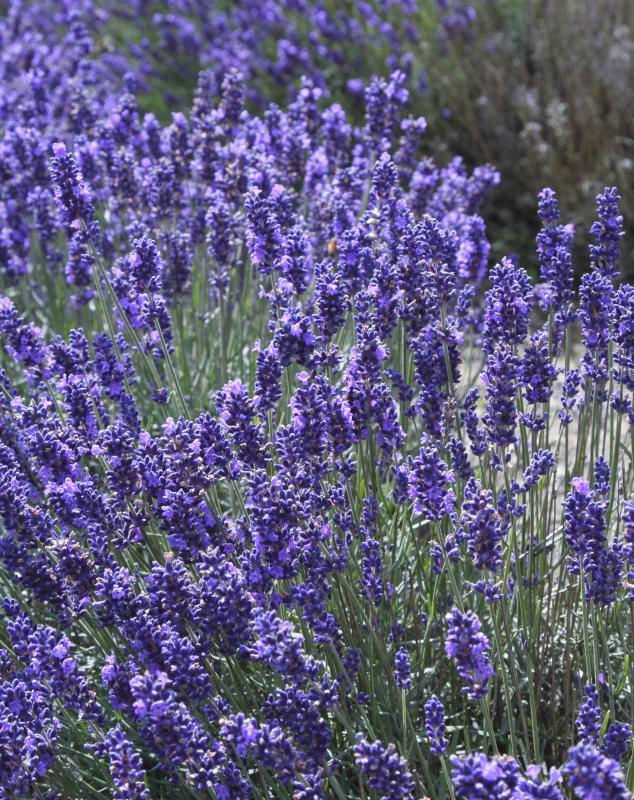
Due to the inclusion of specialty malt and hop ingredients, a microbrew varies in aroma and flavor from commercially brewed beer. Aficionados believe that these beers have a more complex flavor than typical American light lagers. The hop flower can cause the beer to have a flowery, fruity, or sweet-smelling aroma. Craft beers are often sold in individual bottles and created for those who appreciate the aromas and flavors that the special attention produces. They might contain natural ingredients as varied as coriander and lavender, and most likely do not contain artificial flavorings, fillers, or thickeners.
AS FEATURED ON:
AS FEATURED ON:


-
![Three types of beer in Pilsner glasses.]() By: Marius GrafThree types of beer in Pilsner glasses.
By: Marius GrafThree types of beer in Pilsner glasses. -
![Barley is used in making microbrews.]()
Barley is used in making microbrews. -
![Lavender is sometimes used to add flavor to microbrews.]() By: Elena MoiseevaLavender is sometimes used to add flavor to microbrews.
By: Elena MoiseevaLavender is sometimes used to add flavor to microbrews. -
![Microbreweries are smaller-scale operations compared to large national breweries.]() By: Steve LovegroveMicrobreweries are smaller-scale operations compared to large national breweries.
By: Steve LovegroveMicrobreweries are smaller-scale operations compared to large national breweries.



Discussion Comments
@croydon - I usually try more microbrews when I'm on vacation than when I'm at home, which is a shame really. I guess people become loyal to a particular brand and don't venture elsewhere unless that brand isn't available.
What I'd really like to do is to make my own beer. I know there's someone locally who has started growing and selling organic hops and there are several microbrew supplies stores online that are fairly reasonable as well.
I'm a bit worried about making a bad batch or that the bottles will explode or something. I've heard that can happen if you do something wrong in the process of making the beer.
I love trying regional microbrews. When I went backpacking around the States I made an effort to try one in every place I stopped. It was actually a good practice, not just because you got to taste the local flavor, but also because you could start a discussion with someone at the bar by asking them to recommend a local beer.
Plus, it just tastes better. I suspect it's healthier as well, which is a good thing when you are having one every night more often than not.
@roxytalks -- Your husband might be interested to know that there actually are tastings for microbrews. A lot of places have started having microbrew festivals, where you can go to try different microbrews.
You should look into it and see if there is one in your area. I know there was one not to far from where I live just a few months ago. He'd probably love it!
Did you know that you can make your own beer at home with a microbrew kit? My friend just started doing this. We had our first sample of it recently, and it was actually very good.
I think I'll have to try it next. It very well may become my new favorite hobby.
My husband loves a good Microbrew. It's kind of like it's an art form to him, and he has made a hobby out of trying different kinds and comparing them to each other. It reminds me of people who love wine tastings. I could definitely see him going to a microbrew tasting, if such a thing existed.
I always thought a beer was a beer -- not much difference from one to the next. I have been proven wrong.
Post your comments