
At WiseGEEK, we're committed to delivering accurate, trustworthy information. Our expert-authored content is rigorously fact-checked and sourced from credible authorities. Discover how we uphold the highest standards in providing you with reliable knowledge.
What is a Medical Esthetician?
Appearances are important to many people, so much so that some people find that looking good actually leads to feeling good. The practice of esthetic therapy by a licensed medical esthetician is one example of how this philosophy is gaining hold in mainstream medical culture. Because of increasing demand, many people who are already licensed in the areas of nursing, cosmetology, and esthetics are looking into this job. Someone who is trained in skincare and works in a medical setting, this esthetician specializes in helping patients learn how to care for changes in their skin, hair, and overall appearance as they undergo medical treatment.
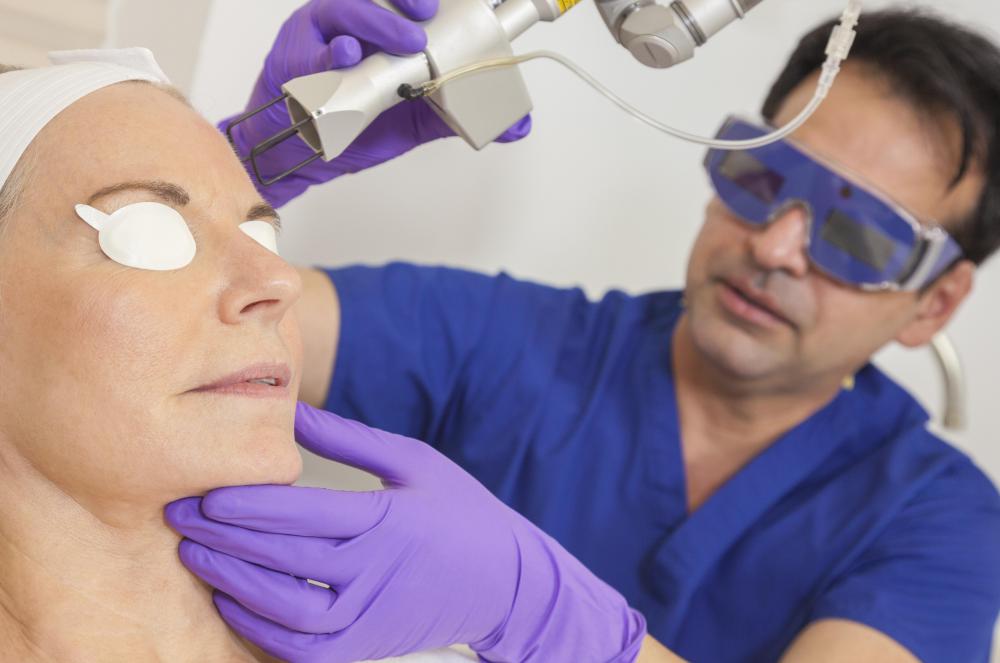
Some of the most common settings where a medical esthetician can be found are dermatologists’ offices, oncology practices, plastic surgery offices, and hospitals. The duties of an esthetic clinician in each of these settings vary slightly, with different procedures practiced in each. One working in the field of dermatologic skin care, for example, might routinely practice the art of exfoliation or restorative techniques for patients suffering from skin or hair diseases. Someone who is working at a hospital may help burn victims learn to apply makeup to conceal scarring, while a practitioner who works in an oncology setting may help cancer patients learn to care for sensitive skin after a chemotherapy treatment. While the treatments used may vary, the job is essentially the same: to help patients feel better by learning to care for the changes that are occurring with their bodies.

People from all walks of life can use the services provided by a medical esthetician. Contrary to most people's opinions when they hear the words “skin care,” “esthetician” or even “cosmetology,” these professionals do not work only with women. Many men are concerned about their skin after medical procedures, and they seek help to learn to care for any changes that have occurred. A doctor or other medical professional may recommend that a patient see a medical esthetician, although services can be sought out independently.

Most people enter the field because they have had some prior medical experience, or a desire to gain medical experience. The job does require training, in most cases. Licensing requirements vary by location, and what may be sufficient training in one place may not be considered so in another. In the United States, for example, almost all locations require people in this field to have completed 600 or more hours of training at a school licensed by the Bureau of Barbering and Cosmetology, and to have successfully passed a state administered examination.
AS FEATURED ON:
AS FEATURED ON:









-
![Medical estheticians work with dermatologists, surgeons, and other medical professionals to improve the appearance of patients.]() By: spotmatikphotoMedical estheticians work with dermatologists, surgeons, and other medical professionals to improve the appearance of patients.
By: spotmatikphotoMedical estheticians work with dermatologists, surgeons, and other medical professionals to improve the appearance of patients. -
![A medical professional may be involved in recommending a medical esthetician to a patient.]() By: s_lA medical professional may be involved in recommending a medical esthetician to a patient.
By: s_lA medical professional may be involved in recommending a medical esthetician to a patient. -
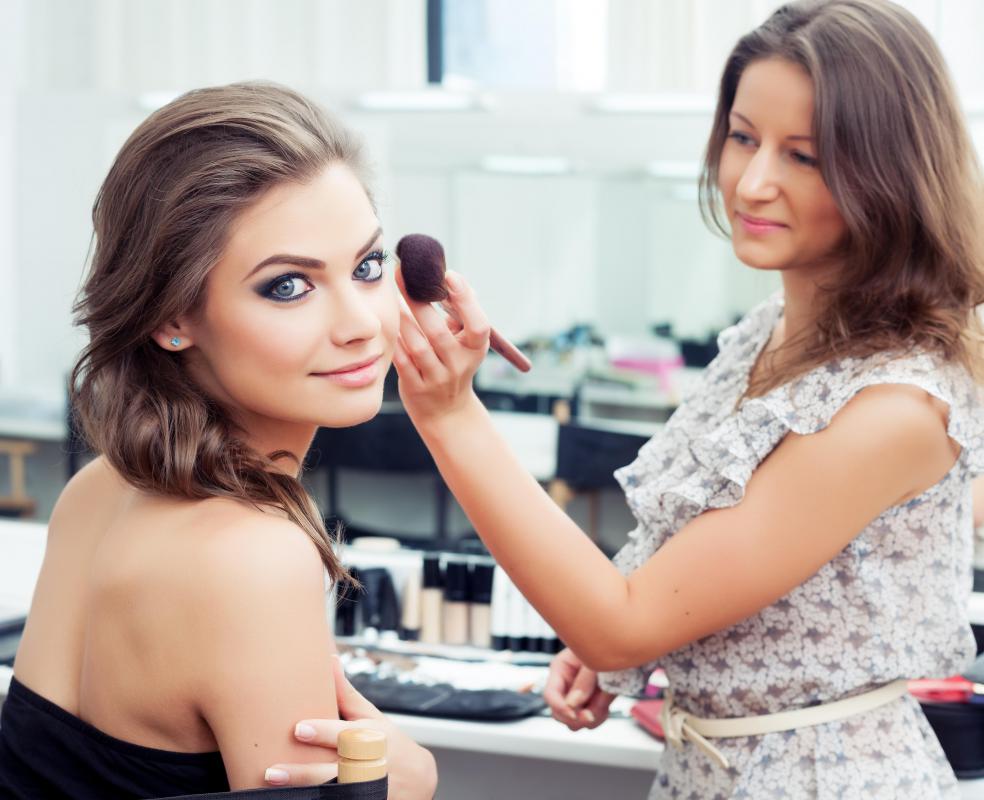
![Estheticians are typically trained in skin care and makeup application.]() By: mikelaptevEstheticians are typically trained in skin care and makeup application.
By: mikelaptevEstheticians are typically trained in skin care and makeup application.

Discussion Comments
As with many other jobs in the medical field, it is important that medical estheticians protect themselves from lawsuits. Medical malpractice can ruin the well-being and livelihood of uninsured medical workers.
Medical estheticians typically earn a salary plus percent commission based on services rendered and overall sales. The pay for this profession varies from state to state.
Most of the time, day spas provide a higher commission percentage. However, these day spas may not offer a salary and tend to use less expensive equipment than those employed in the medical field.
I get a chemical peel from a great esthetician at a local spa a couple times a year. The experience is always excellent. My skin looks and feels amazing, which makes me feel confident and healthy.
Post your comments