
At AllThingsNature, we're committed to delivering accurate, trustworthy information. Our expert-authored content is rigorously fact-checked and sourced from credible authorities. Discover how we uphold the highest standards in providing you with reliable knowledge.
What is a Mauve Splitting Wax Cap?
 Mary McMahon
Mary McMahon
Mary McMahon
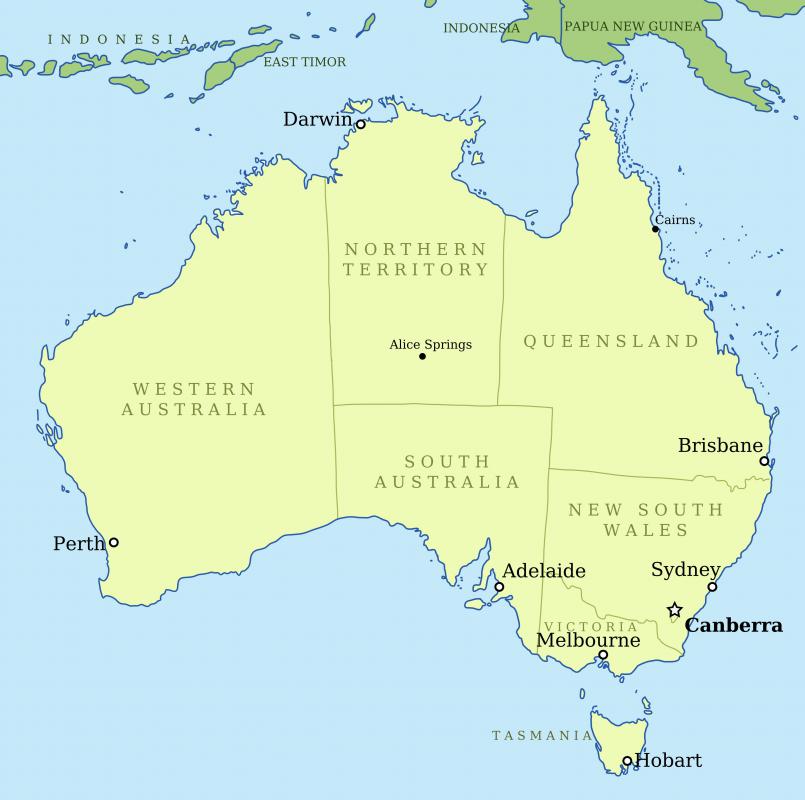
A mauve splitting wax cap is a mushroom native to the forests of Australia and New Zealand. As might be imagined from the name, this fungus is famous for its purple hue and for the distinctively split cap, which also has a waxy texture. Because of its brilliant color, the mushroom is a popular subject for photographers in the areas where it grows, and it is easy to identify, making it a good starter fungus for people who are just starting to learn to identify mushrooms.
Not least because of its color, the mauve splitting wax cap was almost certainly known to natives of New Zealand and Australia long before Europeans arrived, but as is common with plants and animals native to colonial regions, Europeans are credited with its “discovery.” Because the privilege of naming generally goes to the person who discovers an organism, a European biologist, Karoly Kalchbrenner, named this mushroom after describing it in the late 1800s.

Formally known as Humidcutis lewelliniae, this mushroom is in the wax cap family. Like other members of this family, it has a texture that is slightly waxy to the touch, and as the genus name implies, the skin is very moist, which can add to the waxy feel. Wax caps also often leave a waxy residue on the skin, which can feel odd or unpleasant, depending on one's feelings about wax.

Several features beyond the color distinguish the mauve splitting wax cap. This fungus is gilled, with the gills being free, rather than attached, and the distinctive splits in the cap develop along the line of the gills underneath. The cap is shaped rather like an umbrella, and the stem, also known as the stipe, is smooth. The spore print is white, and the mushroom does not appear to be edible.
This fungus prefers moist environments, and it can be found in both temperate and tropical regions of New Zealand and Australia. It is most abundant in areas with thick layers of leaf mold, and the mushrooms often grow in small clusters. They will also grow in sandy soils.
Frequently Asked Questions
What is a Mauve Splitting Wax Cap?
The Mauve Splitting Wax Cap, scientifically known as Hygrocybe calyptriformis, is a rare and colorful mushroom found in grasslands. It's recognized for its distinctive mauve or pinkish cap, which can split or crack with age, and its waxy gills. This species is an indicator of well-managed, unimproved grassland ecosystems, often signifying a high conservation value of the habitat.
Where can the Mauve Splitting Wax Cap be found?
Mauve Splitting Wax Caps are primarily found in Europe, with a notable presence in the UK. They thrive in ancient, nutrient-poor grasslands that are free from fertilizers and pesticides. Due to habitat loss, their distribution has become more limited, making sightings less common and increasing their conservation importance.
Why is the Mauve Splitting Wax Cap important for conservation?
The Mauve Splitting Wax Cap is considered a species of conservation concern because it is reliant on declining habitats like unfertilized grasslands. Its presence indicates a healthy, biodiverse ecosystem. Conservation efforts for this mushroom also protect other species within the same habitat, underlining its role as an umbrella species for grassland conservation.
How can I identify a Mauve Splitting Wax Cap?
To identify a Mauve Splitting Wax Cap, look for its distinctive mauve to pink cap, which can measure 2-5 cm across and often displays splits or cracks as it matures. The stem is similarly colored, and the gills are waxy in texture. It's usually found from late summer to late autumn in suitable grassland habitats.
Is the Mauve Splitting Wax Cap edible?
While the Mauve Splitting Wax Cap is not known to be toxic, it is not generally considered edible due to its rarity and conservation status. Foragers and mushroom enthusiasts are strongly discouraged from picking this species to help preserve its populations and the ecosystems they indicate.
What are the threats to the Mauve Splitting Wax Cap?
The primary threat to the Mauve Splitting Wax Cap is the loss of its grassland habitat due to agricultural intensification, land development, and the use of fertilizers and pesticides. These activities reduce the availability of the nutrient-poor conditions the species requires, leading to a decline in its populations and making it a species of conservation concern.
Mary McMahon
Ever since she began contributing to the site several years ago, Mary has embraced the exciting challenge of being a AllThingsNature researcher and writer. Mary has a liberal arts degree from Goddard College and spends her free time reading, cooking, and exploring the great outdoors.
Learn more...
Mary McMahon
Ever since she began contributing to the site several years ago, Mary has embraced the exciting challenge of being a AllThingsNature researcher and writer. Mary has a liberal arts degree from Goddard College and spends her free time reading, cooking, and exploring the great outdoors.
Learn more...AS FEATURED ON:
AS FEATURED ON:









-
![A mauve splitting wax cap is a mushroom native to New Zealand.]() By: Ruslan OlinchukA mauve splitting wax cap is a mushroom native to New Zealand.
By: Ruslan OlinchukA mauve splitting wax cap is a mushroom native to New Zealand. -
![A mauve splitting wax cap can be found in the tropical and temperate regions of Australia.]() By: TupungatoA mauve splitting wax cap can be found in the tropical and temperate regions of Australia.
By: TupungatoA mauve splitting wax cap can be found in the tropical and temperate regions of Australia.

Discuss this Article
Post your comments