
At WiseGEEK, we're committed to delivering accurate, trustworthy information. Our expert-authored content is rigorously fact-checked and sourced from credible authorities. Discover how we uphold the highest standards in providing you with reliable knowledge.
What is a Lisp?
 Mary McMahon
Mary McMahon
Mary McMahon
A lisp is a form of speech impediment in which someone has difficulty pronouncing sibilant letters like S and Z. These letters tend to emerge with a "th" sound in someone with this condition; the word "cats," for example, would sound like "caths." In addition to causing communication problems, this speech impediment can also cause psychological problems, because people with lisps are often mocked or stigmatized. If a lisp is caught early, it can be treated with the assistance of a speech therapist.
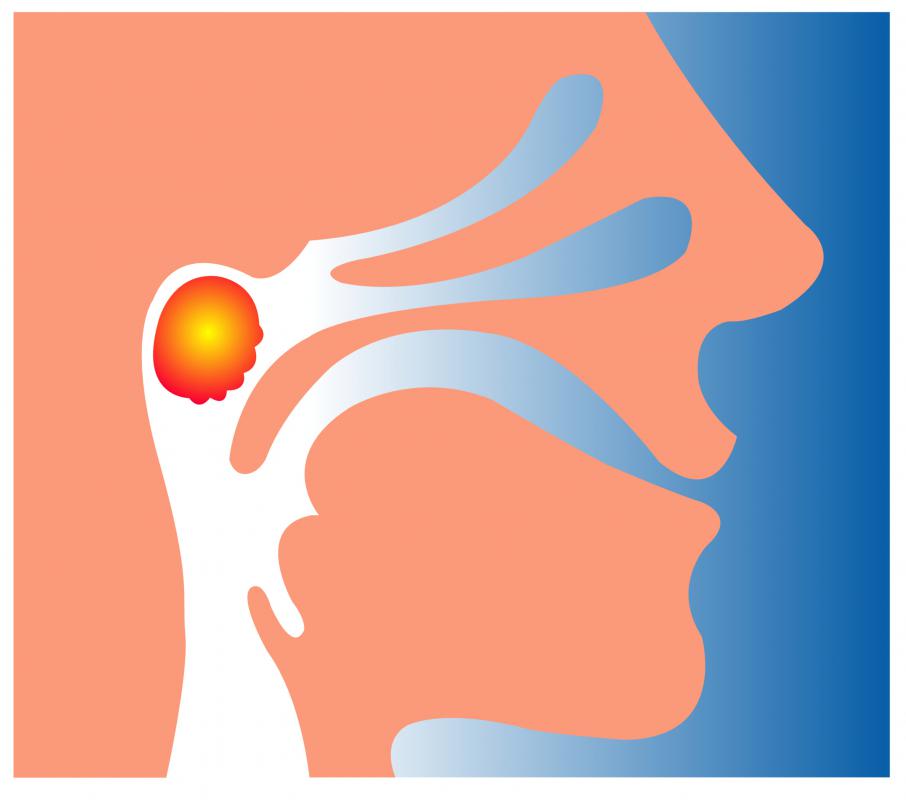
The cause of this speech impediment can vary. In some instances, the cause is physiological, and the patient has some sort of deformity or medical condition which causes the condition. For example, a child with swollen adenoids may tend to lisp, as will people who have recurring stuffy noses. More commonly, this condition appears to be psychological in origin, and often emerges as a reaction to stress. Children may start lisping, for example, to gain attention, or someone may develop one after a traumatic incident. Often, the cause is unknown.

There are several different types of lisp, each of which are treated in different ways. One of the most well known forms is the frontal lisp, caused by the tongue pressing against a gap left by missing teeth. Many young children have these during their development, although they often go away without intervention. In another type, the palatal lisp, the tongue presses against the roof of the mouth when the patient makes sibilant sounds, causing the classic "th" sound.

Lisps can also be caused by the pressure of the tongue against the teeth, in a form called a dentalized lisp. If someone ties saying "seashore" with his tongue pressed against his front teeth, he'll known what this sounds like. A patient may have a lateral lisp, in which air flows around the sides of the tongue because it is held in the position used to make the sound of an L. This can sound very wet and soft.

Up until around age five, lisps are fairly common in children, and they are not a cause for concern. If one continues past this age, it can be a good idea to see a doctor. A doctor should also be consulted for older people who have started lisping. In addition to recommending a good speech therapist, a doctor can also rule out any physical causes or treat them.
Mary McMahon
Ever since she began contributing to the site several years ago, Mary has embraced the exciting challenge of being a WiseGEEK researcher and writer. Mary has a liberal arts degree from Goddard College and spends her free time reading, cooking, and exploring the great outdoors.
Learn more...
Mary McMahon
Ever since she began contributing to the site several years ago, Mary has embraced the exciting challenge of being a WiseGEEK researcher and writer. Mary has a liberal arts degree from Goddard College and spends her free time reading, cooking, and exploring the great outdoors.
Learn more...AS FEATURED ON:
AS FEATURED ON:









-
![Swollen adenoids can contribute to a lisp.]() By: rob3000Swollen adenoids can contribute to a lisp.
By: rob3000Swollen adenoids can contribute to a lisp. -
![A child with swollen adenoids may tend to lisp.]() By: Dmitry NaumovA child with swollen adenoids may tend to lisp.
By: Dmitry NaumovA child with swollen adenoids may tend to lisp. -
![People who have recurring stuffy noses may develop a lisp.]() By: IlikePeople who have recurring stuffy noses may develop a lisp.
By: IlikePeople who have recurring stuffy noses may develop a lisp. -
![Older people who develop a lisp should consult with a doctor.]() By: RidoOlder people who develop a lisp should consult with a doctor.
By: RidoOlder people who develop a lisp should consult with a doctor. -
![A speech therapist may work with children who speak with a lisp.]() By: Monkey BusinessA speech therapist may work with children who speak with a lisp.
By: Monkey BusinessA speech therapist may work with children who speak with a lisp.




Discussion Comments
I was born with a lisp and had no idea I had a speech impediment until my brothers (3 of them) started teasing me when I was about 5 years old. They would say "Jerri, hiss like a snake!" And when I did 'ththththth', they would laugh. My dad told me, 'Jerri, when you talk, hold your front teeth together with your bottom teeth when you talk, especially when you have to say a word with an 's' in it and that will fix it!' I did that religiously for about 6 months and it indeed it corrected my lisp.
Then when I was in the 7th grade in Okinawa, Japan at Kubisaki Jr. High I had a speech therapist named Ms Garcia who was there to interview all the students and of course one of the tests she had us do was to read a sentence that was full of s'es! My tongue got a little tired reading that sentence and she detected something and asked me to read that sentence again! Oh Gosh, so I read it again and she asked me if I had ever had a lisp and I was surprised, but I told her 'Yes, I had a lisp growing up.' And she asked me how I was able to correct it. And I told her about what my dad told me to do and how that was how I got rid of my lisp. She was utterly amazed. I am not saying this is a fix for all lisps but hopefully it may help somebody.
I’ve had a lisp for as long as I can remember, and at first it seemed hidden because no one picked it up, but as I got older it seemed to present itself more and more. At one point I became too scared to speak because it seemed that everyone would point it out and make some comment about it. It got so bad that it started to be a mental issue and I started to feel like I was stupid. This was two years ago.
Nowadays however, I just I just laugh it off. I figured out I can’t let this thing "beat" me and hold me down because I figured this was my big reason for being "shy" when I know I’m really not. If you want to beat the lisp (take into consideration that you won’t be fully healed), do this: find what’s causing it, and start practicing talking to yourself in a mirror (or to a trusted friend).
Stop thinking that you are going to screw up what you want to say. This will make the lisp worse. Build up your confidence, which takes me to the next topic.
For those being bullied, just think like this: if that is the only thing they can say that’s bad about you, take it as a good thing. They may think it’s funny to pick on you because of a common speech problem (as I learned over the years) but in truth, it’s really sad and they (the bullies) are trying to compensate for something. I have “destroyed" tons of these bullies using their own backward logic.
If they point out how you sound and can repeat what you said, they clearly understood you. Just a professional tip: this is a great counter to use if someone is being a jackass.
I'm fourteen and I've had a lisping problem for I don't know how much time. It just makes me feel so sad remembering all the times I thought I'd had the *perfect* voice when I had given those speeches and stuff, only to realize now that I'd always been lisping. I hope I hadn't done it when I gave those staged singing performances. Well, I guess nothing's perfect.
And I don't really like my voice. But at least now I know I'm not the only one and there are so many others who have the problem! :) And I'm trying to get rid of this habit as quickly as I can!
~spbone #legit
I am 18 and I’ve had a lisp since I could talk. I even pronounce my 'r' as 'w', e.g., “red” sounds like “wed.” I’ve been bullied throughout my whole life because of it and it has taken a toll on my confidence.
I hate talking to new people because I don’t know how they'll react. I went to speech therapy but it didn’t help me at all. My girlfriend says it’s cute but she often patronizes me by asking me to say things “six sizzling sausages” and laughing about it with her friends.
I am 25 years old and I have a lisping problem with the letters 's' and 'z'. Since in my country (Kurdistan region), there is no actual speech therapy and I’ve never seen a doctor about this problem I am really shy about it and I can’t talk to any one about it. When my family or others copy me or even talk and make fun of people lisping, I get depressed for a few days or even for weeks.
I hate myself and I wish that I have never existed. I don't know what to do. Is it too late for me to be fixed? Sometimes I want to be alone. I don't want to talk or see anyone, and looks like no one likes me because of this lisping.
I'm 13 and have had a lisp for as long as I can remember, but I've never been picked on, but only a couple of times when they copy you. I find it funny when they can; it makes me feel unique. Be confident. Who cares?
I have had a lisp since birth. I've had no dental treatment or anything like that, but I never got bullied for it. People noticed and asked but didn't tease. I have it on most letters of the alphabet and when saying ch and sh. I'm 13. Just be confident. It's good because you are different from anyone. I also say ph, f and w differently, but I don't mind. It's cool and when people try to copy what you're saying; they can't speak while trying. It's funny
I'm 14 and i have a lisp. I've had one my entire life and it wasn't until my dental work was finished that I realized I had one and it was actually pretty bad. My orthodontist recommended I see a speech therapist and so I made an appointment. This was about seven months ago, and since then, my lisp has improved greatly and I'm nearing the end of my speech therapy. My friends were very supportive of me and although sometimes there were indirect comments about lisps in general that hurt me, I used this a motivation to improve.
My friends say I have improved so much to the point where it is nearly gone. I just wanted to say that many people in the world have a lisp and that you shouldn't feel alone. I know all about feeling self conscious because of it. However, if you practice hard every day and really slow down when talking to people, you should find your speech will improve. And if your friends make fun of you because of your lisp, then tell them how it makes you feel. Usually they will back right off and support you instead.
If anyone is suicidal, they should seek professional help and get counseling. That will help you.
Everyone with a lisp should not worry what anyone thinks about them but if it bothers you, you should see a speech therapist.
I'm 19 years old and I have a lisp and it's making me depressed and also suicidal. Sometimes, I just want to kill myself because I feel like I'm not going anywhere in life. I really need help if anyone would want to help me.
I have a lateral lisp. I cannot say s, z, j, sh or ch. i cannot say any sounds that sound like s. I have tried speech therapy and it has not helped. I have had a lisp ever since I was born. I have no medical problems. What caused my lisp and how can I solve it? Please help.
I'm 16 years old and I have had a lisp since I could talk and I have tried everything and it's getting to the point where I don't even talk because it gets in the way. It's with every word that has "Th," "s," or "z" in it. Help.
Please help me. I have a lisp. It's not that big of a deal, but it is enough for friends to notice and make fun of me about it. I want to be a rapper but when I would rap along to a song, my friends would rap the same thing, but with a lisp. It's not cool and I need some help.
For those of you who are over the age of seven and still have a 'lisp': you need help. I am a speech pathologist so I know what I'm talking about.
Here's something that you can do if you are very motivated and it's simple: Make the 't' sound using an upper tooth and a lower tooth. Your tongue should *not* be involved - it can be either up in the roof of your mouth or down on the floor of your mouth. Your 't' should sound crisp and clear. (If you can do this then you can make an /s/.) Now, say the word 'cat', then say cat-t-t, then add and /s/ and don't move your tongue to form catssssssssssss.
It will be difficult because even though you can make /t/ as soon as you say a real word, your brain will want to make a lispy /s/. Don't let your tongue do that! Keep it away from your teeth and just let air through your teeth.
You may have to hold your mouth closed, meaning all teeth together like you're biting, and just let air flow through. Make sure the air comes out the front of your mouth, not the sides. If it comes out the sides you will have a different problem called a lateral /s/, which you don't want. Keep practicing. If you are very motivated, this should not take long to correct.
You can always watch videos and read up on practicing proper enunciation. And with concentration, holding your tongue to the ridge on the roof of your mouth as the "s" or other troublesome sound is about to be formed and during should limit the sound. Despite speech therapy when I was younger and braces, I still have somewhat of an impediment, though it is not nearly so pronounced as it was. Remember that even though you practice hard it may not go away completely.
Try not to be concerned so much with sounding odd. So long as you can reach a point where others can clearly understand you, there's not a single problem to worry over.
Help me someone, please. People laugh at me all the time in school because I can't pronounce the 's' letter. I usually ignore people when they talk about me in a bad way and so on, but when I tell them off they laugh even harder because I say the s letter again. I'm in big trouble with my mum and anyway we're a bit tight with money so I can't buy the kill lisp thing. Please help me.
I want to be a singer but obviously won't if I can't speak properly. When I say the s letter I press the tip of my tongue to my upper teeth and it sounds like I'm spitting.
I have read all your comments and let me tell you this.
I am a female 45 years old now. I was born with a lisp. Not all lisps can be corrected. I have problems with not just s.c and z's, but I also have a lisp when saying ch, sh.
Yes, I was teased as a child, but I can tell you those who used to tease me actually said as young and older adults, when I confronted them about why they bugged me, said it was cute, and I can honestly say people say my lisp gives me character and you know what? I agree. It is cute and I would not be me without it. So, I say to those that have big issues with it and are being bugged: it will shape you into a great person and make you strong in life when other things may follow.
I have to say when meeting new people I am a little shy on the fact that I'm thinking, "Crap. They are going to notice," and it makes me uncomfortable. However, those new people I have met so far said they noticed, but it was like, "Whatever..." In today's world I think people are being more accepting of all people!
Stay strong and become great people in life.
I've been told by a few people that I have a bit of a lisp, but I don't really hear it. It started in like seventh grade, and my friends thought it was so funny that I stuck my tongue out between my teeth when I made the s sound (I always assumed that it was normal). I've had a lot of dental work done throughout my childhood and my teeth are perfect now, so I think if I lisp at all it's probably just from poor enunciation/bad habit. Not really worried about it though.
@post66: A lisp isn't just referring to the specific 's' to '-th'. It's generally for any mispronunciation.
I'm now 15 and even though I went to speech therapy, I still have a lisp. My 's' now sounds slurry and squeaky. People don't really point it out but I know they notice it. It's even worse when they mock and imitate me.
I hate introducing myself to people because my name has an 's' in it. It's caused me to become very antisocial and at times cynical. Anyway, to anyone with a lisp out there, just brush off the rude comments and be the bigger person.
you people are lucky. i am 20 and I have a lisp and am in college. only God knows what I go through.
I'm 14 and I have a lisp. I get teased and made fun out of at school. I've always been shy and never really made friends very easily, in primary no one really cared, so when I hit secondary school it kind of lowered my confidence. I hate asking questions when the class is quiet because everyone stares at me. But my friends always make me feel better by telling me they're always going to be here for me.
I'm twelve and I had a lisp. I didn't even know it until the eighth grade when this one guy kept on wanting me to say "yes". Nobody said anything about it but I wanted to get rid of it so I can become a actress or something without being afraid to talk. It only took me a week to get rid of it and I did it all by myself!
I have a lisp problem. About three years ago, my "s" sounded like a "z" or a "th," but now I barely notice it. It comes out once in a while but who cares? My girlfriend thinks it's cute, so i deal with it, so my best advice for anybody out there is to have fun and it helps you pronounce every word correctly. I've been singing for about seven months now and I'm pretty good, but my "z" sound is gone! i love it.
So sing. Look for a song that has a lot of "s" or "th" words. It won't help you instantly. You have to be patient. At the end you get two rewards: a charming voice and your lisp is gone! try singing some eminem songs.
I never really thought of a lisp as a big deal until i read all of your comments (yeah i literally sat my butt down and read every single one to the last detail). Wow, i feel stupid.
I don't have a lisp, but i am surrounded by people who do. Well, my little sis has one, but she is only 6 and my small family thinks it's cute. I guess I've been in denial because i also thought it was cute and i didn't think that she needed any help. I still strongly believe that she will grow out of it and that this is just a baby thing. I know I'm wrong, now, but i just can't help but have hope that it is just a small temporary thing. She pronounces her "s" as "Th" and her "r" as "w"... a little like tweety bird especially with her cute,squeaky voice.
I want to help her myself and give her speech lessons, but my mom stopped me saying that she would start to feel self-conscious about her speech and might stop wanting to talk or something, which is true. I know that some of you think the parents are in denial but i bet you that most just don't know your pain and doesn't want to make you self conscious like my parents.
I have friends who are triplets. All three of them had lisps and Cindy was the worst off. She would somehow make her "s" or "th" sound like both sounds together but i never really registered it. I'm the type of person who doesn't see anything weird about a person so i only really registered it when she was reading a book to me in the bus and this little girl pointed it out. When i saw Cindy's face i never saw her so embarrassed before. It just never seemed as if she really knew about it herself.
After that, i encouraged Cindy to keep reading and to just be herself because i can't see her any other way. She felt better and miraculously it disappeared when she turned 14 i think. Of course i didn't realize it because like i said everyone is acceptable to me plus i am simply oblivious to everything and very unobservant. Yeah, but it was hard not to notice when her other sister Selena's lisp disappeared at about the same time.
Celeste is now the only one with it left, but honestly to me it seems as if it has gotten worse. For some reason though it's like I'm in a world where it is totally natural. It was really like they never had any speech problem because they've never been made fun of in my school which honestly does make sense. I'm in a ghetto area which is unfortunate since I'm asian but i guess that all of these students are so distracted by their abnormalities that they hardly notice the triplets lisp plus their tripletness overcomes anything else, get it? I love to understand things and i really feel as if I'm a bit wiser now. Thanks for helping me understand.
i have had a lisp since grade 8 now I'm in grade 10, but i don't really care about it and i just try to be confident and live my life.
I have a lisp, and I just live with it. If you don't let people know it bothers you they will drop it and stop making fun. Trust me.
my child is four years old. He has a long tongue and lisps a little (not differentiating between s and z). Is this a concern? Does he have a lisping problem?
When I was a child I had a lisp and received speech therapy for it in grade 2. It was still subtly there as an adolescent, but as I got older I made more of an effort to speak clearly and it went away entirely.
Still, I invariably stumble over consecutive alternating s-sounds of the she sells sea shells sort. I know most people find this a bit tricky but I'm totally hopeless: I can make hard-s and sh- sounds fine in isolation, but my tongue/brain can't alternate between the two smoothly.
If I catch such a combination, before I get to it I'll slow down and over-pronounce, which only sounds mildly odd (e.g. 'respiration' will get broken out as respira-ton), but if I just blurt it out it's a mess. The weirdest thing is, once I've stumbled over something I can say it with no effort immediately afterward (e.g. if I say the 'she sells...' tongue twister I stumble all over it the first time, and then can immediately say it two times fast, no problem the second time).
I am 44 and I have a lisp. When I was 14, my dentist noticed it and told my parents he thought speech therapy would help. They didn't want to spend anymore money on me and just ignored what he said.
I don't think my lisp is as bad as some that I have heard,and sometimes I don't notice it that much but I know that others do. I would never make fun of how people talk. They can't help it.
I have problems mostly with the letter S. Like saying Mississippi and things like that. I have also noticed the faster I talk the worse it gets.
I have been picked on and made of too. Most of the time people would come up to me and say "Say Sylvester". Of course I would never oblige.
This past May, I had a neighbor come in my yard. she had just moved in a few months prior and was mad because I said their dog tried to bite me. She cussed me and said "You know, you really need to go to speech therapy and you are ugly, too."
I just think people should really be careful what they say. Maybe someday, they will have kids with speech problems or worse. I would not wish it on them but you know what they say: "What goes around, comes around."
My name is Meekesh. For the past few years, i have had a pretty detrimental lisp. It's ruining my day-to-day life. what can I do?
I'm from Spain so my family and I pronounce the c and z differently than many of the latin countries that live in florida.
It's gotten to the point where i haven't been chosen to play a part in a play because of the way i pronounce my words, when in theory there's nothing wrong.
People are ignorant and just because other people have accents doesn't mean you can just poke fun of it. I don't have a lisp!
I'm Polish so people make fun of me, and I don't even have a lisp! But they're always talking in a lisp, and once a boy went up to a girl who was talking in a lisp and said "Nell, when did you get a lisp" and she said, "I went to Poland, and they all have lisps there, so now I have one" it's really embarrassing and annoying! Like I said, I don't even have a lisp! And they also make fun of me because of my height.
And what's the lisp called when you pronounce "th" like an "f"? My cousin has that, but this article says that a lisp has to do with the letter "S" and such. Hey, what is the point of telling people about your lisp and making them feel sorry for you?
I have a lisp. I found out like last year from a kid on my soccer team. I say the letter "S" with my tongue sticking out. I'm embarrassed that I am going to go to speech therapy soon.
I'm 12 and my name is cassie. I have a lisp i think it's because of my tongue and the roof of my mouth and i do have a boyfriend and he thinks that it's cute, but i really don't get made fun of because everyone at my school thinks its pretty awesome.
But i hate it because i can't say three c's -- it sounds like I'm rolling TH and he R and i have problems with my S, Z, TH, and the R and that's about it.
I am a 14 year old girl who has one of the worst times with my "S" lisp. I've had it for as long as I can remember.
I started taking speech and it helped it until I became home schooled and it began to get worse. I get made fun of all the time, from church friends and family and even today by a girl whom i called my best friend. I don't even want to talk in public. And a lot of people don't know who I really am because i have a hard time opening up to them.
When i get put down all the time, i just can't take it. I cry often because of it, and it does not help when your friends like to talk in a lisp because they think it's cute. When they don't see how much it hurt me. I just wish it would go away.
I may not have a lisp, but I do stutter. My stutter is moderate to severe. Be thankful you don't have a stuttering problem, that is worse than a lisp. But I probably can't say that because I don't have a lisp. By the way, I am 21 years old, and have been stuttering all my life.
And yes, having a stutter is very embarrassing as well.
I hate listening to commercials when the voice over actress has a lisp. They're on like every other commercial and it makes me want to tear my ears off. Learn how to talk already!
hey i am 13 and i have a lisp and i have many friends. in third grade i realized that i have a lisp when people made me say "the," "thunder", "three" or think. my teacher made me go to the school speech therapist but that didn't help at all because she thought i had an "s" lisp but i had a "th" lisp. I am living perfectly fine and my friends don't care at all.
i am not known as the girl who has the th lisp, but the girl who is second chair clarinet and the singer who never gets nervous. i don't even know how i got my lisp. I just know that i am still the same music- loving, ambitious, flirty girl that i always was and to all those out there who think that they can't live with a lisp, tell everyone that what are you gaining from making fun of something that they can't change.
then say to yourself that there are millions of peps in the world that have lisps and that a lisp will not change you, then socially kick yourself up. Remember, I believe in you!
I'm 13 and I have lisp. People make fun of me when I say words wrong like twelve, thirteen and my name Rion (pronounced like Ryan) and think I take special education, when I take advances classes and have an 85 average in all of them.
I took speech therapy before, but it didn't work. This problem is really annoying me, and making me very depressed. Don't really have that many friends because I too scared about what they will think of me.
i have a lisp and i get teased a lot for it at school. When i was younger i actually went to a speech therapist but i was teased for going to that too!
I had a boyfriend when i was in 8th grade for 11 months and now he even makes fun of my voice. I can't even hear it anymore, but i know people hear it still. I am an all A student and know answers during class but i am so self-conscious of my lisp and what people think that i dread raising my hand or being called on to talk. Last year when i was in ninth grade i even went to a speech therapist again! my mom had to spend 70 dollars a week and it didn't even help. I feel more self-conscious then before.
I have one really good best friend, but i am so nervous when i meet new people because i am always judged. If people really knew me underneath of my lisp i would have a lot more friends. When i got to high school my friends since kindergarten even stopped hanging out with me because the new people they met didn't like my voice. I am just so tired of being judged and made fun of, people need to grow up and realize there is more to people than their voices or looks.
My seven year old son has a lisp. He has a hard time saying words starting with "s" "ch" and "tr"....which makes him very hard to understand and he actually gets picked on for it.
I have a lisp, and i hate when i talk and people make rude comments. Sometimes i wonder if i will talk like this forever. I know sucking my thumb has made a big impact on my lisp. i have trouble sometimes saying r and s words. i don't know what i can do to stop my lisp and make my words more clearer.
i really need help, i have a bad lisp and people in school make fun of me for that and it gets really bad. i pray it would go away but it doesn't. i really don't like talking about this and i pray i don't have to go through this my whole life. someone please help me.
I don't have a lisp, but I can't pronounce 'r'. I used to get teased relentlessly at school for it, but now I don't even remember I have trouble with it.
You should never be embarrassed about speech impediments. Nobody's perfect, and if your imperfection is that you have trouble pronouncing a letter, then so be it.
My favorite person the world, comedian Lee Mack, has a lisp, I think because of his teeth! There are many successful people with speech impediments of some kind, so don't ever let hold you back, or feel bad about it.
I'm 13 and have had a lisp since i could talk. i can't say the "s" sounds right and they come out sounding like a slurred sh sound. i used to go to speech therapy, but it didn't help so i quit in third grade. I'm barely ever made fun of for it and I've figured out my own way to make it sound better. I've never felt embarrassed by it, and instead, I've embraced it. my lisp is what makes me different.
i have a lisp and i don't think it's that bad in having one. I'm 13 and a lot of the girls in my school think my lisp is cute so i get a lot of attention.
I'm a 14 year old girl, and as you can probably guess, I have a lisp! I try to say words with "s" but they end up ssss. my parents have never even said anything about it. I get picked on at school and people make fun if me, and it doesn't help that my surname starts with s. Even my friends make fun of me sometimes behind my back!
I really want to get rid of it. Is there any chance you can grow out of it? People say it's not that bad but their not the ones living with it, I really hope it goes away.
I'm 12 and i have a lisp. It's very embarrassing because i always have to repeat myself at least twice before anyone knows what I'm saying! My older brother is the only one who can understand me when i talk.
I have a friend who has a lisp, but I don't judge because of that. Yeah, sure, wouldn't everyone love to get rid of their lisp? But you know what, people like you just how you are: lisp or no lisp.
First, Drew Barrymore has a lisp, and I adore her. Second, learn from my failure, and don’t let a lisp interfere with any other pressing matters:
I'm 19, and to this very day, I cringe when I hear myself lisp on the answering machine. To those who are my age and are mad at their parents for not receiving speech therapy, please don't be. What can they do at this point?
My parents did everything right (speech therapy, both in an out of school). In fact, my mother is a speech pathologist. Perhaps, genetics are to blame. I did meet two orthodontists who remarked how undersized my mouth was in comparison to my monstrosity of a tongue. Whatever.
Right now, peace is fewer panic attacks. My “nerves” are at odds with my desires, and this battle overshadows the one between my speech and my thoughts. I wish that I had spent less time in speech therapy and more time in cognitive behavioral therapy.
There is hope. my speech was terrible until about the age of 20. At this time I had terrible bullying etc etc etc. Something amazing happened when I hit around the age of 20. It disappeared -- not completely -- but people can now understand me and I do not try and reword sentences to remove words the the letter S.
The only letter I try and avoid now is the letter 'x' as I seem to pronounce it more like 's'.
But who cares? we are all different and that is what makes us so unique.
If you think having a lisp is bad well, try having a stutter, talking so fast you say literally 600 words a minute, slurring every sentence into one very long word, constantly mumbling, pronouncing r's as W's as well as having a lateral lisp so bad you can't even understand what you yourself is saying. I do and, hey i don't care, and neither does my best friend Bea who can't actually speak, but that's totally beside the point of the whole lisp thing.
I love reading stuff like this. I'm 24 and it's the one thing i would change about myself.
I've gotten by though pretty good without too many embarrassing moments, but i was always the "tough guy" who won all my fights. I got all the ladies and was respected by everyone, really. But i just cannot stand it. i think about it every day. Well, every time i say an "S" word.
Like others said, when i talk, i subconsciously try to take out all the s's which makes me sound like i don't know how to talk. It stinks because I'm really talkative and energetic and love to debate with people but it's hard because i feel like such a idiot when i talk.
I always try to keep my mouth moist rather with gum or water. Gum helps me a lot with my lisp. I've been with my girlfriend for a couple of years now but she's never brought it up or seems to care but i know if she had the choice, she'd wish i didn't.
Prime example of why I hate my lisp: Yesterday i was in a job orientation for UPS. We all had to watch a video and take a quiz. so after that we had to go around and read out the question and answer. and of course i had such bad cotton mouth which is the worst for my life. and of course my question was like: seashells, scissors, psychosis, pencils, etc., etc., then the next question would be like, how do you run faster. I'd be like what? Just like in high school I'd always count to where i had to read and see how many S's were in the sentence.
Either way, it's not the end of the world yes, but it stinks that we have to deal with it every second of our lives. but when i watch videos of notorious Big (who had a lisp) and other rappers, they pull it off so i just try to pull it off.
And therapy doesn't work. Once you hit 13-18 you're branded with this stupid lisp. Grrr.
I have too much saliva in my mouth and I have had a lisp for as long as I started talking. Help me! I'm so embarrassed!
I always have to repeat myself because people don't understand a word I say! I can't stand the teasing. I love singing and people say I have a lovely voice but my lisp is ruining it. Please help!
I'm also sure my tongue is too big for my mouth. My life sucks right now, in case you haven't noticed, and I can't even say my life sucks out loud because god knows nobody would be able to understand!
I'm sure my parents know but not one of them has done anything about it. We are kind of tight on money at the moment, so is there anything I can do to stop my lisp myself?
if you managed to read to the end of this then thanks and please help!
My friends and I noticed I had a lisp since I started eighth grade, and I've been teased since then. Even my dad sometimes makes fun of me! And then, my history teacher asked me for my grade for a workbook page, and I said missing, totally forgetting about my lisp. He asked me to repeat it twice! Now that I think about it, I should have said, "I don't have it." Now, I just try avoiding saying any words with a S.
I'm 15 and I have an "s" lisp. I hate it so much that I talk fast hoping people can't hear but they do. I've asked for a surgery. I've been in speech my whole life: preschool -> high school and nothing has helped. I get made fun of. It's the worst thing.
But it doesn't stop me. Like who cares if we have a lisp. We need to stick together. So people out there with lisps don't let any one stop you from what you want to do or say. :)
Im 12. I barely figured out that I had a lisp in the 5th grade. Since then, I've become very anti-social. And I hate when I ask someone a question involving the "s" sound, and they're like "what?" And then I just write it down on a piece of paper.... Help?
I have a lisp and i am not afraid to speak in public. I am 12 and on the student council and i have to speak in public also. i find no shame in it. i have had it for a while but my parents are noticing it now. they might take me to a speech therapist. It's not that bad, i don't think.
Hey guys don't worry about your lisps. It's perfectly natural and people shouldn't tease you about it. I personally don't have one but I know people who do. Don't get self-conscious about it because it's not worth it. If people truly care about you they won't make fun of it.
I think i have a thick tongue as I am unable to pronounce words right. i get embarrassed often and don't want to talk in public places. I feel myself that i have a space problem. It's difficult to pronounce hard words. Can you help me? What treatment should i take?
I second anon49245 in her pleas that parents not delay in getting their children help for this.
I went through speech therapy classes in elementary school but there was still the mocking from classmates for having to go to "special ed" classes.
Parents, please get your child help before putting him/her into the den of the schoolroom where kids can be most unkind to those that are "different".
To anon23196: What you should do is be man enough to call your family in advance and tell them that your girl has a slight speech impediment but you trust that they'll be adults and greet her kindly and warmly. Then, if any of them are such boors as to be rude, take them aside and explain that they aren't allowed to treat your friend in such a manner. Above all, be a man for this girl, even if she won't be your future wife and most especially if you do have hopes of marrying her. It's up to you to expect respect for her and for you from your family from the start.
She'll love you for standing up for her and your relationship will be strengthened.
I'm 14 I have a slight lisp and my parents think I'm retarded for it. please give me medicine or something to help me get rid of this!
i am 13 and have a lisp. i didn't even realize it until this summer when everyone was like say scissors or pencil. i can barely hear but apparently everyone else can and i am constantly tormented at school from it.
I also have a lisp. I'm 19 and its a pretty subtle one. I used to be so shy and quiet almost to try and hide it but then i realized that when i would be talking no one would mention it or even be bothered by it.
Put the shoe on the other foot: if someone you were talking to had a stutter would you take the mick? no that's what most people are like towards a lisp. honestly boys and gals, having a lisp isn't the end of the world.
i have a lisp. It's very small, and usually it's undetectable, but when I'm nervous and trying to talk fast it gets horrible, and then you can hear the sloshing sound. Soon i will visit a SPL, but I'm happy i found this site. i thought i was like a freak of nature, like one of the only people in the world with one.
I'm 11 and have a lisp. I am constantly teased about it and considering the fact that Seth is my name. It gets really hard and people make me say zachary or meet me in the hall say hi seth in a very mocking tone.
I've tried to ignore it for years but i can't do it anymore. i can't find a speech therapist. what should i do? it's getting really bad and I'm embarrassed and I'm a really loud talkative person and i have a booming voice. What do i do? I've even started to start dropping my S's in my speech and I'm worried. I don't want to have this for the rest of my life.
can a lisp make you breathless and dizzy and give you a fast heart rate? because i'm 14 and got a lisp and i get breathless sometimes.
I have a lisp, had it since i could start talking, when i was young i had the michael taken out of me for it. people would ask me to say "six" "sausage" "shoes" and "six sizzling sausages sizzling in a pan". But, it's grown on me now that i'm 16 and people who are around me a lot can't recognize it that much and quite a lot of people tell me that it is cute and stuff.
I'm 12 and my friend asked if i had a lisp. and i was like, "um...no." and she said it sounded like it. Sometimes when i say "she" it comes out like "he", and people are like, "uhh, she's not a boy!" And I'm like, "OK fine." i guess i can't hear that i have a lisp but only one person asked if i had it.
i have going to speech therapy in school since kindergarten. It gets on my nerves sometimes. i think i got a problem with pronouncing the "sh" sound.
I did want to inquire about the source of the information regarding a lisp being psychological in nature -- that children will lisp to get attention.
As a speech language therapist, I have never read or been taught that in my nine years of initial training, nor my 13 years of experience and research as a speech therapist. I would like that to be researched please.
Wow. I didn't know this was here. I am a speech language pathologist and the very first questioner wanted to know what type of lisp she had that was not the one where the /s/ sounds like 'th.' He or she has a lateral lisp. A lateral lisp is one where air comes out of the sides of the mouth and makes a little bit of a slushy sound.
It does not sound like 'th' and it does not sound like a snake or flat tire - a high pitched sound that the /s/ should sound like. It is a common error sound. I will try to write again to address some of the other comments I read, but my home computer is down and therefore it is a bit difficult for now.
I have a lisp and i really hate it. i'm always self-conscious about it and i hate how my best friend forever and mom tell me that i don't have one when i know i do.
I'm 13 and I have a lisp, but I can't find the kind of lisp I have online. It's been going away, and it's not a "TH" lisp anymore, it's more of a hiss, or a whisper, at the end of my S's, and my lip kind of goes to the side. Any ideas?
Where are the parents on here? Where are the doctor's responses on here? I am a 30 something, degreed, police officer. As a child, I realized I had a lisp. I did not even know what a lisp was, but I knew something was terribly wrong in my mouth. My parents never uttered a word about it. The only thing I can figure out is that my parents thought it was cute or something. And that would make my parents, well, let's move on. I told my parents that my tongue was too big for my mouth, (teeth). My tongue is literally smashed up against the sides of my upper teeth and very uncomfortable, to this day. This makes speaking a problem and a constant struggle, especially when I am tired. And, even at such a young age, I realized something was very, very wrong. So my parents took me to a, "respected" orthodontist (not a speech pathologist), and he put braces on my perfectly straight teeth. I clearly told the "doctor" that I needed my upper teeth widened because my tongue was too wide, or thick, for my mouth. After years of wearing these braces, they were finally removed. This, "doctor" did absolutely nothing for me. And today, as a police officer, I have great difficulty even saying my own unit number on the radio. It is a nightmare which no one should ever go through. Learn from my mistakes and go to a speech pathologist, not an orthodontist. Maybe the speech pathologist works with an orthodontist -- and that's cool as long as there is an actual, organized, medical goal to this. Just like a lot of younger people on here, I have trouble with pronouncing the S words. I have tried to set up an appointment with a speech pathologist. I have pretty good insurance -- or so I thought. Unfortunately, my insurance company has politely informed me that I will have to jump through about two million hoops to be covered. So, now my choice is to pay about $150 to $200 per appointment to even begin to get help with this. This is a very real nightmare. I called my insurance company. The girl from my insurance company was about as nice as possible. I explained to her that I had a birth (genetic) deformity that resulted in a lisp. I was politely blunt with her. I told her my tongue was too big for my teeth. And then I asked her if this was unusual. She paused, and told me that, it was actually not unusual. I could clearly tell that she understood that my situation was real (who would make this crap up?), but that I was about to go through some real "fun" in getting help with this. She did some research and called me back. And it's going to be hoop-jumping time for me to get my insurance to cover a speech pathologist. Fantastic. And it could have easily been avoided if my parents had taken me to a certified speech pathologist as a young person. Message to *all* parents with kids who have lisps: This is not a joke, it's not cute and it is not funny. Take your child to the best certified speech pathologist you can find if your child has trouble speaking, lisps, or stutters. Your child will appreciate this more than you can imagine -- especially as they become adults. Message to kids with lisps or speech problems: If you have told your parents about this, and they are doing nothing, please talk to them again about it and tell them you need help. If your parents refuse to help you (or they are in denial), don't just ignore this. When you get a job, call your insurance company and get an appointment with a certified speech pathologist. If you go to college, go to the college doctor's office and tell them you need help with a speech disorder. If you are in junior high school or high school, go to your school nurse and at least tell them you are having problems speaking. Once you hit your mid-teens, this stuff does not go away. Trust me, I know it all too well. (If you spoke well before braces, and then had a bit of trouble after the braces, that's probably different). Otherwise, just get help, and don't stop until a professional actually helps you. You don't want to be in your 30's dealing with this -- you really don't. And for the parents who are in denial that their child has a lisp, stutter, or whatever--and refuses to help them: Shame on you!
I'm 12 and i have a lisp. it is a 'sh' lisp though. people tease me about and make me say pencil, but i can't actually hear it, but people say i have one, and i hate it so much. :'( :'(
i have a lisp and its kind of annoying because my friends say stuff like, "say pencils or massachusetts or mississippi" and stuff like that.
I had a strong lisp from the time I could start talking up to the third grade. I took years of speech therapy which helped me out a lot. Now, at the age of 33, I still work with the techniques I was taught and if I have a drink or two, the lisp will come out. I can see my lisp sometimes if I watch myself on video. I'd love to resolve the problem 100 percent but I've come to terms with it and it is part of who I am. I am happy that I don't sound like I am saying the "TH" sound when I say "Yes" and I would definitely recommend therapy to everyone. I don't think it would be cute in the professional world. :-)
I Have a lisp. Luckily I work at a sheltered workshop because it is embarrassing. In public mainly.
i don't have a lisp but i have friends who do. people shouldn't be self conscious of it. there are famous people that have lisps including alex gaskarth from the band all time low and he sings very well, so people shouldn't be self conscious of it.
Im 13 and i have a lisp. i can't hear it but everyone i know says i have one and i have had speech therepy and still have it. what do i do?
I'm 12 and i also have a lisp. my mom says it's just because of my braces but some people told me i had a lisp even before that. it's really embarrassing and the people on the bus make fun of me. they always make me say scissors. :(
i have a lisp. although i myself cannot hear it, others can. it is very embarrassing. i also don't know which lisp i have. i know this can't be true, but people said i may have a lisp because my tongue may be thick and/or big. now im very self-conscious about what i say. i try substituting words that have an "s" in it, with another word that means the same thing. :(
I am 14 and I have a lisp and can't pronounce s's right. I get embarrassed by it often and don't like to talk in public because sometimes people point it out. I've had speech therapy but I still have speech problems.
I am 17 and I have a slight lisp. It is very small, but it is embarrassing because people tend to notice it, and make fun of me for it. Because of this, I have become very antisocial...
Ek! I know what you mean. I have a lisp and people sometimes think I'm rude because when I say 'she' it sounds like I'm saying he. It's very annoying when your under pressure and people are just staring at you because they can barely understand you.
I never realized I had a lisp until I was in 5th grade. We were on a field trip to Gumbo Limbo, a nature exhibit. The instructor had a lisp and a girl in my class said "Look! Now you have a lisp buddy!" I never realized it until then!
I have a lisp and I'm 14 years old. Its really annoying because my closest friends are the only ones who somewhat know what I'm saying. :(
That's Terrible, I have a lisp and try and ignore it, but it's really embarrassing, I know I only have a small one but I'm still really self conscious about it. Which makes it worse because when I'm nervous it gets a lot worse.
Try and make her feel better about it,
Some lisps can be cute.
If she's really worried, go see a speech pathologist.
hi i have a girlfriend who has a lisp and she's worried about meeting my family cause they might laugh at her cause of her lisp. what should i do?
Post your comments