
At WiseGEEK, we're committed to delivering accurate, trustworthy information. Our expert-authored content is rigorously fact-checked and sourced from credible authorities. Discover how we uphold the highest standards in providing you with reliable knowledge.
What is a Hostage Negotiator?
A hostage negotiator typically is a professional who is highly skilled in diffusing crisis situations that involve hostages. In these circumstances, the negotiator’s job is to remain calm and bring a peaceful conclusion to the situation. Such negotiators usually are former law enforcement officers that have gone through extensive crisis negotiation training.
In a crisis situation, any person who negotiates with a hostage-taker may be labeled a hostage negotiator. Official government-recognized hostage negotiators, however, have gone through specific courses that aid in honing their negotiation skills. Generally, these courses are offered by the Crisis Negotiation Unit (CNU) or the Crisis Management Unit (CMU) — both divisions of the Federal Bureau of Investigation (FBI). While local and regional law enforcement agency officers are trained in a variety of hostage situations, the FBI also trains its agents in worldwide hostage situations, such as international hostage incidents that involve terrorists.

Even after the negotiator has been in the field, his training continues throughout his career with seminars and classes. Hostage negotiators are taught to deal with captors that demand money, justice, media attention, or intricate political objectives. On the scene of a hostage crisis, the hostage negotiator talks directly to the hostage-taker while under the authority of a commander, who lawfully controls the entire scene. Occasionally there will also be a secondary negotiator, who can provide instruction and ideas for the primary negotiator when required.

During a crisis situation, the hostage negotiator attempts to determine how cunning and calculating the hostage-taker is, and whether she is suicidal or mentally deranged. The results of this mini psychological sketch can help law enforcement officials decide how to deal with the captor as an individual. To do this, the crisis negotiator gathers information about the attacker by remaining calm and asking for details regarding her desires. The hostage negotiator usually never says "No;" instead, he delays the captor by making counter offers and reassuring her that a peaceful conclusion is still possible.

Hostages can come in the form of family members during domestic disputes, strangers taken as human shields, or planned hostages during planned political crisis situations. Regardless, the negotiator’s goal is to ensure the hostages’ safety while cultivating a calm relationship between the negotiator and captor, and the captor and the hostages. When it comes to terrorist hostage negotiation policies, most countries — including the United States (US) — have a non-negotiation rule. Sometimes, however, exceptions are made and deals are struck with the captor. The preferred end result of any hostage crisis is the safe release of hostages along with the peaceful apprehension of the hostage-taker.
AS FEATURED ON:
AS FEATURED ON:









-
![A hostage negotiator attempts to secure the freedom of someone taken captive.]() By: RTimagesA hostage negotiator attempts to secure the freedom of someone taken captive.
By: RTimagesA hostage negotiator attempts to secure the freedom of someone taken captive. -
![Negotiators may try to determine a fair amount of money to give someone who has taken hostages.]() By: auremarNegotiators may try to determine a fair amount of money to give someone who has taken hostages.
By: auremarNegotiators may try to determine a fair amount of money to give someone who has taken hostages. -
![Hostage negotiators typically receive extensive firearms training.]() By: jurra8Hostage negotiators typically receive extensive firearms training.
By: jurra8Hostage negotiators typically receive extensive firearms training. -
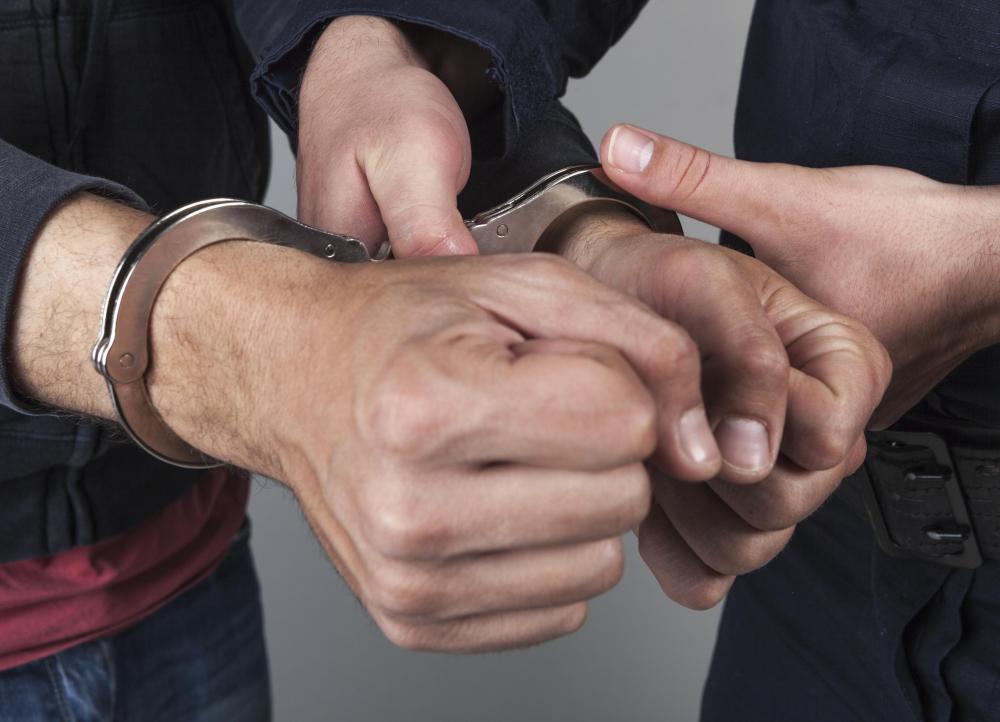
![A hostage negotiator may be authorized to make arrests.]() By: chatsimoA hostage negotiator may be authorized to make arrests.
By: chatsimoA hostage negotiator may be authorized to make arrests.



Discussion Comments
@David09 - I believe that the government does enter into hostage crisis negotiation scenarios with just about everyone, behind the scenes, but they don’t make it public because it might hurt our image or affect some of our official policy objectives. I agree with you—if we can save human lives, we should intervene.
I’ve never understood the pat answer we give that we will “never negotiate with terrorists.” What are the other kinds of hostage takers—angels? They’re all bad, whether their ends are political or simply monetary. Hostage takers need to intervene in all kinds of hostage negotiation scenarios, regardless of who’s involved, as long as innocent human life is involved and there’s a chance we can save those lives.
Everything I ever learned about hostage negotiation techniques I learned through the movies. I don’t know how accurate that information is, but it seems to line up with what I’ve read here. I still vividly recall the scene in the movie “Ransom” where the hostage negotiator tells Mel Gibson to pay the hostage taker, to “play the odds,” because 7 times out of 10 they get the hostage back alive. Then Mel (I forgot his movie name) turns to the negotiator and asks, “What about the other 3 times?”
Post your comments