
At HomeQuestionsAnswered, we're committed to delivering accurate, trustworthy information. Our expert-authored content is rigorously fact-checked and sourced from credible authorities. Discover how we uphold the highest standards in providing you with reliable knowledge.
What is a HEPA Filter?
HEPA stands for High Efficiency Particulate Air, and a true HEPA filter is widely regarded as the ultimate filter. It was invented during World War II, when the Atomic Energy Commission needed a filter to protect researchers from radioactive dust particles that might present a health hazard to them. It traps particles as tiny as 0.3 microns with an efficiency rating of 99.97%.
To provide an idea of the size of a micron, it takes 25,400 microns to equal 1 inch (2.54 cm). In metric terms, a single micron is 1 millionth of a meter. A particle of 10 microns is invisible to the naked eye. Pollen ranges between 5-100 microns, while human hair between 70-100 microns.

The rating for a HEPA filter is based on capturing nearly all microns 0.3 in size, versus 0.1 or even 0.001 because 0.3 microns are the hardest size to trap and the optimal size for passing into the human respiratory system. Therefore, this micron efficiency rating sets the highest standard.
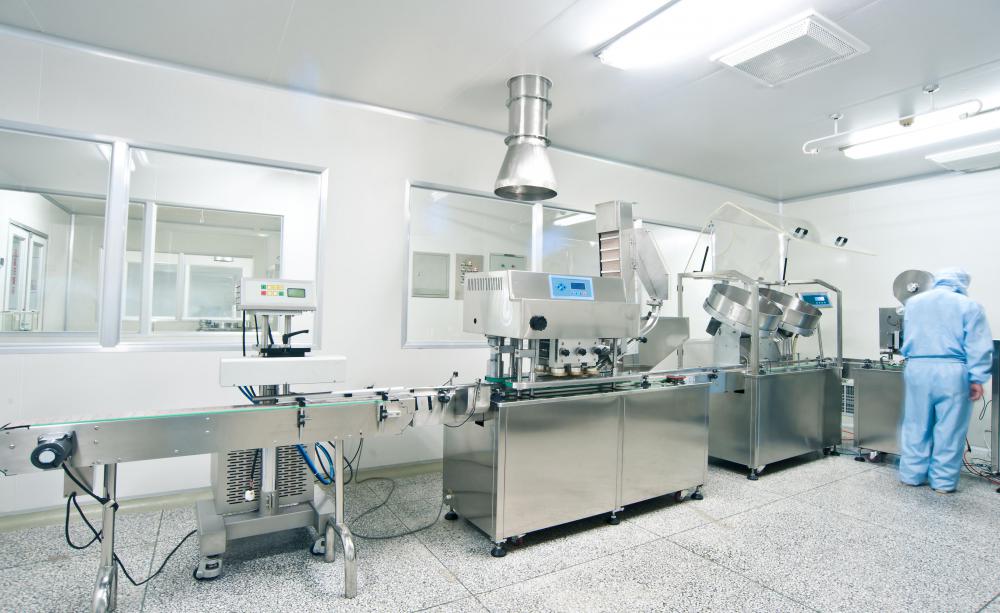
This type of filter is so efficient that, for every 10,000 particles that enter it within its filtering range, only three particles will get through. Surprisingly, HEPA filters become even more efficient the longer they are in use. For this reason, they are used in environments that rely on high clean-air standards, like surgical facilities, tuberculosis wards, NASA clean rooms, and laboratories. They are particularly useful for allergy sufferers.Many imitations filters pervade the marketplace, usually called HEPA-type filters. They are less expensive, rated lower, and do an inferior job of filtering the air. People whose health requires the specific benefits and efficiency of a HEPA filter should check the packaging to make sure the filter is rated at an efficiency of 99.97% for microns 0.3 in size. A real one will be clearly marked.
AS FEATURED ON:
AS FEATURED ON:


-
![HEPA filters are used in laboratories that require high clean air standards.]() By: pengyou92HEPA filters are used in laboratories that require high clean air standards.
By: pengyou92HEPA filters are used in laboratories that require high clean air standards. -
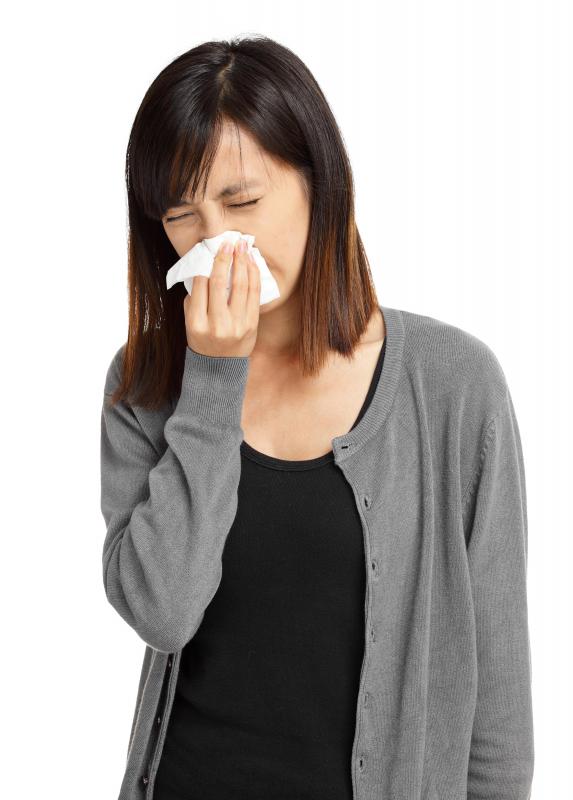
![HEPA filters can be beneficial for allergy sufferers.]() By: leungchopanHEPA filters can be beneficial for allergy sufferers.
By: leungchopanHEPA filters can be beneficial for allergy sufferers. -
![HEPA filters can remove allergens like dander from the air.]() By: sushaaaHEPA filters can remove allergens like dander from the air.
By: sushaaaHEPA filters can remove allergens like dander from the air. -
![HEPA filters can improve air quality and reduce the need for inhalers.]() By: PatryssiaHEPA filters can improve air quality and reduce the need for inhalers.
By: PatryssiaHEPA filters can improve air quality and reduce the need for inhalers. -
![Installing a HEPA filter can help someone dealing with sinus allergies.]() By: itardiuszInstalling a HEPA filter can help someone dealing with sinus allergies.
By: itardiuszInstalling a HEPA filter can help someone dealing with sinus allergies.



Discussion Comments
A HEPA filter does help to catch much smaller stuff and therefore it is helpful to control some of the allergy symptoms.
Thanks so much! This the best answer I've ever found to my homework.
although many vacuums today offer hepa filtration, if the vacuum is not sealed, the contaminating particulates still leak back into your home, thus most of these products are just gimmicks to get you to try them.
In my experiences, everyone who has had true hepa filtration in their home has benefited in some way. No secondhand smoke, better sleeping, reduction of allergies, control of asthma and emphysema, just to name a few.
Has anybody with really bad allergies used a HEPA filter with good results?
I've got a terrible dust allergy, and was considering investing in a HEPA filter air purifier, but wanted to know if anybody else out there had any advice beforehand.
Is it worth the investment?
@EarlyForest -- By and large, most HEPA filter vacuum cleaners have, like you suspected, HEPA-type filters.
Although some vacuum cleaners do feature actual HEPA air filters, many of them are for technical, rather than household, use.
For instance, some industrial vacuum cleaners designed to remove asbestos or mold do have true HEPA filters, but again, not all do.
As the article says, if you really need that level of filtration, you should look for the 99.97% filtration rate.
So do those so called HEPA filter vacuum cleaners actually have HEPA filters, or are those the imitations?
Post your comments