
At PracticalAdultInsights, we're committed to delivering accurate, trustworthy information. Our expert-authored content is rigorously fact-checked and sourced from credible authorities. Discover how we uphold the highest standards in providing you with reliable knowledge.
What is a Hematologist?
 Mary McMahon
Mary McMahon
Mary McMahon
A hematologist, sometimes also written “haematologist,” is a medical professional who studies and treats blood conditions and disorders. In most countries, hematology is a medical specialty that requires a great deal of training, often as much as eight to 10 years past undergraduate university studies. People with this sort of expertise are typically in very high demand and often earn high salaries as a consequence. Their work involves a range of blood-centered concerns, and they can be found working in blood banks, pathology laboratories, and private clinics as well as hospitals. They spend most of their time treating blood conditions and doing research about diseases and disorders that are either carried by or transmitted through fluid exchanges.
Scope of the Work

The study of hematology centers on the identification, treatment, and management of blood disorders, though preventative care is also a big part of the job. Prevention of blood disorders can include everything from genetic testing of people believed to be carriers of blood diseases to the administration of supplements designed to ward off mineral deficiencies. Early diagnosis and treatment is an important part of a hematologist’s job, as managing blood conditions often requires action before complications develop.
Importance as a Medical Specialty

The idea of blood studies may seem trivial at first, but it is in many ways essential to a whole-body approach to health care. While most medical professionals have some understanding of how important blood is to overall health, only hematologists have the expertise to cure most life-threatening blood conditions. Genetic blood disorders, such as hemophilia and thalassemia, are usually managed by individuals in this field, as are cancers of the blood. These experts also deal with issues like blood transfusions, stem cell transplants, and bone marrow transplants. If it involves blood, a hematologist is usually the person for the job.

Hematologists may also do more administrative work, like managing blood banks in order to keep supplies safe and accessible. They may also supervise labs that analyze blood samples, provide advice to advocacy groups for patients with genetic blood disorders, or work with government agencies on education campaigns designed to inform the public about common health issues like anemia, which is a type of iron deficiency. Work in this medical field can be quite diverse and is often very rewarding, especially when research uncovers new information about the management and treatment of particular disorders.
Interactions With Other Medical Professionals

Most hematologists work within very narrow niches, often seeing patients with only one type of disorder or researching only certain nuanced conditions or treatments. Success on the job often depends on close working relationships with other medical professionals, though. Laboratory technicians, for example, examine samples of blood and related tissues then provide information about abnormalities and other concerns identified in the screening. Hematologists may also work with other doctors as part of a patient care team to provide complete services to people with complex conditions.
Training Requirements

It is not usually very easy to become a hematologist. Specific training requirements vary by country (and sometimes even state or province), but usually involve attendance at a formal medical school followed by four or more years of residency and training programs. Most of the time, these additional programs are highly specialized and involve a lot of hands-on work. Students usually rotate through a number of different employment scenarios, often spending time in labs, in blood banks, in emergency rooms, and in dedicated blood clinics. This way, they are exposed to the profession’s many different angles and can choose their career path with some idea of what will actually be involved.
Licensing and Certification Rules
Simply going to school and completing the required training programs is rarely enough to begin practicing hematology. Most jurisdictions require all medical professionals to pass rigorous licensing and certification exams, and hematologists are no exception. In many places, these exams are recurring, which means that practitioners will need to recertify every few years in order to prove that they are still in touch with the latest trends and developments. Some places may also require regular “continuing education” credits, which can be earned by attending seminars and training sessions designed to provide overviews of the larger field and any new discoveries or treatment options.
Mary McMahon
Ever since she began contributing to the site several years ago, Mary has embraced the exciting challenge of being a PracticalAdultInsights researcher and writer. Mary has a liberal arts degree from Goddard College and spends her free time reading, cooking, and exploring the great outdoors.
Learn more...
Mary McMahon
Ever since she began contributing to the site several years ago, Mary has embraced the exciting challenge of being a PracticalAdultInsights researcher and writer. Mary has a liberal arts degree from Goddard College and spends her free time reading, cooking, and exploring the great outdoors.
Learn more...AS FEATURED ON:
AS FEATURED ON:


-
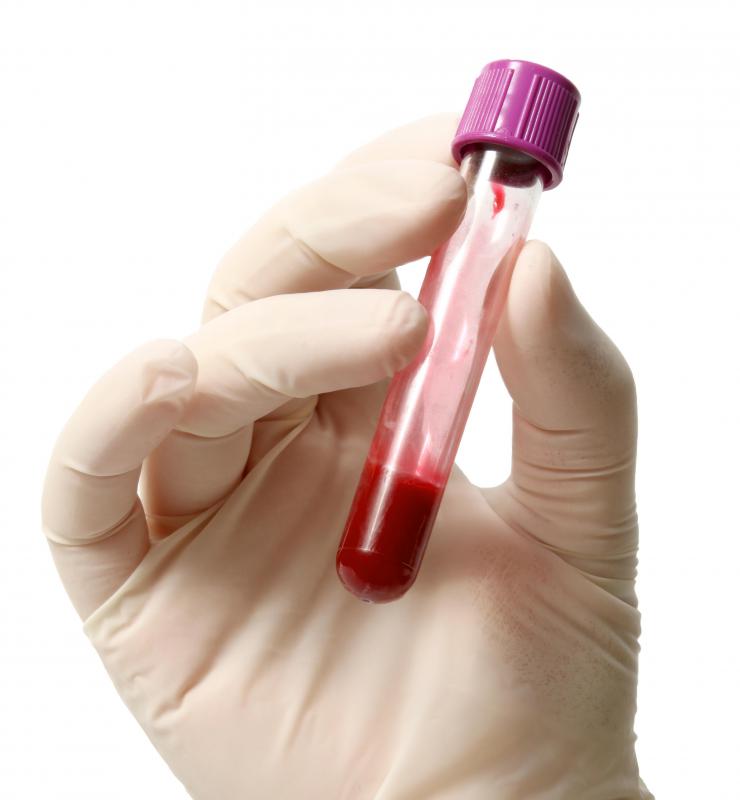
![A hematologist performing lab research with a blood sample.]() By: Rob ByronA hematologist performing lab research with a blood sample.
By: Rob ByronA hematologist performing lab research with a blood sample. -
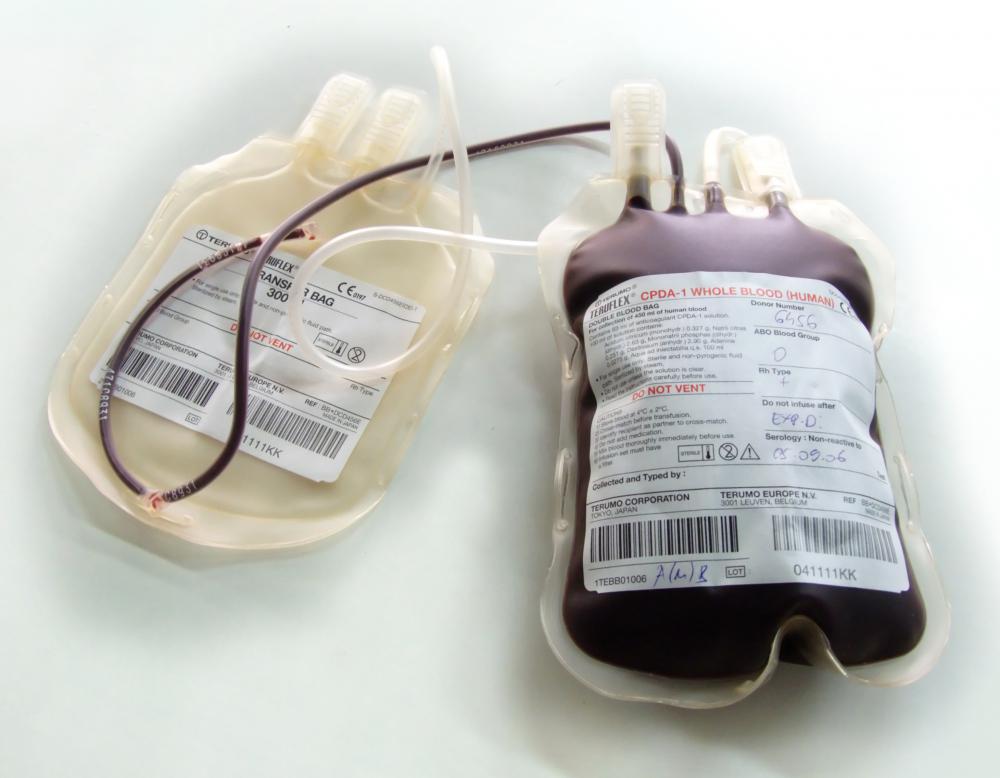
![One empty and one full pint-sized blood bag.]() By: .shockOne empty and one full pint-sized blood bag.
By: .shockOne empty and one full pint-sized blood bag. -
![Hematology involves the study of blood.]() By: Alexander GospodinovHematology involves the study of blood.
By: Alexander GospodinovHematology involves the study of blood. -
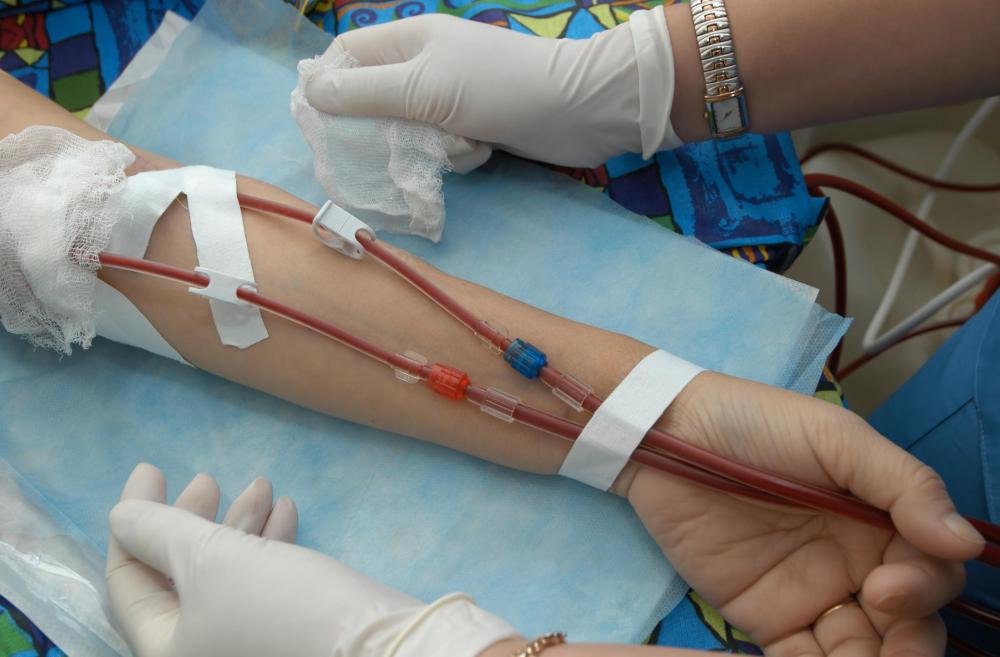
![A hematologist often deals with issues such as blood transfusions.]() By: Max TacticA hematologist often deals with issues such as blood transfusions.
By: Max TacticA hematologist often deals with issues such as blood transfusions. -
![Hematologists work closely with other medical professionals, as a part of a patient's care team.]() By: Andres RodriguezHematologists work closely with other medical professionals, as a part of a patient's care team.
By: Andres RodriguezHematologists work closely with other medical professionals, as a part of a patient's care team.


Discussion Comments
Being a hematologist is a good job rather than being a medical doctor.
I had surgery on my right shoulder and I have bruising all the way down my arm, up my neck. Now I am seeing bruising down my side, and around my waist. Is this normal?
What does it mean when your white blood cells are high and your red blood cells are out of whack?
I am doing a study on my hep C and the doc said my neutral blood cells are low. What is that?
I was told by my GP doctor that my blood platelets were low, dropping from 121 to 111 in just a few weeks. He suggested a Hematologist. Also I have been having pain in the base of my neck, behind my ears and also up into the back of my head. I had an MRI today but do not have results yet. After reading about low platelets, I am worrying a little more if there is a connection.
Where does a hematologist go to school?
can anybody tell me how to fight boils on skin? Is it necessary to go to a hematologist?
my primary doctor is a hematologist. When i did not feel well, he ordered blood tests and found a few problems like my cholesterol high, d low. He also noticed something not right about my thyroid. I found i had hashimoto's disease. He found it in weeks. Some people go many years without being diagnosed.
I have low iron stores and low platelets. I am on proferrin three times a day. I am tired all the time to where I have no energy. Going to work or exercising is a struggle but I have to do it. With having both low iron stores and low platelets, what medical conditions may I have to be concerned about? My sister was diagnosed with lupus and fibromyalgia. Her iron was low too. Thanks.
my husband collapsed last year. He ended up having a pacemaker fitted. We have just discovered a letter that had been misplaced for him to go to the hospital to see a consultant hematologist. Should it be something to worry about?
should i be concerned if my white blood cell count is 3.7?
William Harvey was perhaps one of the earliest known hematologists. He was a the first physician to correctly describe the systemic circulation and properties of blood being pumped to the body from the heart. In 1628, he published at 72 page book accurately detailing the blood's circulation process.
Many people do not realize the importance of a hematologist. A hematologist is a health care expert trained in the research, handling, and treatment of conditions involving blood. Every major medical center will have at least one hematologist.
Something of huge importance that they do is diagnose patients without using invasive procedures. Many diseases that are caused by a virus or bacteria can be tested in our blood. Even cancer can be detected in our blood. Hematologists treats patients with anemia, leukemia, HIV/AIDS, hemophilia, and many other conditions. Hematologists also perform blood transfusions and stem cell transplants.
Post your comments