
At EasyTechJunkie, we're committed to delivering accurate, trustworthy information. Our expert-authored content is rigorously fact-checked and sourced from credible authorities. Discover how we uphold the highest standards in providing you with reliable knowledge.
What is a GPRS SIM Card?
A GPRS SIM card is a small technological device used to help smartphones configured for the general packet radio service (GPRS) platform connect to a network and send and receive data. Though the GPRS network still exists in many places, phones designed specifically for it are increasingly rare. As such, these cards are becoming increasingly antiquated and aren’t generally manufactured anymore. Phones running them may still work, but users typically lack the support and network strength of newer and more modern platforms. In most cases this card, which was first introduced in 2000, works the same as any other more modern subscriber identity module (SIM) card. The difference is usually most evident when it comes to download speeds and connection strength.
Understanding the Technology Generally

The general packet radio service is a type of cellular data network that’s most common in Europe and parts of Asia, though some parts of Canada and North America have it in limited places, too. It was designed to work in tandem with the now antiquated 2G cellular data networks. GPRS first became popular in 2000, and the first cards to feature a GPRS SIM card emerged at this time, too.

SIM cards are small chip-based tools that act as basic identifiers for mobile phones. They allow it to connect to a network, but also provide some essential identifying information; they’re what assigns a phone a particular number, for instance, and they typically also hold at least some data like contact information and call logs. People can usually switch their SIM card from one phone to another, and in so doing basically recreate the core elements of their device in a new or updated system. A specifically GPRS SIM card is a card designed intentionally for a GPRS-enabled phone.
Main Function and Purpose

SIM cards designed for GPRS enable a cell phone to receive several different services. Always-on Internet access allows the phone to constantly be connected to the Internet instead of having to wait for the phone to establish a connection. The all-digital nature of GPRS enabled multimedia messaging, a feature before unseen on phones, and some models also featured push-to-talk and instant messaging (IM). Many of these phones were also able to use applications designed to take advantage of a wireless application protocol (WAP).
Data Plans and Pay Structures
One of the most innovative things about the GPRS network when it emerged is that it enabled providers to charge for the actual data sent instead of a flat connection rate, which was more standard at the time. A 2G network service that used a GPRS SIM card was also easier on a cell phone battery than a service that used an older type of card or connection. This was one of the things that helped promote smaller cell phones since the batteries did not have to be as large as ones required for more power-intensive networks.
General packet radio services were traditionally offered as value-added packages from cell phone providers. People often chose data plans as an additional part of a cell phone plan. Today most come bundled together, but this wasn’t always the case. The data transfer rate that a GPRS-based connection can achieve typically ranges between 56 to 114 kilobytes per second (Kbps). At the time they were first introduced, this was quite fast; by modern expectations, though, these same rates are often thought to be quite slow. People who connect to GPRS networks with more modern devices often grow frustrated at the time it takes web pages and other content to load, particularly if that content is optimized for faster connections.
Future of the Technology
Cell phone technology, like most parts of the high-tech sector, is changing rapidly. Where GPRS was once the most cutting-edge option, it’s increasingly seen as slow and second-rate, having been supplanted by successors. First was enhanced data rates for GSM evolution, known more commonly simply as “E”; 3G and 4G networks soon followed. SIM cards optimized for GPRS will usually still work even on these more advanced networks, but not always — and probably not forever.
AS FEATURED ON:
AS FEATURED ON:









-
![A GPRS SIM card.]() By: Nikolai SorokinA GPRS SIM card.
By: Nikolai SorokinA GPRS SIM card. -
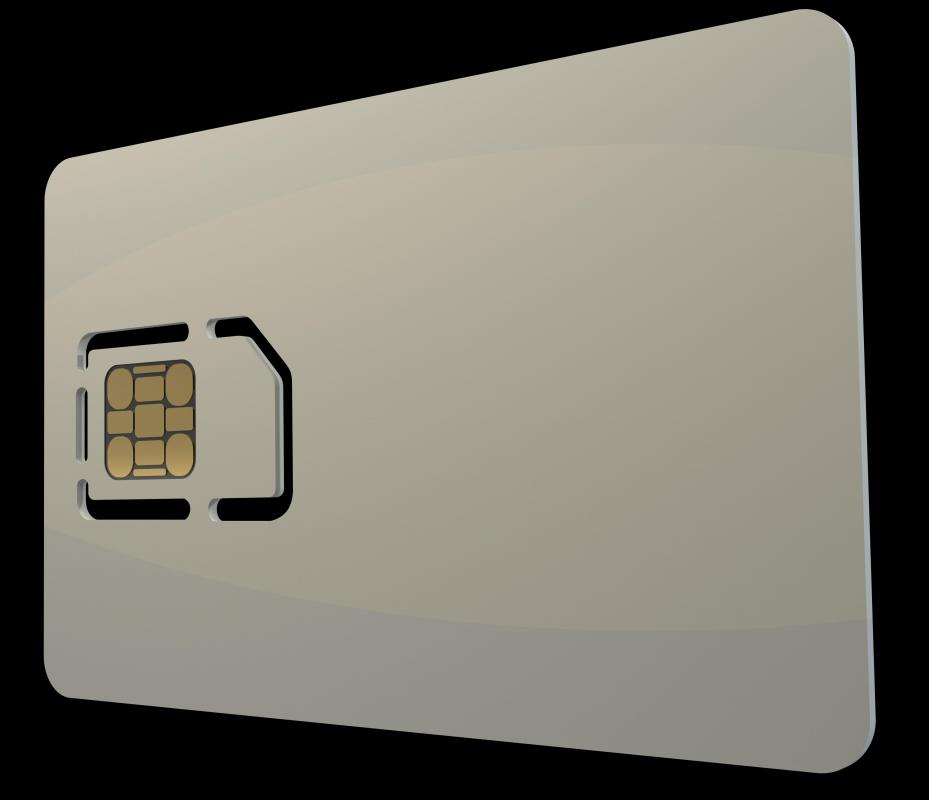
![Some sim cards are packaged inside of a larger card in order to protect them from damage before use.]() By: Iaroslav NeliubovSome sim cards are packaged inside of a larger card in order to protect them from damage before use.
By: Iaroslav NeliubovSome sim cards are packaged inside of a larger card in order to protect them from damage before use. -
![GPRS is a wireless data transfer protocol that is used to connect mobile devices to the internet.]() By: Tarikh JumeerGPRS is a wireless data transfer protocol that is used to connect mobile devices to the internet.
By: Tarikh JumeerGPRS is a wireless data transfer protocol that is used to connect mobile devices to the internet.


Discussion Comments
@Logicfest -- If you have a device that uses 2G in the United States, your days may already be numbered. Most major carriers have announced they are phasing out all 2G networks at some point. Some may hang on longer that others, but they are all vanishing.
You can still find 2G technology in use in the United States. For example, if your phone can't pick up a snazzy 4G signal, you may see a message saying you are running on an Edge network (2.75G) or something similar.
That technology is still prominent in some nations, but 3G and 4G have been phasing it out quite a bit. It may vanish completely one day in all parts of the world as faster networks replace those that use 2G.
Post your comments