
At TheHealthBoard, we're committed to delivering accurate, trustworthy information. Our expert-authored content is rigorously fact-checked and sourced from credible authorities. Discover how we uphold the highest standards in providing you with reliable knowledge.
What is a Frenectomy?
A frenectomy is the surgical removal all or part of the frenulum, or frenum, which is a thin band of tissue that is found in various parts of the human body. This surgery is most often performed on frenum tissue that is found in the mouth. It is a common surgical procedure in dental and orthodontic practices. Patients rarely experience any complications from the surgery. Children and people who are being fitted for dentures are the most common candidates for frenectomies.
Frenum in the Mouth

There are two primary locations in the mouth where a frenum is found — under the tongue and underneath the center of the upper lip. In some cases, this tissue might interfere with the development or function of the lips or tongue. In the event that the frenum is attached too close to the tip of the tongue or too far down the gums between the front teeth, it might need to be clipped or removed.
Lingual Frenectomy

A lingual frenectomy is the removal of the lingual frenum, which is the tissue under the tongue. In some cases, if the tissue is attached too closely to the tip of the tongue, it can interfere with the person's speech and hinder proper tooth development. Patients who are suffering from this condition are sometimes said to be "tongue tied," because their tongues do not have the normal range of motion.
Lingual frenectomies are fairly common procedures for children who have this condition. A lingual frenectomy is sometimes referred to as clipping the tongue. After the procedure, the tongue usually can be extended properly and becomes fully mobile.
Labial Frenectomy

When the tissue that is attached to the center of the upper lip on the inside of the mouth is clipped or removed, it is called a labial frenectomy. A frenum that is attached too far down the gum can cause the gums to recede and create gaps between the front teeth. Additionally, denture patients often undergo labial frenectomies so that proper denture fits can be achieved.
Other Types of Frenum

Although a frenectomy is a common oral surgical procedure, frenula also are found in other parts of the body. Among these areas are the digestive tract, the brain and external genitalia. Removal of the frenum in areas of the body other than the mouth is not common, however.
AS FEATURED ON:
AS FEATURED ON:


-
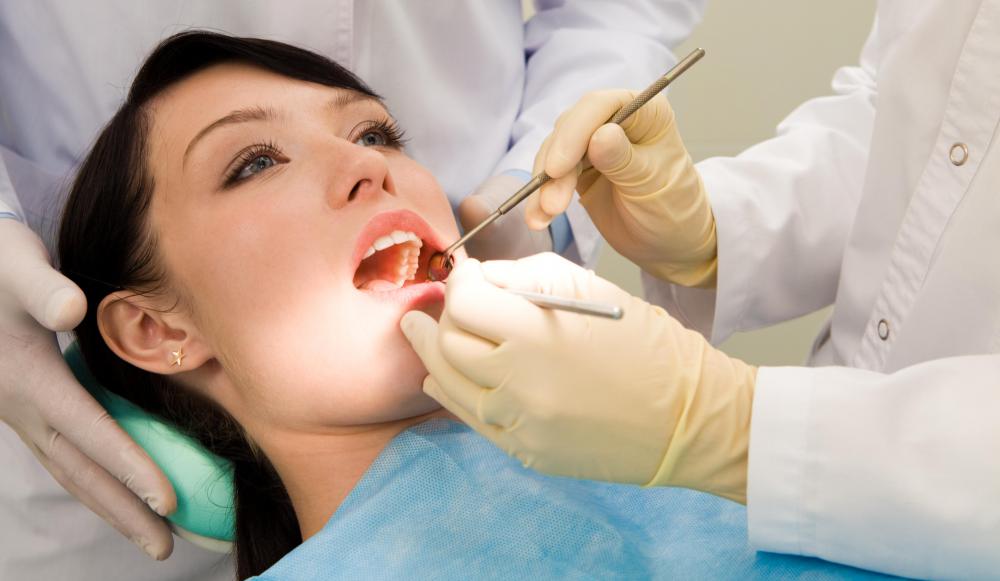
![A frenectomy is the surgical removal of all or part of the frenulum.]() By: yanmingzhangA frenectomy is the surgical removal of all or part of the frenulum.
By: yanmingzhangA frenectomy is the surgical removal of all or part of the frenulum. -
![People being fitted for dentures are common candidates of frenectomies.]() By: BartkowskiPeople being fitted for dentures are common candidates of frenectomies.
By: BartkowskiPeople being fitted for dentures are common candidates of frenectomies. -
![Frenectomies are often performed in dental practices and orthodontic offices.]() By: Vladimir MelnikFrenectomies are often performed in dental practices and orthodontic offices.
By: Vladimir MelnikFrenectomies are often performed in dental practices and orthodontic offices. -
![A frenum may be found under the tongue, where it may interfere with the function of the tongue or lips.]() By: Alexander TrinitatovA frenum may be found under the tongue, where it may interfere with the function of the tongue or lips.
By: Alexander TrinitatovA frenum may be found under the tongue, where it may interfere with the function of the tongue or lips. -
![Frenum that is attached too close to the tip of the tongue may need to be removed.]() By: pressmasterFrenum that is attached too close to the tip of the tongue may need to be removed.
By: pressmasterFrenum that is attached too close to the tip of the tongue may need to be removed.


Discussion Comments
I'm seeing feedback from some regarding the inferior labial frenectomy causing a loose lip. I'm referring to the frenulum connecting the lower gum and lower lip. Has the procedure caused permanent negative changes in appearance of the lip, etc?
A week ago I had a gum grafting and had a lower labial frenulum (between the teeth and the lower lip) removed. Everything is recovering well, but my lower lip now is hanging away down from the teeth and my upper lip. It look awful and I am devastated. Can the frenulum be attached again or what else can be done about it? I hope somebody knows something about it and help me.
I'm 31 years old and just had a lingual frenectomy due to mild tongue tie which did not affect my feeding or speech as a child, so it was not caught. However, I'm certain it affected the crooked growth of my teeth as my tongue rested on the floor of my mouth my entire life when it should have rested on the upper palate. My frenulum would get cut by my lower teeth any time I stuck it out the tiniest bit. This affected my oral hygiene and my sex life. I also could not sweep food from my molars and always had to use a finger. Anyway, the procedure was simple and I should have done it 10 years ago when I first realized I had a problem.
They put numbing gel on the area so I did not feel the shot for numbing the tongue. I did not feel the scalpel or stitches. I got four stitches. I went home and on the way got a milkshake which I ate with a spoon. The numbness wore off and I hurt terribly. I took some hydrocodone I had left over from something a while back and it helped greatly. I took ibuprofen after that and took a four hour nap. I felt much better the second day. I did some tongue stretch exercises but not too many due to tenderness. I mostly drank shakes and soups. I had some pasta which was OK if I was careful. I tried a cupcake. Instant regret. So I bought some pudding and it was heavenly. I'm at the end of my second day and am having some pain still, but it's mild. I also have some tingling in my tongue tip.
I immediately noticed my tongue resting higher in my mouth, and I can reach my molars. Lateral movement is still painful but I'm sure it will heal in no time. It's only the end of my second day.
My 14 year old daughter had this procedure today in between her two top front teeth. Should she wear her invisiline at night yet or wait a few days?
My 7 year old daughter is going to have a labial frenectomy on Friday. We were referred to an oral surgeon and he said it's no big deal and that she can have as many popsicles and slushies after having it done to help with the pain. You guys are making me more nervous. I probably shouldn't have read this. She will have laughing gas because she is nervous, and numbing shots. It will be a laser procedure. Really hoping I made the right decision.
I'm 54 and about to have a lower lip frenectomy. Gum recession is close to the frenum which is why the doc is recommending it. How will I cope? Will it be painful afterward? For how long? Has anyone near my age had one on the lower lip and can tell me how it will be?
I'm 14, and I had an upper labial frenectomy done yesterday. It was fine, it just took them quite a while to get started. It was fine, but the numbing gum they used made me a bit sick. Also, during the procedure the dentist accidentally cut the assistant with the needle with my blood on, which got into hers. This meant that they had to take a blood sample- which took more waiting around.
Anyway, it hurt a bit after the shots wore off, but I took some ibuprofen and it was fine. I haven't needed to take any today, as the pain has already gone. Is it normal for the pain to disappear after the first day?
Oh come on, people! The drama!
I had a laser lingual frenectomy at the dentist four days ago. It was practically painless unless LA, took less than two minutes and when the anesthetic wore off, yes it was sore/tender but I took regular pain relief for the first few days and it's fine! I can eat whatever, talk fine. It's such a minor procedure and only cost me 200 Euros. I also am sorry I didn't get it done sooner!
And I can stick my tongue out finally! I'm delighted! For that, I can put up with a bit of soreness. I mean, what do you expect when somebody cuts inside your mouth?
If you're thinking of doing it, just do it! Just make sure you take pain relief so you can do the exercises because the tie can reattach if you don't move it.
I had a lingual frenectomy yesterday and the procedure wasn't bad at all. I was given local anesthetic and it just felt like a sharp pinch but after that I didn't feel a thing. The procedure took about 15 minutes and then I was out the door. They gave me dissolving stitches and a prescription for percocet.
When the numbness wore off I was in a lot of pain but I took the medication and felt fine. Today the pain was a lot less and only had to take ibuprofen but still can only eat soft foods. I'm talking funny but once my stitches dissolve, I'll be able to use my tongue to speak and I'm really glad I got the procedure done and over with.
I just took my seven-year-old to the dentist yesterday and was told that I needed to take her to an Orthodontist to discuss a labial frenectomy due to the gap between her teeth. I was also told by the dentist that she would have to wear a retainer basically for life and would probably still need braces after all of her adult teeth are in. The dentist also stated that even after a labial frenectomy, that the frenum wants to repair itself so that is why there is a need for a retainer continuously.
I'm a little on the fence about whether I should get the surgery done for her. I'm not sure if it will have any negative effects on her so therefore, I am scheduling an appointment with an orthodontist to discuss our options further and make a better decision. From what I have read on here no one has said anything about having to wear a retainer after the frenectomy.
Also, what I was told by the dentist was that the frenulum under the tongue was the one that affected speech and that the labial frenum just caused the gap between the teeth. Good luck to all and thanks for the info!
I'm 16 and just had this done this morning (about 13 hours ago) on my lower lip because of gum recession in preparation for a gum graft in about a month.
The actual novocaine shots themselves (two, maybe three) weren't too bad, but about the third cut he made really hurt. I guess it wasn't numb enough? I got another shot halfway through.
The total time in the office, from the time I got out of my car until I got back in was about 40 minutes including prep (taking advil and using listerine) and everything. They put putty on the area to protect it, and it fell off about five hours afterward. I've kept ice on it all day, and have had some mild pain, but the swelling feels pretty major. I've more had a sore throat from swallowing the bloody saliva. Yuck! Anyway it was worth it to prevent me from losing my bottom front tooth and developing further gum disease.
Can someone who has had a frenectomy under their tongue please tell me when normal speech will return?
My daughter is 13 months old and I have just discovered she has a lip tie. Reading all your comments has made me decide to call my dentist tomorrow and find out if she snips/lasers them so I can get it over with before she is older, really talking and her adult teeth come in.
One question I do have is how does having a lip tie affect your smile? What I mean by that is tonight I was watching something on tv and there was a lady who when she smiled the inner upper lip kind of flipped out and covered half of her teeth. Was that caused by a lip tie?
I'm 27 years old and I've worn braces three separate times for a total of 10 years. After dealing with a recurring space between my two front teeth in the upper jaw, my orthodontist finally suggested a laser frenectomy.
I had the procedure done today, and I am hopeful that this will finally address the problem once and for all. Also, the procedure was essentially pain free with the numbing gel.
I had a laser upper lip frenectomy today after putting it off for the past three years. My muscle was attached very low (almost to my two front teeth) and has been pulling my gums away from my teeth for the past ten years or so. I read a lot on the internet before having the procedure done which scared me tremendously, however I have been pleasantly surprised by the results so far.
The worst part of the procedure was the numbing shots, there has been no bleeding or intense pain for me. I have had braces and all kind of mouth work done and it has just been uncomfortable but not painful. Doctor gave me a prescription for strong motrin and Peridex mothwash (this mouthwash is amazing to keep it clean and helps with pain.)
If this is something you are putting off as an adult or teenager I say do it. You only have one mouth that needs to last forever. There are rarely complications and this will improve your health.
I had a upper labial frenectomy 15 days ago. Should the area still be red and sore?
should i get it lasered or cut? if i get it cut i need dissolving stitches, if i get it lasered i need nothing. please tell me someone that have experienced it and is the age of 0-10.
I'm getting one done today on my upper lip. It's pretty normal to me because the shot I had done for my tooth pulled out and my cavity. I'm not a grownup and I know that people say it's better to do it when you're young, but the thing I'm scared about is the cutting part. Does it mess your speech up?
I just found out my 15 month old son has the upper lip tie and I'm so upset. I don't know what to do. Do we cut it or not? Will it hurt him for the future or help him? What I decide to do could change is future and I'm so lost right now. The dentist I took him to said if we cut it we take a chance of hurting him once his adult teeth come in because of scar tissue. Can someone help me understand what would be better for him? Please!
I had it done about a year ago. The whole surgery went great, but the recovery was painful. The other is: my gap hasn't really gotten any better. If anything, I'd say it has gotten bigger! Has this ever happened to any one else? If so what should I do?
Help me. My doctor told me that i should have a frenectomy before having braces, but i just ran away, and i went to another doctor who didn't tell me that i needed it.
So after my braces were removed, the gap appeared again. My question is: Can I have this surgery now and will the gap disappear forever?
I just got an upper frenectomy this morning- the shot hurt a little, but the rest was fine. The novacane has worn off though, and my upper lip area is stinging. I took some Advil over 1 1/2 hours ago, and it still hurts, just not as badly. Is it supposed to sting?
I've read the posts from people who say they didn't have pain following this procedure and can only say you're lucky! I had this done four days ago (upper lip). My dentist was wonderful. He has a method where you don't even feel the shot. I was completely numb and had gas because I was very nervous. Completely pain-free procedure.
However, after anesthesia wore off, oh my God! I've been in constant pain for four days and had to go from the Codeine he gave me as a routine medication to percocet; I admittedly have a very low pain threshold. My mouth is still swollen and I ended up missing two days from work due to swelling and extreme pain. Don't want to scare anyone, just think you should know what this procedure entails. Learned there are tons of nerves in the mouth, so it's more painful than some other procedures, even using laser.
After my dentist told me I needed laser gum surgery, I went into a total panic. I have been struggling with periodontal issues for most of my adult life, and have always had some 5 and 6 mm depth pockets in my mouth that have been of concern, but one of them finally flared up to a 9mm pocket. My dentist gave me a referral to a periodontist, and I was about two days away from my appointment when I decided to google gum surgery to find out more.
I'm getting my wisdom teeth taken out tomorrow along with the tendon on my upper lip.
I had the lingual frenectomy done when I was 16 because I was very tongue tied. I got it done when I had my wisdom teeth out. Even though the wisdom teeth were very impacted and required surgical intervention, the frenectomy hurt more. I was so sore from that for about nine days after. Then it took me a long time to learn to talk right again. I was teased horribly by my friends for not being able to say t's & S's. I also had trouble eating.
This was 13 years ago and my tongue still shakes when I stick it out because the muscle never strengthened right when I was growing up. I wish I had gotten it much younger because I think it would have been more beneficial. My son who is 7 just had the labial frenectomy and did not experience as much pain as I did. He is talking fine and just a bit sore. I do not know if it is the speed of a youngsters healing or the difference in the spot where it is done. Even though mine was tough, I do not regret doing it at all. If you have kids that need it done, for their sake, do it as early as possible!
My daughter (7) had her upper lip done. No pain whatsoever. They gave her general anesthesia and she was pretty groggy after the two-minute laser surgery. She doesn't remember a thing. About three days later she forgot all about it and was back to everything as usual. Cost: $3000 -- well worth the oral surgeon!
My son's doctor told me (when he was a baby) that he should have his tongue clipped if there was a feeding problem, there wasn't with a bottle. (He also said there was a good chance it may grow back as well.) We waited, and he is now seven and no speech problems. For him, it didn't affect anything. Glad we waited and didn't overreact with surgery when he was six months old. But, an upper lip frenulum has now developed pulling his front teeth apart. We will more than likely return to the same oral surgeon.
I just had a frenectomy performed on my upper lip today. The only part that was slightly painful about the procedure was the first shot to numb me, but it wasn't bad at all-- just like a small pinch. The surgeon gave me two additional shots just to make sure I was completely numb and I did not feel those at all. The procedure was very quick and I did not feel a single thing.
However, the numbness has worn off and it is really hurting. I took tylenol, but that has not worked yet. I really hope this gets better.
Just got my labial frenectomy done because I am going to get invisalign and all i can say is, the process was not painful at all! Well for me, the doctor rubbed some of that pink gel stuff to make my frenulum part numb. after that they gave me the numbing shot (Yes you have to get a shot, the numbing gel isn't enough) after that, they gave me some cool glasses!
they had me lie down and the guy began using the laser. Once again no pain! It took about five minutes (seemed like a year to me) and i am a very big wimp when it comes to needles and dentists. the shot will give you a pinch (My numbing gel wore off a bit so i felt the needle). I am 19 years old.
I just had this done last week. I am in my 40's and decided to have it done after my dentist said it wouldn't be painful and I would only need Tylenol or Advil for pain. That was wrong. It's only been a week since having it done but I would never do it again. It didn't hurt at all to have it done but about an hour after was the worst pain. I had to call for pain pills and that barely touched it. I could not eat anything other than jello or soup for about five days. I am now eating small pieces of meat with minimal pain.
I needed Tylenol and Advil every four hours for several days. If you must have this done be prepared with pain meds and soft foods and you should be fine. It feels different, almost like I'm having trouble talking because my tongue hasn't been able to move around before. I would only have this done if needed for braces, etc.. it's not worth it otherwise.
I'm 22 years old and just had a frenectomy under my tongue and on my bottom lip in front of my two bottom teeth. The surgical process wasn't too bad. they had to numb me a few times because it started to hurt. Afterward, i was in so much pain. I took Motrin 800 and at night to sleep Tylenol pm. I always have an ice pack near me because the front park of my mouth is so sore. I'm barely able to talk, it feels like my tongue is swollen and it hurts a bit to move my tongue. Upon using the prescribed mouthwash, i noticed that i was spitting or drooling out the blood. Pretty gross, I know. But i rinsed this morning and didn't have any blood at all. I also brushed my teeth very gently. I have braces as well, so it was slightly more painful.
I really hope that my speech won't be ruined after i heal. I see everyone's comments above saying how their child's speech is ruined. I just think that its a different feeling now that the tongue isn't attached. I was originally supposed to get the laser procedure, but they came to the realization that the laser couldn't do the job, so they ended up cutting. I'm sick of shakes, and ice water. I can't wait to eat normal food again!
I'm getting my top braces on the 28 of Feb. along with a MARA device, then I have to get a lower frenectomy because I have two frenums, one's off by a tooth. Then I get lower braces. What I want to know is if it will hurt after the fact?
My three year old son had his lower lip done. He is really in pain and can't eat or drink, and drools a bit. I feel really bad, but it was affecting his speech. Hopefully his speech will improve. I would hate to have put him through so much pain for nothing.
My fourteen year old daughter just had a lingual frenectomy four days ago. She has really suffered during the recovery. Her speech is way worse, and she still can barely eat food that is not liquid.
I wish we had been told how bad this was going to be.
We did it because the tongue tie was pulling her lower teeth out of line, and it was made to sound so simple by the dentist and oral surgeon. I am living in fear that her speech will not return to normal. I will be looking for a speech therapist for her on Monday. I currently regret the decision to do this to my girl, even though she wanted it.
I'm getting an upper frenectomy tomorrow and I'm freaked out. i hate needles and i don't care about the actual procedure. is it possible to be put to sleep?
I had my tongue tie removed two days ago and if anyone's worrying about the surgery, don't. it is painless. the local anesthetic hurts a bit but doesn't take two minutes to work, if that.
i had the procedure done and a couple of dissolvable stitches and i was fine in 15 mins tops. when the anesthetic wore off it was quite painful so i would recommend some painkillers and to not eat anything that is going to need chewing as it really hurts I've tried. the surgery is well worth it though so i would recommend it.
I had it done a few days ago. it has since been three days and there is minimum discomfort. It just "itches a little." I guess that's from the skin healing. Cost was $498 without insurance and $100 with.
@13: It doesn't hurt. The laughing gas is awesome - I suggest you purchase some if you get the chance.
two weeks on soft food, or else you risk ripping it open. Then it'll hurt.
I'm 18 and yesterday I had a frenectomy, the one under my tongue. My orthodontist recommended it because I'm getting my braces off soon. The procedure went smoothly, and when I got home I slept. That night I was getting ready to go to a football game, and I felt great. Then I started feeling sick.
I hadn't eaten a thing since before the surgery because it was so painful. Turns out, the anesthetic made me sick, and every time I got sick, it would rip under my tongue. So try your best to eat as much as you can and drink lots of water, it's no fun! I wouldn't recommend it if you don't have to get it done!
I'm 15 and i got my braces off and a labial frenectomy yesterday. It was just to make sure my teeth don't gap now that i have my braces off. My ortho just used numbing gel and it didn't hurt at all. I'm not having much pain at all. It's just a little tender like if i itch my nose and it pulls it up a little.
It's really gross looking. It looks like it has pus on it and i keep trying to get the gunky stuff off and the ortho gave me vitamin E tablets that you poke with something sharp and get the liquid inside on a q-tip and put it on it twice a day. This helps with the healing.
You can get that vitamin E tablets just at drug stores. Don't be scared. It's not a big deal at all. And it heals in like two weeks.
I must have gotten screwed. my six year old son had his tongue clipped last month and it cost me $2,276!
I am a 49 year old female. I had a lower labial frenectomy on the outside of my bottom teeth about a month ago. It healed very quickly and with minimal pain. I was having a gum graft and wasn't told I was getting a frenectomy too. I was somewhat shocked after learning from my regular dentist what the perio surgeon had done.
My 16 year old son had his tongue surgically corrected underneath his tongue. His speech got worse after the procedure. It has only been five days but I am worried that his speech is worse. His tongue was very painful and is struggling to keep saliva from dripping out of his mouth.
Just got a lingual frenectomy last month. The actual surgery is painless but the recovery is really painful. Even taking painkillers won't reduce the pain to a bearable level.
You also are living off liquid and really soft foods during the recovery. So if you are thinking of getting a lingual frenectomy or you are getting your child a lingual frenectomy, keep in mind that there will be two to four weeks of pain and you may lose a lot of weight because it is so painful to eat and drink.
You will eat less to avoid pain and you won't even be eating substantial food when you do eat. I lost 20 pounds during the recovery process. But getting lingual frenectomy surgery is worth it because if you don't get it your teeth will get screwed up over time, even if you had braces.
I am 16 years old and I looked up lip attached to gum out of curiosity to know if anyone else has the same thing I do. To my surprise, people do.
I have the one that attached from the middle of my top lip to my gum which parts my two front teeth-giving me gapped teeth. I'm kind of used to it and am thinking to keep it.
I just had this done on my upper lip today. Not only was i numbed and still felt some of it, but i bled a lot and i got two stitches. I am wondering if the stitches part is normal?
My daughter is five,and she just had a labial frenectomy done today. They did it with a laser and the whole process took less than ten minutes! She says that it hurts a little, but it's not slowing her down any.
The dentist said it's better to do it when they are young because recovery is quicker and less painful. Also he said it should be done before adult teeth come in.
I also had the same procedure a year and a half ago. Everything was fine. I was a little sore the next day but nothing that tylenol couldn't take care of.
I had a labial frenectomy done about two weeks ago and I now have firm white scare tissue under my tongue. Has anyone experienced this? I'm not sure if this is part of the healing process or not.
#37- the labial frenectomy didn't hurt. the numbing was slightly painful but it was OK, during the actual thing, i didn't feel anything. There was a little pain afterward, but they gave me prescription drugs that helped but i didn't use them much and i was fine. I think you should just get it.
I am thinking about having an upper frenectomy. I am 16, and got my braces off two years ago. I am very upset with the small gap in between my two front teeth which is constantly closing and opening again. My orthodontist recommends it since i have extra tissue, but doesn't guarantee it will close the space. Will this procedure help keep my teeth together and avoid having the constant on/off space?
I am also a big baby- terrified of pain/needles/surgery. What is it like? Do you feel anything while they are doing the procedure? What do they use?
I have just returned from the hospital. My 14 year old daughter has just had an upper frenectomy. Her upper lip is really swollen, and she is afraid to talk or eat.
Can anyone suggest something that she could eat? She has been given really strong painkillers from the hospital but this hasn't eased the pain at all, so I've just been to the local chemist and he suggested neurofen for the in between hours of taking her painkillers from the hosp.
It's been over an hour since she took the neurofen and she is still in a lot of pain. Can any1 also suggest any other painkillers?
Had this procedure done to my upper lip last night. I took two Advil prior to the procedure and two a few hours later. It's been 18 hours and I have zero pain and a little swelling.
I was so scared it would be very painful during and after but I did not feel a thing. The shots also did not hurt at all because he put some numbing gel in the area first.
I want to get a frenectomy done in my tongue since I'm tongue tied but I don't have a problem with my speech. I speak perfectly fine Its just it bothers me a little bit and I'm a teenaqer so my tongue is weird basically and I'm scared of needles and surgeries.
I am getting an upper one in two days and I am very nervous! My orthodontist said that there wasn't even a recovery. I'm not sure what she means by that. I'm a little nervous about the pain afterward. My friend says dentists just want our money and that I shouldn't get it. Help!
I had a frenectomy done last week. No pain other than the prick of a needle in my upper gum area. Some pain the next day but not unpleasant. I am on a blood thinner and was concerned about excess bleeding but everything went smoothly.
I'm 13 and just had a frenectomy done yesterday. First, the dentist had me rub some peppermint right under my upper lip. After this, the needle didn't even hurt, just a pinch.
They began the procedure, and I'd say it took no more than five minutes. During, there was no pain whatsoever. But after the numbness wore off, there was aching. I took pain meds and it was all fine and dandy.
Today, I have swelling in my upper lip but I suppose this should go away.
I am 19 and just had a frenectomy performed yesterday, two actually, one on my lower lip and one on top next to my canine tooth (i am preparing for a gum graft in a few months.)
Let me assure everyone, the procedure was so, so, so easy, so quick, so smooth, and painless! I am a bit of a baby, so I got really queasy during the surgery when I smelled my flesh being lasered off (gross!) but there was no pain at all.
It was so quick and the job was so clean I was amazed. I felt a very slight bit of pain a few hours after the surgery on my lower lip, but nothing a tylenol couldn't fix.
Just be careful what you eat to avoid irritation and I would say don't brush your teeth the first day. Good luck!
My son is 31/2 and is having a labial frenectomy tomorrow. I'm a bit worried about the surgery, and whether it will be painful for him, before and after the procedure. His dentist strongly suggested that he have the procedure, otherwise he said it could cause some problems later on, when his permanent teeth start to come in.
i am 13 and i am about to get it done to my upper lip. i am nervous because i think it will hurt during the process. what do they use? a laser? i saw videos using a laser and it didn't look like it hurt at all! but i am afraid of the needles. also my dentist said i wouldn't need stitches and i would need a retainer. someone please answer my questions.
My daughter is 11 months old and has the same thing. I was told that if not taken care of she will have speech developmental delays and she currently can not drink from a cup or sippy very well. We are going to a specialist today to see what and how they are going to perform this procedure. As it is not done on someone so young very often.
My nine year old is scheduled to have it this friday. I am really afraid for her. I would like to know what is the estimated time of recovery and what she can and cannot eat during the recovery.
my son will be having both his tongue and upper lip done this coming friday. i was not going to fix this as it really has not given him a speech problem and figured i would wait till he was bothered by it, however we were at the dentist and they advised up to have it repaired before his permanent teeth start to come in due to spaces it is causing in bother the upper and lower front two teeth.
i opted for an ENT surgeon to do the procedure rather than a dentist since my son has VSD. i feel more comfortable with a hospital setting. will let you know how it goes.
I too had the labial frenectomy done, and the procedure (laser) did not hurt one bit. However the pain after is unbelievable. Years ago I had 12 teeth pulled under just general anesthesia - and that was nothing compared to the frenectomy. really, if you don't have to do it, don't! I opted for it for better fitting dentures. and how I wish I hadn't.
I am 15, a sophomore in high school, and I had it done yesterday. I was also very afraid! But believe me, once you get through with it, you'll be glad you did. It does not hurt one bit during the procedure. The only part that hurt a little bit was the needle, but even that is only a pinch. Once the numbness wore off I experienced some aching and a tiny amount of bleeding, but after that I was just fine. Have no fear, it's a very simple procedure!
I just had all my upper teeth removed and immediate dentures. I've had a lot of stinging type pain way up inside my upper lip in the center and when I tried to blow my nose I had enough pain to make my eyes water. It felt like I had a needle or something stabbing me between my gum and upper lip. I just figured it had to do with my extractions. Well today I received the breakdown of my bill and found a word I didn't know that cost over $300. LOL! Of course I looked it up and found this web site! I didn't know what that little cord was called and they *never* told me they cut it to the tune of all that money. No wonder my top lip was so swollen! I thought that was odd, figured it was from the Novocaine needles. Five days later it is still quite sore but a little better every day. Still hurts like crazy when I put my denture in and out though. At least now I know what is is.
A laser can be used to painlessly perform all frenectomies. Recovery is quick and bleeding is virtually non-existent. Ask your dentist to refer you to a periodontist/oral surgeon who uses a laser for surgery.
I just had the frenectomy done on my upper and lower lip a few days ago. I also got my wisdom teeth taken out at the same time. I am on my fourth recovery day. I am still talking weird and I cannot laugh without getting a horrible pain in my upper lip and my bottom lip is very loose. Is it normal for the recovery to take so long? And, will I not be able to smile like I did before the surgery?
i am having a frenectomy tuesday and i wanted to know some tips on smooth recovery and really how the whole procedures works more than anything i want to know if it hurts
what is the recovery time for this labial frenectomy? how long before eating back to normal and/or drinking
Similar to anon22712 (above) -- I am scheduled for a lower lip frenectomy due to receding gums. I've not found anyone who has had this procedure (it's usually labial or upper lip). Does the procedure really help to stop or slow the receding? Is speech affected post-procedure? What is the expected recovery and anything else that I might experience following the frenectomy?
I am 13 and getting the skin under my tongue cut. I am not so much scared of the cutting (I am the one who wanted to get the frenectomy done), but I am getting a shot to numb my mouth. I really am scared of shots, so he is giving me laughing gas then the shot then the cut. I am also getting dissolving stitches. I have a few questions
1. How badly does it hurt? :)
2. Am I going to be really weirded out with the laughing gas?
3. How long does it take to heal?
4. What is good to eat while I am recovering?
I am 15 and getting a frenectomy in a week or so and i am really ....really scared by this and I have seen footage of the procedure on the internet and that just frightened me even more. All I want to know is how much it hurts from a person who has had a frenectomy before.
i'm 16 and about to get one done tomorrow and i'm really scared. is it really not that bad or are you just trying to make people like me feel better? lol
I am 25 years old and just had a lower labial frenectomy. They cut the frenum on the inside of my lower lip in front of my teeth because it was pulling my gums off my teeth. I have been unable to find anyone who has had it done on their lower lip, only on the top. Is is normal to have it done on the bottom or was this just a way for the dentist to get some extra money?? I had it done 4 days ago and I am worried about it causing me to speak differently, because my lip is so loose now. Any help?
I am a 35 year old female former Invisalign patient that just had the frenectomy done yesterday. I should have had it prior to the Invisalign as advised, but was afraid. The procedure only took about 10-15 minutes. My dentist used novocaine to numb the area and then performed the procedure. The novocaine wore off a few hours after the procedure and I followed with one dose of Tylenol and ate a regular meal shortly after. I decided not to pay for the prescribed painkiller until I ruled out the effectiveness of over the counter meds. I have not taken any more pain killers and am good to go. My top lip is a little swollen, but I am in no pain.
I advise this procedure to anyone that may need it. It's nothing. Really. I'll repost once my stitches dissolve and let you all know how I am doing then.
Teri, my son had his removed this past month. I am one of the first ones that posted b/c I too was concerned since he was just turning 6. They used laughing gas and a local anesthetic- he was great!
my daughter who is 6 is scheduled to have a frenectomy in 4 days. i am worried about the general anesthesia. i was told because of her age and weight (60lbs) that was the best. i would prefer local but the preciseness requires absolute stillness from the patient. any suggestions?
Well I went through with it on July 1, 2008. I had the frenum cut away from the back of my bottom teeth. I also had it clipped in the middle to free up my tongue a bit. Apparently I was VERY tongue tied. The procedure itself was not painful (thanks to needles of numbing meds and valium). As for the recovery, I only took my prescribed pain meds for one day and took Tylenol as needed thereafter. I enjoyed the exercises that the doctor prescribed which included the use of a life saver. I'd have to say that the worst part of the healing process was yawning. It hurt to yawn big. That was the worst of it for me. My speech was not affected at all, thank God.
i just had this procedure done. it was painless and took about ten minutes. it's definitely worth it. the after effects of the surgery was some pain and a little bit of swelling of my top lip. the doctor can prescribe you a pain killer and ice will reduce the swelling. i recommend having the surgery.
I'm 29 years old and am about to get braces for the second time. This go around they will be invisiline. I've been going to the same dentist for a number of years now and she recently took on a younger partner. The younger partner has recommended me to have the frenectomy because my bottom front teeth have spaces between them near the gumline. I do have a large lower frenum. I am uncertain as to whether or not I should have this surgery. What should I do?
My son is having a labial frenectomy done in May and he is 5 (6 in June). His pediatric dentist has been mentioning that he needed to have it done eventually ever since our first visit when they turned 2. It only really would be an issue once his permanent teeth start to come in which could be soon. I would recommend you see a pediatric dentist for an evaluation.
My daughter is 15 months old and I believe she has labial frenectomy. Is she to young to have it removed? And is it going to cause problems with her speech?
Post your comments