
At HomeQuestionsAnswered, we're committed to delivering accurate, trustworthy information. Our expert-authored content is rigorously fact-checked and sourced from credible authorities. Discover how we uphold the highest standards in providing you with reliable knowledge.
What is a French Seam?
 Mary McMahon
Mary McMahon
Mary McMahon
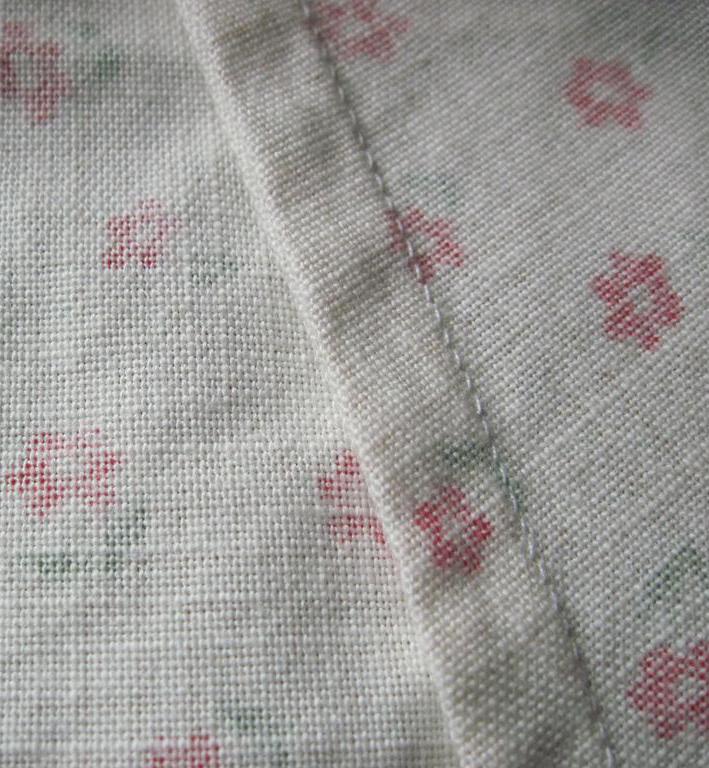
A French seam is a type of sewing seam in which the raw ends of the fabric are tucked in, leaving a clean, polished, professional look. In addition to looking tidier, this type of seam also protects delicate skin, and it prevents raveling of the fabric. Many seamstresses use such seams on lightweight fabrics, and they are relatively easy for a sewer to create once he or she gets the hang of it.
To sew a French seam, the seamstress starts with the right side of the fabric facing out, and sews the seam along the desired edge. Then, the seam allowance is closely trimmed so that a minimum of fabric sticks out beyond the stitches. Next, the fabric is opened and then folded together, with the right sides facing in, and another seam is sewn in close proximity to the first one, neatly enclosing the ragged edges of fabric inside the seam. Typically, the seam is then pressed to lie flat in a particular direction, and after that, it is finished.

Because this type of seam is entirely concealed, the technique can be used when threads would distract from the integrity of the design, or on lightweight fabrics that might ravel easily without reinforcement. The double layer of stitches protects the fabric and hides contrasting thread very well. In addition, there are no trailing threads or ragged edges to irritate the skin, a trait that can be very useful on garments worn close to the skin.

When sewing a garment with a French seam, sewers should remember to include the required larger seam allowance when cutting the fabric for the garment. Since the seam is sewn and then doubled back on itself, it will require a wider margin than some other seams. Sewers may also want to start with straight seams before plunging into hidden seams on curves such as sleeves, as these can be challenging.
When purchasing clothing, a French seam is often a sign of good quality and careful construction. Shoppers should make sure to inspect the seam closely to ensure that it is tight and even, and look for signs of puckering or gaps along the length. Consumers may also want to pull gently on either side of the seam to make sure that the fabric does not tear or separate. These inspection techniques should be used on all garments before purchase, as seams are the first line of failure on cheap clothes.
Mary McMahon
Ever since she began contributing to the site several years ago, Mary has embraced the exciting challenge of being a HomeQuestionsAnswered researcher and writer. Mary has a liberal arts degree from Goddard College and spends her free time reading, cooking, and exploring the great outdoors.
Learn more...
Mary McMahon
Ever since she began contributing to the site several years ago, Mary has embraced the exciting challenge of being a HomeQuestionsAnswered researcher and writer. Mary has a liberal arts degree from Goddard College and spends her free time reading, cooking, and exploring the great outdoors.
Learn more...AS FEATURED ON:
AS FEATURED ON:


-
![A french seam has the raw edges of the fabric tucked in and leaves a clean edge.]() By: kellyA french seam has the raw edges of the fabric tucked in and leaves a clean edge.
By: kellyA french seam has the raw edges of the fabric tucked in and leaves a clean edge. -
![A seamstress making a French seam.]()
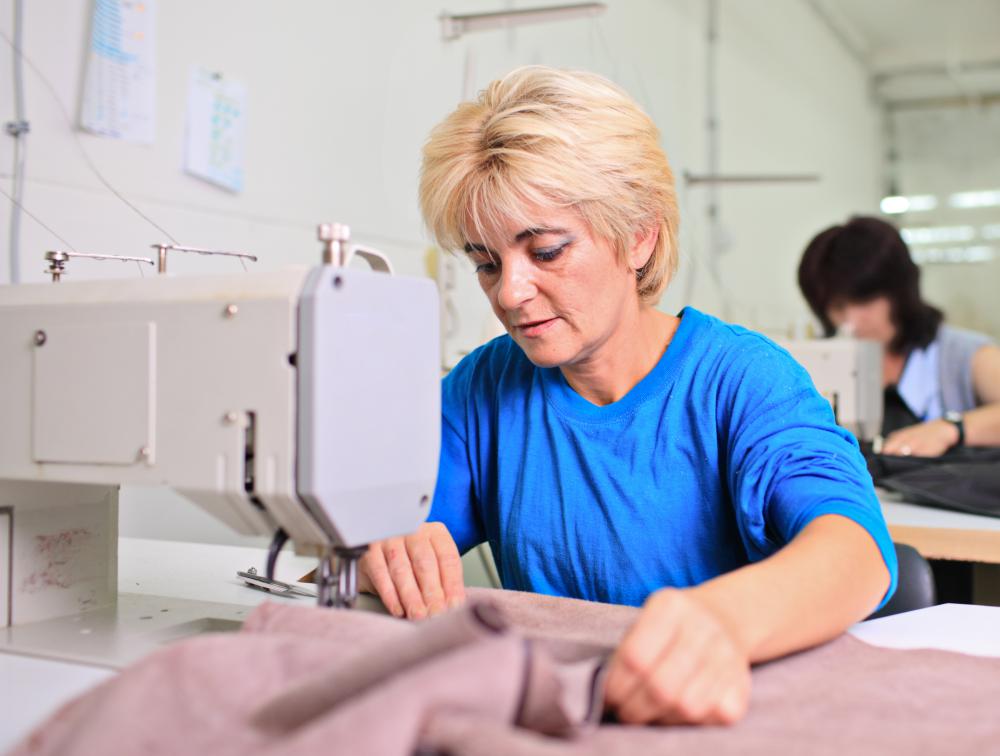
A seamstress making a French seam.
Discussion Comments
@dautsun - I hate when sewing projects go wrong! However, at least you learned your lesson doing a pillowcase pattern with French seams instead of on a larger project like a dress! I know the more I spent on materials for a project, the more upset I am if something goes horrible awry.
As the article said, you definitely have to allow extra fabric to do a French seam. I think a good rule of thumb is to double what you would usually allow for the edges.
The first time I ever did a French seam I was making a French seam pillowcase. I forgot to allow extra fabric for the seams, and I ended up making the pillowcase way too small. It wouldn't even fit on the pillow I made it for. I ended up scrapping the project, but I did learn my lesson about French seams.
@starrynight - I learned to sew when I was younger too, but for some reason I always resisted French seams until recently. A friend offered to show me how to sew a French seam, and once I saw her do it, I realized how easy it was. Now I use French seams in most of my sewing projects!
@goldenmist - I agree! I do a lot of thrift store shopping, and checking the seams is one way I check the quality of the clothing I'm about to buy. You can find a lot of really good stuff in thrift stores, but there's also a lot of junk out there!
Anyway, my mom used to be a tailor, and she taught me how to sew pretty early on. I didn't really take to it, but I do remember how to sew a French seam. In the rare even that I sew an article of clothing, I always do French seams!
What is the second name for a french seam?
Could you please tell me what types of garments are drapery french seams used for?
Excellent tip in the last paragraph there. I'm sure everyone's had experiences where they can't really tell the difference between cheaper and more expensive clothes in stores. I usually go with the more mid-range to slightly-on-the expensive side with clothes because they seem to last longer.
Post your comments