
At PracticalAdultInsights, we're committed to delivering accurate, trustworthy information. Our expert-authored content is rigorously fact-checked and sourced from credible authorities. Discover how we uphold the highest standards in providing you with reliable knowledge.
What is a Forensic Toxicologist?
A forensic toxicologist evaluates chemical levels in the body to help determine facts about poisoning, drug use and cause of death. They identify foreign, toxic or otherwise hazardous chemicals that negatively effect the body. Some of the substances that can be identified during an evaluation include alcohol, illegal narcotics, prescription pills, poisons, metals, gases and other measurable chemicals.
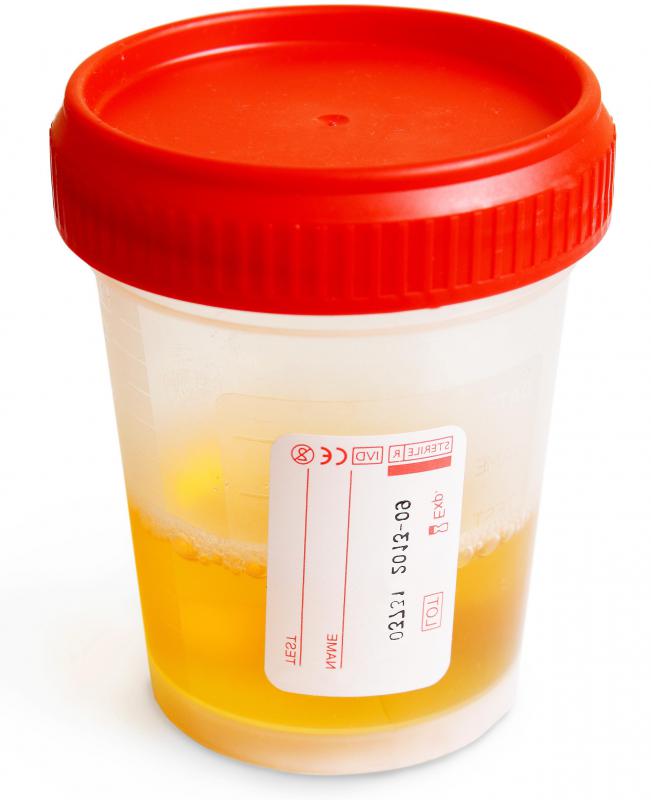
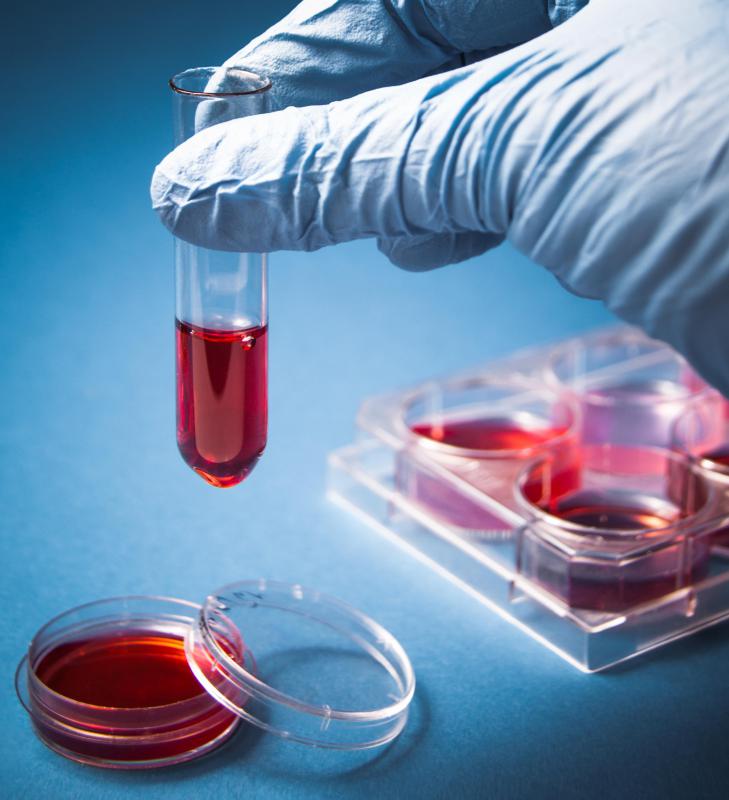
Investigations include the examination of tissue samples and bodily fluids. This requires attention to detail and a natural understanding of bodily functions, as chemicals rarely remain intact once the body ingests and metabolizes them. Forensic toxicologists commonly work with urine, blood, hair and oral samples. However, when bodies are compromised, such as with decomposition, they may sample the vitreous humor to detect chemicals. In more extreme cases, bacteria or maggots taken from the body can be studied, since these organisms are likely to have ingested the chemicals.

Work is generally performed in a lab using state-of-the-art tools, chemical reagents and strict methodologies. The findings can shed light on a person's physical state at the time of a crime or even the cause of his death. When a crime has taken place, a forensic toxicologist uses medical technology and tools to help tie together physical symptoms with crime scene evidence. Relevant crime scene evidence may include pill bottles, trace residue, powders and the presence of pre-identified chemicals. Samples gathered at a crime scene usually serve as a jumping-off point for a toxicologist.

Forensic toxicologists usually work as part of a team. As law enforcement officers, forensic pathologists and other crime scene investigators work to piece together a scene, they offers their findings as part of the puzzle. Likewise, while a forensic toxicologist is usually perceived as someone who determines what is present in the body, his or her job also involves determining what is not present in the body. An absence of chemicals can be just as significant, though typically, forensic toxicologists choose tests to perform based on what chemicals are suspected to be found.

People in this position can be licensed by the American Board of Toxicology, the American Board of Clinical Chemistry and the American Board of Forensic Toxicology. They may work in law enforcement, but they may also be hired to do work for employers and those involved with animals and sports. Regardless of who hires a forensic toxicologist, their goal remains the same: to identify the absence or presence of chemicals in bodies.
AS FEATURED ON:
AS FEATURED ON:


-
![Forensic toxicologists often work with urine.]() By: ALEXEY FILATOVForensic toxicologists often work with urine.
By: ALEXEY FILATOVForensic toxicologists often work with urine. -
![A forensic toxicologist may analyze blood for evidence of drug use.]() By: frog-travelA forensic toxicologist may analyze blood for evidence of drug use.
By: frog-travelA forensic toxicologist may analyze blood for evidence of drug use. -
![Forensic toxicologists working.]()
Forensic toxicologists working.

Discussion Comments
Icecream17-I love watching television shows that showcase medical examiners, but I don’t think I could do that job. My hat goes off to those that do.
Forensic science is a large field that touches on the law enforcement and scientific communities. A forensic technician, for example, works in a lab that analyzes the data that was picked up at the crime scene.
The forensic DNA is analyzed in order to determine who the victim was and who the suspect could be. DNA evidence is very specific because they often study the bonds which are very unique. This is why DNA is usually very definitive.
However, if the DNA evidence was degraded by say factors of the sun or water, the percentage of accuracy should still be high, but it will not be as conclusive as a freshly found sample. This is why crime scenes are sealed off right away.
Sunny27-They often testify in court and provide their scientific findings to the jury. The job can be stressful because some family members may not want to hear the truth about how their loved one died.
For example, if the death was ruled a suicide, it may be especially difficult for the family to deal with the death. Sometimes the findings are so gruesome that it may be difficult for family members to bear.
While many families are appreciative of receiving answers regarding their loved one’s death, there are a percentage of families that will be angry toward the findings. The message, “Don’t shoot the messenger” applies here.
Bhutan-Forensic pathology analyzes a sudden death of a person. They usually perform autopsies and try to determine the cause of death.
Forensic pathologists are medical doctors. They have to complete an additional 1 to 2 years of a forensic pathology fellowship after they finish their medical residency. It is best to focus on fellowship programs that perform around 250 autopsies a year.
This will provide sufficient experience for your training. Forensic pathologist generally earn up to $180,000 or more depending on the locale.
A forensic toxicologist salary averages between $75,000 and $90,000 a year.
In order to seek a toxicology forensic career, it is best to get an internship with a private lab while you are in college. Many forensic science chapters within universities offer access to information regarding these internships and other work opportunities.
Those that work as a forensic analyst have to take many chemistry courses in order to learn how certain chemicals are identified in the body and how these compounds were a contributing factor in the person’s death.
Certain drugs or chemicals taken in certain dosages can also be lethal. This helps the toxicologist and the medical examiner determine if the person died of an overdose, or may have been poisoned.
Post your comments