
At WiseGEEK, we're committed to delivering accurate, trustworthy information. Our expert-authored content is rigorously fact-checked and sourced from credible authorities. Discover how we uphold the highest standards in providing you with reliable knowledge.
What is a Forensic Science Technician?
A forensic science technician is a scientist who analyzes crime scene evidence. He or she is involved in collecting, preserving, and testing pertinent evidence, and presenting findings to investigators or judges in criminal trials. Forensic science technicians are typically employed by local, state, or federal agencies to aid in the investigation of crimes and the pursuit of justice.
The primary concern of a forensic science technician is to determine the exact nature of a crime. Technicians survey the aftermath at a crime scene and determine what may be relevant to the case. They carefully gather and safeguard physical evidence, which might include firearms, blood, clothing, fingerprints, or chemical substances. In addition, they record data and details of a crime scene, such as ballistics information, in order to gain a more accurate picture of the crime.

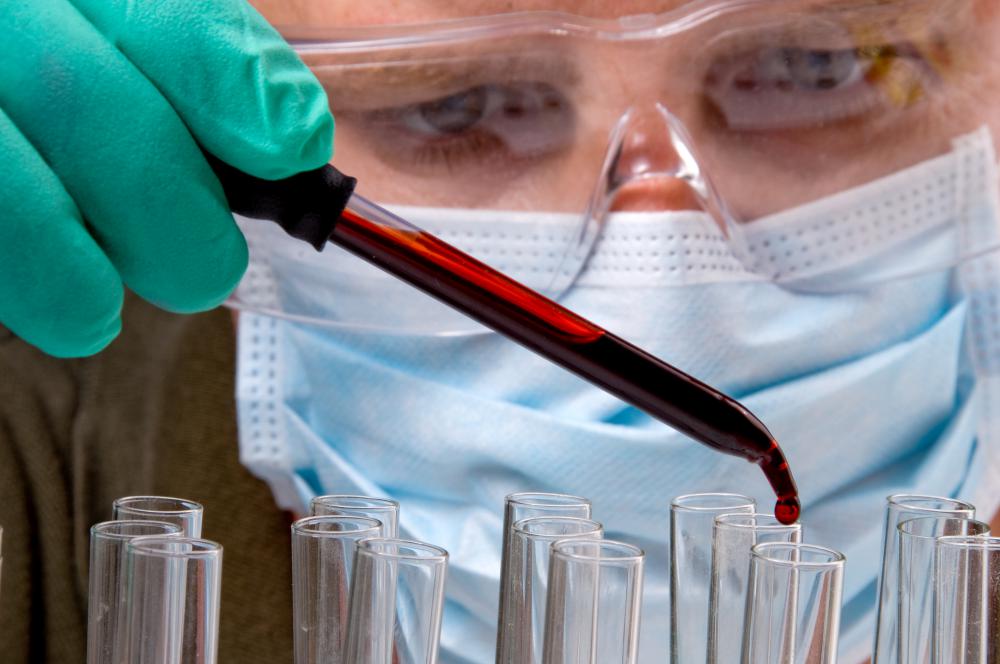
Once physical evidence and data are collected, forensic scientists begin a detailed analysis process, which often includes the use of highly specialized laboratory equipment. Computer proficiency is a must for technicians: they perform background checks, retrieve archived information, and search databases to match fingerprints and DNA samples. Forensic science technicians may also be required to perform tests on weapons, including firearms, to determine if, how, and by whom certain weapons were used. Technicians frequently work with other laboratory or medical specialists to compound evidence and confirm information.

After lab testing is completed, a forensic science technician is typically required to prepare a detailed lab report which documents testing methods and results. Technicians commonly meet with investigators and police to discuss their findings, trade information, and give their opinions about a case. When a case goes to trial, a technician who has uncovered pertinent evidence may be called on to appear as an expert witness.

To become a forensic science technician, one needs at least an undergraduate degree in forensic science or a related scientific field. Hands-on training as an apprentice or laboratory assistant is a helpful precursor to finding employment as a forensic science technician. Official certification is typically not required, although there are several certification agencies and exams that might increase one's chances of finding a job.

The idea of applying forensic science in solving crimes is still fairly new. The demand for qualified technicians is on the rise, however. With the expanding field of DNA research and technological advances in laboratory techniques and equipment, the need for professional technicians will likely continue to grow.
AS FEATURED ON:
AS FEATURED ON:









-
![A forensic science technician evaluates crime scene evidence.]() By: corepicsA forensic science technician evaluates crime scene evidence.
By: corepicsA forensic science technician evaluates crime scene evidence. -
![A forensic science technician may collect and analyze blood samples.]() By: Rob ByronA forensic science technician may collect and analyze blood samples.
By: Rob ByronA forensic science technician may collect and analyze blood samples. -
![Forensic scientists may use dental records and fingerprint databases to identify victims.]() By: Paco AyalaForensic scientists may use dental records and fingerprint databases to identify victims.
By: Paco AyalaForensic scientists may use dental records and fingerprint databases to identify victims. -
![Forensic science technicians may specialize in biology, chemistry, DNA, toxicology, or many other fields.]() By: Darren BakerForensic science technicians may specialize in biology, chemistry, DNA, toxicology, or many other fields.
By: Darren BakerForensic science technicians may specialize in biology, chemistry, DNA, toxicology, or many other fields. -
![The primary concern of a forensic science technician is to determine the exact nature of a crime.]() By: Leah-Anne ThompsonThe primary concern of a forensic science technician is to determine the exact nature of a crime.
By: Leah-Anne ThompsonThe primary concern of a forensic science technician is to determine the exact nature of a crime.



Discussion Comments
@umbra21 - Honestly, most forensic work, particularly for people new to the job, is going to be analysis of home break-ins and car jackings.
While the news and TV does make it seem like there are a lot of murders about the place, unless you live in a very big city, and work in the worst neighborhood you won't be seeing all that many murders in your lifetime.
@croydon - It's not just that samples might take time to analyze, it's also that often the people who do the analysis are completely backed up and they have to give priority to certain tests.
This is particularly true with crime, as they likely don't use a private lab where they might be able to get results faster.
One thing I think people should also bear in mind if they are thinking about pursuing this is that real life is more shocking than television. You might think you're prepared to, say, perform a rape kit analysis on a victim, but you might not be able to handle it, particularly if you want to do this work because of your empathy with victims.
Make sure you aren't going to freak out on your first disturbing case before committing your life to this kind of job.
I thought they made a really good point in a crime TV episode I saw recently, in which one of the characters (who was not a cop or a technician) wanted to know the results from a test right away and the others laughed at him.
TV makes it seem like this kind of job is very glamorous and that they find out exciting things without having to try much.
In reality, results can take weeks or months. You might notice this when there is a celebrity case on the news. They will often say that the results of the blood tests won't be available for however many weeks. This is because often whatever they are testing for needs time to grow. They can't always just dip in a piece of lab paper and wait for it to change color.
I'm not saying it isn't a very interesting job. But, it's not all swishing around in a white coat and pointing out clues, with a different case every week.
Post your comments