
At PracticalAdultInsights, we're committed to delivering accurate, trustworthy information. Our expert-authored content is rigorously fact-checked and sourced from credible authorities. Discover how we uphold the highest standards in providing you with reliable knowledge.
What is a Forensic Investigation?
A forensic investigation is the practice of lawfully establishing evidence and facts that are to be presented in a court of law. The term is used for nearly all investigations, ranging from cases of financial fraud to murder. When most people think about forensics, they think about crime scene investigation, in which physical evidence is gathered. There are other forms of forensic investigation, however, such as computer forensics and sub-fields that focus on dentistry or insects and crime scenes.
Crime Scene Forensics

The type of forensic investigation most people know about revolves around violent crimes. Forensics used in these investigations can uncover scientific evidence that may provide enough proof or evidence to convict a violent criminal. These methods can also help disprove outdated evidence that could lead to the release of someone who was wrongly convicted.

One of the main kinds of evidence this form of forensic investigation yields is biological evidence, such as blood spatter and hairs that include Deoxyribonucleic Acid (DNA). Impression evidence, like fingerprints and tire tracks, help connect people to a crime scene or victim. Weapon identification, the microscopic examination of firearms and tools for the purpose of matching weapons to wounds, helps identify a weapon used in a crime and connect it to a suspect. After the evidence is carefully collected at the crime scene, it is typically sent to a crime lab for processing.
Computer Forensics

An especially fast-growing division of forensics involves digital or computer investigations. It is a branch of science that involves legal evidence found in digital storage mediums and computers. This field of forensic investigation has several subdivisions including database forensics, firewall investigations, and portable or mobile device forensics.

Digital forensic investigation is useful in a variety of situations, such as the examination of a defendant’s computer system to look for evidence. Investigators use different programs and utilities to recover lost data after a system-wide computer crash or efforts by a suspect to eliminate incriminating computer files. Careful handling and presentation of digital evidence is necessary, however, for it to remain admissible in a courtroom setting.
Other Forensic Fields

There are several other subdivisions of forensic investigation that can be used for the collection of evidence. Investigators specializing in entomology conduct examinations of insects on or near human remains, which can help determine location and time of death. Forensic odontology is the investigation of dentition, or teeth, which is often crucial in identifying the remains of a victim. Other subdivisions include forensic anthropology, geology, and toxicology. Investigators in all of these divisions use exacting techniques to collect data to help prove or disprove accusations of criminal or civil wrongdoing.
AS FEATURED ON:
AS FEATURED ON:


-
![A forensic investigation is conducted in an effort to gather evidence about a crime.]() By: Loren RodgersA forensic investigation is conducted in an effort to gather evidence about a crime.
By: Loren RodgersA forensic investigation is conducted in an effort to gather evidence about a crime. -
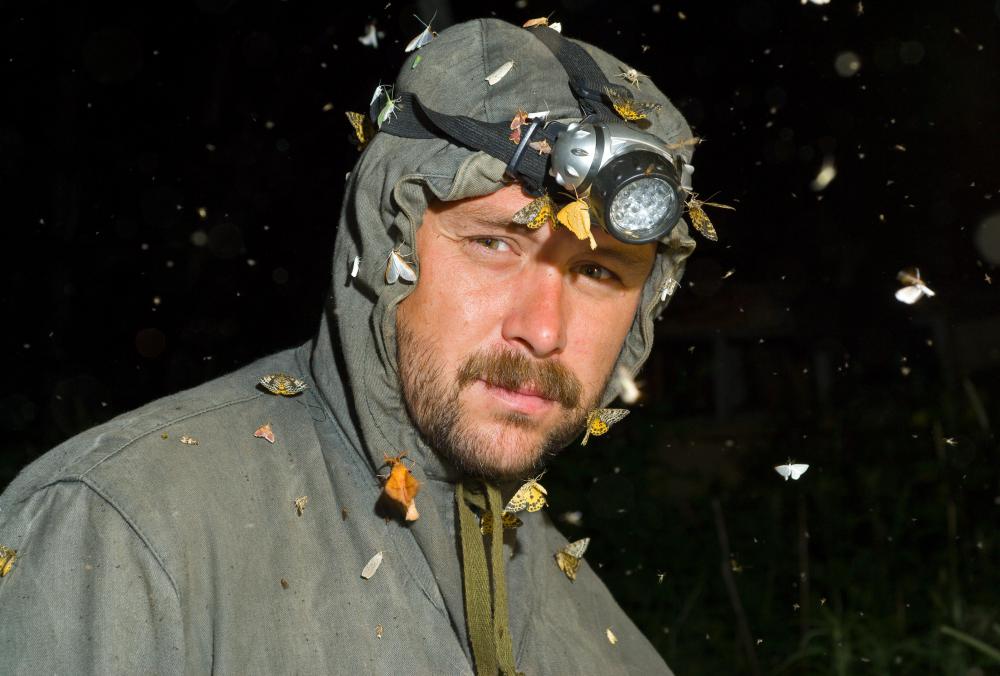
![There are various subsets of forensic investigations, such as the study of insects as they relate to crime scenes.]() By: Valeriy KirsanovThere are various subsets of forensic investigations, such as the study of insects as they relate to crime scenes.
By: Valeriy KirsanovThere are various subsets of forensic investigations, such as the study of insects as they relate to crime scenes. -
![Tire tracks are analyzed during a forensic investigation.]() By: riccamalTire tracks are analyzed during a forensic investigation.
By: riccamalTire tracks are analyzed during a forensic investigation. -
![A crime lab analyst inspects material evidence from crime scenes.]() By: Vasiliy KovalA crime lab analyst inspects material evidence from crime scenes.
By: Vasiliy KovalA crime lab analyst inspects material evidence from crime scenes. -
![Tire tracks can lead to a specific make of tire.]() By: Karin & Uwe AnnasTire tracks can lead to a specific make of tire.
By: Karin & Uwe AnnasTire tracks can lead to a specific make of tire. -
![Police officers usually set up a perimeter at crime scenes to prevent evidence tampering.]() By: ia_64Police officers usually set up a perimeter at crime scenes to prevent evidence tampering.
By: ia_64Police officers usually set up a perimeter at crime scenes to prevent evidence tampering. -
![Crime scene forensics usually revolves around violent crimes.]() By: Mr Korn FlakesCrime scene forensics usually revolves around violent crimes.
By: Mr Korn FlakesCrime scene forensics usually revolves around violent crimes.



Discussion Comments
How long do normal forensic investigations go on for?
I am a student of criminology specialising in forensic investigation. Where will I go for attachment?
Forensic science and Criminology are the same career with different responsibilities. This is because forensic science focuses much on the practical aspect that can provides scientific evidence, proof or facts that are reliable enough to be use in a court of law to solve certain criminal cases.
While on the other hand, Criminology emphasizes much on the theory using the scientific findings to support their stand.
Greenweaver- You know that you can get a forensic investigation degree from Lewis University in Romeville, IL.
US News and World Report voted it as one of the best colleges in the Midwest. Their tuition is around $12,000 per semester.
This forensic investigation college offers courses in forensic chemistry, computer software, and digital photography to name a few. Their number is 815-836-5686.
A forensic death investigation is analyzing the cause of death and the time of death. This is important because it helps the police set a timeline for when the murder took place.
Determining the time of death and the way a person died is usually kept a secret because the police do not want to reveal critical information that the suspect might use to construct an alibi.
When the police interview a suspect they usually already know how the crime took place and more or less when it took place.
They look for inconsistencies that put the suspect at the murder scene. The interrogation often reveals things that only the suspect would know.
A forensic criminal investigation involves sealing the crime scene and taking specific items from the crime scene in order to analyze it in a lab.
Obvious samples include, blood samples, hair samples, fingerprint samples and other articles at the crime scene that would shed light as to who the suspect was and how the victim died.
Sometimes a forensic computer investigation has to be done in order to determine critical information as to where a victim may be or why a victim was killed.
Often the computer investigation reveals how the victim knew the suspect and possibly where they may have gone if they are missing.
Many internet related crimes in which the suspect lured the victim through social networking sites and may have disappeared with this person call for a forensic criminal investigation on the hard drive of the victim’s computer.
Other times a forensic science investigation might look into the suspect’s computer after he was arrested to determine the extent of his criminal behavior.
Anon34431- This is a really good question. Forensic science is a division within the criminology umbrella that focuses on collecting and analyzing criminal evidence.
Criminology is broader because it also includes theory regarding criminal behavior and profiling. Criminology tries to determine why certain people have the propensity to commit crimes.
Anything in the field of forensics focuses on physical evidence that is needed to solve crimes. It might help develop a motive in a case, but it does not focus on theories only hard scientific facts.
Is forensic science and criminology the same career? If not, what is the distinct difference between the two?
Post your comments