
At SmartCapitalMind, we're committed to delivering accurate, trustworthy information. Our expert-authored content is rigorously fact-checked and sourced from credible authorities. Discover how we uphold the highest standards in providing you with reliable knowledge.
What is a Flat Tax?
A flat tax is a percentage charge applied equally to everyone, regardless of their income level, investments, or other financial characteristics. The tax is "flat" because it can be graphed against any other factor and still result in a flat line, meaning that the revenue generated doesn't vary with the person's budgetary situation. For decades, American politicians and economists have proposed a flat federal income tax to replace the US's historically graduated system.
Local sales tax in the US is very similar to a flat tax. That is, the same tax rate is applied equally to everyone. Each county determines what that exact percentage is (e.g., 8.25%). Although some goods, such as food, are excluded, this tax is still, in many ways, flat. No matter how much the payer earns, the same tax rate is applied to everyone when the same thing is purchased, from a pack of gum to an automobile.

The difference between a sales tax and the way the term "flat tax" is typically used, however, is what the tax is applied to. Usually, "flat tax" is used in reference to taxing people's income. Sales tax, however, is applied to people's expenses. Still, the two types of taxes are both flat in that they are applied equally to people regardless of their income level.
A long-standing debate on the fairest method of applying federal income tax has surrounded the question of instituting a flat tax. In a progressive system, those who earn less money per year pay at a lower percentage rate than those who earn an income that falls in a higher bracket. In a flat tax system, everyone of every income level would be taxed the same percentage, to be determined by further legislature.
Some advisors suggest that a simplified flat tax on income would not only be fairer but also save the government a considerable amount of money in bureaucratic fees. As it is, the Internal Revenue Service spends a lot of time and money investigating the proper filing of taxes, including exemptions or "write offs." Coincidentally, this proposed flat income tax is often paired with legislation that would eliminate tax exemptions, but these need not be linked. Proponents point out that much of the generated tax revenue is spent maintaining the tax system itself. They believe the IRS should be pared down such that the money can be better spent on other parts of the national budget.
AS FEATURED ON:
AS FEATURED ON:









-
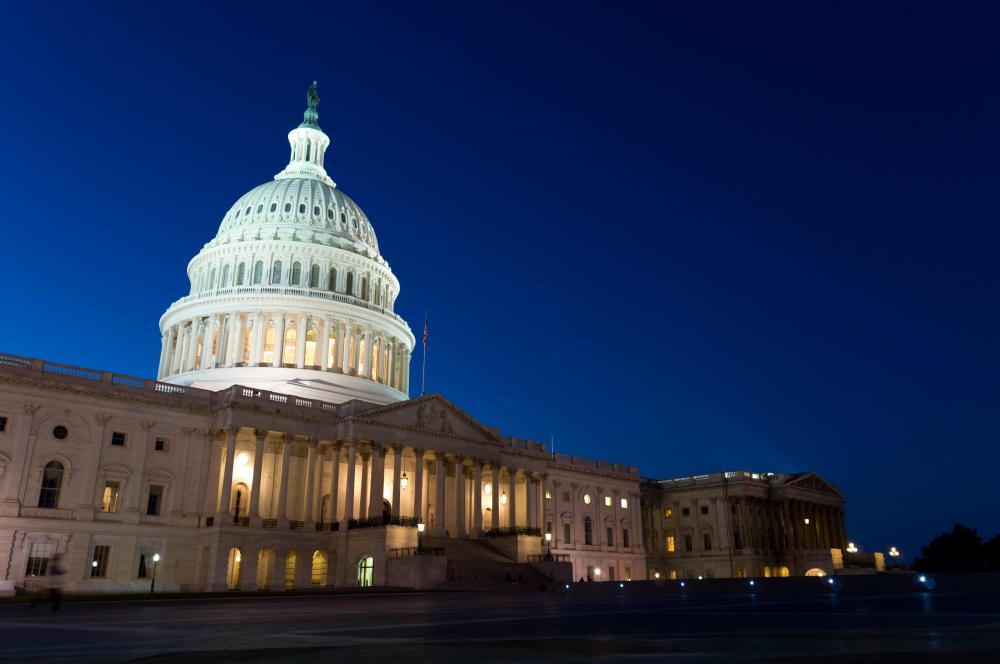
![For decades, American politicians and economists have proposed a flat federal income tax to replace the US's historically graduated system.]() By: Konstantin LFor decades, American politicians and economists have proposed a flat federal income tax to replace the US's historically graduated system.
By: Konstantin LFor decades, American politicians and economists have proposed a flat federal income tax to replace the US's historically graduated system.
Discussion Comments
Okay a flat tax = Everyone pays $10,000 a year in taxes. A flat percentage tax is everyone pays 30 percent of what they make in taxes. Taxing income is better than taxing items: a tax on income people adjust to what they take home and the loan system is already set up to account for "take home" pay estimation.
The wealthy did not get that way over paying for things. They buy the smart and thrifty to get the best value over cost. That being said, adding large sales taxes to items would actually punish business as well as the poor. This would happen because the wealthy would buy out the cheaper items to save them selves money. This will push manufactures to slow or stop production on higher end items because demand would be so low because of the inflated cost with such a tax scheme.
Just think of it this way: take the cost of your car, house, etc., and multiply it by 1.30 (30 percent being the average middle class tax rate) and see if you would actually pay or afford that new rate.
This is not getting into the fact of the interest on loans needed to cover such a purchase and then paying interest on the taxes that were covered as part of that loan.
A $200k house would cost $260k with taxes. A $25K car would be $32.5k after taxes. That is what most people who vote for this do not account for. You will have to have that money up front or pay interest on it over years, if not decades.
@anon31968: Your assumption is that a person making $100,000 a year will buy the same car as someone making $10,000 a year and that is an invalid assumption.
A person who makes more also spends more on just about everything and therefore even at a fixed tax rate pays more into the system. That bigger house comes with a bigger tax amount, that fancy car comes with a bigger tax amount, if you eat out more because you are affluent, it means you pay more in taxes than someone who does not eat out as much. It also allows all taxpayers and businesses to plan better for future growth and savings.
@anon66292: this argument that a national sales tax is "regressive" and therefore "hurts" the poor, is old, lame and outdated. I've got some news for you: everything is "regressive." A gallon of milk cost me the same as it does Bill Gates. A gallon of gas cost you the same as it does John Chambers. The NST is the only way to make sure that everyone pays "their fair share".
@anon68440: This unproven notion that "when you tax the rich too much, you don't give them incentive to grow and be innovative" is old, tired and misleading. Just because it's repeated often doesn't make it true. Giving tax breaks to the wealthy in order to "motivate" them and create a "trickle down effect" has already been tried by Reagan and Bush and it didn't work. The federal income tax rate for the highest income bracket is 35 percent, and that's already significantly lower than the 91 percent it was in the 60s. But since that era the income of top earners income has (275 percent increase). Isn't that enough "motivation"? If this had provided the rich with good "incentives to innovate and create jobs" then we wouldn't have a bad economy right now with high unemployment.
A true flat tax would also just create even more tax breaks for the rich by eliminating taxes on capital gains,interest, inheritances, dividends etc. It would undoubtedly favor the wealthy.
How would it affect people on social security. would they have to pay?
It's fair for all! Doesn't matter rich or poor. If everyone pulled their fair share, maybe Americans would start paying more attention to where our money actually goes!
Anon100473- Greatly researched and intellectual food for thought. You make it hard to not point and laugh at the poor, (even though I am included in that group).
With a little research and motivation, others can see what the 'real deal' is behind a flat tax rate, not just say 'the rich are for it so it must be bad for the poor'. That sounds like ignorance to me.
If others could simply 'do the math' they would see that the more money you make the more you pay. The fairness involved in a flat rate is that everyone pays the same. How is that unfair?
I am all for a flat rate, if you haven't already figured that out. A simple 17 percent on my measly 15,000 wouldn't be the best, but it's not like I don't already expect the government to take some. Then again, it's only $2,550. Really people, what do you really plan on achieving with $15,000 anyway?
I suggest some wise words from my mother, "you're never too cool for school". So, if you'd be unhappy with the chunk of change and unable to survive, go make a difference in your wallet and your life. Hopefully, you'll make a difference in the life of others as well, in a positive way of course.
@anon57971: Please nobody try to make the point that it's obvious that a "flat tax" would benefit the rich, simply because they are the ones complaining about it. That's like discrediting the Jews complaining about their conditions in concentration camps during World War II, simply because they would be the ones benefiting from their treatment being "fair".
The rich complain because the current system screws them over unfairly and gives benefits to the the middle and lower class. So listen closely. This is important. You are entitled to nothing! We are fortunate to have a government that will provide emergency health care regardless of situation. We have not earned Medicare or Medicaid. We have earned Social Security, but most of us may not receive it because the government "stole" from that fund to pay for other programs. A flat tax is fair, it is literally impossible to argue that point. Everybody pays the same in taxes, get it?
The government wouldn't need anywhere near 33 percent from the people if they also pared down IRS, the Dept of Education, the TSA, the EPA, the FDA and a gazillion other organizations that only exist for the purpose of taking money away from the private sector--regardless of what sort of sugar coating they like to put on it to make it seem like something that is beneficial to everyone.
Hopefully the flat tax rate would decrease over time as the size of the federal government decreased. As fewer IRS people are needed with the flat tax (and lawyers, etc.), for instance, the Federal budget should go down so everyone would have more of their hard earned income to spend.
Why should some federal employee spend your hard earned money? Do they spend it more wisely than the person who earned it? I'd rather decide what charity to donate to, than some federal employee. In many cases, they would probably give it to an entity that I'd never, ever give it to. It's my money. I should be able to decide who it goes to!
Sales tax is regressive. How do you not understand that? It hurts the poor more because it hits their income harder than the rich, so it is regressive.
1. The more money someone makes, the more they typically spend. So you didn't take into account the fact that if you only make $10,000 per year the total you can spend is what you make less your expenses. If someone is making $200,000 they will be spending a lot more than your income. Stop looking at a one item purchase and look at the whole picture.
2. Good grief. Narrow minded point anon31968.
3. Anon52972: the flat tax is great. If you want more money, better yourself! Find another job, go back to school, get a second job. My wife went back to school in her 30s and became an RN at 36. Yes we incurred school loans but she started making $60,000. Some people sit around and just pity their situation and never do anything about it.
5. Not sure where you are getting the 33 percent figure. I have research and it would be no higher than 20 percent and more likely around 15-17 percent.
6. Yes off of income. Warren Buffet; that's why he's always for increasing taxes, because he's not paying from income but from capital gains on his investments. Though, he had to pay taxes on the income he made to become wealthy.
7. Capital gains from investments, and it's taxed at a lower rate.
8. The flat tax can really stimulate growth in the economy as it has in several other countries. Do some research on 'flat tax.'
The changes that the administration in 2009/2010 has made will hurt the country. Help people by motivating them, not by issuing mandatory health insurance that will cost more and get less for the majority of people. Not by increasing taxes by amount of income.
It's just like when the idiots in my state voted to raise minimum wage. Yes, it sounds good but it hurt everyone instead. Jobs were lost so companies could cover the increase in payroll. Benefits were cut or contributions reduced to compensate for the increase in wages. And cost of goods and services increased.
With a flat tax on income, a person making $10,000-$15,000, from what I read, would probably not pay any taxes.
Income and tax amount for a rate of 17 percent: $30,000 would pay $5,100; $60,000 would pay $10,200; $200,000 would pay $34,000; $500,000 would pay $85,000.
How is this not "fair"? The harder or smarter you work, the more money you pay in taxes (yet at the same rate) and the more money you get to spend to stimulate the economy or/and the more you can save for a relaxing retirement as we all can count on SS to disappear.
Of course making lesser money and buying the same car would be a higher percentage of your income, logically a person making $10,000 wouldn't expect to buy a Lamborghini. If a person makes $100,000 a year and spends $20,00 on a car then the guy making $10,000 drives a $2,000 car. It's not regressive, its logic.
I just heard that in a poll of people from different economic groups, that people thought a tax of up to 25% of income was appropriate. In the US, the "rich" get taxed at 40% or more. The problem is people can't be subjective. The other problem is that when you tax the rich too much, you don't give them the incentive to grow businesses and be innovative -- thereby decreasing the opportunities for poor folk like me. I support a flat tax. Make it fair.
Anon66292 - I think it would all depend on how the specific flat tax legislation was worded. As for Warren Buffet, he gets an income. But even if he only got income off of the interest of investments, it's still usually considered "income."
I have a question regarding the Flat Tax. Would the amount paid be base on the income reported by the individual? Some of the richest people in the world report to the IRS that they do not make an income.
Case in point is Warren Buffet. I believe he reported for last year because he says he doesn't make an annual income.
So how would the flat tax be based.
All one needs to do in order to see if the flat-taxes are fair is look to those who are in favor of a flat-tax. It's the rich. In order for the government to receive the same amount of taxes so they could run and protect our country the flat tax would need to be 33 percent, which would be a huge tax hike to the middle-class. Food for thought!
I like that a flat tax is easy to apply but I don't think that benefit is worth the unfairness in how much individuals are taxed given their particular financial circumstance.
Anon31968 - Interesting argument. I see where you're coming from, but I believe the article is right. Flat taxes *will* affect everyone differently based on their income level, but it is still "flat" because the tax itself is the same as compared to how it is applied to everyone. So the "flat" doesn't apply to how it affects the taxpayer (as a percentage of their income), rather the "flat" in "flat tax" refers to the actually tax *rate* that is applied to taxpayers. Since it is the *same* tax rate that is applied to all taxpayers, the tax rate is "flat." But again, interesting point.
The example you give as a flat tax, the local sales tax, is wrong. The sales tax is a regressive tax. In other words, the less income you have, the higher your tax rate will be in terms of percentage of your income. If the local sales tax on an automobile is 0.5%, everyone would pay $125 on a $25,000 car. However, if I make $10,000 a year, that is 1.25% of my income. If I make $100,000 a year, that is 0.125% of my income. This is a regressive tax system.
Post your comments