
At WiseGEEK, we're committed to delivering accurate, trustworthy information. Our expert-authored content is rigorously fact-checked and sourced from credible authorities. Discover how we uphold the highest standards in providing you with reliable knowledge.
What is a Face Transplant?
 Mary McMahon
Mary McMahon
Mary McMahon
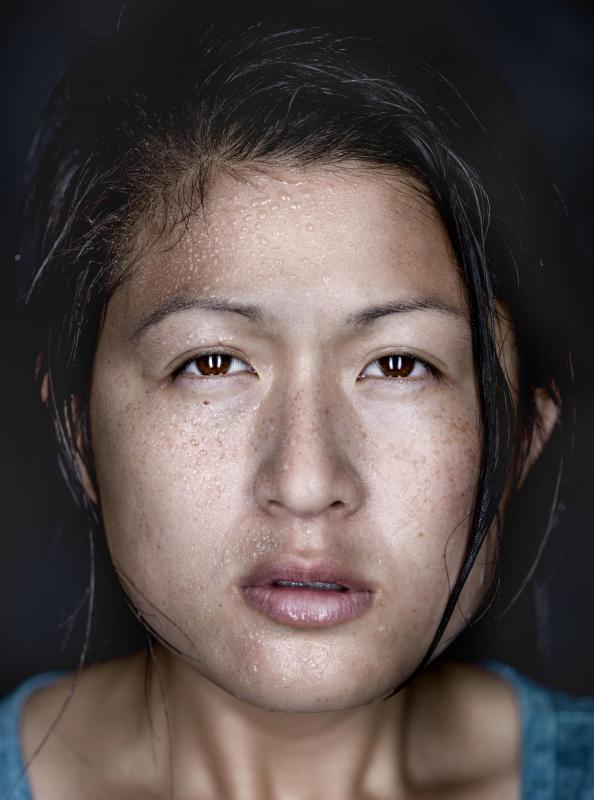
A face transplant is a medical procedure in which facial material from a cadaver donor is transplanted to someone else. This procedure can be used to address congenital birth defects which have severely marred the face, and to replace a face which has been damaged as a result of trauma. The first face transplant took place in India, and it was actually a face replant, in which the face of a young girl was reattached after being torn off in an agricultural accident.
The groundwork for these transplants was established when doctors began transplanting other organs and tissue. The fact is a particularly tricky area to work in because of the fact that it is so visible, making mistakes and mismatches very obvious. However, the very visibility of the face is of the one things that makes transplanting a face so appealing to reconstructive surgeons, because a badly scarred or damaged face can be a heavy social burden, and a face transplant has the potential to give someone a more familiar and normal expression. The alternative to this transplant is skin grafts, taken from the body of the patient or from a donor, which tend to resemble a quilt more than a face.

There are two types of transplant: partial and full. In a partial face transplant, only a section of tissue is removed from a donor and implanted onto the recipient's face. In a full transplant, the whole face is used, and in a face and scalp transplant, the scalp is transplanted as well. In all cases, the surgery involved is very complex, and the patient must take immunosuppressive drugs for life to prevent rejection of the donor face.

A French doctor successfully performed a partial face transplant in 2005 on a woman who had been severely mauled by dogs, and a number of hospitals began exploring the procedure shortly afterwards. Like many innovative surgical techniques in their early years, this transplant was initially regarded as highly experimental, and a number of studies were conducted to make it as safe and effective as possible.

When a face transplant is performed, the recipient does not take on the features of the donor. Only the skin of the face is transplanted, with the underlying muscle and bone structure coming from the donor. The resulting face is often described as a “hybrid” between the donor and the recipient, as the new face will not be a perfect match for the old one. In the case of someone with birth defects who has opted for reconstructive facial surgery, the new face will be entirely different from the previous one.
Mary McMahon
Ever since she began contributing to the site several years ago, Mary has embraced the exciting challenge of being a WiseGEEK researcher and writer. Mary has a liberal arts degree from Goddard College and spends her free time reading, cooking, and exploring the great outdoors.
Learn more...
Mary McMahon
Ever since she began contributing to the site several years ago, Mary has embraced the exciting challenge of being a WiseGEEK researcher and writer. Mary has a liberal arts degree from Goddard College and spends her free time reading, cooking, and exploring the great outdoors.
Learn more...AS FEATURED ON:
AS FEATURED ON:









-
![A face transplant occurs when facial material is transplanted from a donor to someone else.]() By: Warren GoldswainA face transplant occurs when facial material is transplanted from a donor to someone else.
By: Warren GoldswainA face transplant occurs when facial material is transplanted from a donor to someone else. -
![Face transplants typically result in a hybrid face which includes aspects of both the donor's and recipient's face.]() By: Jeffrey BankeFace transplants typically result in a hybrid face which includes aspects of both the donor's and recipient's face.
By: Jeffrey BankeFace transplants typically result in a hybrid face which includes aspects of both the donor's and recipient's face. -
![An individual with birth defects may undergo reconstructive facial surgery.]() By: kistyaAn individual with birth defects may undergo reconstructive facial surgery.
By: kistyaAn individual with birth defects may undergo reconstructive facial surgery. -
![In a partial face transplant, only a section of tissue is removed from a donor and implanted onto the recipient's face.]() By: danr13In a partial face transplant, only a section of tissue is removed from a donor and implanted onto the recipient's face.
By: danr13In a partial face transplant, only a section of tissue is removed from a donor and implanted onto the recipient's face.


Discuss this Article
Post your comments