
At TheHealthBoard, we're committed to delivering accurate, trustworthy information. Our expert-authored content is rigorously fact-checked and sourced from credible authorities. Discover how we uphold the highest standards in providing you with reliable knowledge.
What is a Double Hernia?
 Malcolm Tatum
Malcolm Tatum
Malcolm Tatum
Also known as a bilateral hernia, a double hernia is a condition in which a dual set of hernias is present. It is possible for double hernias to be composed of both a right and left inguinal hernia as well as a set of two femoral hernias. In most instances, the only way to deal with a hernia of this type is to undergo surgery.
A double hernia can develop in anyone. However, it is usually elderly males and children who appear to be the highest risk groups. The placement of the first hernia in the sequence may increase the chances for developing a companion hernia. For example, if a left inguinal hernia develops first, the odds that the same type of hernia will develop on the right side are increased significantly. Once a diagnosis for a bilateral hernia is made, physicians normally choose to move forward with treatment quickly.

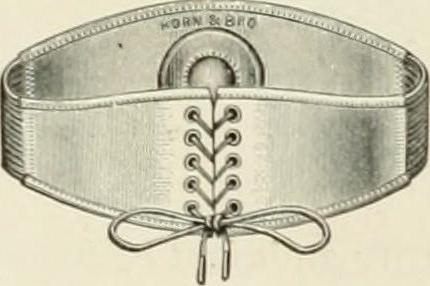
It is important to note that the presence of a double hernia is often more difficult to deal with than a single hernia. Support garments such as belts or briefs may work very well with a single hernia, but may not offer the stability required to prevent further growth or damage with a double hernia. For this reason, physicians tend to monitor the growth of this type of hernia condition closely and often recommend surgery as soon as it is practical.

There is some difference of opinion in the medical community regarding whether to address both components of a double hernia at one time or repair each hernia at separate times. Healthcare professionals who promote the idea of two repairs point to the possibly longer recuperative period as well as the enhanced chances for infection and other risk factors that could impact the ability of the patient to heal. Others consider the amount of risk to not be appreciably higher than when treating a single hernia. If there are no complicating factors, they see no reason to not deal with both hernias during the same surgical session.

Treatment options for repairing damage caused by a double hernia will vary depending on the location and type of hernias involved. The age of the patient is also an important factor. A procedure that would work relatively well for a young person may not be a viable process for someone over sixty years of age. For this reason, the attending surgeon will take into consideration the age, general physical condition, and the presence of any other ailments that could inhibit the healing process before deciding on the best way to deal with the double hernia.
Malcolm Tatum
After many years in the teleconferencing industry, Michael decided to embrace his passion for trivia, research, and writing by becoming a full-time freelance writer. Since then, he has contributed articles to a variety of print and online publications, including TheHealthBoard, and his work has also appeared in poetry collections, devotional anthologies, and several newspapers. Malcolm’s other interests include collecting vinyl records, minor league baseball, and cycling.
Learn more...
Malcolm Tatum
After many years in the teleconferencing industry, Michael decided to embrace his passion for trivia, research, and writing by becoming a full-time freelance writer. Since then, he has contributed articles to a variety of print and online publications, including TheHealthBoard, and his work has also appeared in poetry collections, devotional anthologies, and several newspapers. Malcolm’s other interests include collecting vinyl records, minor league baseball, and cycling.
Learn more...AS FEATURED ON:
AS FEATURED ON:


-
![Elderly men and children are in the highest risk groups of developing a double hernia.]() By: kazoka303030Elderly men and children are in the highest risk groups of developing a double hernia.
By: kazoka303030Elderly men and children are in the highest risk groups of developing a double hernia. -
![Surgery will be required to treat a double hernia.]() By: Tom WangSurgery will be required to treat a double hernia.
By: Tom WangSurgery will be required to treat a double hernia. -
![Hernia belts may not be as effective for a double hernia as they would be for a single hernia.]()
Hernia belts may not be as effective for a double hernia as they would be for a single hernia. -
![The age of a patient is an important factor when treating a double hernia.]() By: Photographee.euThe age of a patient is an important factor when treating a double hernia.
By: Photographee.euThe age of a patient is an important factor when treating a double hernia. -
![Repairing both components of a double hernia simultaneously may result in a longer recuperative period for the patient.]() By: Tyler OlsonRepairing both components of a double hernia simultaneously may result in a longer recuperative period for the patient.
By: Tyler OlsonRepairing both components of a double hernia simultaneously may result in a longer recuperative period for the patient.




Discussion Comments
I have a double hernia in my belly and groin, but no doctor will touch because I am diagnosed with liver cirrhosis, which doesn’t qualify for transplant because my MELD is 10’ and it must be 25 and up. Any suggestions? The hernias are protruding, getting bigger and are uncomfortable. Fitness, diet and fashion guidance is needed . Can anyone throw me any suggestions? Thanks
In October 2013 I had a hernia repair. Initially, it was diagnosed as inguinal, but after incision, the consultant discovered it was femoral. It was duly repaired.
Subsequent to the procedure, I suffered discomfort and was told it was the healing process. The discomfort continued along, with protrusion from time to time at at the original incision point. A subsequent ultrasound scan in December confirmed, according to the radiologist, that there was an inguinal hernia there, also requiring repair. Should the consultant have spotted it, given that it was in the same area, and done a repair back in October?
help. my husband had a double hernia op last may and since then has had a lot of cramp like pains. he has been diagnosed with colitis but no treatment has been effective. could it have been the op causing him all these problems he has.
I have a double hernia, but am quite overweight. Can I be operated on while still overweight, or do I need to thin down first?
i had a double hernia operation but still have a long bubble in the middle of my stomach running length-wise. i feel as though maybe the surgeon screwed up and it's coming back through the mesh. is this normal or should my stomach be flat? --bubble gut
@closerfan12 -- Hernia repair is actually a pretty cut and dried thing, even in the case of double hernia surgery.
What will happen is you will go in, and about an hour before the procedure, the anesthetist will start you on an IV drip. You will go under a general anesthetic during the surgery.
During the actual surgery, your surgeon will remove the hernias, either laparoscopically, with a tube inserted into small incisions in your abdomen, or in an open hernia repair.
Open hernia repair requires a larger cut, and is usually only performed in odd cases.
After the hernias are removed, your surgeon will implant a sterile surgical mesh to strengthen the wall of your abdomen. This may have a drain in it to prevent fluid from building up in the abdomen.
Afterwards you will be placed in post-operative care. I imagine that since you have a double hernia, your surgeon will advise you on ways to strengthen your abdominal wall so you can avoid getting one again.
All in all, it's a piece of cake -- don't worry, the vast majority of hernia surgeries come off without complications of any kind.
What should I know about hernia surgery?
I am going in in a few weeks for a hernia operation, and am a little scared, because I have a bilateral abdominal hernia.
Has anybody ever undergone this, or have any advice on what I should know?
One of the most common hernias in children is an umbilical hernia.
This occurs in the area around the abdomen around the belly button, and can be either single or bilateral.
Many infants have umbilical hernias, the classic sign of which is a protruding bellybutton.
They heal on their own most of the time, but ones that last for longer than one year, or appear in adults are often surgically removed to avoid any possibility of complications.
Post your comments