
At AllThingsNature, we're committed to delivering accurate, trustworthy information. Our expert-authored content is rigorously fact-checked and sourced from credible authorities. Discover how we uphold the highest standards in providing you with reliable knowledge.
What is a Dolphin?
 Tricia Christensen
Tricia Christensen
Tricia Christensen
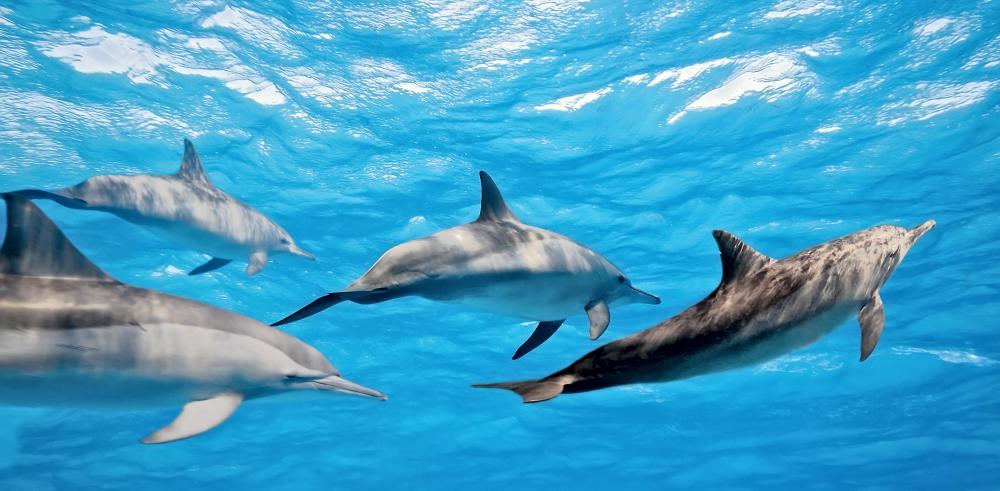
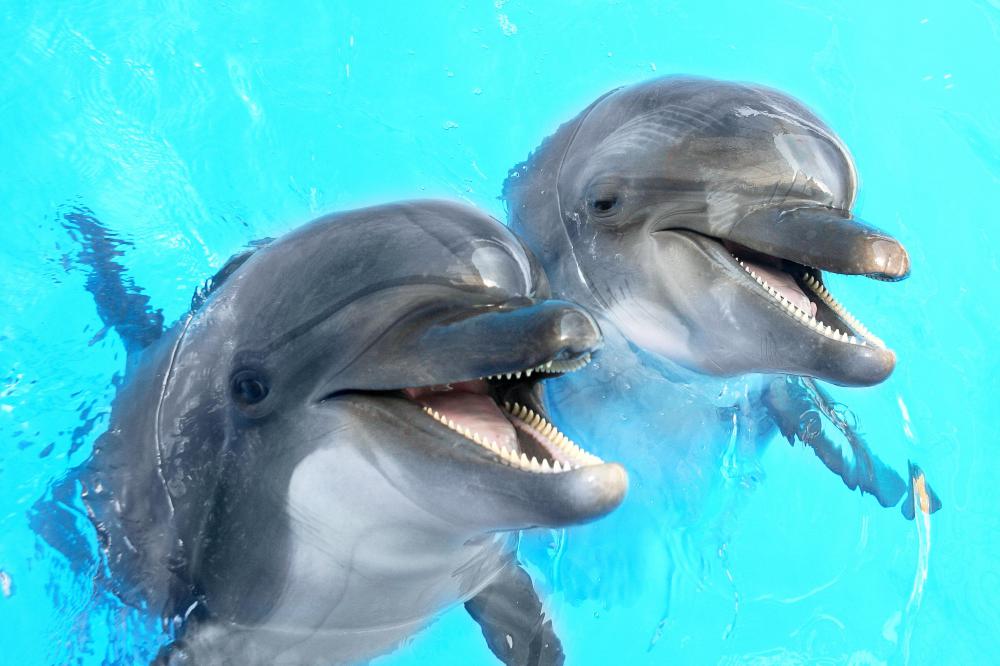
A dolphin is a sea mammal, closely related to both whales and porpoises. Though it is most often thought of as living at sea, there are also river species. Most are familiar with the Bottlenose, frequently seen in aquatic park dolphin shows. This is only one of 40 known species, including the Killer Whale, which though called a whale, actually belongs to the Delphinidae family.
While killer whales are quite large, up to 30 feet (9.14 m) long, many dolphin species are considerably smaller, averaging about 8 feet (2.44 m) long. The smallest, the Maui’s Dolphin, is only 4 feet (1.22 m) long and weighs less than most adult humans.

These animals are thought to be joyful, playful creatures, but can be deadly when protecting their young. They often use their noses to, with full force, ram into sharks, repelling them from attacking their babies. The dolphin also derives strength in numbers, usually traveling in a pod of as many as 12 animals to provide protection and to serve their social needs. Superpods, which may include up to 1,000, can be found in areas where food supply is plentiful.

Though dolphins are thought to be friendly, and generally are, to humans, killer whales can be particularly aggressive. In general, killer whales do not see humans as a food source and are adaptable to training in aquatic parks. However, they do hunt other dolphins, and there is no record of killer whales coexisting peacefully with smaller species.

Dolphins have several skills that adapt them well to marine existence. They are thought to have excellent eyesight and extraordinarily good hearing, far surpassing the hearing abilities of humans. They use echolocation for navigating their underwater world and for finding objects. They can swim very quickly to easily catch escaping fish. They have also been observed using tools and teaching their offspring to use tools.

The dolphin is considered to be one of the most intelligent creatures on the planet, and arguments abound as to whether or not it exceeds the Great Apes in intelligence. Recent research analyzing the clicks and whistles of dolphins has led to a preliminary conclusion that certain species may actually have unique names. Further, two dolphins may discuss a third animal by name. This study, released in 2006, lends great support to the theory that they are in fact more intelligent than the Great Apes, and highly deserving of our protection.

There has also been some evidence that some varieties of dolphins may gather and hunt with their close cousins, porpoises. Though some species clearly discourage association with porpoises, other groups have been observed feeding them, suggesting that the porpoises may be something akin to pets.
Though unusual, the dolphin may also mate across species. This has been observed in both the wild and in captivity. When successful, hybridized species are the result. Both the Bottlenose and Spotted species have mated with Spinners.
Unfortunately, not all people take protection of dolphins seriously. For many years, fishermen used nets that could easily snare and kill them. Though more dolphin friendly fishing methods have been developed, this does not mean that the animals are completely safe from newer nets. In fact, though many tuna cans now label their tuna as dolphin-safe, some still meet their death when they become entangled in nets. Overfishing areas can also lead to less food for dolphin populations, reducing their numbers.
The dolphin has been hailed by many cultures as a sign of good fortune. Anecdotes relate cases of these animals saving humans from drowning or from imminent shark attacks. Their pleasant way of swimming in the wake of ships has endeared them to many. When their protection is not ensured by environmentally sound fishing practices, it is indeed sad.
The dolphin’s skill and intelligence has been praised in literature and films. Swimming with them is now thought to have beneficial effects for those with illnesses or developmental disabilities. Their high intelligence continues to be of great interest to many, and it is hoped that more studies will aid in the protection of all 40 species.
Frequently Asked Questions
What exactly is a dolphin?
A dolphin is a highly intelligent marine mammal belonging to the family Delphinidae. They are known for their agility, playful behavior, and complex communication skills. Dolphins are cetaceans, which means they are related to whales and porpoises, and they breathe air through a blowhole on the top of their heads.
How many species of dolphins are there?
There are approximately 40 species of dolphins, according to the World Wildlife Fund. These species vary in size, color, and habitat, ranging from the well-known bottlenose dolphin to the rare and endangered South Asian river dolphin.
What do dolphins eat?
Dolphins are carnivores, primarily feeding on fish and squid. Their diet can vary depending on their species and habitat. Some larger dolphins, like orcas, also hunt other marine mammals, such as seals and other dolphins. They use sophisticated hunting techniques, like echolocation, to locate and capture prey.
How do dolphins communicate with each other?
Dolphins communicate using a variety of sounds including clicks, whistles, and other vocalizations. They also use body language, such as leaping from the water and slapping their tails on the surface. This complex communication system is essential for social interaction, hunting, and navigating their environment.
Are dolphins endangered?
Some dolphin species are indeed endangered. Factors such as habitat loss, pollution, and entanglement in fishing gear threaten their populations. The International Union for Conservation of Nature (IUCN) lists several species, like the Maui's dolphin and the vaquita, as critically endangered, with only a few individuals left in the wild.
How intelligent are dolphins?
Dolphins are considered one of the most intelligent animals on Earth. They have large brains relative to their body size, which is a sign of high intelligence. They exhibit complex behaviors such as problem-solving, self-awareness, and the ability to learn new tasks. They also show signs of culture, with different populations having unique behaviors that are passed down through generations.
Tricia Christensen
Tricia has a Literature degree from Sonoma State University and has been a frequent AllThingsNature contributor for many years. She is especially passionate about reading and writing, although her other interests include medicine, art, film, history, politics, ethics, and religion. Tricia lives in Northern California and is currently working on her first novel.
Learn more...
Tricia Christensen
Tricia has a Literature degree from Sonoma State University and has been a frequent AllThingsNature contributor for many years. She is especially passionate about reading and writing, although her other interests include medicine, art, film, history, politics, ethics, and religion. Tricia lives in Northern California and is currently working on her first novel.
Learn more...AS FEATURED ON:
AS FEATURED ON:









-
![Dolphins are typically considered playful mammals.]() By: crisodDolphins are typically considered playful mammals.
By: crisodDolphins are typically considered playful mammals. -
![So-called "killer whales" are actually dolphins.]() By: desertsolitaireSo-called "killer whales" are actually dolphins.
By: desertsolitaireSo-called "killer whales" are actually dolphins. -
![Dolphins will ram sharks with their noses to protect their young.]() By: Christopher BartlettDolphins will ram sharks with their noses to protect their young.
By: Christopher BartlettDolphins will ram sharks with their noses to protect their young. -
![Though often associated with the ocean, dolphins, such as the pink river dolphin, can sometimes live in freshwater.]() By: guentermanausThough often associated with the ocean, dolphins, such as the pink river dolphin, can sometimes live in freshwater.
By: guentermanausThough often associated with the ocean, dolphins, such as the pink river dolphin, can sometimes live in freshwater. -
![The dolphin is considered to be one of the most intelligent creatures on the planet.]() By: Aleksandr LesikThe dolphin is considered to be one of the most intelligent creatures on the planet.
By: Aleksandr LesikThe dolphin is considered to be one of the most intelligent creatures on the planet.


Discussion Comments
@googie98: Tuffy, a dolphin that was trained by the United States Navy, holds the diving record for bottlenose dolphins. Tuffy dove 300 meters (990) feet. For the most part, dolphins do not generally dive very deep. Most of the bottlenose dolphins live in shallow water.
In some areas, dolphins spend a lot of time in waters that are less than 7 feet deep.
@googie98: Oddly enough, dolphins have to be completely conscious to breathe. That means that they cannot go into a deep sleep because they would suffocate. Research done with EEG studies has determined that, amazingly, dolphins let one half of their brain sleep at a time.
Dolphins have different ways of getting their sleep. They can swim slowly and surface every little while for a breath. They can rest at the surface of the water with their blowhole exposed and they can rest on the bottom in shallow water.
I’m looking for some information on dolphins for a biology project. I need to know if dolphins sleep and how deep they can dive. If anyone can help me out, I would greatly appreciate it.
Post your comments