
At SmartCapitalMind, we're committed to delivering accurate, trustworthy information. Our expert-authored content is rigorously fact-checked and sourced from credible authorities. Discover how we uphold the highest standards in providing you with reliable knowledge.
What is a Debit Card?
 Jessica Ellis
Jessica Ellis
Jessica Ellis
A debit card is a plastic card issued by banks to customers. It allows instant purchase, removing the correct balance from the user’s attached bank account. These cards are distinct from credit cards in that they allow purchase based on available funds in the account to be deducted immediately, instead of by using a line of credit that can be repaid at a later time.
Most debit cards have two features: the ability to purchase items at stores that have automated debit or credit card machines, and the ability to withdraw cash from a bank account at an automatic transaction machine (ATM). They are available in most countries of the world, and have nearly supplanted the use of checks in the United States. The cards possess many dangers to the user, however, both in terms of possible identity theft and unexpected bank fees.

In most cases, this type of card has a personal identification number (PIN) as a security feature. When removing money from an ATM or using an automatic purchasing machine at a store, the user will have to enter his PIN for verification. In online purchases, the PIN is usually not required, but users will often need to enter the three or four digit security code listed on the back of the card. Additional safety measures common for debit cards include a photograph of the card’s owner on the front, or an electronically reproduced customer signature imprinted on the card.

While the security features hold up well for in-person transactions, they leave users vulnerable for online theft. If a thief steals a person's wallet, he will likely have all of the information he needs to use the victim's debit card for Internet transactions. When it's a dual debit/credit card, the thief may also be able to use the card in stores that do not require a PIN for credit use. People who discover their card is missing, or who notice suspicious charges to the account, should contact their bank immediately.

Another peril debit card users face is accidental charges. People who have a two or more linked bank accounts, such as checking and savings, may sign up to have money transferred from one to the other in case of overdrawing the account. Customers should read the fine print carefully, however, as some banks charge an overdraft fee for each transfer of this kind. Banks may also set a limit of daily, weekly, or monthly transactions that a person can use debit for. Exceeding this limit can also result in serious charges to the account.

Rules regarding the use of debit cards vary from country to country and can impact their popularity. In India, the merchant can be charged for each transaction involving a debit purchase, leading to many shops banning their use. A few countries or banking networks charge customers a transaction fee each time they use their card. In most nations, however, the cards are freely and widely used for all types of transactions. Studies suggest that in Canada, New Zealand and the United States, debit has or will soon overtake cash as the most common form of payment.
Jessica Ellis
With a B.A. in theater from UCLA and a graduate degree in screenwriting from the American Film Institute, Jessica is passionate about drama and film. She has many other interests, and enjoys learning and writing about a wide range of topics in her role as a SmartCapitalMind writer.
Learn more...
Jessica Ellis
With a B.A. in theater from UCLA and a graduate degree in screenwriting from the American Film Institute, Jessica is passionate about drama and film. She has many other interests, and enjoys learning and writing about a wide range of topics in her role as a SmartCapitalMind writer.
Learn more...AS FEATURED ON:
AS FEATURED ON:









-
![Debit card machines enable customers to make purchases using their debit cards.]() By: NatUlrichDebit card machines enable customers to make purchases using their debit cards.
By: NatUlrichDebit card machines enable customers to make purchases using their debit cards. -
![Debit cards allow purchases based on the available funds in the account to be deducted immediately.]() By: Andres RodriguezDebit cards allow purchases based on the available funds in the account to be deducted immediately.
By: Andres RodriguezDebit cards allow purchases based on the available funds in the account to be deducted immediately. -
![A debit card can be a convenient way to access funds while shopping.]() By: Odua ImagesA debit card can be a convenient way to access funds while shopping.
By: Odua ImagesA debit card can be a convenient way to access funds while shopping. -
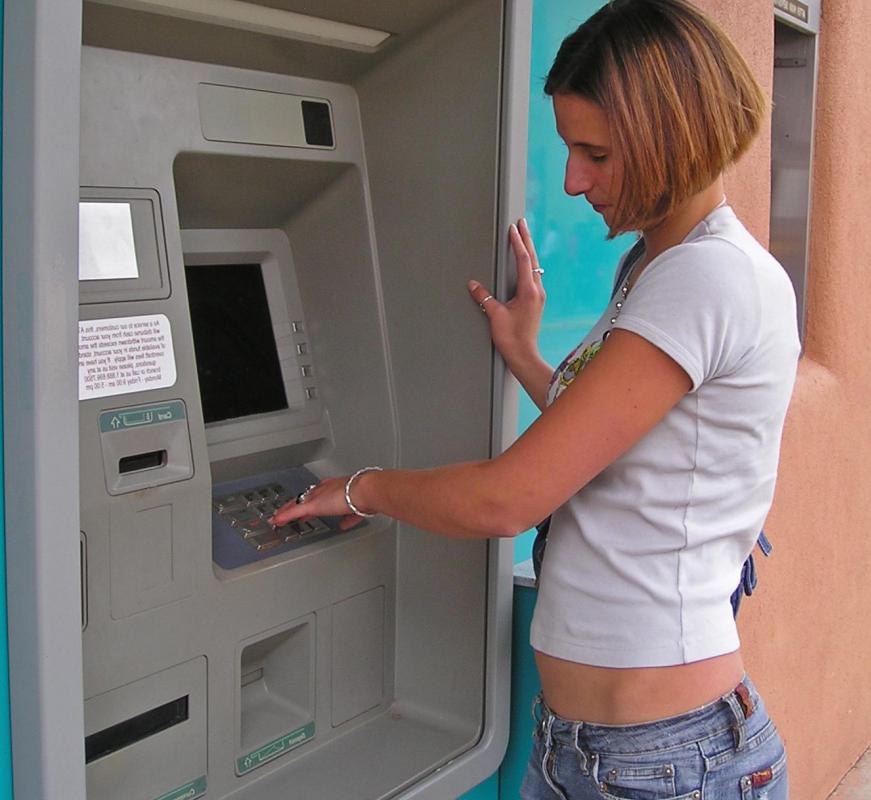
![A debit card gives someone the ability to withdraw cash from an ATM.]() By: monamakela.comA debit card gives someone the ability to withdraw cash from an ATM.
By: monamakela.comA debit card gives someone the ability to withdraw cash from an ATM. -
![Debit cards typically require a PIN to take cash out of an ATM or make a purchase.]() By: WavebreakmediaMicroDebit cards typically require a PIN to take cash out of an ATM or make a purchase.
By: WavebreakmediaMicroDebit cards typically require a PIN to take cash out of an ATM or make a purchase. -
![A debit card can replace a paper check payment for many household bills.]() By: oneblink1A debit card can replace a paper check payment for many household bills.
By: oneblink1A debit card can replace a paper check payment for many household bills.





Discussion Comments
For the most part, I'm happy with my bank. It will refund any debit card fees incurred at ATM locations other than at the bank itself. So, if I need cash but I'm nowhere near a branch, I can get it out elsewhere and the ATM will put a temporary $2 charge on my card, but the bank will refund me later.
However, I do take issue with one thing. To me, taking money out with a debit card should be no different than with a check or cash. Why, then, does the bank set a limit for how much I can withdraw with my debit card at one time?
I once tried to get out cash at an ATM for my rent, but the screen said that this amount would be beyond my daily limit. It was my money, and I should have had access to all of it!
So, I tried to trick it. I got out half the rent with one swipe, and then I made another ATM transaction for the second half. This actually worked!
@Oceana – Be careful about ordering online with a debit card. I used to do this, and someone hacked into my account and stole all my money.
After that day, I vowed to only shop with credit cards online. At least that way, the company can alert me to fraudulent charges, and I'm not liable for them. The money doesn't come straight out of my checking account like it did with my debit card.
I remember when I first got a debit card for my account. I was so happy that I didn't have to deal with cash and checks anymore!
What I loved most was not having to go into a convenience store to pay for my gas before pumping it. Instead, I could just swipe my debit card at the pump. It saved a lot of time, and I didn't even have to deal with anyone in person.
I also love being able to order things online now. Many places require either a credit or debit card, and since I don't have a credit card, I never could do this before I received my debit card.
@anon156519 – It sounds like your friend is attempting debit card fraud. You can't put money onto a debit card. You can only put it into a bank account if you have the account number, but anyone who asks you for this is most likely out to steal from you.
Many fraudulent emails are sent out every day telling people that someone will put a million dollars into their account if they will give them their account number. This is an attempt to rob you blind. Don't fall for it!
Never give your info to anyone. Even if they are friend or family!
If my son stuck my debit card to the refrigerator with a magnet will that mess up my card?
thank you. now i understand exact what the debit card is and what features it has.
If a friend from another country ask me for my debit card information in order for him to put money in my debit card. is this OK? please advise.
thanks for this article, because it helps me to know about debit card and related topics. Rupak
very well explained. thanks.
from aslam a. i really like your article because it has the all complete data about the debit card. Thank you very much because it provides help me in my study because i am the student of the business (B COM).
Oh. Thank you very much. After reading your entire article now i can say what is exactly a debit card. keep it up. Nipun J.
Your article gives us an entire detail about debit cards. I really understand about what is a debit card? by using Your article. thanking you.
Post your comments