
At WiseGEEK, we're committed to delivering accurate, trustworthy information. Our expert-authored content is rigorously fact-checked and sourced from credible authorities. Discover how we uphold the highest standards in providing you with reliable knowledge.
What is a Culture Test?
 Tricia Christensen
Tricia Christensen
Tricia Christensen
A culture test is evaluation of fluid, tissue or other products of the body to look for presence of abnormal cells indicating presence of viruses, bacteria or fungi. Such a test usually relies on small samples collected from the body either by the individual or by a medical practitioner. These samples are placed in secure dishes named culture dishes, which have nutrients on them that encourage growth of abnormal substances and these are then examined regularly to determine if growth of irregular cells, indicating infection, is occurring. No growth indicates that infectious agents are not present, although cultures are not 100% accurate. Growth of abnormal tissue either means beginning treatment or initiating additional tests to find the specific infectious agent creating illness.
Doctors or others can collect culture samples from a variety of body areas. The skin, blood, or urine can be subjected to a culture. Stool or mucus membranes may be tested. Fluid can be collected from the joints or around the heart, or alternately bone marrow might be collected for a culture test.

The collection area really depends on what physicians think might be wrong, and the degree to which collection of a sample is complex depends on area targeted. Most often samples taken are very small. Yet bone marrow or pericardial fluid collection will be require more challenging collection procedures than, for instance, swabbing the throat to check for disease like strep or asking patients to give a urine sample by urinating in a cup.

It’s also important to recognize that a culture test takes time, and the time needed may depend on what doctors are looking for. Some cultures for illnesses such as strep take a couple of days at most to get an accurate diagnosis. Other tests might require several more days or weeks to ascertain that there is either presence or absence of an infectious agent or lack of presence.

An abnormal culture test finding doesn’t always mean treatment can begin. On the other hand, if doctors suspect antibacterial infection they may treat with antibiotics designed to be effective against a broad spectrum of bacterial types. More refined tests may still be required to determine specific agents causing infection so that more specific treatment can replace initial treatments.

A culture can also be contaminated by presence of infectious agents in the environment where the test is performed. Failing to wipe down skin with alcohol prior to puncturing the skin with a needle to obtain blood can introduce normal bacteria into the sample of blood. People giving a urine sample are instructed to clean the genital area thoroughly to avoid providing contaminated samples. If protocol is rigidly followed, samples have a good chance of being representative, but it’s fairly easy to contaminate, especially if medical laypeople are performing tests. This means not all tests will be fully accurate.
Tricia Christensen
Tricia has a Literature degree from Sonoma State University and has been a frequent WiseGEEK contributor for many years. She is especially passionate about reading and writing, although her other interests include medicine, art, film, history, politics, ethics, and religion. Tricia lives in Northern California and is currently working on her first novel.
Learn more...
Tricia Christensen
Tricia has a Literature degree from Sonoma State University and has been a frequent WiseGEEK contributor for many years. She is especially passionate about reading and writing, although her other interests include medicine, art, film, history, politics, ethics, and religion. Tricia lives in Northern California and is currently working on her first novel.
Learn more...AS FEATURED ON:
AS FEATURED ON:









-
![A urine sample can be used in a culture test.]() By: ALEXEY FILATOVA urine sample can be used in a culture test.
By: ALEXEY FILATOVA urine sample can be used in a culture test. -
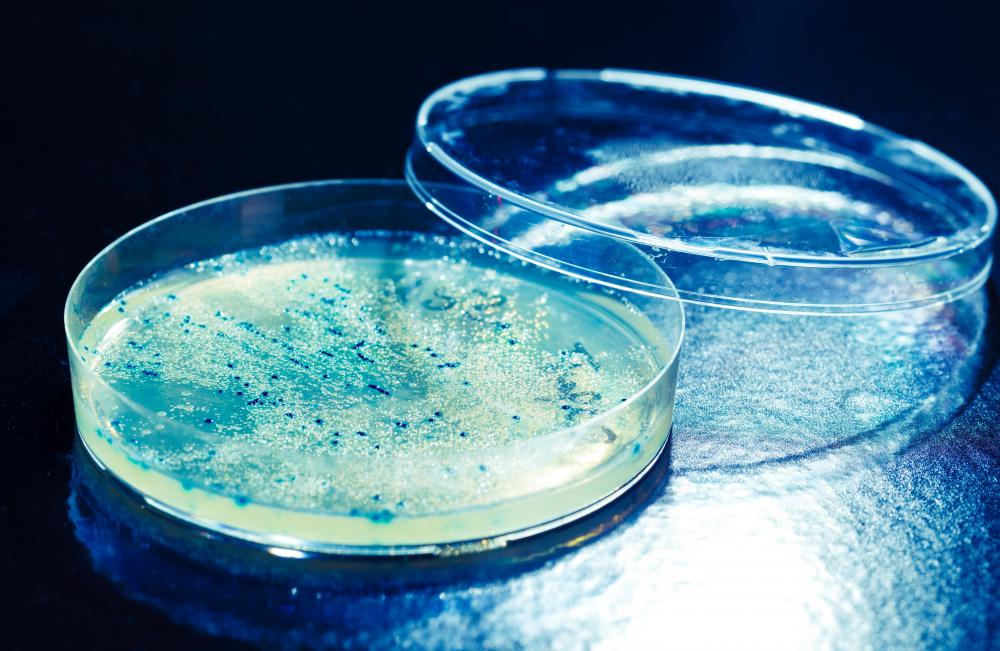
![A culture test involves placing a small tissue sample in a culture dish, allowing it to grow, and then inspecting the results for evidence of abnormal cells.]() By: luchshenA culture test involves placing a small tissue sample in a culture dish, allowing it to grow, and then inspecting the results for evidence of abnormal cells.
By: luchshenA culture test involves placing a small tissue sample in a culture dish, allowing it to grow, and then inspecting the results for evidence of abnormal cells. -
![A throat culture may be necessary to determine the presence of strep throat.]() By: JPC-PRODA throat culture may be necessary to determine the presence of strep throat.
By: JPC-PRODA throat culture may be necessary to determine the presence of strep throat. -
![A stool test can be used to check for the presence of gastrointestinal problems.]() By: inesbazdarA stool test can be used to check for the presence of gastrointestinal problems.
By: inesbazdarA stool test can be used to check for the presence of gastrointestinal problems. -
![In many cases, a large enough sample for a culture can be collected with a swab.]() By: JackFIn many cases, a large enough sample for a culture can be collected with a swab.
By: JackFIn many cases, a large enough sample for a culture can be collected with a swab. -
![A culture can be contaminated by the presence of infectious agents in the environment where the test is performed.]() By: Vasiliy KovalA culture can be contaminated by the presence of infectious agents in the environment where the test is performed.
By: Vasiliy KovalA culture can be contaminated by the presence of infectious agents in the environment where the test is performed. -
![A culture test may include a sample of blood from a patient.]() By: frog-travelA culture test may include a sample of blood from a patient.
By: frog-travelA culture test may include a sample of blood from a patient. -
![A culture test may be done to determine if a wound is infected.]() By: WideAwakeA culture test may be done to determine if a wound is infected.
By: WideAwakeA culture test may be done to determine if a wound is infected. -
![The exact time necessary for a culture test depends on what doctors are looking for.]() By: angellodecoThe exact time necessary for a culture test depends on what doctors are looking for.
By: angellodecoThe exact time necessary for a culture test depends on what doctors are looking for.






Discussion Comments
Most culture tests can take 48 to 72 hours to complete. Depending on examination, a doctor may or may not begin treatment, while waiting for the test results to come back.
Post your comments