
At PracticalAdultInsights, we're committed to delivering accurate, trustworthy information. Our expert-authored content is rigorously fact-checked and sourced from credible authorities. Discover how we uphold the highest standards in providing you with reliable knowledge.
What is a Correspondence Course?
A correspondence course is an academic class that is taken — and taught — across some geographical distance. The original correspondence courses were carried out through the postal service. Professors would mail assignments and lecture notes to students, who would return essays and projects for grading. Most correspondence courses today take place over the Internet, but the concept is the same: students anywhere can take classes without having to physically be present at the school.
Traditional By-Mail Courses

Correspondence courses are named for their postal origins. As early as the 1800s, students enrolled in university distance learning programs would mail their schoolwork to professors much the same way as they would have mailed business or personal correspondence. The instructor would grade the material, then send on the next assignment.
The by-mail model was slow but generally effective, particularly for very busy students. Professors almost always set deadlines, but students were free to organize their own day-to-day schedules. So long as the materials were postmarked by the appointed date, how or when the work got done was not really an issue.
Developments in Online Learning
Few, if any, mail-away courses are available today. The correspondence course model is nevertheless gaining in popularity, however, thanks to the rise of the Internet.

The Internet, unlike the postal system, is instantaneous. When a student e-mails a paper, it is time-stamped immediately, and usually appears in the professor’s inbox within seconds — and many courses can actually be held in real-time over the Internet thanks to video conferencing and web streaming technology. The online space also opens up more avenues for collaboration, such that the modern correspondence course looks far more like a virtual classroom than anything from the mail-only era.
Subjects and Courses Available

Nearly all of the original correspondence courses were offered through colleges and universities. Schools that wanted to reach out to students who lived too far to commute but who were nevertheless interested in taking classes were the pioneers of the distance learning model.
Most of the time, these original distance classes were only available for particularly popular programming. Foreign language training was often near the top of the list, joined by courses that catered to particular niches — business courses, for example, or certain medical seminars. The majority of these were geared towards working professionals in far-away cities who wanted access to the university’s resources.
Modern Offerings

Today, online course offerings are much broader. Languages and career-specific programs remain popular, but are by no means the limits, and students with a computer and an Internet connection can access anything from law to engineering, physics, and advanced mathematics. Courses can be taken individually, or as a part of a degree program — and in many instances, it is possible to earn an entire degree remotely.

Most online correspondence courses are offered at the college level. Increasingly, however, high schools are also participating. High school students in certain areas may be eligible to enroll in from-home, correspondence-style education that fulfills all governmental education requirements.
Benefits for the Working Professional
Taking a correspondence course is not something that is a good idea for everyone. Even in today’s dynamic, real-time Internet classrooms, the learning is never quite the same as it is in person. Just the same, certain people stand to benefit greatly from distance learning.

Those who are already established in careers are usually at the top of the list. Professionals who are interested in enrolling in classes that will help them advance at work often find the flexible schedules of online learning attractive. In many cases, lectures can be downloaded and listened to at any time, and the assignment calendar can usually be tailored to fit around existing obligations.
Benefits for the Busy and the Remote
Likewise, people who have very mobile lifestyles, such as those serving in the armed forces or those with a lot of prior commitments, like stay-at-home moms, often find a lot of benefit in the correspondence course model. People in these positions are often not able to stick to the set class schedule required by a regular college course, but nonetheless want the education.
Those with disabilities and those who live in very remote regions may find that a correspondence course is their only opportunity for higher education. Prestigious universities do not exist everywhere. When access is an issue, whether physically or geographically, taking classes remotely is often an attractive option.
Types of Institutions Offering Courses
The majority of schools offering correspondence courses also offer regular classroom-based learning. Students who earn credits from home still earn the prestige and the reputation of the granting institution. As the popularity of Internet education continues to grow, however, a number of online-only schools have opened, offering only distance learning. Some of these schools have earned strong reputations, but others have collected a lot of criticism.
Accreditation Concerns
Most of the criticism in the web-based correspondence course sphere has to do with accreditation. Schools that are accredited — that is, schools that have had their curricula and course integrity evaluated and approved by an independent reviewer, typically a government entity — are usually deemed legitimate.
A number of unaccredited schools also exist, however, and these are frequently accused of merely “selling” diplomas. The actual educational value of these programs is disputed, despite the usually hefty tuition. Schools in this category are often referred to as “diploma mills,” in reference to how fast they churn out credentials.
Weighing the Pros and Cons
Choosing whether to enroll in a correspondence course is a big decision, and is one best made with a lot of careful thought. Flexibility and schedule control are two of the biggest benefits, but there are also losses, particularly when it comes to classroom dynamics and teacher interactions. It is true that a lot can be accomplished over e-mail, instant messaging, and video conferencing, but it is hard to truly recreate a classroom experience remotely.
AS FEATURED ON:
AS FEATURED ON:


-
![Most correspondence courses on completed online.]() By: apopsMost correspondence courses on completed online.
By: apopsMost correspondence courses on completed online. -
![Stay-at-home parents benefit from the flexibility of correspondence courses.]() By: JackFStay-at-home parents benefit from the flexibility of correspondence courses.
By: JackFStay-at-home parents benefit from the flexibility of correspondence courses. -
![The original correspondence courses were carried out through the postal service.]() By: PHILETDOMThe original correspondence courses were carried out through the postal service.
By: PHILETDOMThe original correspondence courses were carried out through the postal service. -
![Correspondence courses allow institutions to offer courses without having to hire additional staff.]() By: yanlevCorrespondence courses allow institutions to offer courses without having to hire additional staff.
By: yanlevCorrespondence courses allow institutions to offer courses without having to hire additional staff. -
![Teachers may grade mailed-in assignments from students living in a variety of locations in a correspondence course.]() By: AVAVATeachers may grade mailed-in assignments from students living in a variety of locations in a correspondence course.
By: AVAVATeachers may grade mailed-in assignments from students living in a variety of locations in a correspondence course. -
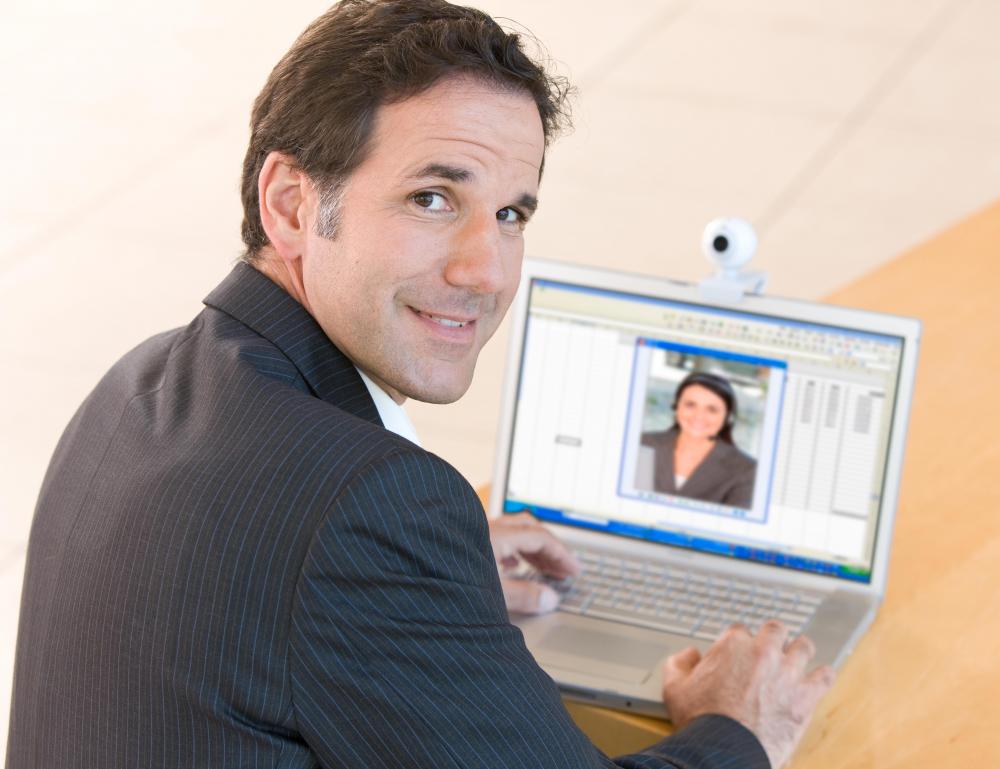
![Video conferencing allows students to communicate with teachers in real-time during a correspondence course.]() By: carlossellerVideo conferencing allows students to communicate with teachers in real-time during a correspondence course.
By: carlossellerVideo conferencing allows students to communicate with teachers in real-time during a correspondence course.





Discussion Comments
I'm an Irish citizen living and working in South Korea. I would like to study and get an extra qualification while I'm here, but I'm having trouble finding an online university.
The online university courses in Ireland and the UK (the open university included) all demand you show up for examinations at some stage, which I can't do as it would cost a fortune to fly back and I couldn't get enough time off work, anyway.
Do you have any information about institutions that run correspondence only courses and don't require that you take sit-down exams? I don't expect these to be very highly rated by any means, but I do want to keep studying so I can have a better chance of getting a job when I return to Ireland.
So far, all I've found are American universities that require you be an American citizen.
Any help you can give would be much appreciated. If you don't have any information on hand, could you point me in the direction of somebody who would?
Sunny27- I just want to add that not all correspondence or distance learning courses lead to a degree. For example, I recently enrolled in a distance learning course for my remedial driver’s education requirement.
Since I receive a ticket, I had to complete a basic four hour program and was able to take the class online. I also know that DVD courses are available as well, so the student does not need to go to a classroom anymore to complete this requirement.
Usually in those cases there is paperwork that the student has to fill out and send back with the DVD.
Some companies even provide codes during various areas of the training and ask the student to copy each referral code to ensure that the student actually watched the material.
BrickBack- I just want to add that Kaplan University, University of Phoenix and American Intercontinental University are all accredited distance learning schools.
They provide distance learning degree courses in business, education and psychology. This distance learning education allows the student to obtain associates, bachelor, or master’s degree while working from the privacy of their own home.
Great article- I agree that distance learning or correspondence schools must be accredited in order to make your degree worthwhile.
According to Peterson’s College Search there are two types of certifications that are considered institutional and specialized. The institutional certification is awarded by six regional agencies such as the Distance Learning Council.
The specialized accreditation refers to the specific department or school within the university offering the distance training.
Also, accreditation usually takes five to ten years, so newer schools are generally not accredited.
Post your comments