
At DelightedCooking, we're committed to delivering accurate, trustworthy information. Our expert-authored content is rigorously fact-checked and sourced from credible authorities. Discover how we uphold the highest standards in providing you with reliable knowledge.
What is a Corkage Fee?
 Mary McMahon
Mary McMahon
Mary McMahon
A corkage fee is charged by a restaurant to patrons bringing their own wines to a meal. The corkage fee is usually minimal and is considered a convenience charge to the restaurant for opening and serving wines from outside their cellar. The use of a corkage fee is widespread in many parts of the United States, especially heavy wine producers such as Napa County in California. The corkage fee is not designed to be a penalty for the diner and should not be viewed that way.
Depending on location and sometimes wine, the corkage fee can vary widely, and it is a good idea to call ahead if you intend to bring your own wine to a restaurant. Some establishments do not allow outside wines, while others are happy to allow them. In some states, it may not be legal for patrons to bring their own wines to a restaurant.

When calling to make reservations, inquire about the corkage fee so that you are prepared upon your arrival. Many establishments offer scaled corkage fees depending on the type of wine brought in and how many bottles there are. Others may waive the corkage fee if customers order a bottle or two from the restaurant's wine list as well. If the wine needs special care, such as chilling or extra breathing time, make appropriate arrangements.

Wine is a major source of markup for restaurants, and loss of wine sales can depress earnings. For this reason, most restaurants charge a corkage fee equivalent to their cheapest bottle, to recoup at least some of the potential lost revenue. As a general rule, bring in a wine that is at least as expensive as the restaurant's cheapest offering. Restaurants that invest a great deal of time, energy, and money in developing a wine list may be offended by patrons who eschew their wines, especially as many chefs keep the wine list in mind when developing new dishes. Exploring a restaurant's wine list and talking with the staff about their wines is sometimes a wonderful way to make new discoveries.
When bringing in outside wines, it is considered common courtesy to offer the waiter, and sommelier, if the restaurant has one, a taste. Usually, the wines that diners bring in are special and unlikely to be on the wine list. Perhaps the dinner is a special event, or the diner has an extensive cellar at home to choose from. Bickering about the corkage fee is considered poor form – accept it with grace and enjoy your meal.
Mary McMahon
Ever since she began contributing to the site several years ago, Mary has embraced the exciting challenge of being a DelightedCooking researcher and writer. Mary has a liberal arts degree from Goddard College and spends her free time reading, cooking, and exploring the great outdoors.
Learn more...
Mary McMahon
Ever since she began contributing to the site several years ago, Mary has embraced the exciting challenge of being a DelightedCooking researcher and writer. Mary has a liberal arts degree from Goddard College and spends her free time reading, cooking, and exploring the great outdoors.
Learn more...AS FEATURED ON:
AS FEATURED ON:


-
![The corkage fee at a BYOB establishment covers the cost of being able to use their glasses and settings.]()
The corkage fee at a BYOB establishment covers the cost of being able to use their glasses and settings. -
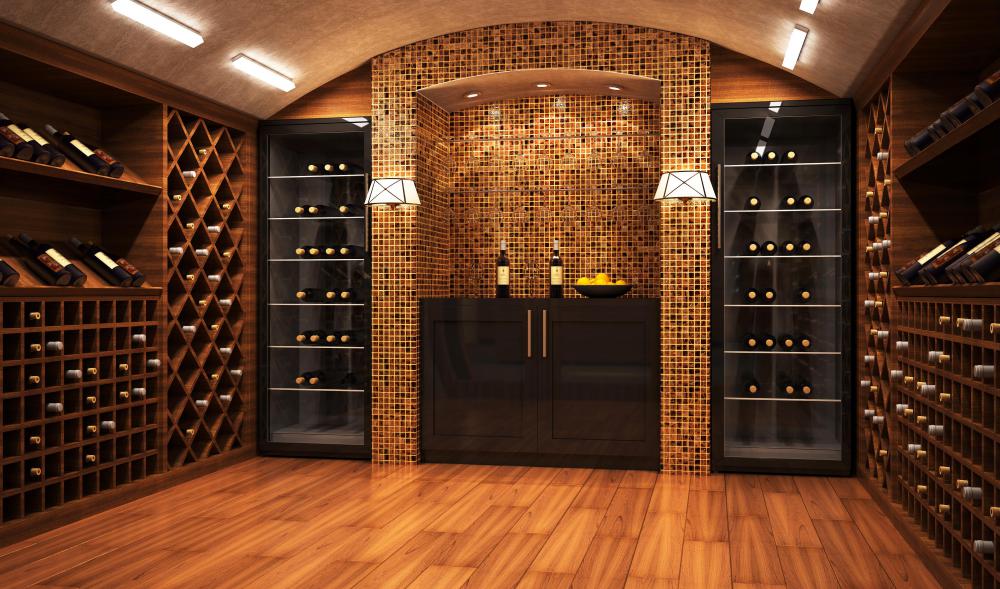
![Bars that sell wine from their personal cellars often charge the highest corkage fees.]() By: slavunBars that sell wine from their personal cellars often charge the highest corkage fees.
By: slavunBars that sell wine from their personal cellars often charge the highest corkage fees.

Discussion Comments
Good post. Many restaurants will let you bring a bottle of wine, so call in advance and find out what the corkage fee is.
One piece of etiquette: Don't bring what the restaurant has on the menu.
This is a great thread. Lots of good points. If you want to bring your own wine and the restaurant allows it, then accept the fee. Bring a nice bottle. No cupcakes or yellow tails.
I bring wine all the time when I go out to eat. Never had a problem.
There is a place in California that charges a corkage fee for all the wines on its lists: $5 per bottle.
I have heard of several people protesting this directly to the owner that a corkage fee is for when wines are brought into the shop by the customers and not for wines they sell. He always has the same answer. 1) he is a shop not a restaurant (Really? The food, tables, servers and menus had me fooled) and 2) the corkage fee is what it costs him to pay his staff, dishwashers, servers and for glassware.
He is also quick to let one and all know that outside wines are not allowed.
When it is pointed out that is exactly why you charge a corkage fee for wines brought into the "establishment" (or whatever he chooses to call it) not for wines that are purchased from the house, he says it's policy and you are not forced to buy anything. However, neither he nor his staff notifies unsuspecting customers who actually know what a corking fee is and how it should be used and that they are applying it to all wine bought and served there, until after the check arrives.
Seems to me that for those patrons who are able to afford $200 bottles or who have their own private cellars who want to bring in specific vintages to pair with foods, money is probably no object. Ergo, corkage fees are no big deal.
For the rest of us who may prefer to dine on a budget, high corkage fees come across as a rip off. I admit that restaurants are within their reasonable right to charge some type of fee, so long as it is nominal - perhaps a few dollars per glass - but charging as a means of recouping lost dollars from lost alcohol sales is misplaced. Using similar logic shows the dubious issues at hand: if a patron orders a $20 meal, rather than a $40 meal, could he also be charged a "mealage fee" because of the dollars the restaurant lost through the lower-priced meal? Or could a restaurant charge a patron a "seatage fee" for ordering just a salad because he wasn't as hungry as the other members in his party who ordered entrees? The recovery of lost, hypothetical profits depends on imperfect calculations at best, and comes across as grabbing at worst.
The way I see it, restaurants should only charge for service/goods provided rather than as a means to offset the hypothetical loss of sales. Go ahead and charge for the use of your stemware, partial cost of your liquor license, and related expenses, but that's it. If you want to prevent lost profits, just go ahead and make it a rule that customers cannot bring in their own bottles.
I understand some customers try to balance costly corkage fees with smaller tips and gratuities (which I believe in some places are way too overrated). Anyway, I rather prefer to eat and drink good, quality and cheaper at home than at restaurants.
What I've learned from this topic is that many restaurant operators are more greedy than I first imagined. If your solution for a customer is telling them to eat at home, I'd have to say you're quite the poor business manager when you think $0 is a better choice.
@curiousme: In my opinion (feel free to disagree), the restaurant did overcharge. The corkage fee should not be added to the gratuity charge. The gratuity charge should be the 18 percent (or whatever the restaurant charges for gratuity) on items sold by the restaurant. The corkage fee should then have been added to the bill separately, making up the total for the dining experience.
If the restaurant is including the corkage as part of the gratuity percentage, then that's not right, as far as I'm concerned.
Having worked in the restaurant trade myself, starting on cleaning and taking every position (both front of house and kitchen) the trade has to offer as you climb the ladder to finally management, I feel that I have a great deal of kinship with my employees as I've experienced everything they do on a daily basis.
This is why I would never make it policy to charge corkage before the gratuity, as I know it is extremely likely to affect their tips. They work hard for the tips they earn and policy shouldn't penalise their efforts. (should the staff declare and pay tax on those tips? In my opinion no, as it is a gift to the staff from the customer for taking good care of the customer and providing the customer with the best possible dining experience, but the law is the law.)
A Corkage fee is purely there to try and dissuade customers from bringing in their own wine and reducing the restaurant's profits. After all, if a restaurant could give a table to someone else who would have bought wine from them, they would have made more profit.
A great deal of a restaurant's profit comes from alcohol sales and if those are being cut, you can bet that the restaurant will have to make cuts to compensate for this (which in my experience starts with how much the staff are paid).
If you want to dine out, be prepared to do exactly that.
I am in the process of opening a wine bar in Bluffton, SC. I have recently discovered that the other two wine bars in Bluffton charge a corkage fee to sell the customer a bottle of wine and open it for them to drink on the premises. I have found this out because people are complaining. I have no intention of charging a fee if you purchase a bottle of wine from my bar and want to sit there and drink it. I welcome the company!
Wow, I can't believe people are getting so wound up over this. I'm in the UK and most restaurants I've been to don't even give you the choice to bring in your own wine or whatever. And if I did find a place that allowed it but charged a fee and I chose to bring in my own, then I certainly wouldn't count it as a tip!
The money is to cover the loss of selling you wine. If you don't want to pay either the corkage fee or the mark-up on the wine, then don't go there, just like you wouldn't take your own food.
Wow. Reading this really disgusts me.
Both sides.
Customers: If you want to enjoy your own wine: pack a lunch and go to a park. Buy the wine there. It's a place of business, and they are rightly making money from you. Profit is not a dirty word; It's how the world works. It's not wrong to charge a corkage fee. Maybe it's wrong to base a gratuity off it, but if you can't afford the price of the meal, (dining experience) then eat somewhere you can or eat at home, but stop complaining and pay up for what you owe. If you just have to have your special wine, bring it and be happy that you can. If they want to charge you for every sip of your own wine, then don't give them any more of your money, but don't assume that the entire practice is some sort of industry conspiracy. If you can't afford it or don't want to, don't snivel about it.
The restaurant isn't there for your convenience. It's there to trade you a meal and service and atmosphere for your money. Trying to get the "best" for the "least" (which really adds up to less than what it is worth) is looting and theft and is what causes the provider/customer relationship to be unnecessarily adversarial. Get what you want for a fair price.
Also, taking out your frustration out on the server, who really does that? What kind of person does that? Someone is going to hold the least powerful person in house responsible and deny him compensation?
Owners and servers: Wow. Change your business model, quit going into business loan debt to open a greasy spoon and stop being such food network drones and opening these "concept" places and open a restaurant where you love what you do and don't buy a plate that costs 10 hamburgers to replace. Don't serve people who demand a plate that costs that much.
Yes, I just said to turn away business if it is demanding an unreasonable level of service. If they don't like what you are doing, tell them to go find somewhere where they do like it. There are far more people who will like what you are doing than there are who won't, and the more jerks you turn away (all of you) the fewer of them there will be. Stop taking money from your lowest paid employee and trying to berate them and acting like they make more money than you.
Stop demanding tip outs. It's their money. They worked for it, and now you are going to sneak up behind them as they fill the salt shakers and stick it in dry and demand they pay you for it? Feed the kitchen free, pay the washers and bussers and hosts the money you charged the customers and then stole from the underpaid tray jockey instead. You charge $25 for a server to pop a cork, and pour something? How do you do it? You are going to charge the customer a fee for the service and then not give any of it to the server?
Quit trying to force people to buy something they don't want (your wine) and make as inviting and accommodating a business model as you can. You will make more money that way. When you tell people that you are trying to charge them for something they didn't buy from you, you lose customers. If a customer tells you they aren't coming back because the hostess was smiling the whole time, tell him to get out. The real customers will appreciate it. If you do anything for money, people will crap all over you. Throw them out.
Stop paying your server staff like prison inmates and respect them as people. Whatever the customer gives them is none of your business. Tell the tax man to get over himself. All of you at once. Whatever the server gives the bussers and bartender and whoever, isn't your responsibility. Make everyone aware that money makes the world go round and fire the ones who don't play right.
Servers have got to stop using drugs, hookers and driving a car they can't afford and make some good math based financial decisions. Be nice but assertive. Your tips from decent humans beings will improve.
Be humans and be nice and quit trying to do better than everyone else and just do the best you can.
Some of you guys are just being too anal. If you dine out, then be happy to drink out too and be prepared to get ripped off. If you want to scrimp and save, have your own drink, please. Go ahead and have it in your own house, at your own cost. Order a take out or cook the meal yourself. Sheesh.
Next they'll be charging extra if the waiter smiles at you.
My favorite neighborhood Italian restaurant is next door to a liquor store with a wide selection of wines, especially Italian wines. The restaurant does not sell wine, itself. Instead, it provides self-serve wine glasses and corkscrews. It is packed with customers who enjoy its good food, their own selection of wine from next-door, and not having to pay for a stupid "dining experience" (their place is nice, cozy and friendly, by the way). They've been doing well for decades without needing to charge their customers four times what they would pay outside a restaurant for the same bottle of wine.
@Post 34: I wish that you had posted the "Wine Spectator Grand Award winning restaurant" you work for, so I know where to avoid.
When I bring my own bottle of wine, I am not trying to save money, nor is anyone I have ever known that has done the same. I have a cellar of over 100 bottles, many of them hand-selected from the reserve vintages of wineries I have visited in person and have a relationship with. Most of them are *not allowed* (by contract) to be sold in stores or restaurants anywhere in the world.
While the Chef has done, I am always sure, a great job in pairing wines with his menus -- and I do take a Chef's recommendations into account -- I know my palate and my wines better than anyone. The only exception I make are, of course, for explicit wine pairing menus, typically done at very high end or celebrity-chef restaurants, and often featuring a separate glass of a different vintage for each dish.
Sure, not everyone is as fortunate as I am with regard to their private wine selections. But I will point out also that wine preference is a highly individualized characteristic, far more so than variations in food preference.
While there are generally good wine pairings and bad wine pairings, no chef -- no matter how good -- can choose one wine as the *best* pairing, for everyone. Even an apprentice or journeyman wine connoisseur could do a better job than the chef at picking the best pairing for their meal and their highly personal and individualized palette.
For me, a restaurant that doesn't offer bring your own bottle (with or without corkage fee) is one that simply doesn't "get it", and one to avoid.
I thought paying a corkage fee for a bottle of wine was outrageous, until recently when I took a six-pack into our local tavern. I asked the owner what the fee would be drink my own beer at his tavern would be and he laughed at me. Throughout his fits of laughter, he escorted me to the door. Of course I told him that I would never return and he continued to laugh.
Like me, people who eat out are always looking for the best quality for the best price. That's just good consumerism, but what are reasonable expectations when going out to eat? What are reasonable expectations for someone who is uneducated as to how the restaurant industry must operate and comply to it's state and local policies/requirements. "I will pay for this, but I won't pay for that". Why would any business not pass on an expense to their customers for providing a product?
After 40 years of proudly serving people, I believe I have the answer. I'll say what I was hoping to read from the other posts. People are cheap! They have champagne tastes on a beer budget. That's the main reason a corkage fee and the tax and gratuity that accompany it, are a thorn to them. They want to simply save some money and that's why they brought the wine: so they wouldn't have to buy it from the restaurant. There are some exceptions, but I am talking to those who quiver and complain over paying the corkage fee, tax and gratuity involved in saving money by bringing in your own bottle.
In Washington state, an average corkage fee is $20. This fee has been steadily climbing year after year, like minimum wage, utilities, fuel and the cost of food and beverages. In Washington, restaurants are required to pay the sales tax on corkage fees, if the restaurant's policy is to require a fee to open your bottle and serve it to you. It is a sales transaction, based on a mandatory fee. If the corkage were voluntary and optional, then sales tax would not be required by the state. Any restaurant not charging some sort of corkage is missing out on normal and acceptable revenue for their business. We are not a grocery store where tax does and doesn't apply to certain items.
The restaurant industry in my area is 100 percent consistent on charging tax and gratuity on corkage fees. The beverage sales are a large portion of the sales mix for restaurants. Many, if not most restaurants would not be able to survive without their beverage sales and profit. Eating out is an enjoyable hobby and practically a sport, for both the wealthy and not so wealthy. A large part of the hobby/sport is to be hypercritical about every aspect of the restaurant experience. Customers are well aware that a restaurant's success rate is slim and many consumers are very willing to hold that over the restaurant's head. Consumers these days have little to no patience in dealing with any restaurant that does not over-cater to their unreasonable expectations. Cheap customers who corner the restaurant owners with unreasonable demands are truly contributing to the slim success rate of restaurants.
Every day, restaurant owners diligently chip away at trying to master the technique of customer retention and to generate more and new types of revenue. Not to make the Fortune 500, but to survive another year. Many of these strategies are inspired from ignorant eaters who threaten to never return. These alterations to the operation almost always have an expense and are rarely successful. The end result is their product and brand become diluted.
The truth is, all it takes to lose a customer is simply changing the staff or the shifts they work, or maybe the bartender forgot to dim the lights and keep the tunes going in the lounge, or the hostess didn't smile big enough.
In closing, I'd like to make some suggestions to the hypercritical restaurant customers around the world. If you want a great meal and great wine, but you want to avoid sales taxes, gratuity and restaurant wine prices, then simply learn to cook, grab some wine and groceries from the supermarket and stay home!
Wow. First of all there is no 'double billing', nor any 'double dipping', tax or otherwise going on. As a restaurant, we are offering you, the customer, a service. The service we offer you is the luxury of a night off from buying groceries, cooking your meal and cleaning up afterward. On the better side of things, we offer you good food, good wine in a an enjoyable atmosphere -- and ultimately a dining “experience.” That is what you pay for.
Keep in mind it is very difficult for the average restaurant to actually make money, and usually a minimum of five years before they start to see any profit. As mentioned in a few previous posts, costs include rent, utilities, advertising, labor, linen, food costs, wastage – right down to the toilet paper and the paper towels you dry your hands on. Then there's breakage. Let me put this in perspective: for example, it would take the sale of 10 hamburgers to cover the cost of one broken plate.
Secondly, offering you, the customer, the choice of bringing in your own select wine is a courtesy. For the more conscientious proprietor, time and effort goes into the wine selection to reflect the menu to offer the best wine pairings to suit the dishes served. And time and effort goes into educating the servers in the wine knowledge and pairing. To offer BYOB, the restaurant must acquire an additional license and pay for that license. In my mind what this is saying to you is "we have a wonderful wine selection, however if you have a choice wine you prefer, we more than welcome you to bring that wine in to enjoy with your meal."
So yes, there is a corkage fee. No, it's not an insult because we've chosen to take on this license and offer you this courtesy. Yes, this fee covers the cost of providing the service, the glassware, and the cleaning/polishing of the glassware. And yes, it does recover, in some way, lost revenue. Alcohol sales is the one area where mark up is significant enough for the restaurant to actually make money (this is universal). Is it better for us if you buy a bottle of wine from us? Absolutely. That just reinforces that BYOB is a courtesy.
Thirdly, I don't know about the U.S. and your various state laws, or for other provinces for that matter. But here in Ontario, Canada, we pay tax on everything - from gift cards/certificates to promos, including corkage fees.
Last but not least, never, ever hold a restaurant's policies against the server. We are the lowly minions on the restaurant totem pole. Post no. 6: do you really believe this corkage fee ends up in the pocket of your server? We make less than minimum wage; we live off our tips. And even then, we tip out to the kitchen/bussers/hostesses. You tip us 10 percent, but we might see anywhere between 6 to 8 percent of that.
Please tip according to the quality of your service. If you don't agree with a particular policy of the restaurant, know your server had no control over that. If you were unhappy about your food and it had nothing to do with server error and they handled it to the best of their ability, don't hold it against them. We do our best to please you and provide you a good experience. Please simply recognize our effort and tip according to that.
I have no problem paying a corkage fee. Frankly, I think its okay and warranted considering the work involved. However, i took offense to an event that happened today. I called ahead and asked if outside wine was okay and if there was a corkage fee. I went so far as to tell them the name and year. I was informed $25, which was acceptable to me.
However when I arrived, the restaurant had a special wine menu for that evening, and on that menu was the same bottle of wine I bought for this event. It wasn't on the normal wine list and was indeed just added today. We were denied the bottle and told we needed to buy the wine in house. When I objected, the manager was summoned and he basically read me the riot act. His attitude had me so peeved I ended up insisting that no one on the meal order anything from the bar.
When the check came with the "automatic gratuity", I pulled the manager aside with a friend and let him have it. "Allowing my wine and allowing me to pay $25 per bottle (we had four) would have gotten him probably $300 or more in mixed drink sales. I explained to him that in no way did I feel it was right for me to pay to be berated.
I asked for the owner's name and contact information and informed him that it would be a cold day in hell when a gratuity would be paid for this meal, at least "automatically." He tried to say he would call the cops, to which I said "please, bring them in. I would love to see how well his half full dining room would play to someone getting hauled off in cuffs for failing to pay a gratuity." After several tense minutes, he agreed to waive the gratuity requirement. After which we tipped the waiter directly a reasonable amount, but less than the 18.5 percent (the "mandatory").
1. I am okay with corkage fees.
2. I find it shady that we cannot bring in our own bottles, regardless of vintage and
3. To hold customers hostage by not providing an accurate rule for allowing outside wine is not right.
I would rather they not allow outside wines than to handle this the way they did it tonight.
I loved comment by - anon148375. it opened the eyes of my soul. I never realized how inconsiderate one can be, not to mention pretentious by taking a bottle of my own wine into a restaurant.
I copied the comment in order to have a poster made and framed.
Thanks for the great objective view!
I have read through most of these posts, and it does have a very customer oriented slant. I have been in the industry for 30 plus years, and have worked mostly for a Wine Spectator Grand Award winning restaurant.
As I go through and read most of you talk about all the high end bottles you would order if you were in the restaurant, I say yeah, right! A majority of customers are just going to buy an average-priced bottle, anywhere from $35 to $65.
There is just an overwhelming amount of pretentiousness in a lot of these posts. I have waited on a lot of wealthy and famous people and they're not sitting there night after night drinking a "Chateau Lafite Rothschilds." A lot of times it's just a glass or two, in order to enhance their meals.
It's important to keep in mind that dining out is about a well rounded experience. What I mean by that is that a restaurant picks a menu, a chef and a cuisine that they feel the public would enjoy. They also pick wines both high and low to enhance that meal. So, when you go into a restaurant, enjoy the experience. Stop trying to be a "Robert Parker" every time you go out to eat. It really is pretentious.
You wouldn't go to your mechanic with a part you bought and ask him to repair your car for free, or go to Starbucks with your own coffee and do the same, would you? Where do you think restaurant horror stories come from? Stupid people who do pretentious things. I have never been a participant in this type of behavior, but believe me -- I know a lot who have.
Keep in mind that, in some places, not all there is a ripple effect to bringing in that one bottle of wine. I mean, you might as well go up to the owner/manager with a pair of gloves and slap them in the face.
You all talk about the cost of the corkage fees being ridiculous. Keep in mind that a restaurant spends as much time building a wine list as they do a menu. The costs for that wine list is for ever ongoing because most establishments have an education program for the staff, a salary for the sommelier, storage (refrigeration -- have you looked at your electric bill lately), and for some extended storage if they have a recycle program.
For those folks who bring bottles into a restaurant. It's always been my dream to show up at your house with a moving truck, put your furniture in your yard, and move mine in, because I'm more comfortable that way. But, when i leave, I take my furniture and leave yours on your lawn. That's kind of how a restaunter feels.
I do feel for the uneducated customer in this respect: you do get overcharged in a lot of restaurants. Here are some of the worst offenders. Chain restaurants like Capital Grille, Ruth's Chris and the like. My solution don't eat at chains. The other bad offenders are restaurants that capitalize on their fame from such networks as the Food Network and the Cooking Channel.
In any touristy situation, whether you're buying t-shirts, taking a duck boat ride, or getting your picture taken with some oversized rodent, you're going to get ripped off. The most important thing you could do is patronize a local establishment. They really do appreciate your business, they might work with you on a reasonable corkage fee, or even carry your favorite wine and reasonably price it. The most important thing to keep in mind is that it's about the relationship, not the attitude.
As the saying goes, "the customer is always right", Not always! As far as bringing wine into an establishment, no bueno. That's just my opinion.
One last thought: in the 30 plus years that I have been in the business, here is my summation of those that bring wine into a restaurant.
First off, the entire staff is making fun of you in the back, secondly so are your friends. To your face they are thanking you and the waiter is praising you, but it's all fake. Most waiters will chalk it up as a loss because you're cheap. You were cheap today, you were cheap yesterday and you'll be cheap tomorrow. It's just a bottle of booze for your friends, and the only reason that they are there is because you bought something they wouldn't.
Just keep in mind: as the wine dries up so do your friends. I have seen it too many times. When you're gone or away from the table, they are just laughing at how gullible you are, and how they drink well because you always bring wine and they don't have to. Some people get it and some don't.
Okay, Restaurateurs: One of my local wine bar restaurants charges a corkage fee for bottles purchased and drunk on premises. We're already paying them for the bottle of wine, and the corkage fee is $10 per bottle on top of that. I suppose it does draw more income for them if we buy by the glass, but where does this fit into the whole corkage fee scheme of things?
if you do not charge the corkage in a restaurant, you won't be losing money in reality, but you are not earning any money from the alcohol you should be selling. You have to keep in mind that a restaurant is business, not a charity, and the owner of the establishment has to pay for rent, and all the different services such as water, electricity and taxes.
A small corkage fee is reasonable ($1 per glass)but it is ridiculous to act like the waiter has to work so hard to open the bottle or that the restaurant would be losing so much money. Keep in mind that many of us won't be ordering wine from the overpriced menus anyway!
Curious, How do you consider it losing out on $220 in wine sales from that table? Obviously, if they chose to bring their own bottles, you didn't have their preferred wine on your list. So, perhaps they wouldn't have ordered from you at all. Therefore, nothing is lost.
I think the customer should have had a conversation with the restaurant owner to negotiate a flat fee for the wine service, separate from gratuity. This situation needed better communication.
Were there 11 different wines? That's a lot of work. Pouring 165 glasses, refilling and monitoring, etc. later washing and polishing (45-60 minutes), makes for a very busy server. That may be the only table the server has that night.
The restaurant needs to have some revenue for use of their facilities. It is not gouging to have a reasonable charge for wine service, more like a necessity. Just having 165 glasses on hand can run $1,000 for good stemware. Then rent, (in fine dining restaurants, it costs $4 per seat per shift, so in this case, the restaurant has $60 rent to pay on that table for the night). Add linen, plates, silverware, utilities, tax, licenses, all these expenses to keep an establishment trying to make it, especially in these times.
Most anger and frustration with corkage fees is generated by restaurant owners who are not reasonable with their policy, or customers who have limited insight about what it takes to run a restaurant.
How would the restaurant know if it was a 200 hundred dollar bottle or a 2 dollar bottle? What if you peeled the label off? Will there be a microwave fee if I bring my own frozen pizza to a pizza restaurant and ask them to heat it up for me?
Definitely, the corkage fee is taxable as it contributes to income for the owners of the restaurant. They don't tax the corkage fee so they make more money off you; they do it to collect for the government.
At the end of the quarter, the government or IRS is not going to look through all of your sales and determine what is and isn't taxable. Those who are outraged by a simple corkage fee definitely have no class whatsoever and the saddest part is when they short change the server's gratuity just because they don't agree with it.
I am taking family for a birthday luncheon and expect to pay a corkage fee for my preferred wine. We will be a large and expect to consume 12 bottles at a catered club house setting. All is well until they actually tax corkage, cake cutting and gratuity(service charge). I don't think I need to tack on those extra taxes.
I think services are not taxed in CA and doubt the tax will ever be seen in my state coffers.
no you didn't. you lost out on $55 as you charged $15 instead of $20.
5x 11=55. As a vegan i really appreciate being able to bring in my own bottle.
In many states, including the one I live in, a corkage fee is illegal. Many establishments still do it, and when I tell a guest "no", because I choose to obey the law, I get criticized, even yelled at.
As for the "Corkage" and "Gratuity" being a double-dip? No way. When reporting for taxes, the server is required to claim all their tips. The government monitors it based on total sales; they don't differentiate.
The server doesn't get great on the corkage fee, the server still is required to claim tips on it.
Wow, 'corkage fee'. I'd never heard of it. I grew up in Montreal, and loved, absolutely loved going to BYOB places. The BYOB culture (and number of BYOB restos and bistros) was huge there. But let me assure you, there was no such thing as preposterous as getting charged for bringing your own wine!
Well, I'm now in Ontario, where corkage fees are in place. Consequently, I go out to eat about 1/10th as frequently. And whether I'm poor or rich won't change this. Eliminate corkage fees.
Why is it called a "corkage" fee, when (1) the waiter is actually uncorking the wine and (2) the uncorking part pales in comparison to the effort and expense of setting, pouring, and clearing glasses, icing the wine, and so on?
Re comment 20: many states have dram-shop laws that make the bar or restaurant expressly not liable for serving booze.
I really didn't want to bother responding, but I feel I have to. I am an avid restaurant goer as well as a bar manager in Upstate New York. The simple fact is that there exists a large amount of confusion in these posts, which I can tell were submitted predominantly by patrons, not members of the service industry.
You all have to keep in mind a number of factors:
Restaurant owners are legally liable for all alcohol consumed on their property. If a manager allowed a large party to bring in a case of wine as was previously mentioned, and one of those patrons drives away that night and kills someone, the restaurant is liable. Why would a restaurant want to ever assume that liability with a minuscule profit collected.
If I had my way, no one would ever bring any form of outside alcohol into my restaurant. However, that would aggravate guests and after all, we want to make guests happy.
If a restaurant has a good wine list, there shouldn't be much need to insist on bringing one's own bottle. If a customer still insists, we would want to please them (say for instance they had a $200 of Barolo or Bordeaux.)
If the guest were to purchase that bottle off our wine list, they would pay about $400 (a $200 profit for the restaurant) as markup on wine bottles is about times 2 (industry mark up on liquor and beer is times 5 on average).
So if a guest had a simply amazing bottle of wine, a $35 or $45 corkage fee is a steal, rather than an outrage.
Remember, the corkage fee does not really have much of anything to do with the service offered, but more the profit lost on that bottle. Incidentally, we limit our customers to bringing in no more than one bottle of their own.
I hope this helps to explain the situation in a little better light. Remember, if you want to enjoy a magnificent $200/plus bottle while out to dinner, by all means pay the corkage fee and be happy.
If you have a $20 bottle, leave it home and find a comparable bottle on the list. It's not worth the fee at that price point, and let's face it, most $20-$30 bottles of wine are similar in quality, as long as they are of good value. If the wine list is lacking at your favorite restaurant and you still just want a decent $20-$30 bottle, ask the restaurant to carry your bottle, or order it special for you, and pay their markup. This is usually well within their ability, and if they're unwilling, I would stop frequenting their establishment.
I am anxious to hear responses, but neglected to register.
Curious -- As a restaurant manager, I can totally relate to the experience you've described above. I can understand one, maybe two bottles of wine (OK maybe five for your particular case of 15 guests), but 11 bottles of wine? I'm sorry, but that is just a bit ridiculous!
For heaven's sake, take the rest of the bottles back home and have them there! The restaurant is an establishment to serve guests great food and wine to accompany the food, not to be your private servants!
As for the corkage fee -- let's explain how this works for those infrequent restaurant goers who claim to be experts: the corkage fee is the fee you are paying to the restaurant, who is now spending money on 1)the server to serve you your wine, 2)providing you stemware (which costs the restaurant to supply), 3)once you leave said restaurant, who do you think has to hire someone to clean the glasses?)and 4)let's not forget the license the restaurant must acquire to serve you wine, that comes as as expense too just in case you thought that was free!
Then we come to the gratuity, which goes to your server who opened and poured you your wine. If you had bought the wine from the restaurant, you would pay for gratuity for that wine, right?
That said, the gratuity on the bill for the corkage fee is the gratuity your server well deserves for opening a bottle of wine. So if there was no corkage fee, the waiter would have received no tip for opening the wine (leaves job), the restaurant would be have made no money and on top of that, lost money for opening your wine (closes restaurant), and there would be nothing left but your unopened bottles of wine.
I agree in a modest fee if the restaurant sells wine. I recently went to an Italian restaurant that did not have a liquor license so the fact that you could bring your own wine seemed attractive as the restaurant had gotten rave reviews.
When the waiter told me there would be a corkage fee I was not to surprised but when he told me it was 20 bucks, I was, needless to say, shocked. They don't even sell wine so it is not a loss to the restaurant. The food was incredible but I will not be dining there again.
The fact that restaurants charge a corkage fee in proportion to the quality of the alcohol (e.g. charge the price of cheapest bottle of champagne when customer brings bottle of nice champagne) indicates that what is charged is not the effort of the waiter, it is the "loss" that the restaurant owner believes he is making for not selling his own alcohol.
As a regular restaurant-goer, who almost always buys wine and sometimes scotch from the menu, but occasionally likes to bring some fine champagne for a special occasion, I very simply and permanently take my business elsewhere when restaurants are being silly with corkage fees (high charge and double-dipping on the tax). Win 1, lose 10.
Interesting exchange. Obviously the perception of corkage fees varies widely depending on whether the perceiver is customer, server, or management. Given this, I'm surprised any restaurants still allow customers to bring in their own wine.
If I were asked by the restaurant to pay a corkage fee, I'd simply take it out of the tip. Let the servers argue with the owner about corkage fees, I'll do my arguing with my wallet. Next thing you know they'll be charging me a water fee for requesting water instead of some other beverage, or a food fee for ordering the cheapest dish instead of their more exquisite dishes which bring in more profits. I don't know, maybe it's due to the way I've been brought up, but I find it ridiculous to pay such large sums of money (corkage fees plus 18 percent tips), in addition to my food bill, for essentially nothing.
The justification made of a "corkage fee" would also allow that fee to be applied to anyone who doesn't order wine at all as part of their meal. Same lack of wine-sales revenue/profit from that person as the one at the next table who brought their own bottle.
I was charged corkage fees on two bottles of wine I purchased at the restaurant. I was under the impression that you would only be charged corkage fees on bring your own bottles?
I think corkage fee should be price of bottle less cost. (So if you charge customers $20 for your least expensive bottle, and your cost for said bottle is $8, then $12 corkage is about right). I have no idea what wine costs the restaurants however. But if the corkage is too high, then it discourages customers from bringing their own wine (and makes them unhappy) and you'd be better off simply *not* allowing outside wines in the first place.
What a crock! Corkage is such a rip off! It is a blatant way to make money out of nothing, especially as a lot of wines have screw top lids these days. If, and that is *if,* you are going to charge it, charge minimal. Don't piss people off. They won't come back. You make more money with recurring customers and word of mouth! And if you keep the prices reasonable they might actually buy some alcohol.
in response to lefty.. If a customer brings in a botle of wine and opens it before the server arrives. This is when Management must be involved, first off all as a public establishment. we have a liquor license. regardless if a guest purchases wine from us, or their own bottle we are liable for that guest as they are are on a property. That guest must be charged a corkage fee. restaurants do not allow outside alcohol or food for safety reasons
OK, hypothetical situation: a party of four comes to a given restaurant with wine in hand because the restaurant totes the ability of the patron to bring his/her own wine. After they're seated but before the waiter gets to the table, said patron opens the bottle he/she brought and serves his/her friends(i.e. no waiter intervention at all). Is there still a corkage fee?
As the owner of a restaurant, I have to say that a corkage fee and gratuity are two totally different things. The corkage fee is to make up for the alcohol sale loss you are taking by allowing someone to bring in their own wine and gratuity has nothing to do with this.
If, as a server, you factor corkage fees into your gratuity calculations, expect some customers to react negatively.
Think of how they see it. If they bring in their own bottle and have you serve it, in their mind the corkage fee is primarily to pay for the service you are providing. The work you do is what they see and what they think they're paying the fee for. The profit recovery that management is raking in is secondary in their mind and assumed to be included in the corkage fee. Remember, no matter how well you explain it, the customer is there to eat, drink, and be merry, not comprehend arcane rules of the establishment and perform accounting exercises.
If you think it is unfair that you are providing extra service for which you receive no gratuity, talk to your management and ask for a share of the corking fees. If they have to raise the fees, so be it. Customers will be less offended by a higher up-front corking fee than if they are surprised by perceived double-billing.
I agree with this article that a corkage fee should be a viewed as a penalty for bringing wine. As a server for a Sushi Restaurant in Fair Oaks, CA for 3 years.. This September 2008 was the first time a customer had complained about the fee. As I went to greet his table, he abruptly said, "can you open this wine for me?" I said yes, but there's a $10 corkage fee. He responded "Oh you guys sure make a profit from this!" I said no its just what the owner charges when you bring in a bottle of wine. Then he said "No worry, it won't affect your tip." I smiled and continued with the service. So I took time to open, let him test, serve to 3 other guests he had at the table. I was the only server on the floor on a fairly busy Saturday Night. Throughout their dining period, they looked satisfy and I asked how the food was? " Good" After they paid, and I look at how much they tipped. I realized I was the toll of this table. A 9% Tip! on a $108.00 tap. I don't know if he thought the fee goes into my pocket or he is just a poor poor tipper. Isn't this sad!
I just found out that momofuku in NYC is charging a $45.00 per bottle corkage fee. If that's not 'punishment', then I don't know what else to call it.
In response to "Anonymous" who thought the customer was correct I disagree completely. A Corkage fee is not a tip and a gratuity is. The corkage fee gets paid to the restaurant and does not go to the server at all where as the gratuity does. Gratuity is often charged by server's for parties of 8 or larger in order to ensure the party doesn't stick the server on the charge. It's in poor taste to get upset with a server for a restaurant policy and it's also in poor taste to be upset with a server for charging a gratuity. If you had an extremely poor service or an issue paying the gratuity because you received sub-par service that is a different situation that should be taken up with management, not your waiter.
What do I think? I agree with the customer. I think the corkage fee is basically a gratuity, and that it is double-dipping for you to add 18% to it. Now, the corkage fee doesn't take the place of the server gratuity, but it is awfully nervy of you to charge corkage AND include it in the gratuity basis.
And remember, you didn't lose $220. Compared to $220 less your cost, you probably did better with the $165 corkage.
What do you think of a customer that brings in 11 bottles of wine (we did not argue but did charge $15 corkage per bottle)There were 15 guests (lots of glasses!) The customer then got upset that the 18% gratuity added on to the bill (for guests of 6 or more) was added on after the corkage. He then told server we had ripped her off because the $165 from corkage should have been her tip!!! Our least expensive bottle of wine is $20. We lost out on at least $220 in wine or alcohol sales from that table!
Post your comments